The Game-Changing Fuel
Introduction: The Element That Will “Erase” Chimneys
Imagine a fuel with three times the energy density of gasoline, but whose combustion produces nothing but pure water vapor. For decades, this sounded like a screenplay for a science fiction novel. However, in 2026, it is no longer a fantasy. It is Green Hydrogen.
As the world rapidly moves toward net-zero emissions, green hydrogen is ceasing to be just a chemical element and is becoming a strategic advantage. For managers in Serbia and Europe, the question is no longer “what is it,” but “how quickly can we implement it before competition and CO2 taxes leave us behind.”
Demystification: What Makes Green Hydrogen “Green”?
Hydrogen is the most abundant element in the universe, but on Earth, it is rarely found in its pure form. To obtain it, we must “unlock” it from molecules like water.
The Technical Angle:
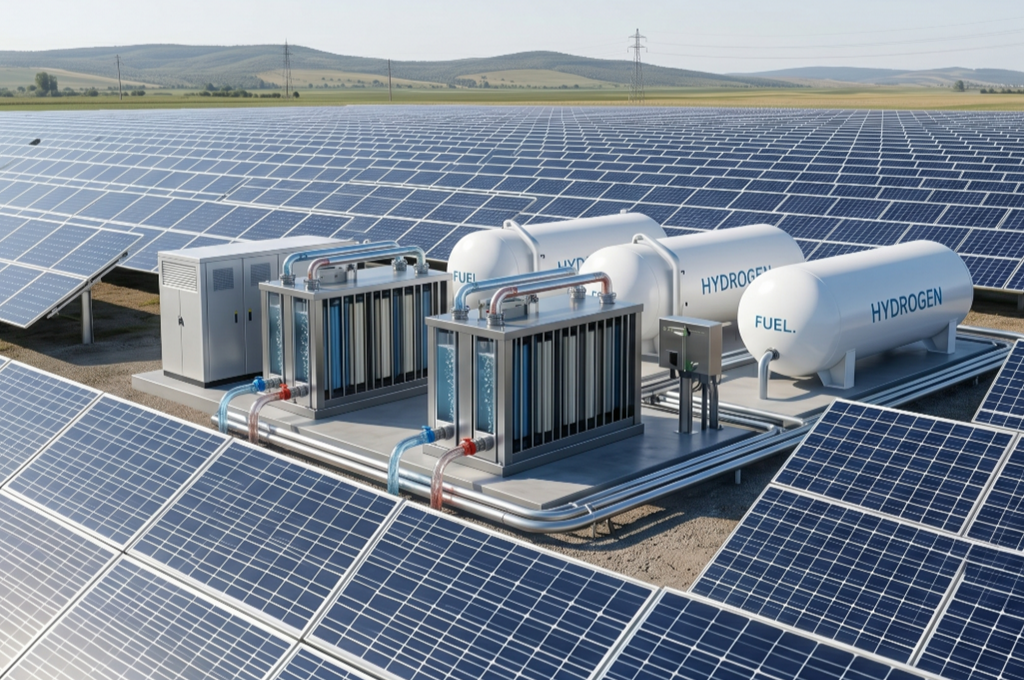
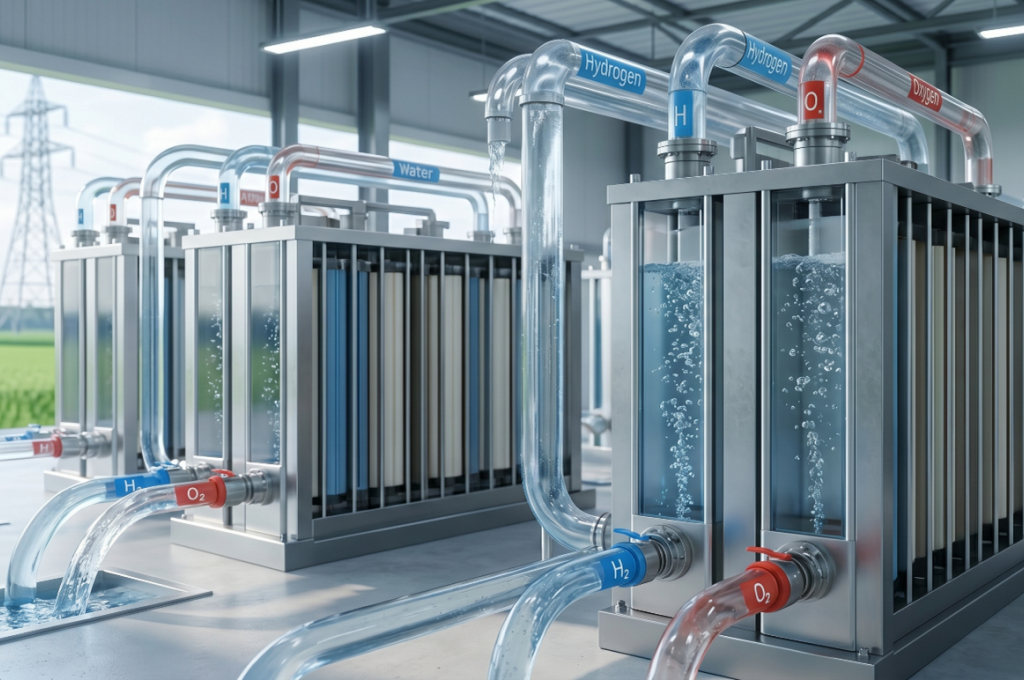
The heart of this technology is the electrolyzer. This is a device that uses electricity to split water into hydrogen and oxygen. For hydrogen to be considered “green,” the electricity powering this process must come exclusively from renewable energy sources (RES) – solar, wind, or hydropower.
Today, two main technologies dominate the market:
- Alkaline Electrolyzers: A proven, robust technology with a long operational lifespan.
- PEM (Proton Exchange Membrane): More flexible systems, ideal for working with variable sources like solar panels, as they adapt quickly to fluctuations in voltage.
Why is 2026 the Turning Point?
You might wonder: “Why haven’t we been talking about this for the last 30 years?” The answer lies in economics and regulation. Primarily, the price of solar panels and wind turbines has dropped to an all-time low, making the electricity for electrolysis more affordable than ever. Also, the European Union is no longer forgiving of pollution. The introduction of the Carbon Border Adjustment Mechanism (CBAM) directly impacts exporters from Serbia. If your production process uses fossil fuels, your goods become too expensive for the EU market. Following the gas market instabilities of recent years, companies are striving for an “island” mode of operation – producing their own fuel at the point of consumption.
Where is Green Hydrogen Actually Used?
Hydrogen is not just a fuel replacement; it is the “Swiss Army knife” of the energy transition.
Some of the most interesting ones are:
Heavy Industry
There are industries you simply cannot “plug into an outlet.” Steel, cement, and glass production require extreme temperatures that batteries cannot achieve. Green hydrogen serves here as a direct replacement for coking coal or natural gas, turning “dirty” factories into ecological leaders.
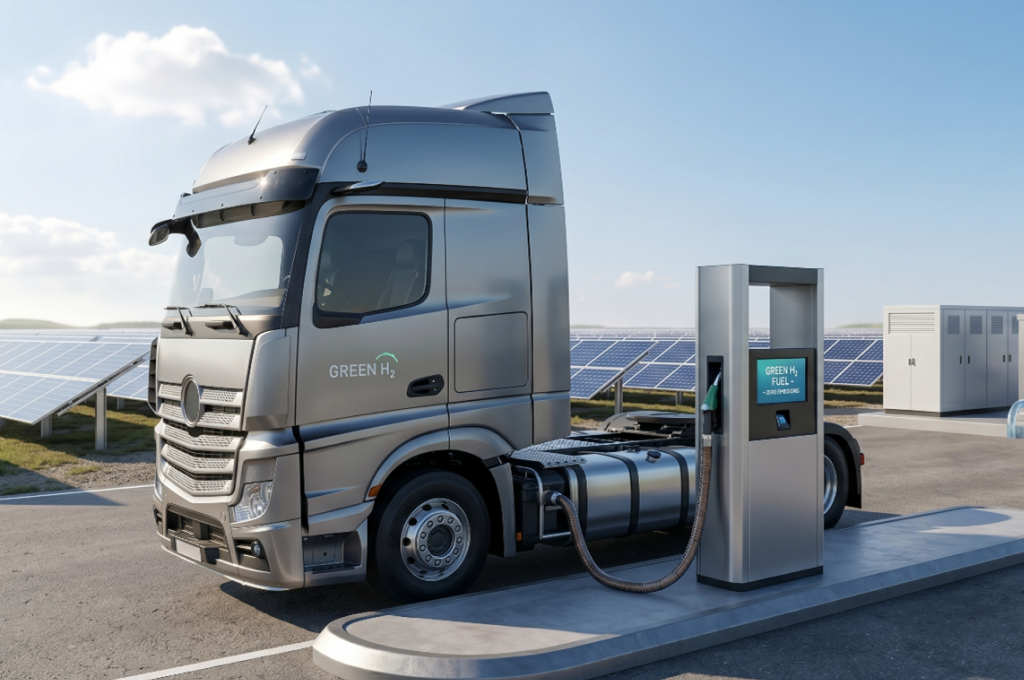
Heavy-Duty Transport
While electric cars are great for city driving, 40-ton trucks or ocean-crossing ships face the problem of battery weight. Hydrogen Fuel Cells allow for a range of over 1,000 km with a quick refueling time of just about ten minutes.
Seasonal Energy Storage
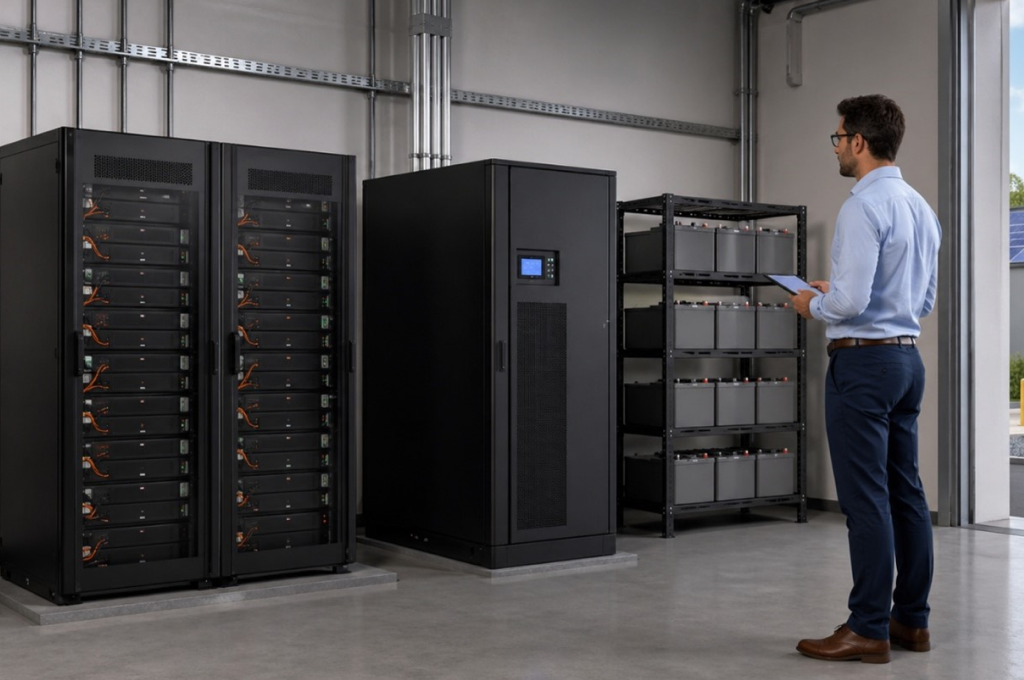
This is a key point for energy managers. What to do with excess solar energy in the summer? Batteries can store energy for hours, but hydrogen can store it for months. It is “battery power in gaseous form” that balances your energy sheets year-round.
The Balkans as a “Sleeping Giant” of the Hydrogen Economy
Serbia and the region have a specific advantage that Europe wants to tap into. Our geography is ideal for large hybrid parks (solar + wind) that can power mass electrolysis systems.
Instead of just exporting raw electricity, the region can produce and export green hydrogen through modified gas infrastructure. This positions us as a key hub in the European Hydrogen Backbone – the future network that will power the industrial heart of Germany and Northern Europe.
Challenges: Let’s Face the Reality
There are three key challenges:
Initial Costs (CAPEX): Installing an electrolyzer is still a significant investment.
Infrastructure: Transport and storage require specific materials because hydrogen is the smallest molecule and can “leak” through standard valves.
Efficiency: Energy loss during the conversion of electricity to gas and back is present, but technology is rapidly improving.
Conclusion: The Future Belongs to Those Who Adapt
Green hydrogen is not just an ecological trend; it is a fundamental shift in how the world operates. For managers, it represents the path to decarbonization, energy security, and new revenue streams.
Investing in hydrogen knowledge today is an investment in competitiveness tomorrow. Is your company ready to become part of the “Hydrogen Revolution,” or will you wait for the market to force the change?