When rooftop solar comes up in conversation in Serbia, two very different reactions usually appear. One is enthusiastic: people see clean energy, lower bills, and a more modern home. The other is cautious: the topic quickly fills with doubts, half-accurate stories, and myths that often confuse more than they help. That is normal for a market that is growing quickly. Whenever a technology moves from a niche into broader use, it carries a package of assumptions with it. That is why it is worth separating what is fact from what is simply a shortcut in thinking.
1. It only works in the summer
The first myth is that solar “only works in summer.” It is true that production is stronger in summer because there are more sun hours and better weather conditions. But panels also generate electricity in spring, autumn, and even winter, only at a lower level. Solar is therefore not a device that suddenly stops outside summer; it is a system whose output changes with the seasons. That is exactly why it should be evaluated over a year, not on the basis of one cloudy day in January.
2. You need a huge roof
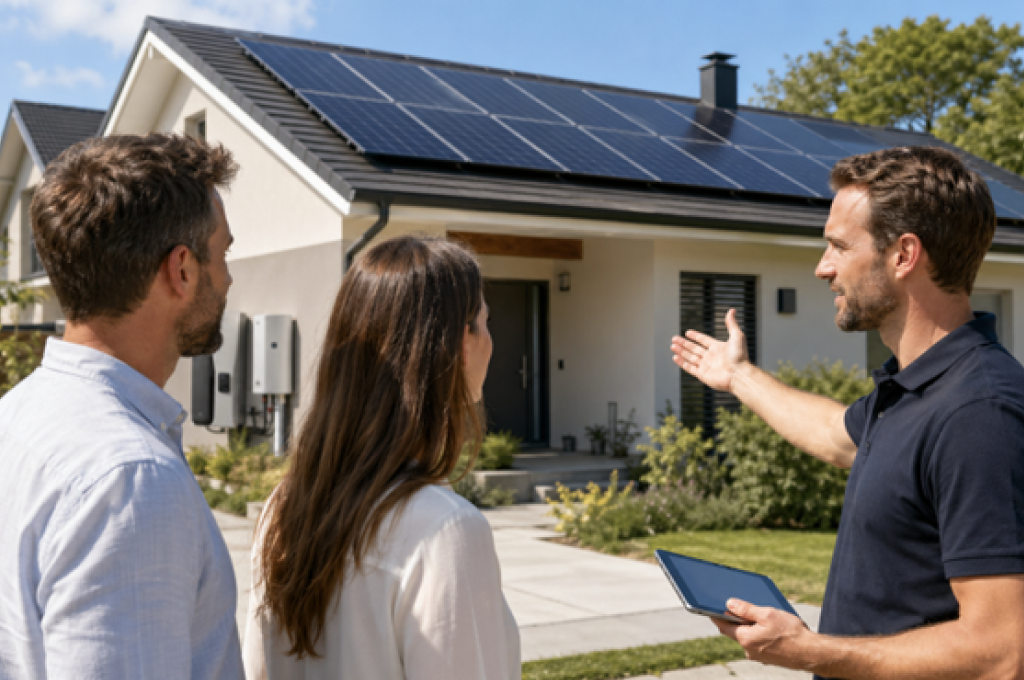
The second myth is that you need a huge roof. In practice, it is more important that the roof is usable than that it is enormous. Orientation, pitch, shading, and available surface are often more important than the overall size of the house. Many completely standard family homes have enough space for a system that can cover a meaningful share of their consumption. The real problem is often not the roof itself, but the assumption that “my roof must be too small,” which prevents people from even asking for an assessment.
3. You need to have a battery
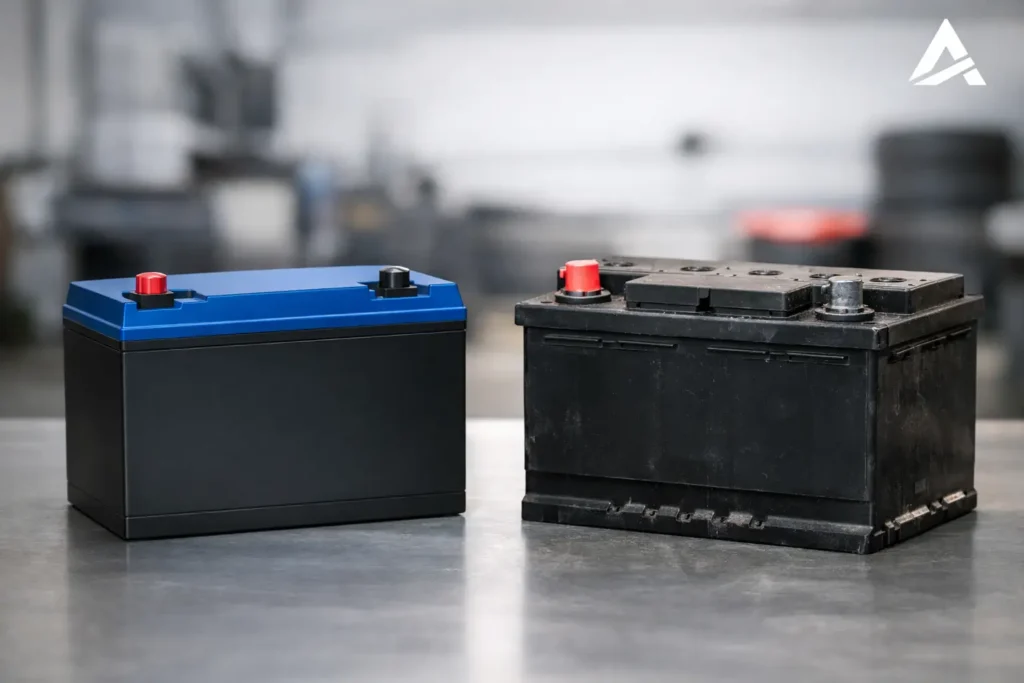
The third myth is that solar makes no sense without a battery. Batteries are certainly interesting and, for some users, can be an excellent next step, but for most residential projects the first logical move is the solar system itself. In Serbia, household consumer-producers have a net metering model, which means batteries do not have to be treated as a prerequisite for solar to make sense. A battery may become a good second phase for users who want more autonomy or have a very specific load profile, but it is not a requirement for a sensible household solar project.
4. The process is too complicated
The fourth myth is that the procedure is so complicated that it is not worth trying. It is true that there are administrative steps that must be followed, but that is not the same as saying the process is impossible. EPS explains the steps for obtaining consumer-producer status, and the market today has much more practical experience than it did a few years ago. As with any serious investment, paperwork and discipline are part of the process, but it is no longer an unknown territory reserved for a tiny group of determined pioneers.
5. Solar means zero electricity bill
The fifth myth is that solar means a zero electricity bill. This is probably the most widespread misunderstanding. Solar can greatly reduce the bill, but that does not automatically mean the bill disappears. The result depends on consumption, the timing of that consumption, system sizing, seasonality, and the billing model. Promises such as “you will never pay for electricity again” may sound attractive, but they are not a good basis for a serious decision. It is much more useful to understand what solar can realistically do: reduce the amount of electricity you buy from the grid and give you greater control over long-term costs.
6. Maintenance is too expensive
The sixth myth is that maintenance is difficult and expensive. For the average homeowner, a rooftop solar system is not something that requires constant intervention every month. Like any technical equipment, it benefits from periodic checks and responsible use, but it is not a technology that pushes a household into a permanent service regime. Much more important than maintenance anxiety are quality equipment, a good design, and a reliable installer.
7. It only makes sense if you have EV
The seventh myth is that solar only makes sense for people who already have an electric car or a luxury home. This is one of the most damaging myths because it creates the impression that solar is a status symbol rather than a practical energy solution. The reality is almost the opposite. Solar increasingly makes sense precisely for ordinary family homes that want to manage consumption more intelligently. An electric vehicle, a pool, or a highly automated home can increase interest in solar, but they are not the condition that makes a project worthwhile.
Once these myths are removed, the picture becomes much healthier. Solar is not a magic wand, but it is not an exotic complication either. It is a technology with very practical value when viewed through real household consumption, a suitable roof, and a long-term perspective. That is why the best approach is not to repeat simple slogans, but to ask better questions. How much does the house consume? When does it consume most? What is the roof like? Is there shading? How does the billing work? Are there plans for new electric loads in the years ahead?
This kind of approach matters especially in Serbia because the market is no longer in an early experimental stage. In recent years, Serbia’s Ministry of Mining and Energy has repeatedly highlighted the growth in the number of households and buildings entering energy renovation programs, and the term consumer-producer is no longer unfamiliar. That means the decision about solar is becoming less about impressions and more about verifiable information. And that is very good news for private users.
Bonus myth: Now is not the good time
There is also an eighth, often unspoken myth: that “now is not the time” and that it is always smarter to wait a bit longer. Sometimes waiting does make sense, for example if the roof or insulation has to be solved first. But very often delay has no clear reason other than general uncertainty. The problem with that approach is that the topic never moves forward. A good approach is not to sign the first offer impulsively, but to get a quality assessment. Once you know the condition of the roof, your consumption pattern, and the broad possibilities, it becomes much easier to decide whether now is the right moment or not.
In other words, the biggest enemy of a good solar decision is not limitation, but vagueness. Myths survive because they fill the space where clear information is missing. The moment the conversation returns to a specific roof, a specific household, and realistic expectations, most myths lose their power on their own. Solar without myths does not mean ignoring limitations. It means treating solar seriously: neither as a miracle nor as a problem, but as a practical tool. And when viewed that way, it becomes a very logical option for a large number of homes in Serbia.