For office buildings, hotels, shopping centers and industry
A parking lot is the first thing every guest, client or partner sees before entering the building. And in most companies, it is the zone that gets the least investment — asphalt is repaired when it cracks, lines are repainted when they fade. Vehicles stay exposed to sun, rain and snow, while the surface sits empty and brings the company nothing.
A surface that already exists, but delivers nothing
Most commercial sites have more square meters of parking than they think — regulations require a specific number of spaces per square meter of building. Those square meters are paid for through land cost, maintenance, snow clearing and cleaning, but they are not used for anything else. Customer experience suffers, and the company gets nothing in return.
At the same time, the roof of the building itself is often already used to its limit or lacks the structural capacity for a serious solar installation. The parking lot, which stretches over dozens or hundreds of square meters next to it, sits empty — a free, sunny, unused surface.
A canopy that does three things at once
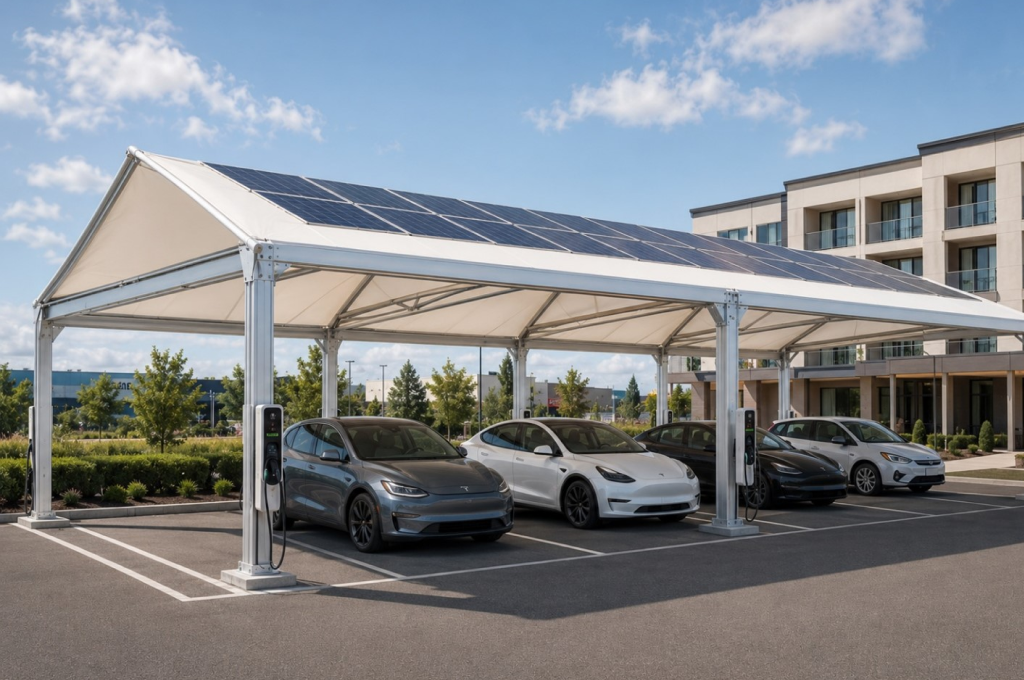
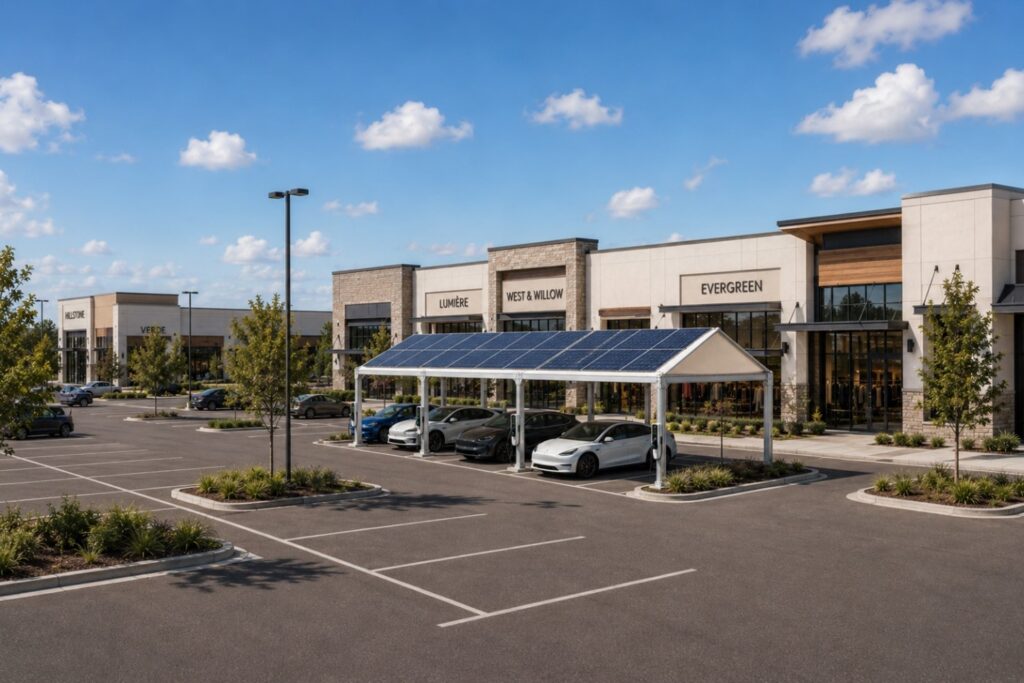
A solar canopy changes that picture. A structure of metal and panels forms a roof over the parking spaces. Vehicles are protected from sun, rain, hail and snow, which extends their life and lowers the cost of washing and maintaining a company fleet. In the summer months, the temperature difference inside the vehicle can be as much as fifteen degrees. That is the difference between a pleasant and an unpleasant return for a client to their car.
At the same time, the panels on top of the structure produce electricity. A larger site easily produces tens to hundreds of kilowatt-hours per day — directly reducing the building’s electricity bill. For hotels and shopping centers, where peak consumption falls during the day when solar delivers the most, that balance is especially favorable.
The third thing is the visual impression. A tidy, symmetrical structure with modern materials raises the look of the whole site. The parking lot stops being a surface people walk through and becomes part of the building’s identity.
Which buildings benefit most from this
The clearest value goes to locations with high daily visitor traffic. Hotels that offer guests covered parking automatically raise the standard of service while also reducing an electricity bill that rises with occupancy. Shopping centers and retail parks have large parking surfaces that currently bring nothing — covering them increases customer comfort and adds income from on-site electricity production.
Office buildings and corporate campuses use covered parking as a benefit for employees, which goes into the retention package without major additional cost. Production plants and logistics centers have vehicle fleets that overheat in summer and freeze in winter, costing time and fuel. Service centers, used-car lots and vehicle dealerships have an additional reason — vehicles exposed to the weather lose value faster, and covered space protects both the inventory and the impression made on the customer.
One decision, not three
The greatest value is not gained when the canopy is built only for protection and solar is considered later. When everything is planned together — structure sized for panels, installations run from the start, orientation and tilt aligned with electricity production — the system runs optimally from day one, and the investment has a clearer payback.
The existing parking lot doesn’t have to be demolished or relocated. The canopy is installed above it, with columns between parking spaces, so the number of available spaces is most often unchanged. Operations don’t stop, guests don’t feel any disruption, and the result is visible quickly.
| If the parking lot is already there, a solar canopy can turn it into a space that protects vehicles, produces energy and visually raises the value of the whole site. Schedule your free feasibility study: nevena.milenkovic@energize.rs |