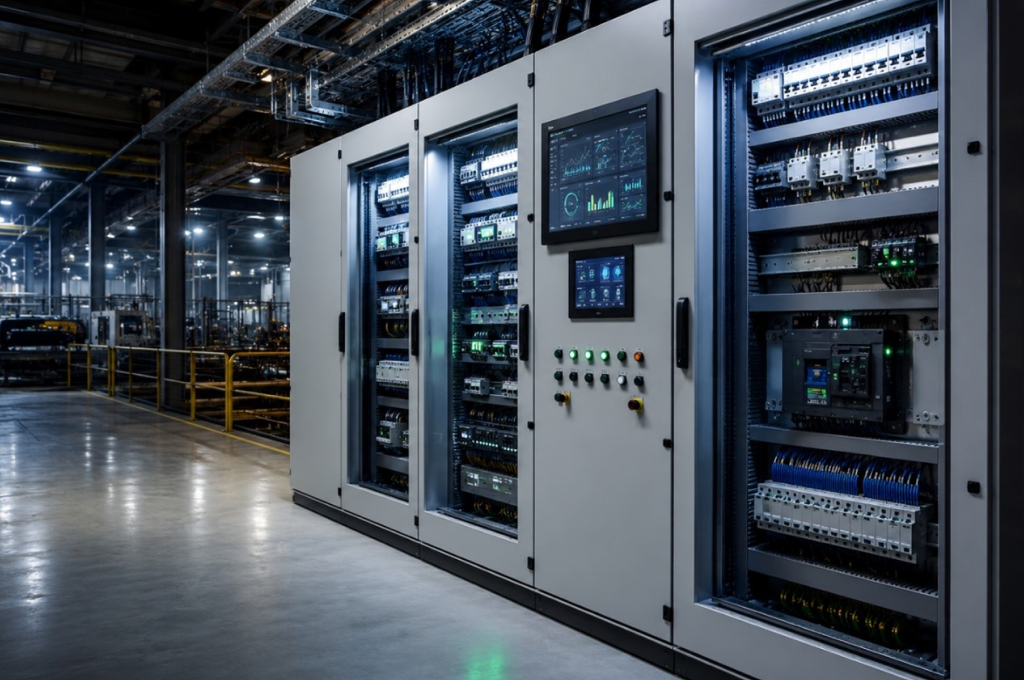
A low-voltage distribution panel has traditionally been viewed as a passive element of the electrical installation, a cabinet with fuses and breakers that quietly performs its function in a technical room or basement of the facility. With the development of digital technologies, this perception is becoming increasingly unjustified. Modern low-voltage distribution panels incorporate sensors, smart circuit breakers and communication modules that monitor the condition of all components in real time and transform what was once passive equipment into an active hub of energy system management for the entire facility. An understanding of the difference between a classic and a smart distribution panel, together with the economic implications of this transition, is becoming a critical element in the decision-making process during the design or modernisation of every industrial and commercial installation.
From a technical standpoint, a smart low-voltage distribution panel represents an assembly of components that simultaneously perform the classic function of distribution and protection, and the advanced function of measurement, monitoring and communication. Smart circuit breakers, equipped with integrated electronics, record current, voltage, power factor, the number of operations and the thermal characteristics of every individual circuit. Temperature and humidity sensors monitor the conditions inside the panel, while a communication gateway collects data from all components and transmits it to the central monitoring system or to the cloud. The difference compared with classic panels is not merely an addition of functionality but a fundamental change in the way the electrical system of the facility is observed and managed throughout the entire service life of the installation.
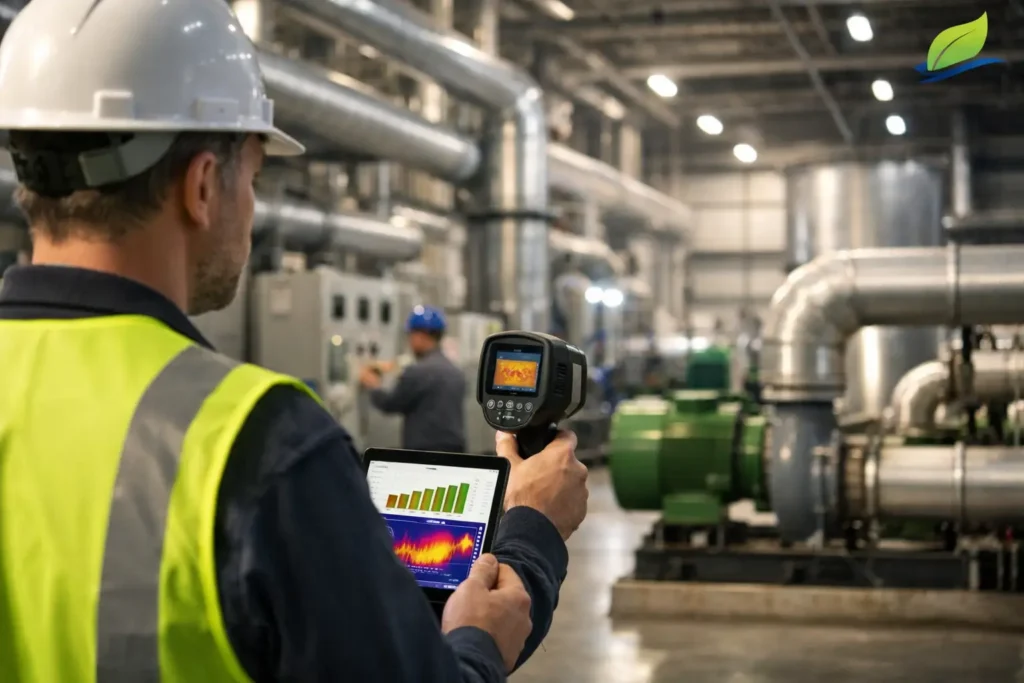
The safety aspect of smart distribution panels represents one of the most significant arguments for their application in industrial and commercial facilities. Statistics show that a significant proportion of fires in industrial facilities, according to various sources between twenty and thirty percent, originate precisely in low-voltage distribution panels due to gradual overheating that remains undetected by classic measurement systems. Loose connections, overloaded phases, gradual wear of contacts and excessive leakage currents represent processes that develop over months or years before they cause a critical fault. Smart panels equipped with thermal sensors and advanced measuring instruments detect these phenomena in real time and send alarm signals to technical personnel well before the situation reaches a critical level, thereby preventing not only costly production downtime but also serious risks to property and people.
The functionality of predictive maintenance represents a further key argument for the transition to smart distribution panels. The classic approach to maintenance is based either on predefined intervals or on reaction after a fault has already occurred, both of which generate inefficiency. Periodic maintenance often means the replacement of components that are still in good condition, while reactive maintenance means costly and unplanned downtime. Smart distribution panels, through the continuous monitoring of the number of operations, thermal characteristics and wear of contacts, enable the replacement of components exactly when needed, neither earlier nor later. This approach significantly reduces total maintenance costs, extends equipment service life and, most importantly, dramatically reduces the frequency of unplanned production downtime.
Central monitoring represents the layer that transforms smart distribution panels from individual components into an integrated energy infrastructure management system. The communication gateway collects data from all panels in real time and forwards it to an Energy Management System or to a SCADA platform, where the data is processed, displayed through clear graphical interfaces and stored in a historical database. Technical personnel and management can at any moment, from any location and from various devices, gain insight into the condition of the entire electrical system of the facility. A real-time alarm system reports all anomalies, whether overheating, irregularities in consumption or communication faults between components, which enables rapid response and prevents the escalation of problems.
From the standpoint of energy efficiency, smart distribution panels reveal a potential for savings that remains invisible in classic systems. Detailed measurement data enable the identification of machinery operating idle, sectors with unjustifiably high consumption during night hours, anomalies in load distribution throughout the day, as well as gradual increases in consumption that indicate problems with equipment operation. In the majority of industrial facilities, the analysis of data from smart panels reveals a potential for the reduction of total consumption between five and fifteen percent through straightforward organisational and operational interventions, without investment in new equipment. These savings, which accumulate over years of operation, often outweigh the initial price difference between smart and classic panels within two to four years.
The regulatory framework is increasingly establishing smart distribution panels as a standard, particularly for new commercial and public facilities. Energy efficiency certificates for buildings, including LEED, BREEAM and their local equivalents, require detailed consumption monitoring by sector, which is practically impossible without smart metering systems integrated into distribution panels. European regulation on the energy performance of buildings is gradually expanding the mandatory requirements for monitoring and consumption control, which means that smart panels in the coming years will become a legal obligation rather than merely best practice. Corporate ESG reporting, which increasingly demands audited data on energy consumption, also cannot effectively function without this layer of digital infrastructure at the level of the electrical system.
From an economic standpoint, the difference between a classic and a smart distribution panel extends well beyond the initial purchase price. The smart variant is typically fifteen to twenty-five percent more expensive at purchase, but this difference is rapidly amortised through several parallel mechanisms. The reduction of maintenance costs through the predictive approach, the energy savings obtained through data analysis, the reduction of unplanned downtime, the lower risks of fire and faults, as well as the increasing demands for ESG reporting, together form a package of benefits that in an industrial context results in a payback period of between three and five years. In commercial facilities with requirements for energy efficiency certificates, smart panels are often not a matter of choice but a prerequisite for the realisation of the project according to investor or regulatory requirements.
Low-voltage distribution panels are ceasing to be a passive component of the electrical system and are becoming an integral element of the digital infrastructure of modern industrial and commercial facilities. The transition to smart systems is no longer an option oriented towards technology enthusiasts, but a strategic step that directly affects the profitability, safety and competitiveness of every company that takes the modernisation of its energy infrastructure seriously. Collaboration with an expert team that understands both classic electrical engineering principles and new digital technologies is essential for the design of a system that fully exploits the potential of smart distribution panels, from the proper selection of equipment to integration into a central management platform. Investment in smart low-voltage distribution returns through twenty or more years of operation without unforeseen costs, with complete insight into the condition of the system, thereby establishing the foundation for all future phases of the digital transformation of the company’s entire energy infrastructure.