When a production line stops for 12 minutes, the cost is not limited to lost kilowatt-hours. The loss extends to undelivered goods, service interventions, additional pressure on personnel, and very often damage to customer relationships and reputation. That is why a TCO analysis of industrial power supply systems is not a financial formality but a tool for making serious investment decisions.
In practice, the biggest mistake occurs when a power system is selected based solely on its initial purchase price. This is understandable—CAPEX is visible, easy to compare, and quickly appears in quotations. However, industrial power systems should not be evaluated only by acquisition cost but by their total cost of ownership throughout the system’s lifecycle. Only then does it become clear that cheaper equipment often turns out to be more expensive, while higher-priced equipment frequently proves to be the more rational choice.
What Does TCO of Industrial Power Supply Systems Actually Include?
TCO, or Total Cost of Ownership, includes all costs generated by a system from design and implementation to replacement or modernization. In industrial environments, this includes the initial investment, installation costs, commissioning, energy efficiency, maintenance, spare parts, service interventions, battery or consumable component replacement, as well as the cost of downtime.
For UPS systems, rectifiers, battery installations, generators, and hybrid energy solutions, TCO must also include the quality of the initial engineering and design process. An incorrectly sized system may technically function, but it can create hidden losses for years through elevated operating temperatures, reduced component lifespan, and unnecessary stress on the electrical network. This is not a theoretical problem. It is a very common scenario in facilities that have expanded in phases without a unified energy strategy.
Why the Initial Purchase Price Is Almost Never Enough
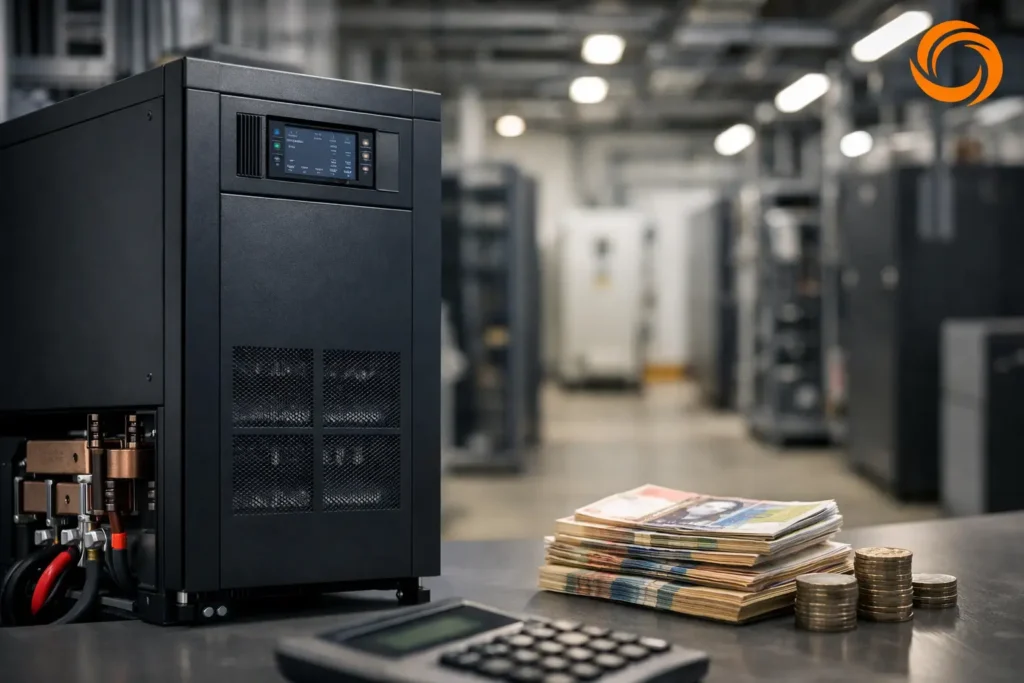
If two systems differ in acquisition cost by 12 to 18 percent, management often assumes that the more expensive solution is difficult to justify. However, that difference quickly becomes insignificant if the more efficient system consumes less energy, requires fewer service interventions, and handles real operating conditions without unexpected failures.
For example, the difference between a high-efficiency UPS and a model operating at a few percentage points lower efficiency may seem negligible on paper. In continuous operation—especially at higher capacities and in 24/7 environments—that difference becomes a significant operating expense. When additional cooling requirements caused by higher losses are included, the financial outcome becomes even less favorable for the cheaper option.
An even greater concern is the cost of downtime. In the food industry, downtime can result in spoiled raw materials or a disrupted cold chain. In logistics, it can halt sorting operations and delay deliveries. In data centers and telecommunications environments, the cost of interruptions increases exponentially because it affects service availability, SLA obligations, and customer experience. For this reason, a TCO analysis must evaluate failure probability, recovery time, and the consequences of outages.
Key Factors That Change the Financial Equation
Energy Efficiency of the System
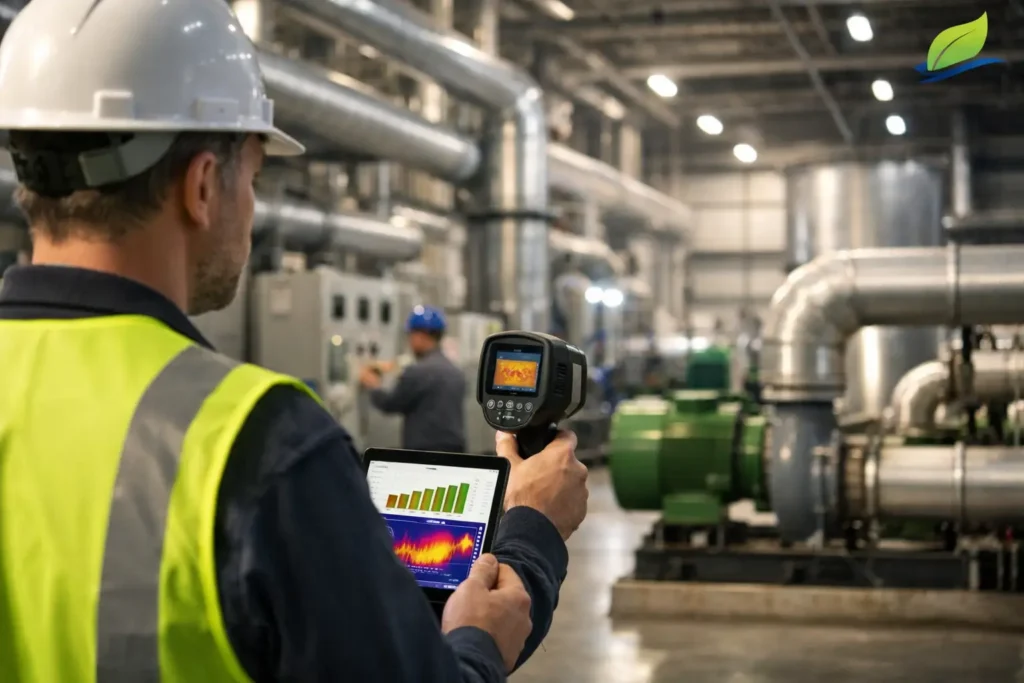
Efficiency is not a marketing detail. In systems that operate continuously, every percentage point of energy loss has a cost. This is particularly evident in larger UPS installations, rectifier systems, and equipment operating in controlled environments. Lower efficiency means greater heat dissipation, higher cooling requirements, and increased monthly operating costs.
If the system is installed in a facility with an already heavily loaded HVAC infrastructure, energy losses from the power system indirectly increase air-conditioning expenses as well. This is a typical example of how TCO is underestimated when only individual devices are analyzed instead of the entire energy ecosystem.
Battery Life and Consumable Components
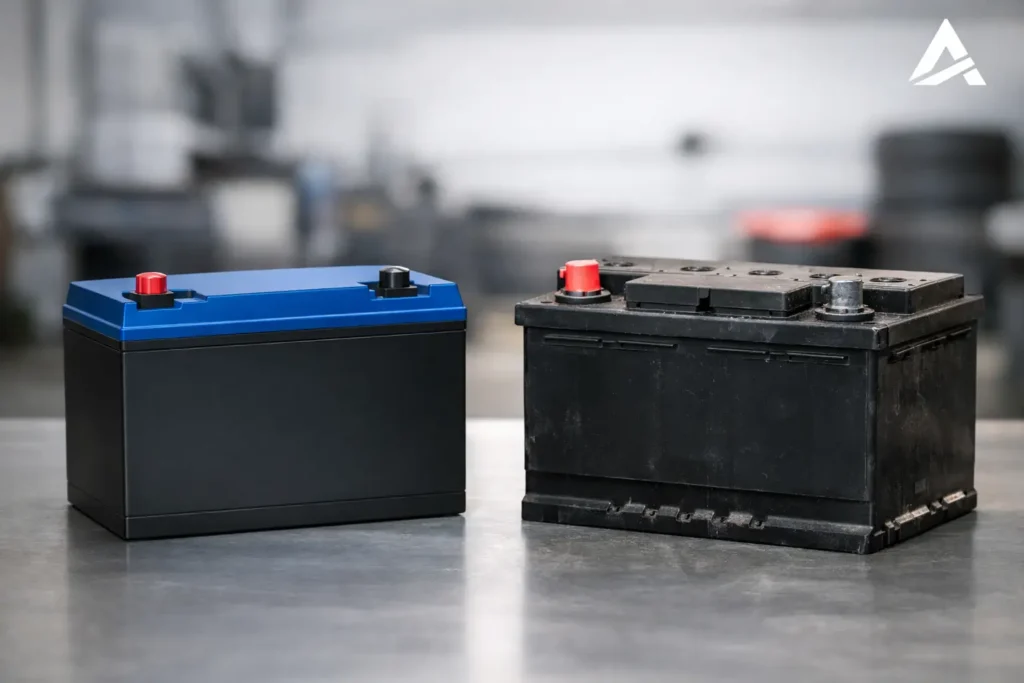
In battery systems, the most significant difference is not simply the price of the battery bank but its actual service life under specific operating conditions. Ambient temperature, cycle count, depth of discharge, charging quality, and maintenance practices directly affect replacement intervals. If batteries need to be replaced earlier than planned, TCO increases immediately, leaving little room for correction.
The same applies to fans, capacitors, filters, and other components that may not appear impressive in sales presentations but are critical in real-world operation. A serious analysis evaluates not only manufacturer specifications but also actual site conditions.
Maintenance, Service, and Spare Parts Availability
An industrial power system is not considered good because it rarely requires maintenance. It is considered good when it is designed to minimize risk and when service can be delivered quickly, predictably, and efficiently whenever needed. The difference between planned and reactive maintenance directly impacts total ownership costs.
If spare parts are not locally available, if service response times are long, or if the system depends on specialized components that are difficult to procure, operational risk increases. This is particularly important for companies operating in shifts, under tight deadlines, or with processes that cannot be easily stopped.
System Sizing and Future Scalability
An oversized system ties up unnecessary capital and often operates outside its optimal efficiency range. An undersized system increases the risk of failures, accelerates wear, and complicates future expansion. The goal is not to install the largest system possible but to size it correctly for current loads and realistic growth plans.
This is especially important in manufacturing facilities that are expanding capacity, introducing automation, adding compressor stations, refrigeration systems, or EV charging infrastructure. If the power system is not designed with scalability in mind from the outset, every future expansion becomes more expensive.
TCO Analysis of Industrial Power Systems in Real Projects
A proper analysis begins with understanding the consumption profile and the criticality of different loads. Not all consumers are equally important, nor do they require the same level of protection. In many facilities, the greatest savings do not come from purchasing cheaper equipment but from properly separating critical and non-critical loads, selecting the appropriate autonomy level, and combining multiple energy sources.
For example, a facility may need to protect PLC controls, server rooms, measurement equipment, and communication infrastructure with a high level of availability, while auxiliary loads can be treated differently. If all loads are placed under the same protection regime without analysis, investment costs often increase unnecessarily.
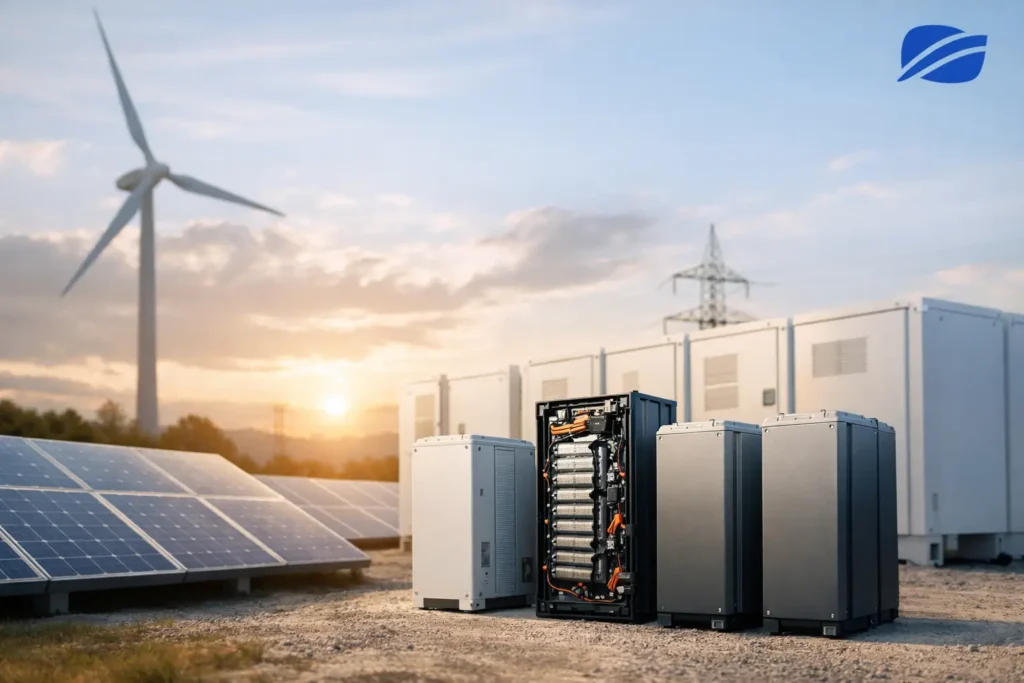
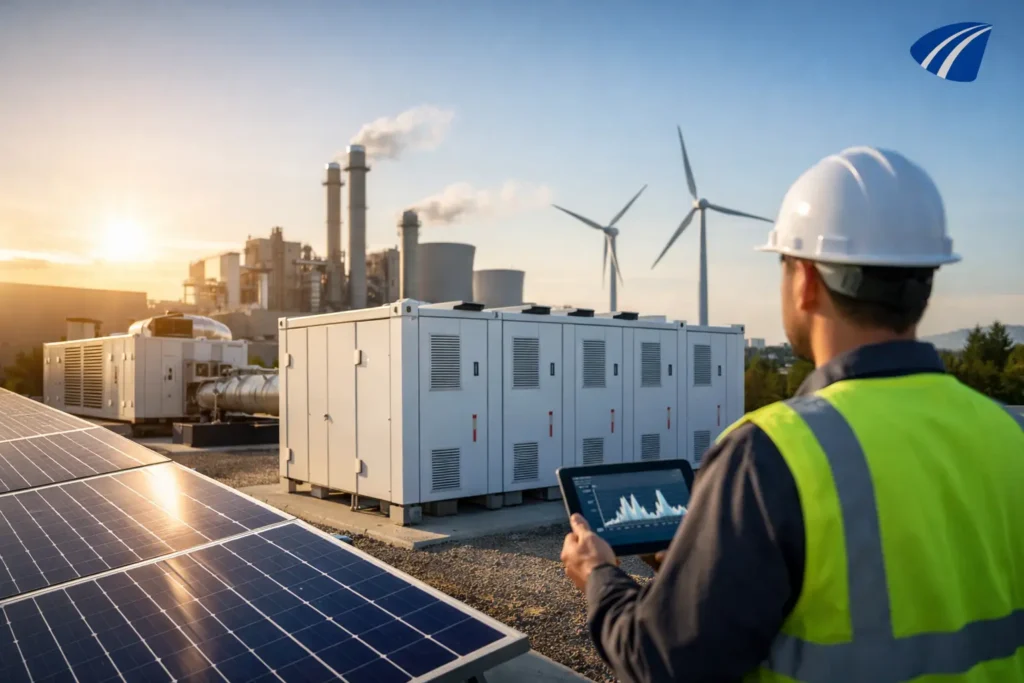
In more complex systems, TCO changes further when solar power plants, battery energy storage systems, generators, and energy management solutions are integrated. At that point, power supply is no longer an isolated category but part of a comprehensive energy model. Companies that plan several years ahead gain the greatest advantage because they combine power reliability with energy cost control.
Where Companies Most Often Make Mistakes
The first mistake is comparing proposals that are not truly comparable. If one proposal includes higher-quality batteries, commissioning, monitoring, and a defined service response agreement while another includes only equipment, the price difference alone is not a valid comparison.
The second mistake is ignoring operational conditions. Room temperature, grid quality, dust, vibration, peak loads, and operating regimes must all be part of the equation.
The third mistake is underestimating the cost of downtime. In practice, management often considers only direct production losses while overlooking restart costs, damaged semi-finished products, and disruptions to production schedules.
The fourth mistake is the absence of a growth strategy. A system that appears sufficient today may become a bottleneck within just a few years.
What a Rational Investment Decision Looks Like
A rational decision does not automatically mean purchasing the most expensive system. It means selecting the solution that offers the best balance of reliability, efficiency, serviceability, and lifecycle performance for the specific operating environment.
In some cases, that may be a modular UPS with a higher initial investment. In others, it may be a hybrid solution combining batteries and generators. Sometimes, upgrading existing infrastructure is a better option than complete replacement.
A serious partner therefore does not begin with a product catalog but with the load profile, operational processes, and risk assessment. That is where the value of an engineering-driven approach lies. When an investment is evaluated through the lens of TCO, it becomes clear where additional investment is justified and where overspending is unnecessary.
This is the approach Energize applies when designing complex energy systems—to ensure that every decision is both technically sound and financially sustainable.
Questions Worth Asking Before Procurement
Before approving an investment, management should know the actual cost of one hour of downtime, the annual energy losses of the system, the expected replacement schedule of critical components, and how quickly service support can respond.
It is equally important to understand how the system will support planned capacity growth in the coming years.
If a supplier cannot explain these factors through numbers and realistic scenarios, they are not providing an analysis—they are simply offering equipment. And in industrial power supply systems, the difference between those two approaches is worth far more than the initial purchase price shown in a quotation.
The best investment is not the one that appears cheapest at the time of procurement, but the one that keeps production stable, operating costs predictable, and risks under control for years to come.