How a sports hall turns its roof into a source of power, not just a cost
In energy terms, a sports hall is one of the most demanding buildings a municipality or club owns. A large space has to be lit, heated in winter and cooled in summer, and it is used for long hours, often late into the evening, with spikes during matches and events. For a public budget, the electricity bill is one of the heaviest recurring costs, and it only grows with the price of energy.
Yet the same building hides a resource that almost nowhere gets used: a large, unobstructed roof. On a modular hall, that roof is engineered and can carry solar panels from the very start, which makes it an almost ideal surface for generating your own power.
Why a sports hall consumes so much
Consumption is driven not only by size but by how the building is used. Powerful court lighting, ventilation of a large volume, heating in winter and cooling in summer run for hours, and the peak is usually in the evening, when the hall is used most. During tournaments and events, consumption climbs further. For an owner that is a municipality, school or club, this is a fixed cost that recurs month after month and rises along with tariffs.
The roof that does nothing
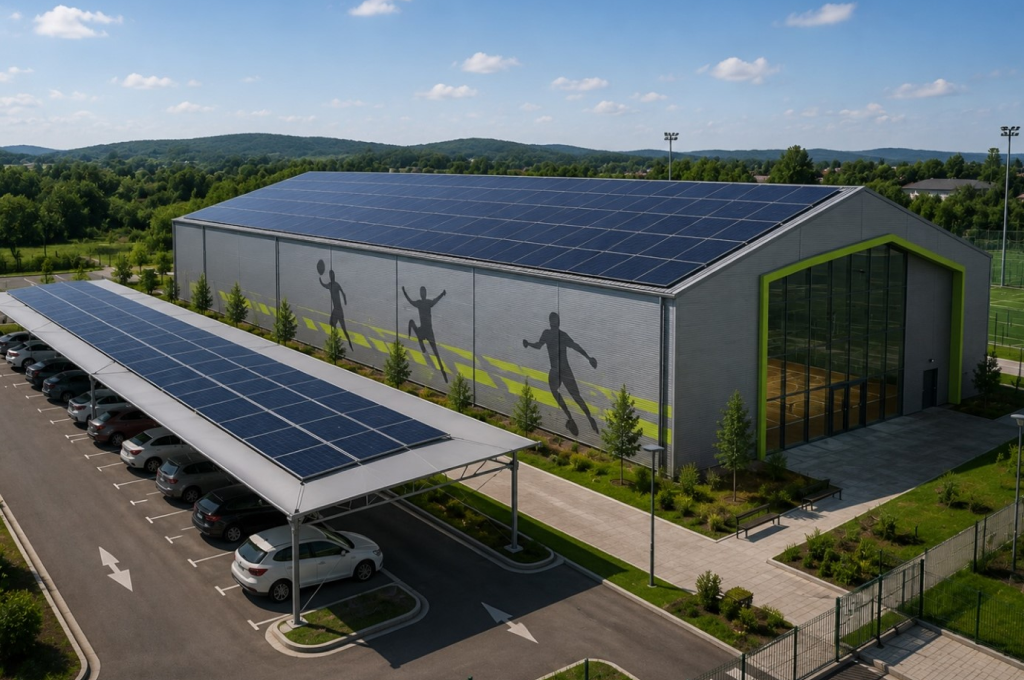
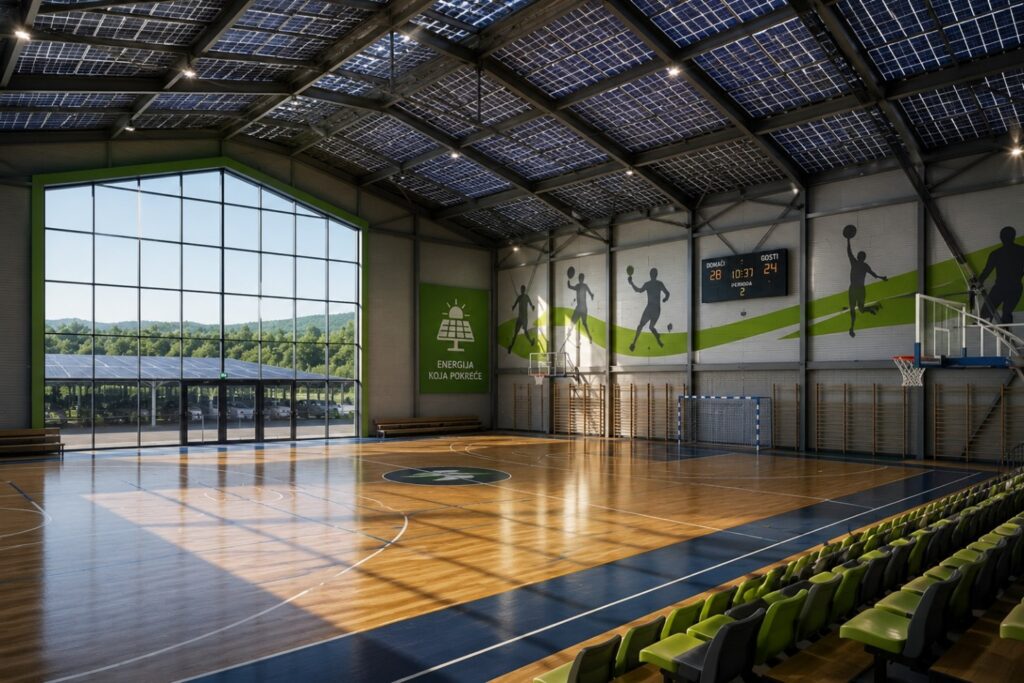
A sports hall’s large, uninterrupted roof is exactly what a solar system needs. Panels placed on it generate power right where it is consumed and exactly when the hall runs during the day, for training, school slots, ventilation and base load. Every kilowatt-hour produced on the roof is a kilowatt-hour not paid to the grid, so the bill falls with no change in how the hall operates.
The evening peak and the battery
Sports halls are busiest in the evening, when the sun is gone. That is where the battery comes in: the surplus produced during the day is stored and used in the evening, when consumption, and the price of electricity, is highest. This “shaves” the most expensive peak, and as a bonus the system provides backup power: an outage need not cut short a match or an event.
A parking lot that also works
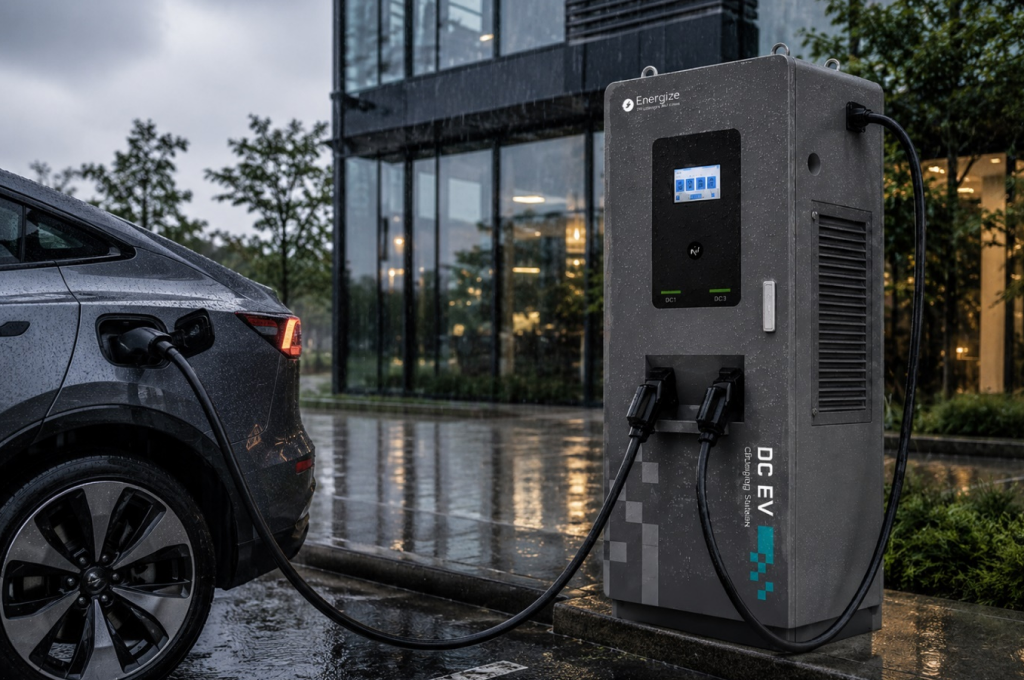
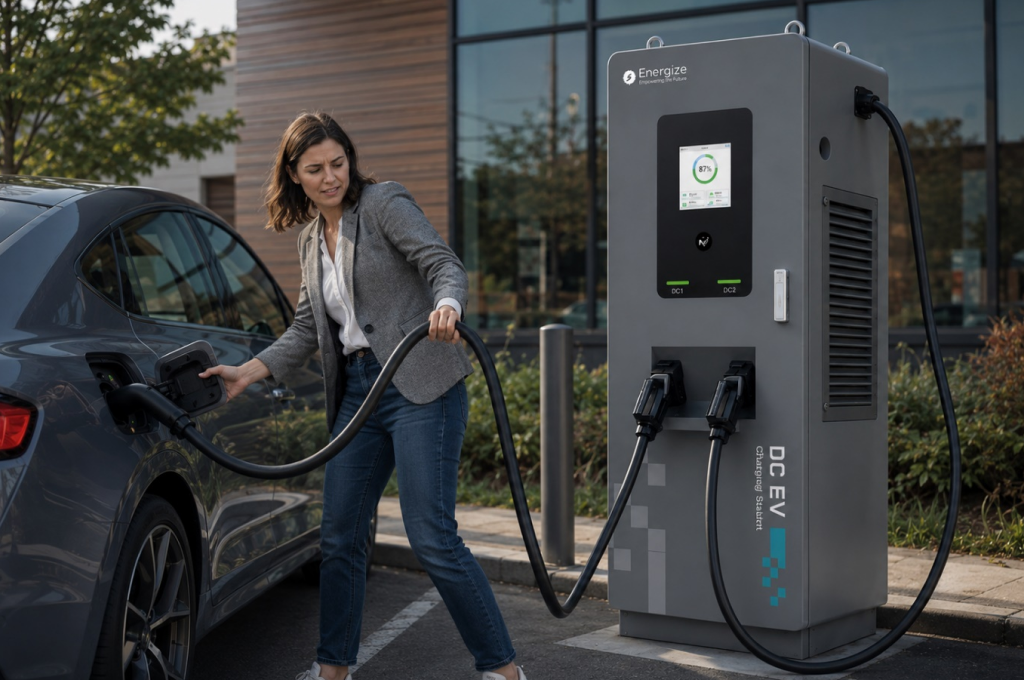
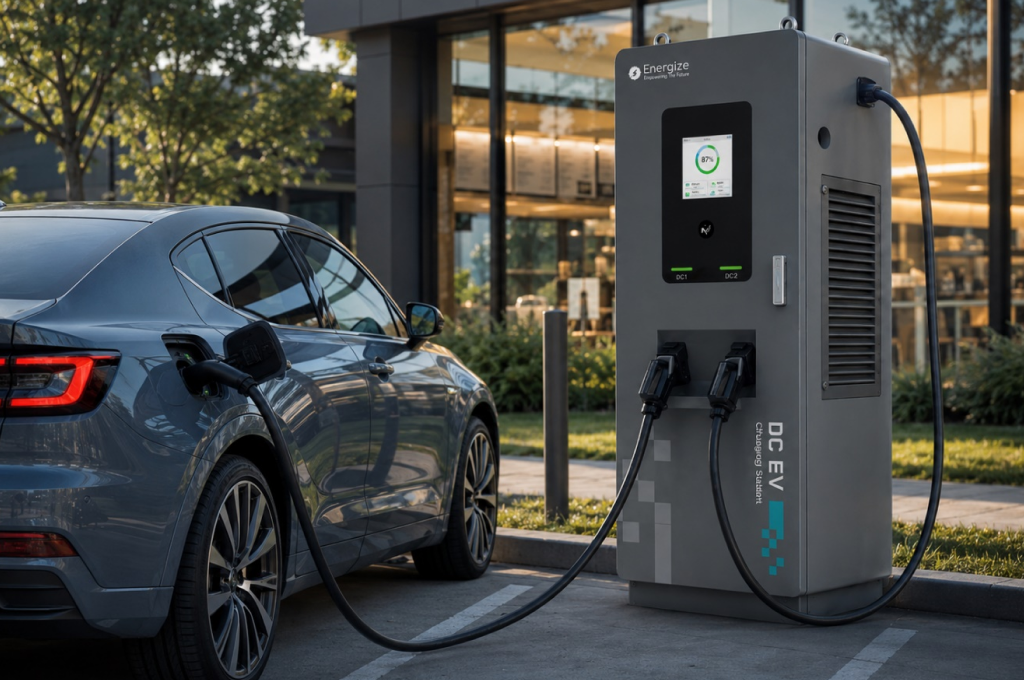
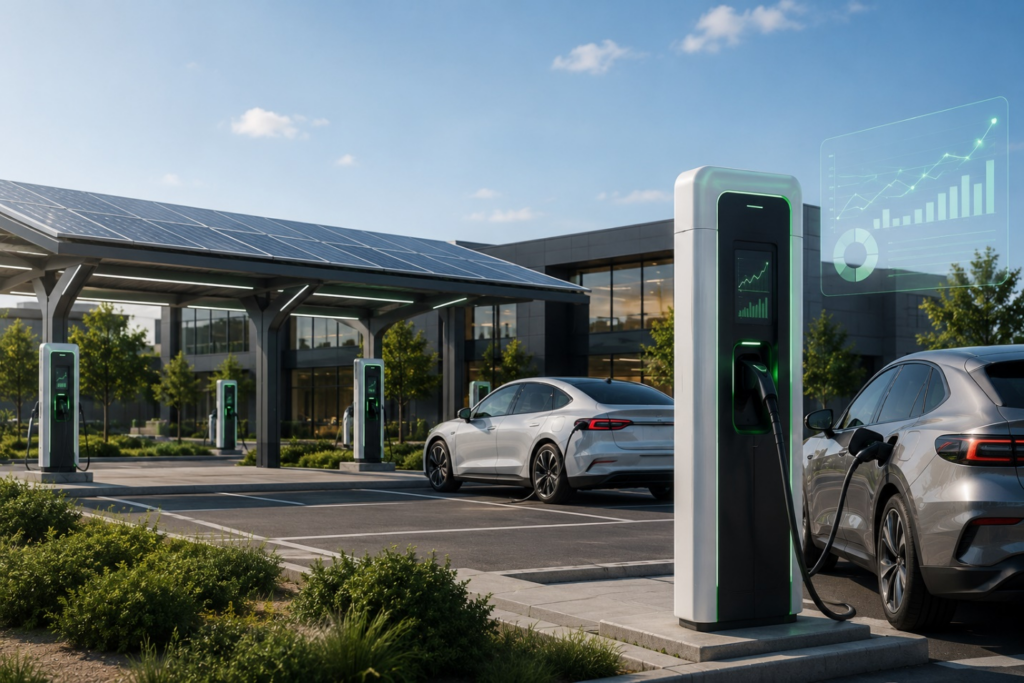
There is almost always a parking lot around the hall. Solar canopies over it generate additional power, shelter the vehicles and carry chargers for electric cars, a service for visitors and one more source of value for the facility. Same logic, same location, simply used to the full.
Why a modular hall specifically
With a modular hall, the energy system is planned together with the structure, the roof is ready to take the panels from the start, and the system is sized to the hall’s actual consumption. The building goes up fast, waits for no grid reinforcement or complicated extension, and the solution can grow if the hall expands. The structure is the modular hall; the solar system mounted on it is an Energize solution.
The math for a public budget
The investment shouldn’t be compared with “doing nothing”, but with the real cost already being paid, a bill that recurs year after year. On-site generation and storage deliver savings every month, the cost becomes predictable, and the system pays back across its working life, measured in decades. For public institutions there is an added argument: a clear, visible green credential in front of citizens and funding bodies. The question is usually not whether it pays off, but how much another season at the full bill costs.
| If you run or are building a sports hall, the roof is probably the biggest unused resource you already have, it’s worth seeing how much power it can produce and how much that takes off the annual bill. A solar system is mounted on the modular hall structure: it generates during the day, stores energy in the battery for the evening peak, and powers vehicle charging in the parking lot. Schedule your free feasibility study: nevena.milenkovic@energize.rs |