Business opportunities rarely arrive with a pre-agreed timeline. A major contract is signed in three weeks, a customer asks for delivery in five months, a new production segment is approved and now has to start. In all these situations the same problem comes up: the space is needed now, but classic construction is measured in quarters or years. By the time the space is finally ready, the business that justified the plan is often no longer the same.
That is only the first part of the problem. The second, which only shows after the first year of use, is the cost structure that becomes hard to change once you move in. The bill for electricity, heating and cooling rises every year, and the company is already locked into the building, the location and the equipment it chose in a moment when everything had to be done “yesterday”.
Speed that can actually be planned
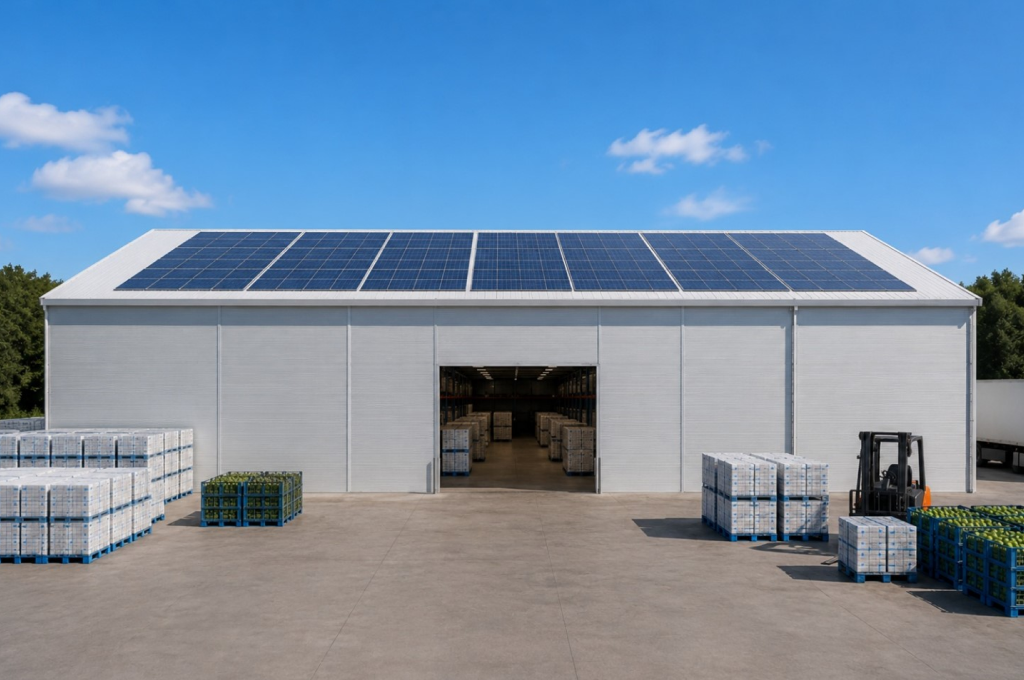
Modular construction changes that dynamic. The hall is designed and produced in controlled conditions while foundations and infrastructure are being prepared on site at the same time. Assembly of the finished modules takes weeks, not months. That means a company can respond to a contract, a season or a new opportunity within a realistic timeframe, without delays that often cost more than the construction itself.
The difference is structural. Traditional construction is sequential — every phase waits for the previous one. In modular construction, site preparation and production run in parallel. Those are weeks that bring the whole investment process back to reality.
Costs you control upfront
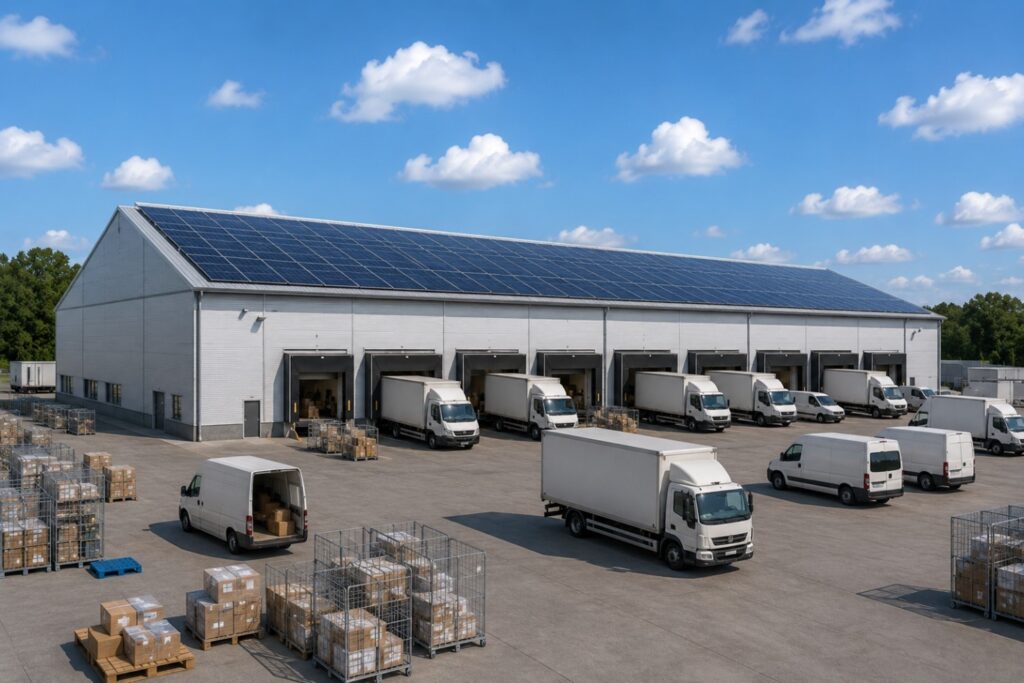
Speed solves one part of the problem. The second part — predictability of operating costs — is solved by integrating a solar system into the hall project itself. Electricity is today the largest variable cost for most facilities, and in Serbia it rises noticeably every year. Supply contracts tie the company to a price that is regularly adjusted upward.
A solar system installed together with the hall changes that balance. Producing your own electricity means that a significant part of daily consumption no longer depends on the market price. What you invest today in panels and the system locks in your electricity cost for the next twenty-five years. The cost stops being uncertain.
Which companies benefit most from this approach
The biggest difference is felt by a company that, on short notice, has to open a new production or logistics space because it has signed a contract whose start date cannot move. The same applies to distributors who are growing faster than they planned and whose current space is no longer enough. Seasonal industries — from fruit and vegetable processing to logistics at peak periods — often need space that is full during one part of the year and half-empty during another, and for them a fixed energy cost is the difference between a profitable and a marginal year.
Another increasingly common case: companies whose lease is ending and whose renewal terms have become unfavorable — instead of accepting a price hike, they move into their own facility with controlled costs. Add to that producers opening a second plant, agribusiness with new capacities, and tech companies whose storage needs grow with each new product.
One project instead of two
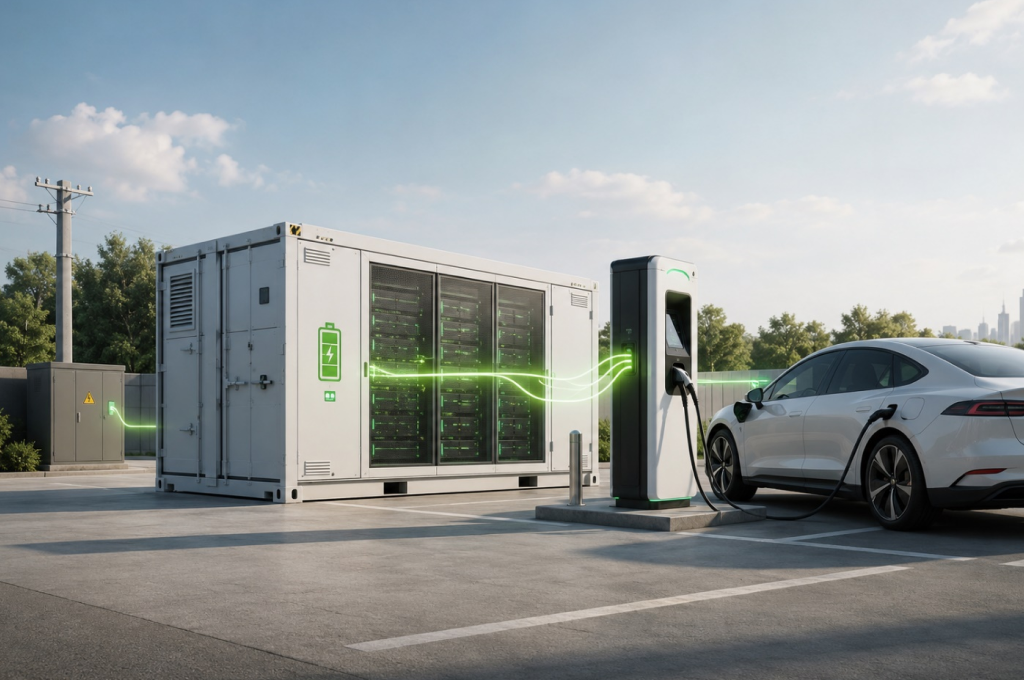
When a modular hall and a solar system are planned together, the project becomes faster and cheaper. The structure is designed with full awareness of what will be placed on it. Electrical installations, connections, battery storage and the option for expansion are all foreseen from the start. Adding things later always means compromises — weaker orientation, fewer panels, additional work. When everything is one project, the system works optimally from day one.
Speed and predictability are not opposites. They can go together, if the decision is made before everything has to happen “yesterday”.
| If your company is planning a new facility and doesn’t want operating costs over the next decade to depend on factors outside your control, this solution is worth looking at from both sides: delivery speed and long-term cost. A modular hall with an integrated solar system answers both questions as one. Schedule your free feasibility study: nevena.milenkovic@energize.rs |