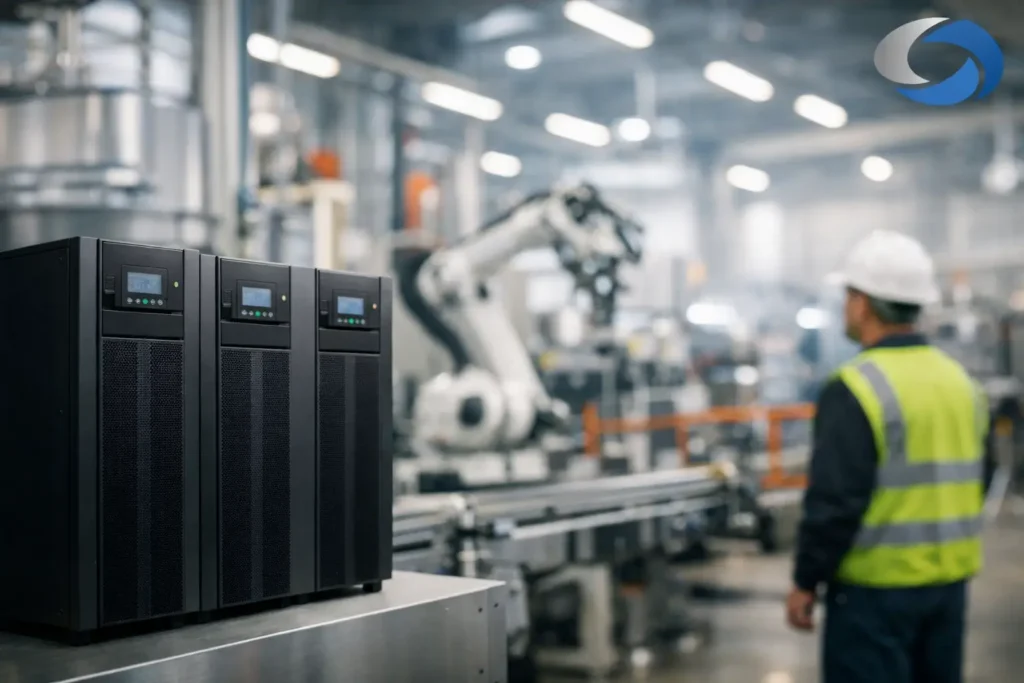
Industrial UPS systems without costly downtime
A voltage drop lasts only a few seconds. The consequences in industry often last for hours – line stoppage, data loss, automation restart, production waste and costs that are measured far beyond the price of the equipment itself. That is why UPS systems for industry are not viewed as an addition to electrical installations, but as part of critical infrastructure that directly affects business continuity.
In practice, the biggest mistake is not that a company does not have a UPS. A bigger problem is when it has a poorly dimensioned system, without a clear logic of load prioritization, without autonomy assessment and without integration with the rest of the facility’s energy system. Industrial power supply requires an engineering approach, because not every load has the same sensitivity, nor does every interruption create the same business risk.
Where industrial UPS systems make the biggest difference
Industrial UPS systems make sense where even a short voltage disturbance triggers a chain reaction. These include production lines with PLC control, SCADA systems, server rooms, telecom nodes, laboratories, cooling systems, pharmaceutical and food production, as well as logistics centers where a stoppage causes interruption of multiple processes at once.
In the food industry, for example, the problem is not only equipment shutdown. If cooling or an automated packaging line stops due to unstable power supply, the loss transfers to product quality, delivery deadlines and customer relationships. In a data center, the logic is different – the priority is service continuity, data integrity and controlled transition to a backup source. In production with large motor-driven systems, the focus is on selectivity, peak loads and stability of control systems.
That is why a good solution is not selected from a catalog, but from process analysis. The question is not only how much power the UPS has, but what exactly must remain powered, for how long and under what conditions.
Not every UPS is the same
On the market, the topic of UPS topology is often overly simplified. For office and smaller commercial applications, there are basic solutions that can be quite sufficient. In industry, however, online double-conversion topology is predominantly selected, because it provides the highest level of protection against voltage drops, surges, noise, frequency variations and other grid disturbances.
This is especially important in facilities with sensitive electronics, automation and processes that do not tolerate even short deviations in power quality. Line-interactive devices may be acceptable in peripheral applications, but for critical industrial loads they are generally not a level of solution that matches the real risk.
The next important difference is single-phase versus three-phase systems. Many industrial applications require a three-phase UPS, but this is not a rule without exception. In some cases, it is more rational to protect only control systems, IT layers and communication equipment through separate branches, instead of placing the entire facility on one central system. This depends on the facility architecture, load distribution and business continuity plan.
How to properly size a UPS for an industrial facility
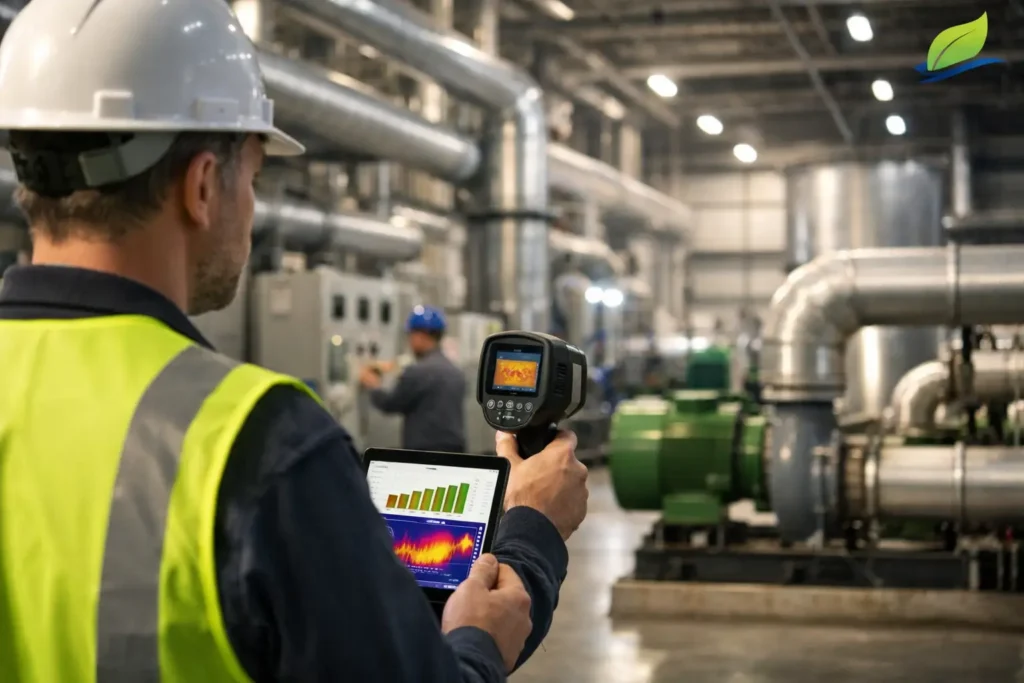
Sizing begins long before selecting a model. First, critical loads are mapped, including their active and apparent power, inrush currents, power factors and real operating mode. After that, the required autonomy is defined. For some, 5 to 10 minutes is enough to bridge short interruptions and enable generator startup. For others, 30 minutes or more is required to complete a technological cycle without waste or to ensure controlled system shutdown.
There is no universal formula here. Longer autonomy means more battery capacity, higher investment cost, more space and different maintenance requirements. On the other hand, too short autonomy often cancels the purpose of the entire investment. The right answer depends on whether the UPS serves as a bridge to a diesel generator, as a standalone backup source for short interruptions or as part of a broader micro-energy architecture.
Special attention is required for non-linear loads, harmonics and sudden load changes. If this is ignored, a system may appear sufficiently powerful on paper, but in real conditions operate at its limits or outside design parameters. That is why serious design includes measurement, simulation and a capacity reserve that is not excessive, but responsible.
Batteries are not a secondary element
When discussing UPS systems, focus often remains on the device itself, while the battery system is treated almost as an afterthought. This is incorrect. Battery type, operating режим, ambient temperature, number of cycles and replacement planning significantly affect total cost of ownership.
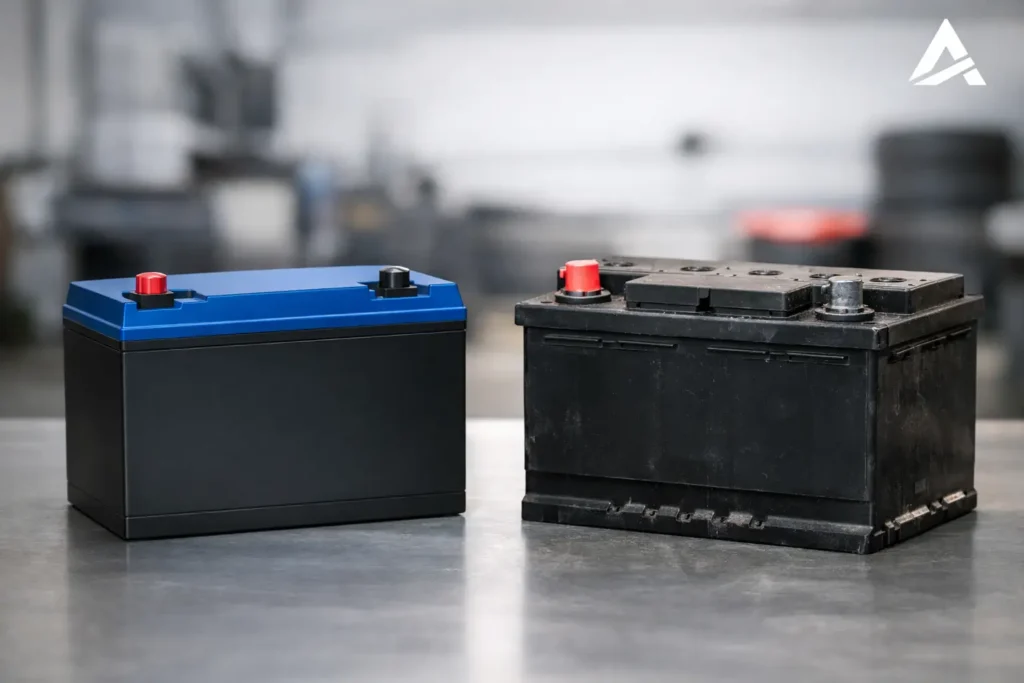
VRLA batteries are still a common choice due to familiar technology and lower initial cost. Lithium batteries are becoming increasingly attractive where smaller footprint, longer lifespan, higher cycle count and lower long-term costs are important. There is no automatically better option. If the initial budget is limited and the operating режим is standard, a conventional solution may be justified. If space is expensive, maintenance must be minimal and reliability maximized, lithium often provides a better overall result.
Redundancy, bypass and serviceability
Industrial users often ask about power and autonomy but overlook system availability during maintenance and failure. This is where redundancy comes in. N+1 architecture makes sense when the cost of downtime is such that a single failure is not an acceptable scenario. In other cases, that level of protection may be unnecessarily expensive.
Bypass, both internal and external, is also a key element. It allows the load to be transferred to the grid or an alternative power path during maintenance or certain system states. Without it, every intervention becomes an operational risk. A good project does not end with UPS delivery but anticipates how the system will operate over the next 5, 10 or 15 years.
Serviceability is especially important in facilities operating 24/7. If equipment cannot be quickly diagnosed, if spare parts are not available and if there is no preventive maintenance plan, even the best specification does not guarantee results. That is why the partner must understand both power engineering and the client’s business continuity.
UPS as part of a broader energy strategy
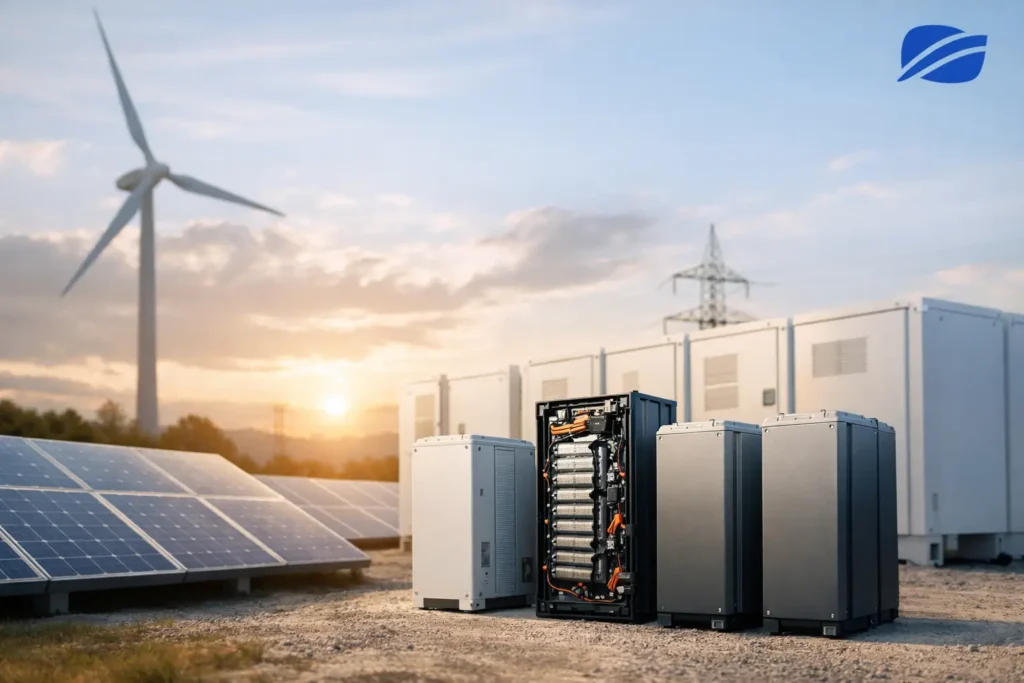
The greatest value today is not in an isolated device, but in integration. UPS systems for industry are increasingly designed together with generators, BESS systems, solar power plants, energy monitoring and HVAC infrastructure. This approach changes the logic of the investment.
When UPS is viewed separately, the goal is protection from outages. When integrated into a broader architecture, more is achieved – more stable operation, better load control, more efficient peak management and clearer total cost of ownership. In certain facilities, BESS can take over part of the autonomy or consumption optimization function, while UPS remains responsible for power quality and instant bridging without interruption. These are not competing solutions, but different layers of the same energy logic.
For companies planning production growth, capacity expansion or greater energy independence, this integration makes the biggest difference. A solution that seems sufficient today can become a bottleneck in two years if it is not designed modularly and with a clear scaling plan.
What a good investment approach looks like
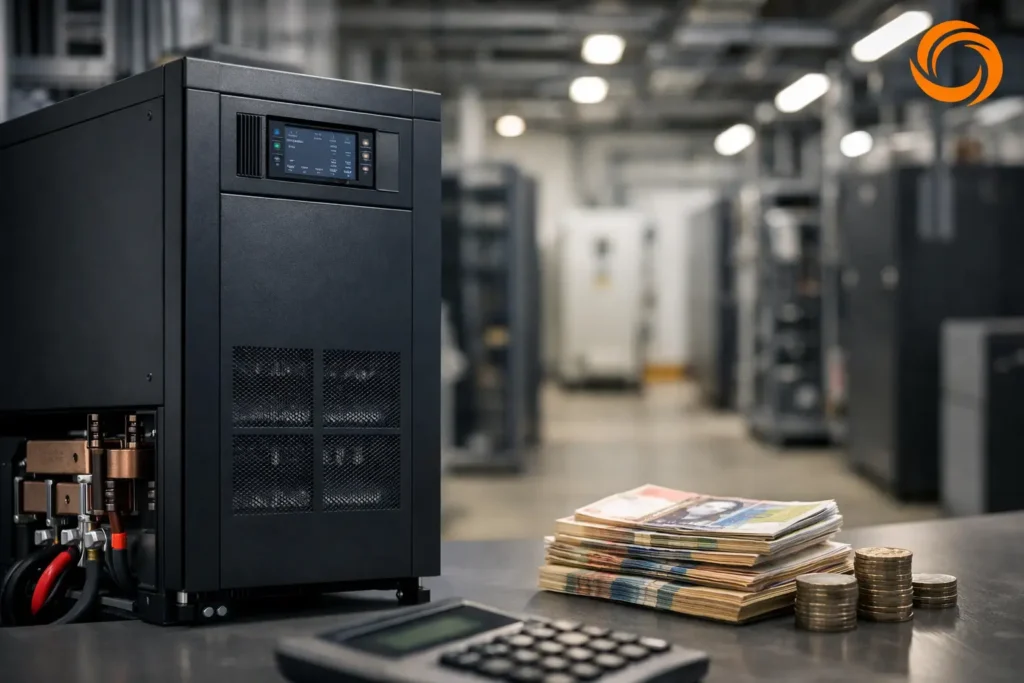
A serious UPS decision is not made based on the lowest price. A much more important question is what cost you are preventing. If one hour of production downtime costs thousands of euros, then the difference between an average and a well-designed system quickly stops being a major topic.
That is why the full picture must be considered – equipment cost, batteries, installation, commissioning, service, energy losses, replacement cycles and expected system lifetime. The TCO approach is the only way to make the investment rational, not just formally inexpensive.
This is where the difference between an equipment supplier and an engineering partner becomes clear. Companies looking for long-term reliable solutions usually do not want to coordinate multiple contractors, align electrical design, battery systems, automation, generators and later service. They want one responsible partner who takes the project from risk assessment to implementation.
When is the right time to invest
The most expensive moment to think about a UPS is after an incident. At that point, decisions are made under pressure, often without time for proper analysis. It is far more rational to plan the system during facility expansion, automation upgrades, construction of a new hall, IT infrastructure migration or integration of solar and storage solutions.
If you already have problems with voltage drops, micro-interruptions, frequent equipment alarms or unexplained automation stoppages, that is a clear signal that the power supply needs to be analyzed more seriously. Sometimes the cause is not only the distribution grid, but also internal loads, poor distribution, grounding quality or lack of coordination between existing systems.
Final thought
The real value of a UPS is not that it sits in an electrical room. The value is that production does not stop, data remains protected, processes stay under control and management does not have to explain to customers why a few seconds of unstable power created hours of problems.
If you are planning the next step in developing your facility’s energy infrastructure, the first question should not be which UPS to buy, but how to design a system that matches the real risk of your business.