The electricity bill in a commercial building rarely increases due to one major problem. Much more often, it grows due to ten smaller ones – misaligned HVAC systems, lighting operating when not needed, peak loads, poor automation, outdated equipment and consumption that is not properly measured. That is why energy efficiency in commercial buildings is not a matter of a single intervention, but a system of engineering-driven decisions that directly affects operating costs, occupant comfort and the reliability of building operations.
For owners and facility managers in Serbia, this is no longer a topic for “later.” Energy prices, tenant requirements, ESG pressures, the need for business continuity and the growing importance of predictable costs are changing the way commercial real estate is viewed. A building that consumes less, operates more reliably and manages energy more precisely now has a clear market advantage.
What does energy efficiency in commercial buildings means
In practice, energy efficiency does not simply mean lower consumption. It means that the building uses energy exactly where it creates value, with minimal losses and without compromising the function of the space. In an office building, this includes employee comfort, stable temperature and proper lighting quality. In a logistics center or industrial facility, the focus is often on operational continuity, power quality and peak load control.
That is why a serious approach does not come down to replacing lighting or adding insulation, although those measures are often justified. The real effect occurs when building elements, mechanical systems, electrical infrastructure, automation and energy sources are integrated. Only then does management gain a clear view of where energy is consumed, where it is lost and where investment delivers the highest return.
Where commercial buildings most often lose energy
The largest losses are usually not hidden they are simply treated as normal for years. HVAC systems are almost always among the first areas of analysis. If heating, cooling and ventilation operate on fixed operating regimes instead of real occupancy, the building pays for comfort even when spaces are unused. Poor temperature settings or lack of hydraulic balancing further increase consumption.
Lighting is another common issue. Many buildings still operate with excessive illumination, poor zoning or without presence and daylight sensors. On paper, this may seem minor. On an annual level, especially in large facilities with long operating hours, the difference becomes significant.
The third layer relates to electrical infrastructure. Poor power factors, high peak demand, inefficient transformers and distribution elements, as well as equipment operating outside optimal ranges, directly increase costs. In buildings with sensitive processes, additional risks include short interruptions, voltage drops and poor power quality.
There is also the issue of management. A building without accurate metering by zones and systems operates almost blindly. If you do not know how much is consumed by cooling, ventilation, IT equipment or auxiliary systems, you cannot reliably plan investments or verify results after upgrades.
What a serious optimization approach looks like
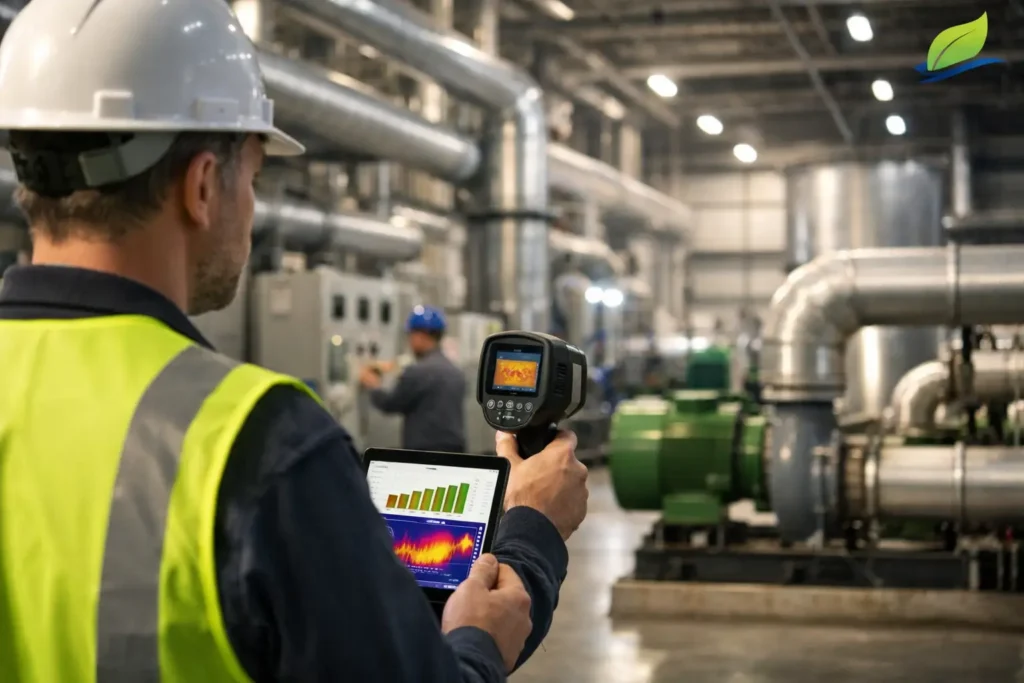
The first step is not equipment purchase, but analysis of consumption and operating patterns. It is necessary to determine baseline consumption, seasonal trends, peak loads and the relationship between installed capacity and actual usage. Without this, any recommendation remains an estimate.
After analysis comes the building energy concept. This is where a key decision is made: whether the priority is reducing total consumption, reducing peak demand, increasing reliability, integrating on-site energy production or combining these goals. The answer depends on the type of activity, operating hours, tenant structure and development plans.
For example, an office building with high daytime demand may have excellent economics for a solar system aligned with daily consumption. A data center or telecom facility will place greater value on power reliability, UPS infrastructure, battery systems and precise cooling. In retail, automation of HVAC and lighting by zones and schedules is often critical.
Measures that deliver the fastest results
LED lighting with intelligent control remains one of the fastest-return measures, but it is not the only one. Installing variable frequency drives on pumps and fans, optimizing the operation of chillers, boilers and air handling units, replacing inefficient motors and improving control systems often deliver greater overall impact than initially expected.
Automation is especially important. BMS or similar systems are not there to make a building look technologically advanced, but to ensure rational operation. When consumption is monitored in real time and systems adjust to occupancy, temperature, tariffs and available capacity, control is achieved. And control is a prerequisite for savings.
In many cases, significant improvements also come from power factor correction, optimization of contracted demand and load redistribution. These may not be attractive presentation topics, but they are highly relevant for financial performance. A serious energy strategy must include these details.
Solar, storage and consumption stability
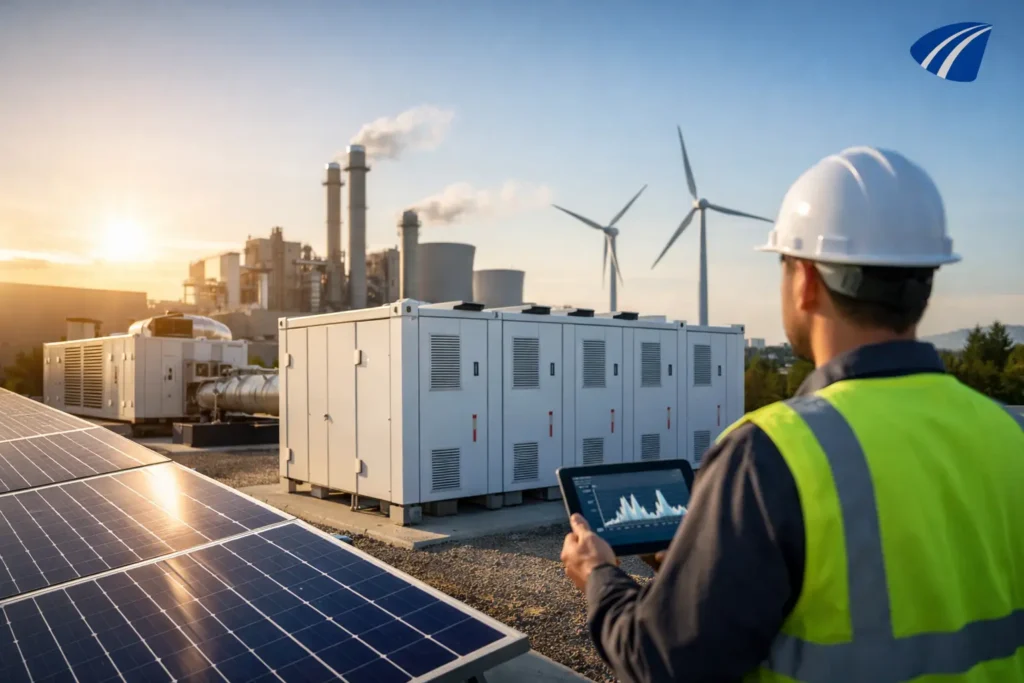
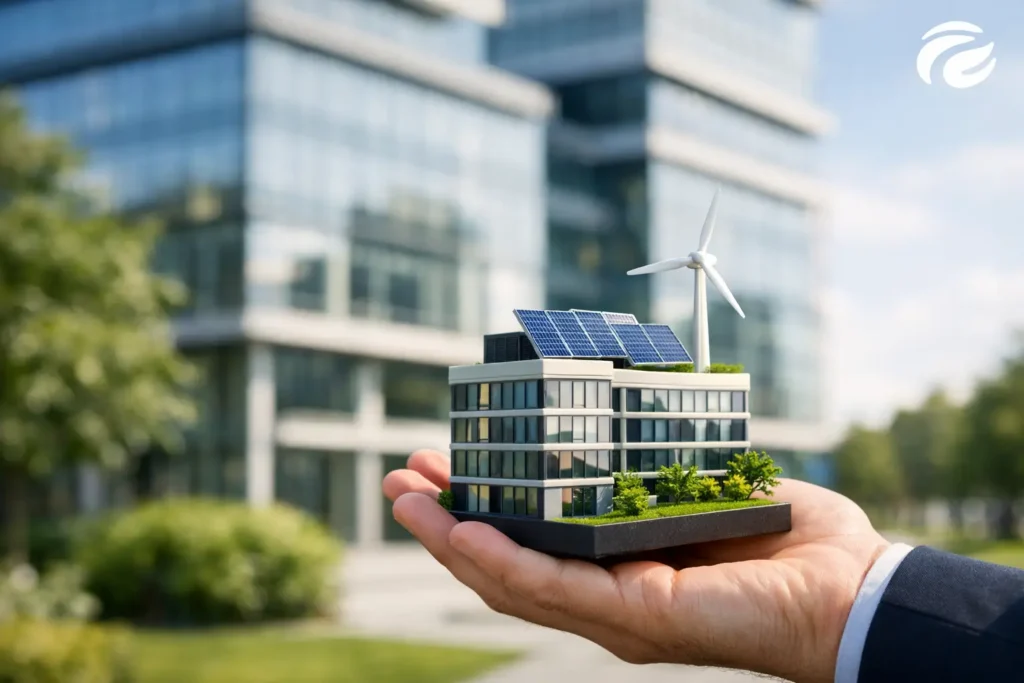
When discussing how to improve energy efficiency in commercial buildings, on-site energy production should not be considered separately from consumption. A solar system only makes full sense when aligned with the building’s load profile, grid connection capacity, available roof or land area and annual consumption patterns.
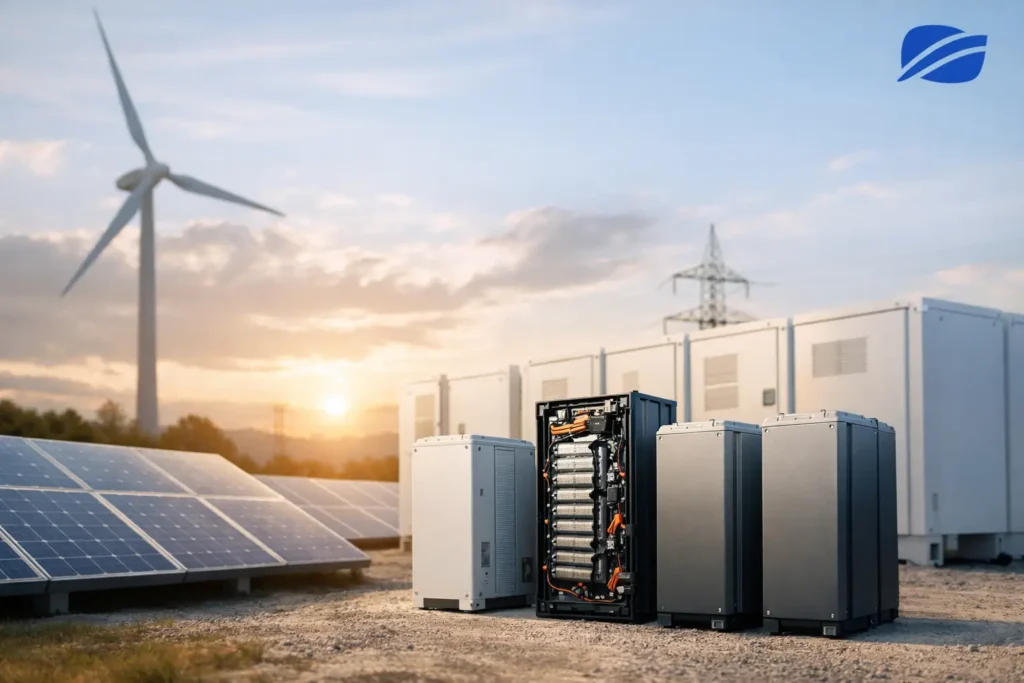
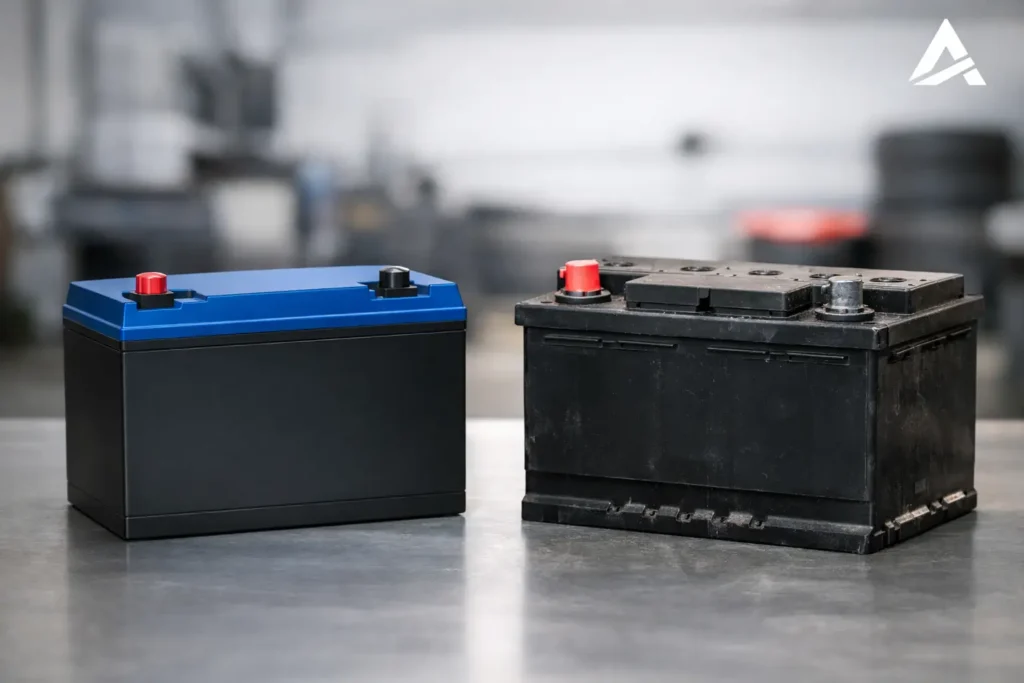
Even greater impact occurs when solar is combined with storage solutions and advanced energy management. Battery systems can help reduce peak loads, improve the use of generated energy and increase resilience to grid disturbances. This is particularly important for facilities where power interruptions lead to process downtime, product loss, service disruption or reputational risk.
There is no universal solution. In some cases, batteries have strong economic justification, while in others they primarily serve as a reliability tool. In some buildings, the priority is maximizing self-consumption of solar energy, while in others it is grid relief and tariff optimization. That is why design must be based on real data, not general assumptions.
What the investment is worth
The most common mistake is focusing on initial cost instead of total cost of ownership. Cheaper equipment that consumes more, lasts less or requires higher maintenance is rarely truly cheaper. The same applies to partial solutions that do not communicate with each other and require multiple contractors, service points and higher operational risk.
A proper evaluation includes CAPEX, operational savings, maintenance costs, system lifespan, reliability, spare parts availability and the value of avoided downtime. For larger facilities, it is also necessary to consider the impact on property value, lease conditions and long-term competitiveness.
That is why investors are increasingly looking for a partner who can integrate feasibility study, design, implementation and maintenance into one accountable system. When the energy system is viewed holistically, decisions are faster, risks are lower and results are measurable.
Regulatory and market pressure will not decrease
Efficient buildings are no longer just about internal cost savings. Tenants, financiers and international partners increasingly expect measurable energy performance, lower emissions and greater system resilience. For companies in manufacturing, logistics, food production, telecommunications or critical infrastructure, building energy performance is becoming part of overall business risk.
This means that delaying modernization also has a cost. A building that remains inefficient becomes more expensive to operate, harder to lease and more demanding to maintain. On the other hand, a facility with well-designed systems, metering, automation and integrated energy sources enters the next decade with a much stronger operational position.
Where to start if you want measurable results
The starting point does not have to be complex, but it must be precise. It begins with data, technical assessment of the existing condition and definition of a business objective. For some, the goal is to reduce energy costs by 15 to 20 percent. For others, the priority is eliminating interruption risk and stabilizing critical systems. For some, it is preparing the building for a solar system and future expansion.
Only when the objective is clear can a phased plan be created with both financial and technical logic. In serious projects, this sequence makes the difference between short-term effects and long-term performance improvement. That is why companies planning their next investment cycle increasingly choose an integrated approach – from analysis and feasibility study to implementation of systems that operate as a unified energy infrastructure.
If you’re building today consumes more than it should, the problem is likely not only in consumption. The problem is that energy is not yet fully under control. And that is where every serious saving begins.