When a production line stops due to a grid outage, the loss is not measured only in minutes. It is measured in missed deliveries, spoiled goods, logistics disruptions, and pressure on contractual deadlines. That is why a diesel generator for a commercial facility is not a backup option to “have somewhere in the plan,” but a part of critical energy infrastructure that must be sized, designed, and integrated without improvisation.
For commercial users, the most expensive mistake is not simply buying an undersized or oversized generator. The problem arises when the decision is made based only on equipment price, without analyzing operating режим, peak loads, critical consumers, and the transition from grid to backup power. In such cases, the investment appears smaller at the beginning, but the total cost of ownership quickly reveals a different reality.
When a diesel generator is a justified investment
Not every facility requires the same level of backup power. An office building with a limited number of critical loads has a completely different risk profile compared to a cold storage facility, production plant, data center, or logistics hub. In some cases, it is sufficient for the generator to cover security systems, lighting, server rooms, and part of HVAC equipment. In others, backup power must maintain the process without interruption or with minimal recovery time.
The justification for the investment depends on three questions. First, what is the cost of one hour of downtime. Second, which loads must remain active and under what conditions. Third, whether the generator is viewed as a standalone solution or as part of a broader system including UPS, batteries, solar, and load management.
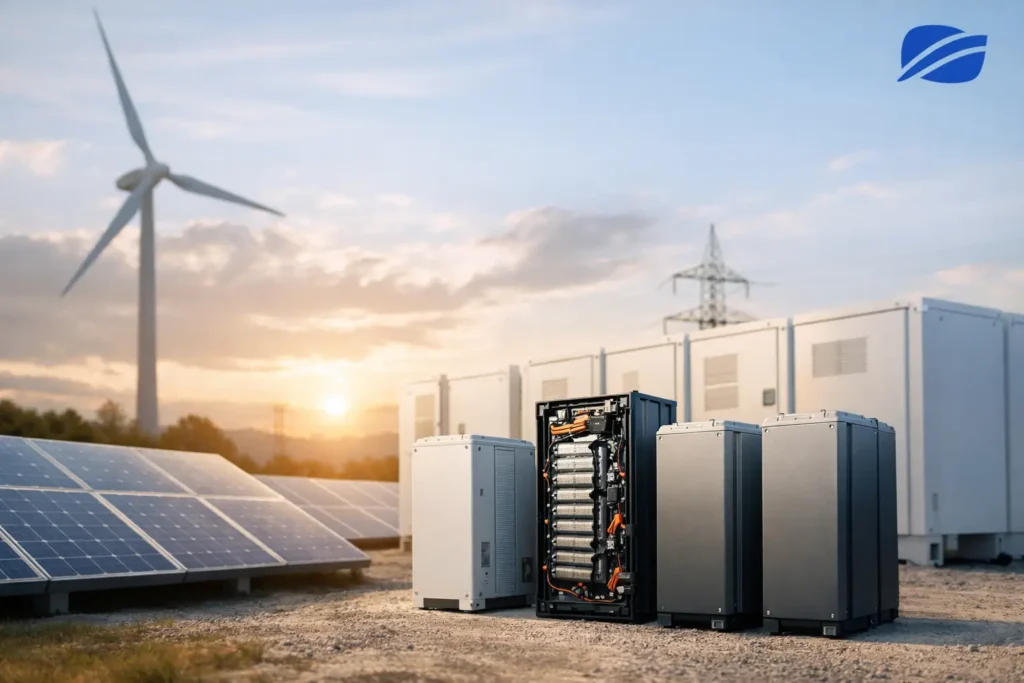
This is where the difference between equipment procurement and solution design becomes evident. If a facility has sensitive loads, the diesel generator rarely operates alone. It provides long-duration autonomy, while the UPS bridges the transition in seconds and protects critical electronics. If a BESS is present, it is possible to optimize generator startup, reduce peak shocks, and better manage fuel consumption.
Generator capacity is not the same as real demand
The most common question is how many kVA are required. The most common wrong answer is to sum nominal ratings of all equipment and add a margin. This approach is too rough for a serious commercial facility.
Accurate sizing requires analysis of active and reactive power, motor inrush currents, load sequencing, power factor, and expected operating режим. Systems with compressors, pumps, fans, elevators, and production machinery are particularly demanding due to high short-term startup loads. A generator that appears sufficient on paper may operate in overload, voltage drop, or unstable conditions.
There is also the opposite problem – oversizing. A larger generator does not automatically mean higher reliability. If it operates for long periods at low load, inefficiencies, increased fuel consumption, and poor engine performance can occur. That is why capacity selection is not solved through a catalog, but through measurement, calculation, and simulation of operating conditions.
Prime, standby, and continuous operating regime
When selecting equipment, it is essential to distinguish the intended application. Standby operating regime refers to backup power during grid failure. Prime operating regime is intended for extended operation with variable loads, where the generator periodically or regularly carries the main load. Continuous operating regime is even more specific and used in demanding scenarios.
If a company purchases a generator based on standby specifications but later uses it as a regular power source during prolonged outages or infrastructure works, lifespan and reliability can be seriously compromised. That is why the operating operating regime must be defined at the beginning, not after the system is already installed.
ATS, synchronization, and transfer logic
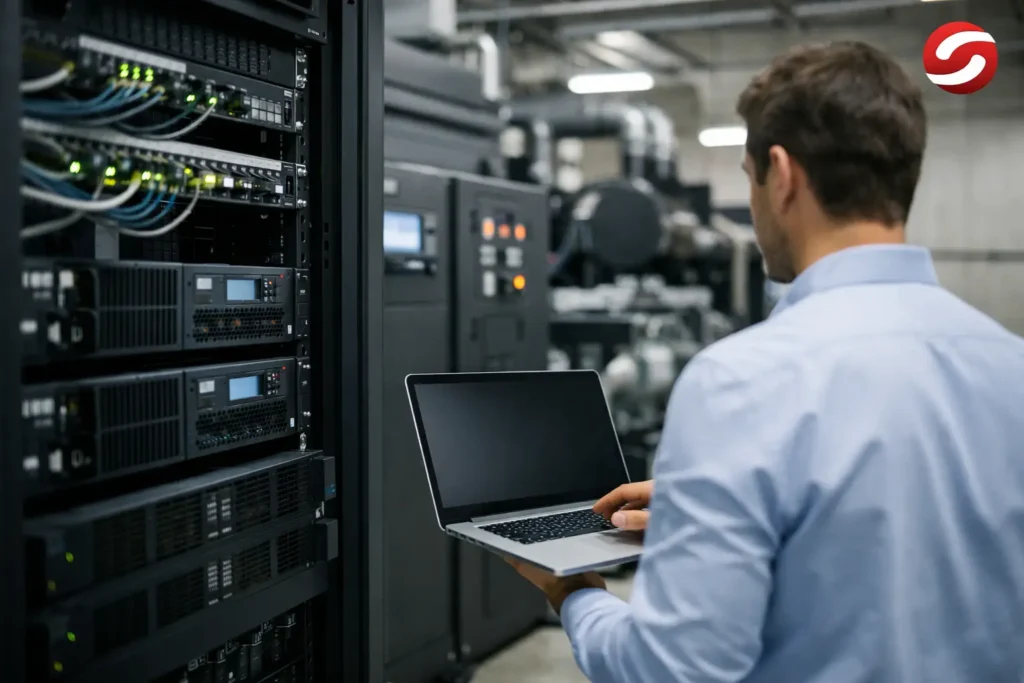
For a commercial facility, it is not enough for a generator to exist. What matters is how it starts, how quickly it takes over the load, and whether the transition is automated. An ATS (Automatic Transfer Switch) is practically mandatory where continuity of operation cannot rely on manual intervention.
However, ATS is not a universal component that is simply “added.” It is necessary to define start delay logic, return-to-grid conditions, load priorities, and behavior during short voltage dips. In facilities with multiple power sources, multiple generators, or combinations with UPS and BESS systems, synchronization and control become critical parts of the project.
Protection selectivity is also crucial. If protection settings are not properly coordinated, a fault in one part of the system can shut down a much larger section than necessary. In that case, the user does not gain backup power, but another source of unplanned interruptions.
Common mistakes in installation and location
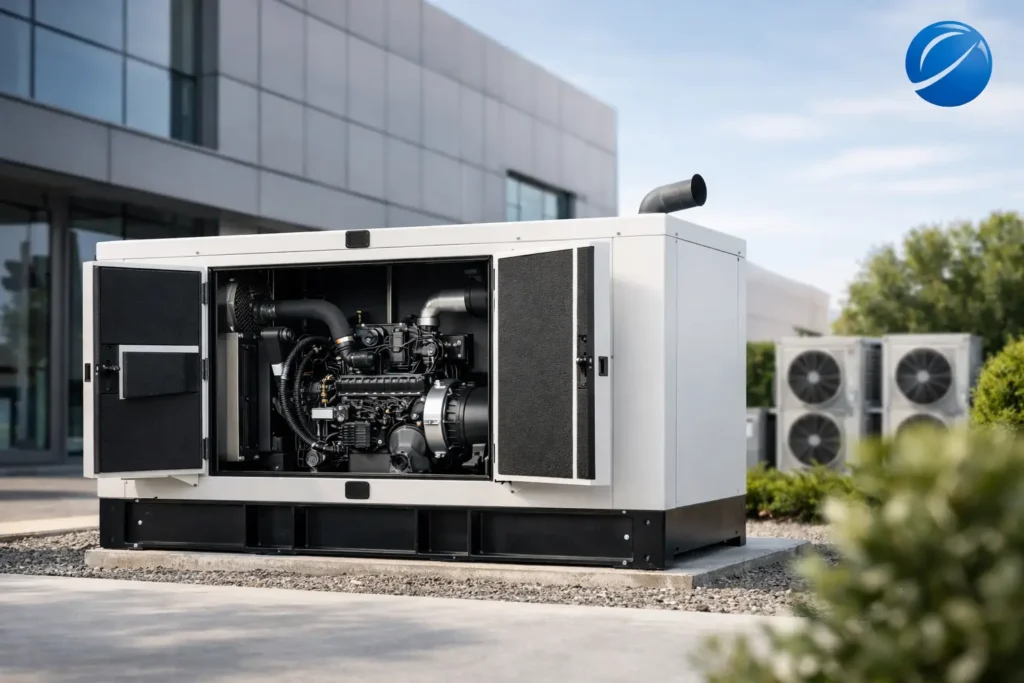
A diesel generator for a commercial facility requires more than available space. Ventilation, exhaust gas routing, service access, noise protection, fire safety, foundation, fuel storage, and cable routing must all be addressed. If installed indoors, thermal and acoustic conditions become even more critical.
Noise is often underestimated, especially in urban environments or near office and commercial spaces. Fuel is another important factor. There is a difference between autonomy of a few hours and several days. A larger fuel tank increases independence but introduces additional safety, space, and maintenance considerations.
In serious systems, installation must comply with local regulations, internal standards, and real operating conditions. A solution that looks correct in documentation may perform poorly in practice if service access is limited or airflow is insufficient under full load.
Maintenance determines reliability
A backup system that is not regularly tested is not reliable. With generators, false security is particularly dangerous equipment is installed but not tested under load, fuel degrades, batteries weaken, and critical loads are never truly verified under outage conditions.
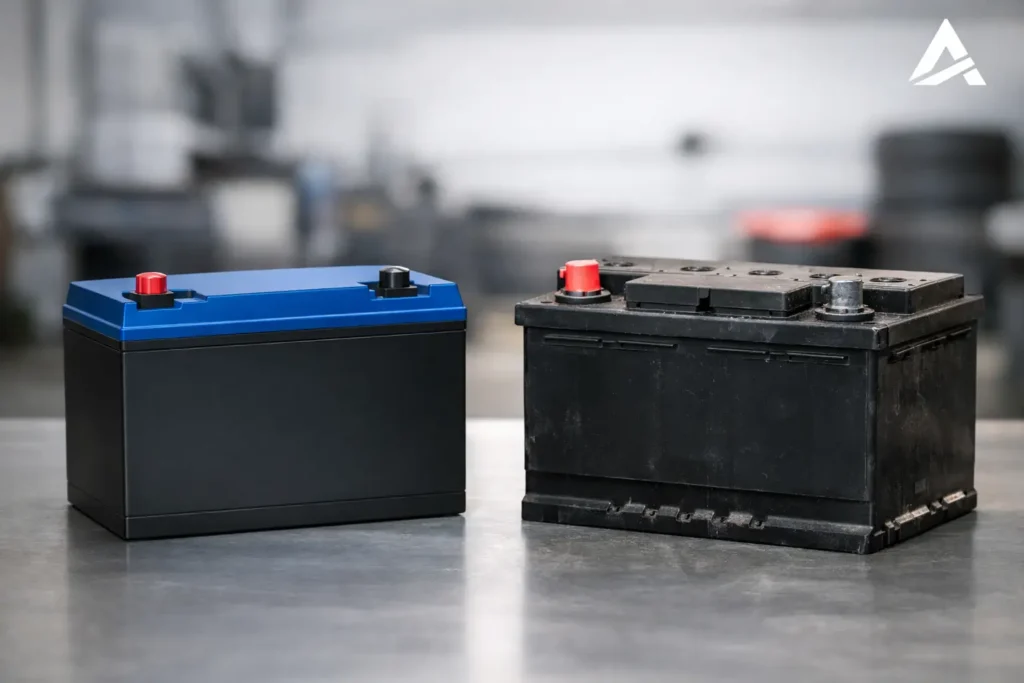
A proper maintenance plan includes periodic testing, battery checks, fluid levels, filters, chargers, fuel condition, and ATS functionality. For commercial users, recommendations should not be only calendar-based, but operational. If the facility is critical, testing protocols must be stricter and documented.
Service support is as important as the generator itself. A company does not just buy an engine and alternator. It buys system availability, response time, and clearly defined responsibility in case of failure. This is especially important in complex facilities where generators, UPS, batteries, and energy management systems are integrated.
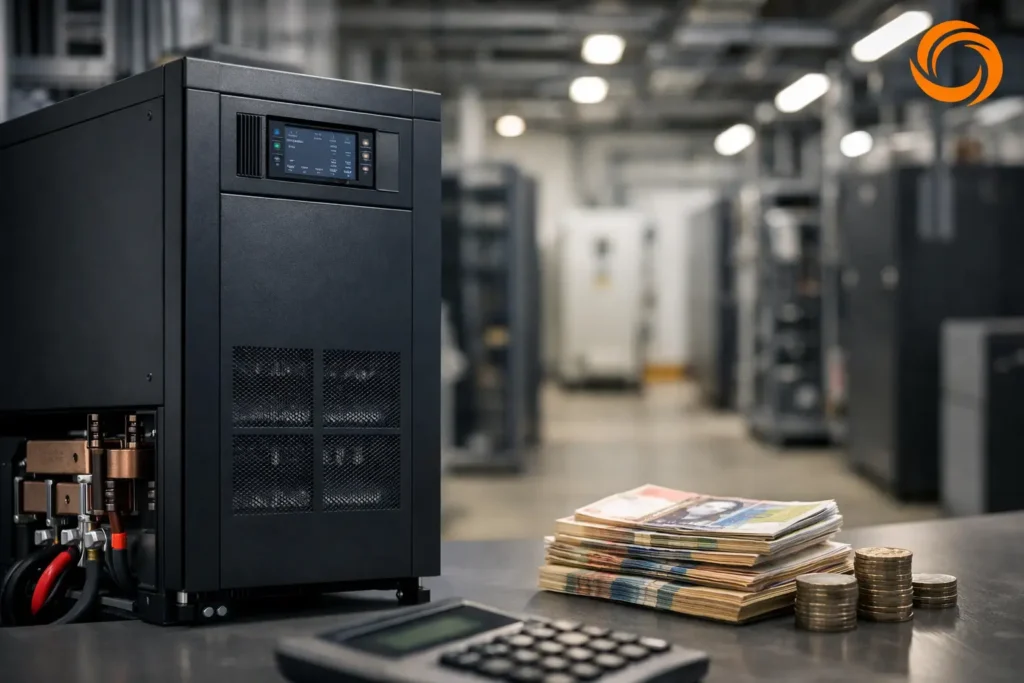
Total cost of ownership is more important than initial price
If the decision is based only on the lowest purchase price, critical factors are almost certainly overlooked. Fuel consumption, service intervals, spare parts availability, controller reliability, enclosure quality, noise, warranty, and expected lifespan all directly affect long-term cost.
Downtime costs must also be considered. For a production plant or data center, a single incident may exceed the price difference between two solutions. That is why serious investors focus on TCO, not only CAPEX. In such analysis, higher-quality and properly integrated solutions often prove more cost-effective, even with a higher initial investment.
When a generator makes the most sense as part of a hybrid system
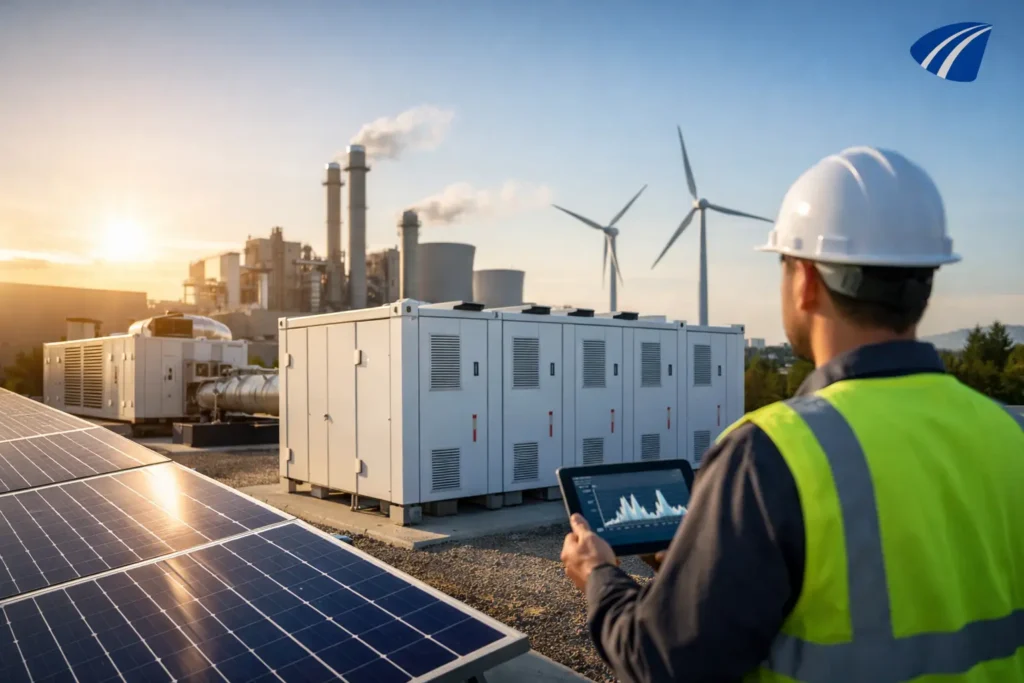
More commercial users are no longer viewing generators in isolation. In combination with UPS, battery storage, and solar systems, a higher level of energy resilience and operational efficiency can be achieved. In such configurations, the generator does not need to respond to every short disturbance or operate inefficiently at low loads.
This approach is particularly rational for facilities with high energy costs, frequent grid instability, or a requirement for 24/7 availability. An integrator who understands the full energy system can design an architecture where the generator remains a key safety component, but not the only solution for reliability.
What a proper selection process looks like
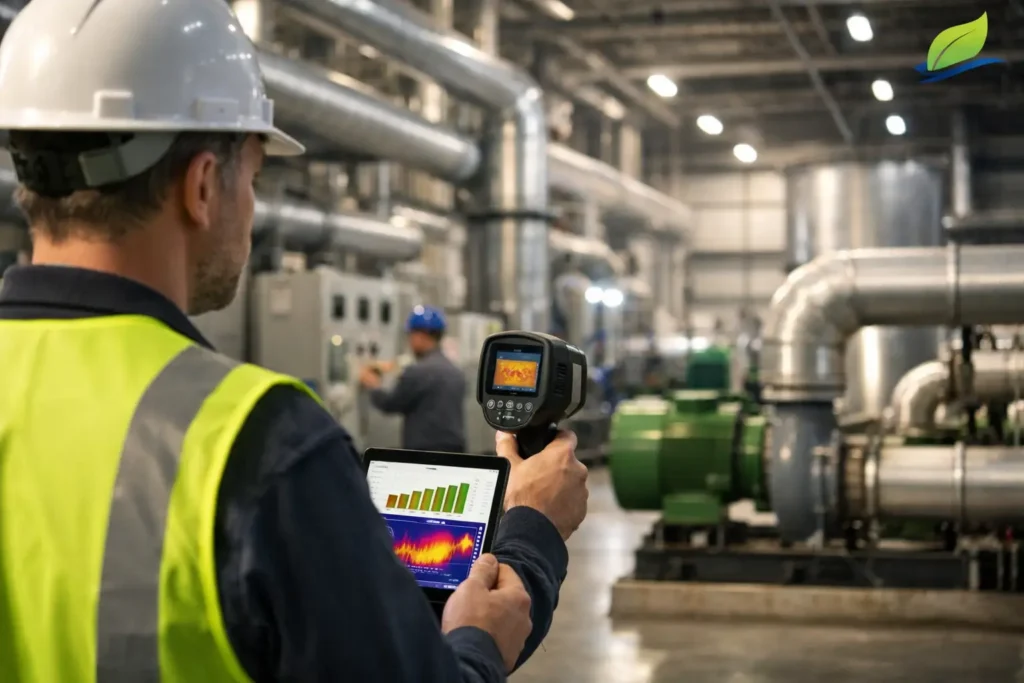
The first step is not selecting a model but conducting an energy assessment. Critical loads, peak demand, allowable interruption time, and required autonomy must be defined. Then comes capacity calculation, operating operating regime definition, ATS selection, and installation design.
After that, alternatives are evaluated. In some cases, a single generator is optimal. In others, a modular approach, parallel operation, or integration with UPS and storage systems provides better results. Only when the architecture is defined does it make sense to discuss equipment, timelines, service, and warranties.
For companies looking to reduce risk and avoid fragmented responsibility, value comes from a partner capable of managing the entire process, from analysis and design to delivery, commissioning, and maintenance. This is the approach applied by Energize in complex energy projects, particularly where backup power is not treated in isolation but as part of a broader energy security strategy.
If you are considering a generator, do not start by asking how much the equipment costs. Ask what the cost is when power is lost, and how precisely you want that risk to be controlled.