Electricity bills rarely increase by accident. In most companies, rising costs come from three main sources — poorly distributed consumption, peak demand loads, and systems operating without precise control. That is why electricity consumption management is not an administrative measure, but a direct business decision that affects profitability, operational continuity, and the company’s future investment capacity.
For industries, logistics, food production, data centres, and telecommunications, energy is no longer just an operating expense. It has become a reliability factor. When consumption is not under control, the consequences are not limited to higher monthly costs, but also include overloaded infrastructure, reduced equipment efficiency, increased risk of downtime, and lower cost predictability. In practice, this means companies are paying more than necessary while operating under greater risk than they should.
What Electricity Consumption Management Includes
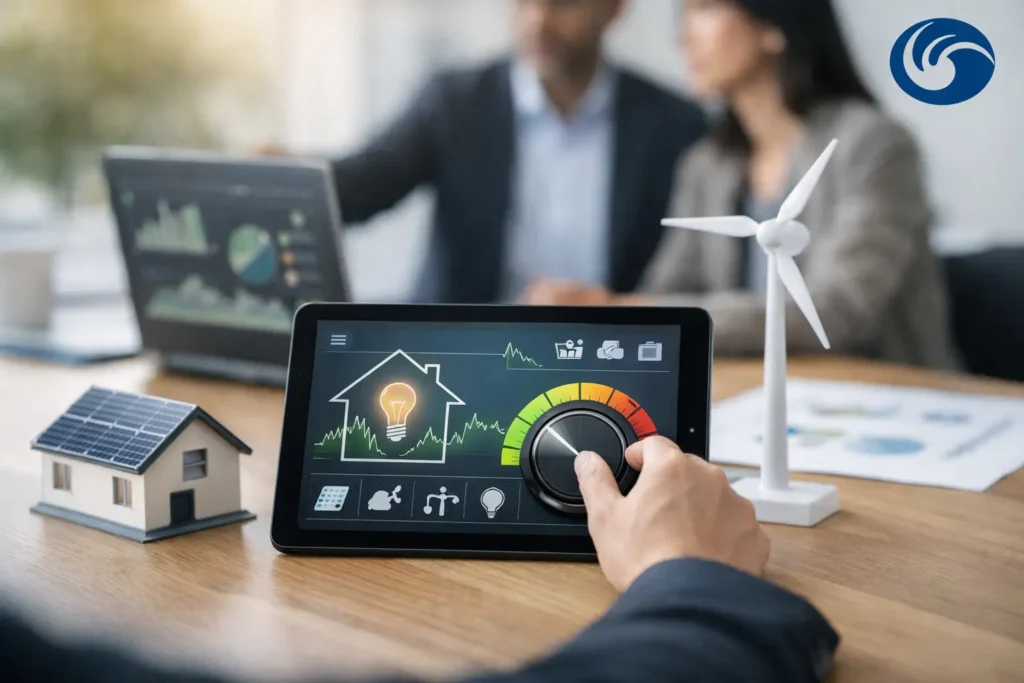
Electricity consumption management involves systematic monitoring, analysis, and optimization of how a facility, plant, or network uses electrical energy. It is not simply about turning off lights or replacing lighting systems. A serious approach includes measuring consumption by zones, understanding load profiles throughout different periods of the day, controlling peak demand, and aligning consumption with technologies that generate, store, or protect energy.
In other words, the goal is not just a lower bill. The goal is to ensure that every kilowatt-hour is used where it delivers the highest value, with the lowest possible losses and without compromising operational processes. In manufacturing systems, this often means optimizing not a single component, but the entire energy flow — from grid connection and distribution cabinets to solar power plants, battery storage systems, UPS protection, and HVAC consumers.
Where Companies Most Commonly Lose Money
The first and most expensive issue is peak demand. Many companies have acceptable total monthly consumption, but a poorly balanced load profile. When multiple high-demand consumers start operating simultaneously, energy spikes occur, increasing costs and putting additional strain on infrastructure. This is especially common in facilities with compressors, cooling systems, pumps, furnaces, and large motor-driven equipment.
The second issue is invisible consumption. Equipment operating outside working hours, improperly configured HVAC systems, outdated rectifiers, inefficient UPS systems, or auxiliary systems remaining active when unnecessary often create continuous costs that remain unnoticed until consumption is analyzed by branches and operating periods.
The third issue is fragmented decision-making. When individual components are purchased from different suppliers without a unified energy concept, companies end up with equipment rather than a system. The result is overlap, poor sizing, lower investment efficiency, and a higher total cost of ownership.
Measurement Is the Starting Point, but Not Enough
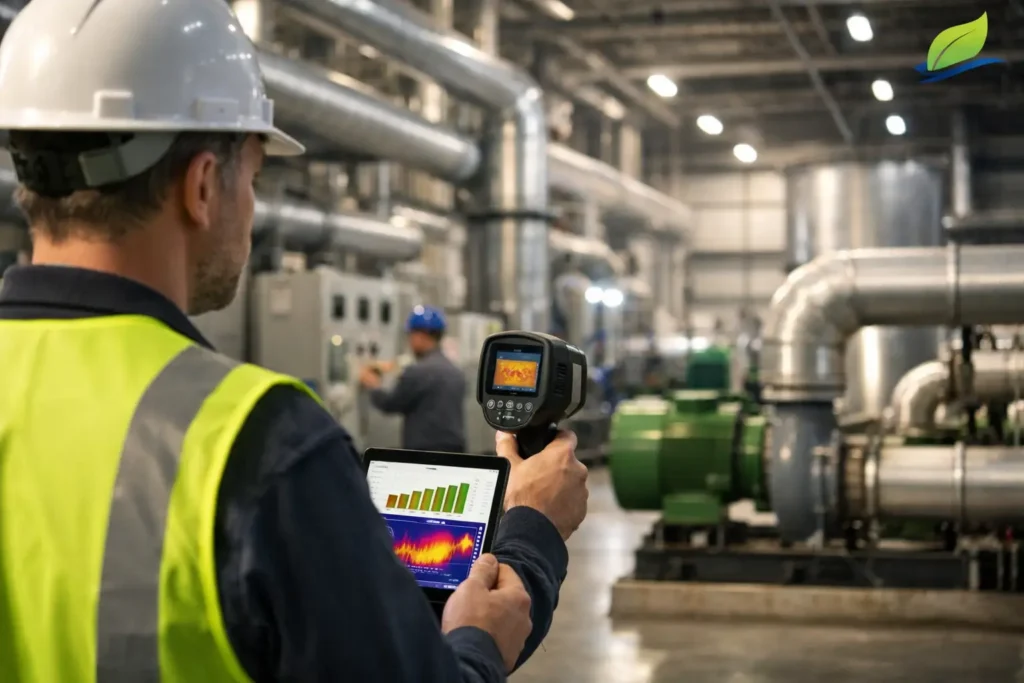
Without quality data, there can be no serious optimization. This means the first step must be precise measurement — not only at the main meter, but across key consumption segments. Production, cooling, ventilation, IT equipment, charging systems, auxiliary operations, and administrative areas all have different load profiles and different opportunities for savings.
However, collecting data alone does not solve the problem. A common scenario is that a company implements monitoring, receives a large number of graphs and reports, and then changes nothing in the way the system operates. The value of measurement exists only when operational decisions are derived from the data — when loads are shifted, automation is introduced, load factors are optimized, or investments in on-site generation and energy storage are planned.
What a Good Consumption Management Model Looks Like
A good model starts with a detailed energy assessment of the facility. Not only how much energy is consumed, but also when, where, and under what conditions. After that, critical consumers, baseline consumption, seasonal variations, and peak demands are defined. Only then does it make sense to discuss improvement measures.
In some systems, the greatest effect comes from optimizing operating modes and automating switching sequences. In others, the key lies in replacing inefficient equipment. In energy-intensive facilities, significant improvement often comes only when a solar power plant, BESS system, and intelligent peak-load management are combined. There is no universal solution. What works for a cold storage facility will not produce the same results in metal production or a data centre.
That is why serious electricity consumption management is not based on general assumptions, but on designing solutions according to the real operational profile. If the goal is only to reduce costs, the approach will differ from cases where operational continuity, protection of critical equipment, or energy independence are also priorities.
The Role of Solar, Battery Storage, and UPS Systems
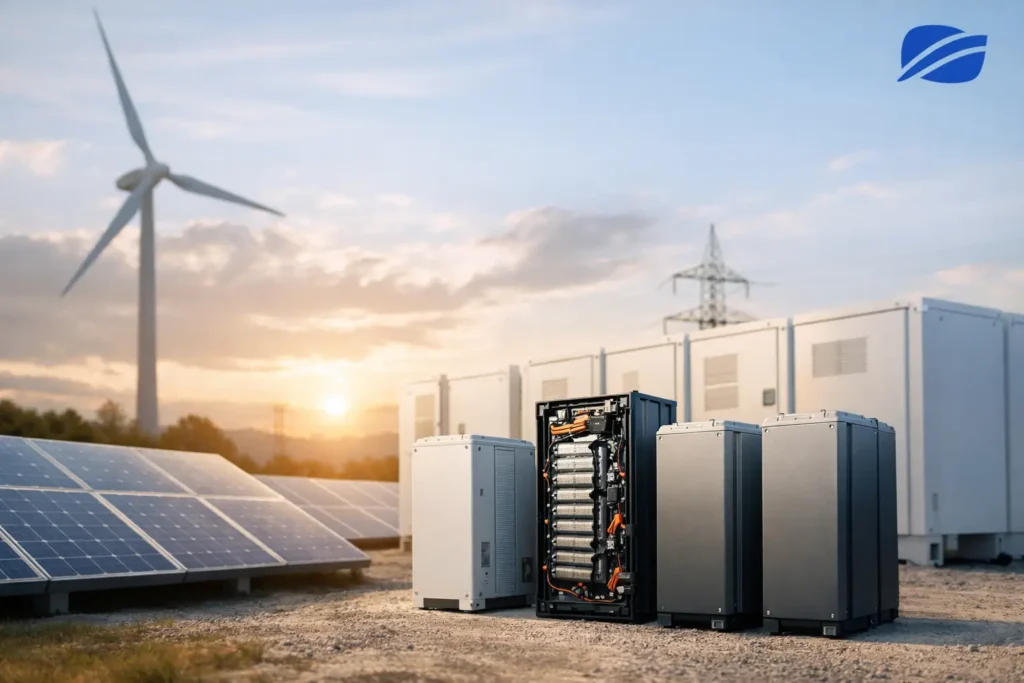
A solar power plant delivers the greatest effect when aligned with the daily consumption profile. If a company consumes most of its energy during the day, solar can directly reduce grid dependency and stabilize energy costs. However, if consumption is concentrated in the evening or characterized by large load spikes, solar alone is not sufficient.
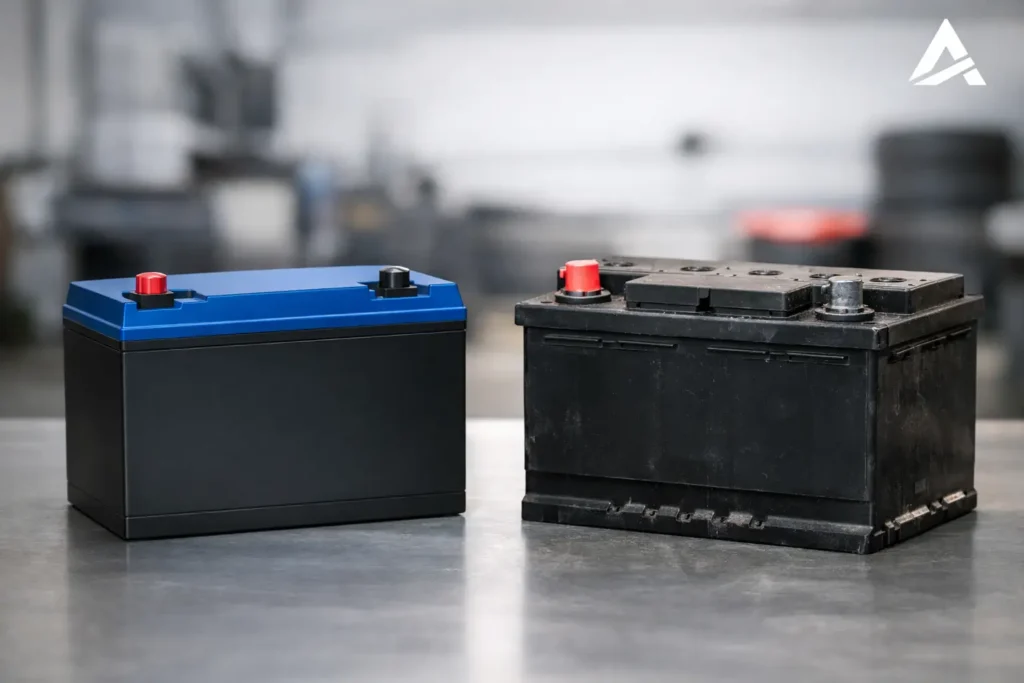
This is where battery storage becomes essential. BESS enables part of the load to be covered during peak periods, improves the utilization of locally generated energy, and provides greater flexibility in consumption management. In certain cases, this makes the difference between an acceptable investment and a truly optimized one.
UPS systems serve a different function but are equally important. Unlike solar or storage, they do not directly reduce electricity costs. Instead, they protect processes from outages, voltage drops, and grid instability. For sectors where downtime means production losses, data loss, or reputational damage, this is not optional equipment — it is the foundation of operational security.
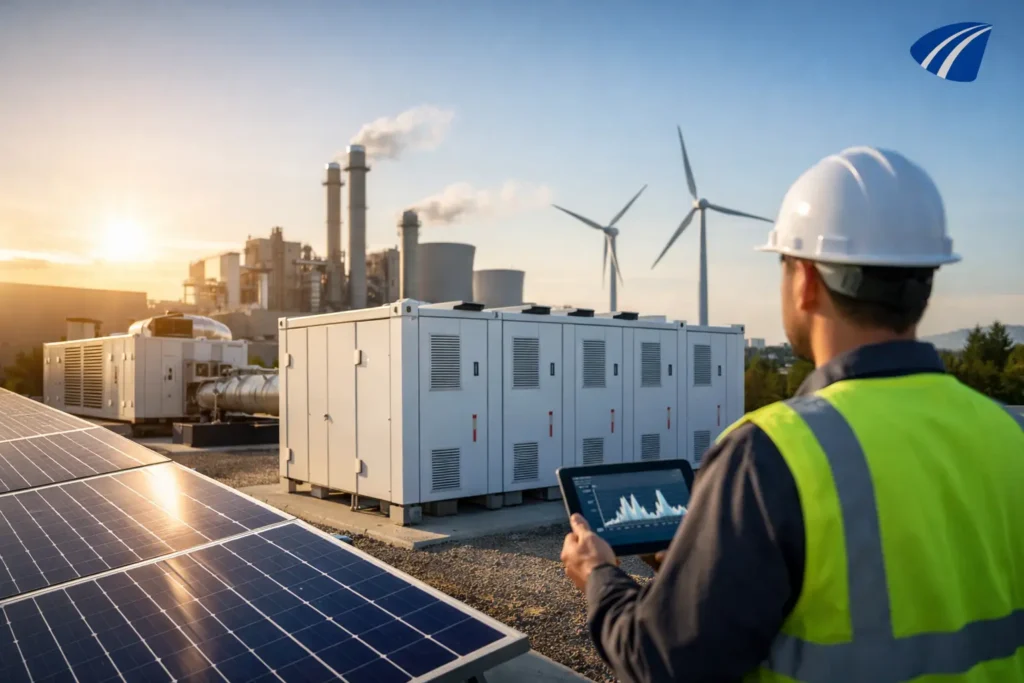
When these technologies are planned together, the result is not merely a collection of components, but an energy architecture designed to support the business. This is precisely where the difference is made between purchasing equipment and making a strategic energy investment.
What Management Should Monitor
If company directors or owners only monitor the total electricity bill amount, management remains superficial. Far more useful indicators include the ratio between base and peak consumption, load distribution by shifts, energy consumption per unit of production, operating time of major consumers, and the cost of downtime caused by energy-related issues.
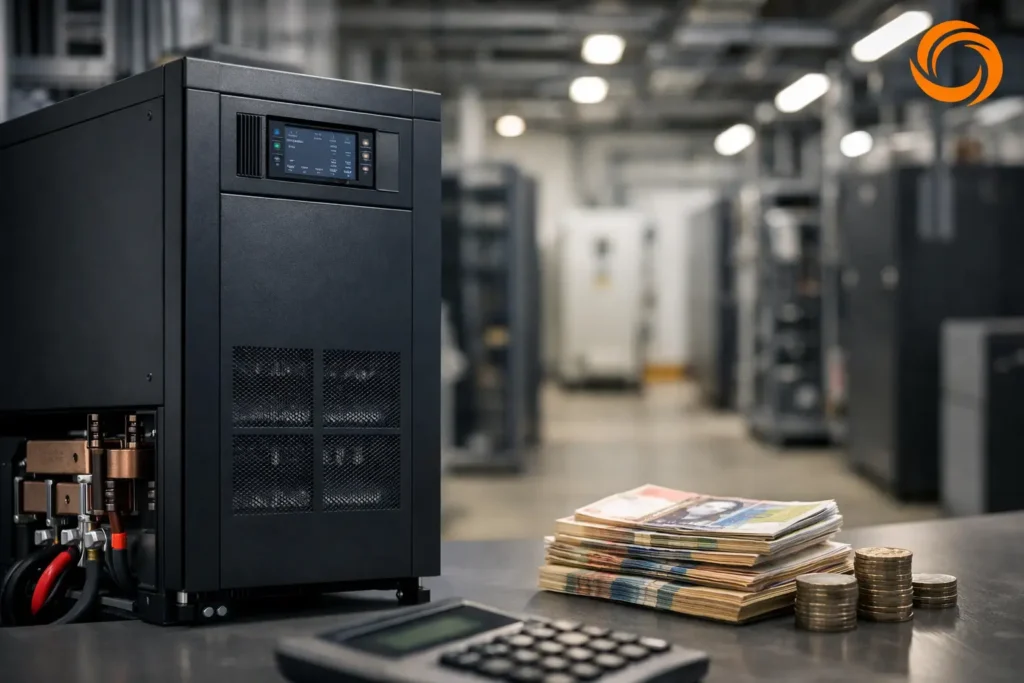
For example, reducing peak demand may have a greater financial effect than reducing total nominal consumption. Likewise, investing in higher-quality power supply and backup systems may initially seem more expensive, but through a Total Cost of Ownership (TCO) perspective, it results in fewer failures, longer equipment lifespan, and more stable operational processes.
In other words, the cheapest solution upfront is often not the most cost-effective solution in operation. This is the point where technical analysis must guide business decisions.
When the Investment Pays Off
The answer depends on the consumption profile, energy price, operating regime, and the level of inefficiency within the existing system. In facilities with high daytime consumption and expensive peak demand charges, results may become visible relatively quickly. In systems with smaller fluctuations and more stable operating profiles, the payback period is longer, but still justified when power reliability and reduced operational risk are taken into account.
It is also important not to evaluate the investment too narrowly. If new energy infrastructure enables production growth without grid connection limitations, reduces equipment failures, and improves cost predictability, its real return extends far beyond savings on electricity bills alone.
That is why serious energy consumption management systems do not begin with the question of which equipment to purchase, but with the question of what kind of energy model the business truly requires. That is the difference between solutions that look good on paper and solutions that perform reliably for years.
Why Integration Delivers Better Results
When one partner manages the analysis, engineering, equipment selection, implementation, and maintenance, responsibility is clear and the system remains fully aligned. When multiple parties handle separate segments without a unified engineering approach, technical and financial gaps often emerge — and the user ultimately pays for them later.
For companies with complex processes, large numbers of consumers, or the need for uninterrupted operation, an integrated approach is the safest path forward. This is where Energize delivers the greatest value — by integrating solar systems, energy storage, UPS solutions, HVAC systems, and complete energy infrastructure into one functional whole, dimensioned according to the real needs of the facility.
If your goal is to reduce energy costs while also improving operational security and business predictability, the right time for analysis is before the next electricity bill confirms that the system is operating more expensively than it should.