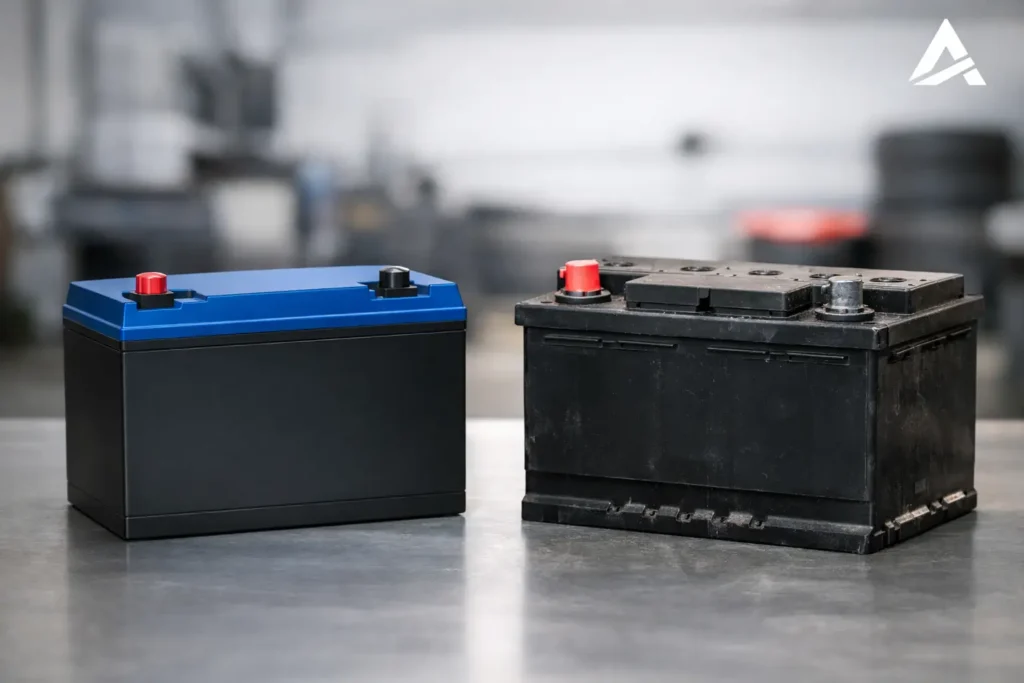
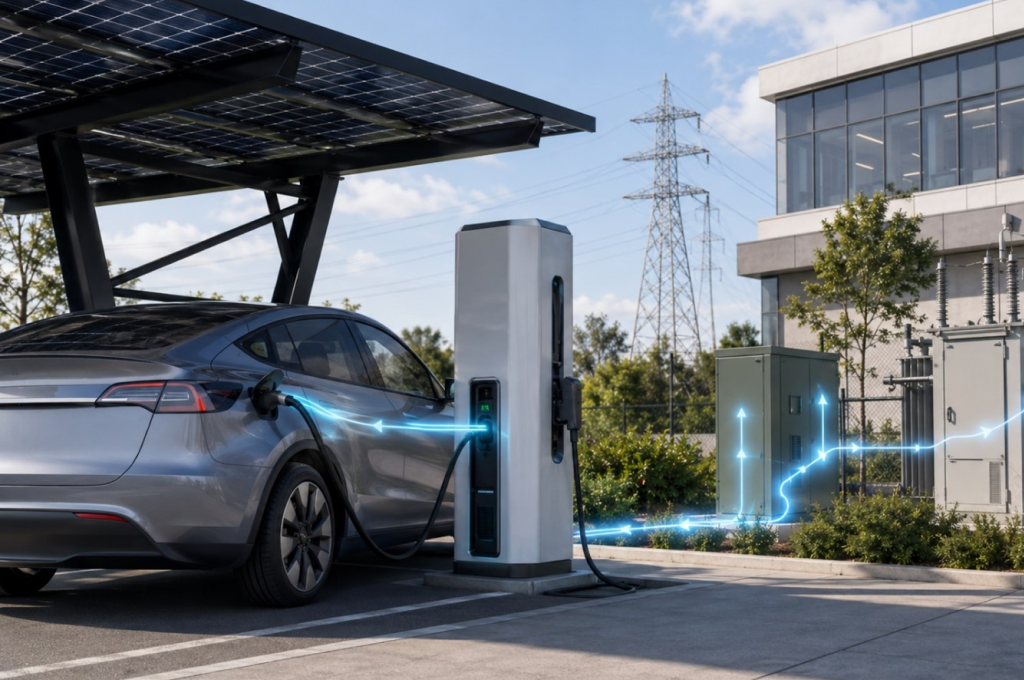
The average car spends more than 90 percent of its lifetime parked. In the case of an electric vehicle, this creates an interesting situation: a large battery, comparable in value to a small residential energy storage system, sits unused for hours and days at a time. The energy stored within it flows in only one direction—from the grid to the vehicle—and until recently, that was where the story ended.
V2G reverses that arrow.
The idea is as simple as it is transformative: if a battery can receive energy, why shouldn’t it be able to send it back? A parked vehicle stops being a passive load on the grid and becomes an active participant in the energy system.
What Is V2G?
V2G (Vehicle-to-Grid) is the capability of an electric vehicle to return energy from its battery back to the electrical grid.
It is only one member of a broader family of technologies commonly referred to as V2X (Vehicle-to-Everything). A vehicle can power a home (V2H), a commercial building (V2B), or even individual devices directly (V2L)—from construction tools on a job site to a refrigerator during a power outage.
The common denominator across all these scenarios is simple: energy no longer flows only toward the vehicle, but also from it.
To make that possible, however, the hardware through which energy flows must also evolve.
How It Works Technically
Charging, as we know, involves rectification—the conversion of alternating current (AC) into direct current (DC). Returning energy requires the opposite process: inversion, converting the direct current stored in the battery back into alternating current synchronized with the grid’s voltage and frequency.
In other words, a bidirectional power converter is required—either integrated into the charging station or built directly into the vehicle.
Hardware alone is not enough. Communication is equally important.
The vehicle and the grid must continuously exchange information and agree on how much energy can be delivered, when it can be delivered, and under which conditions. This is where newer generations of standards, such as ISO 15118-20 for vehicle-to-charger communication and protocol extensions supporting bidirectional charging, are opening the door to wider adoption.
Why It Matters
A single vehicle may seem insignificant.
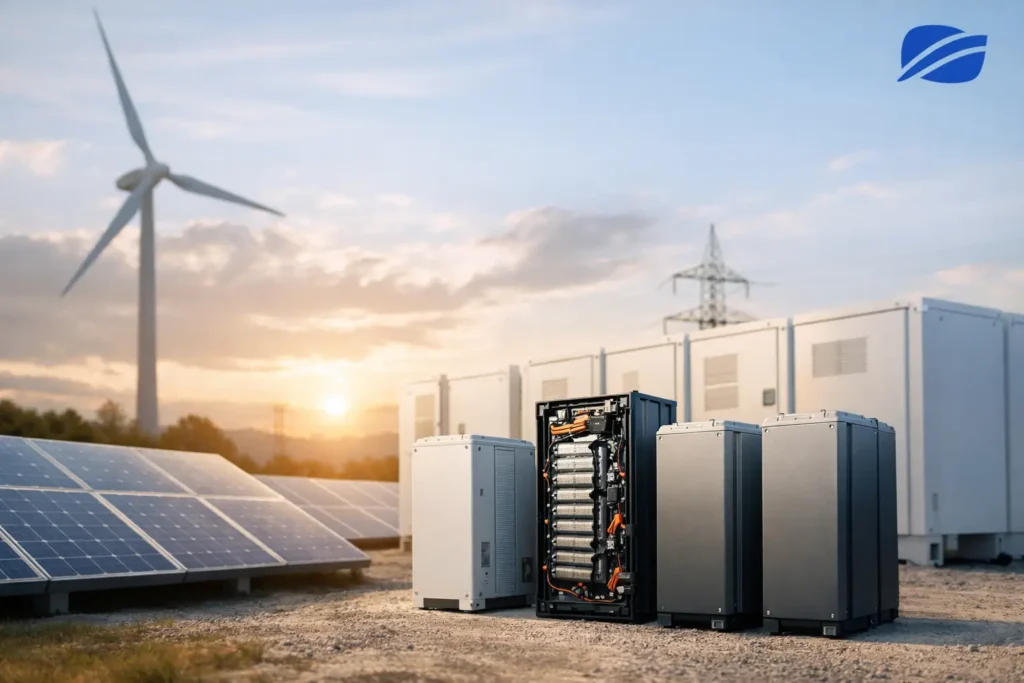
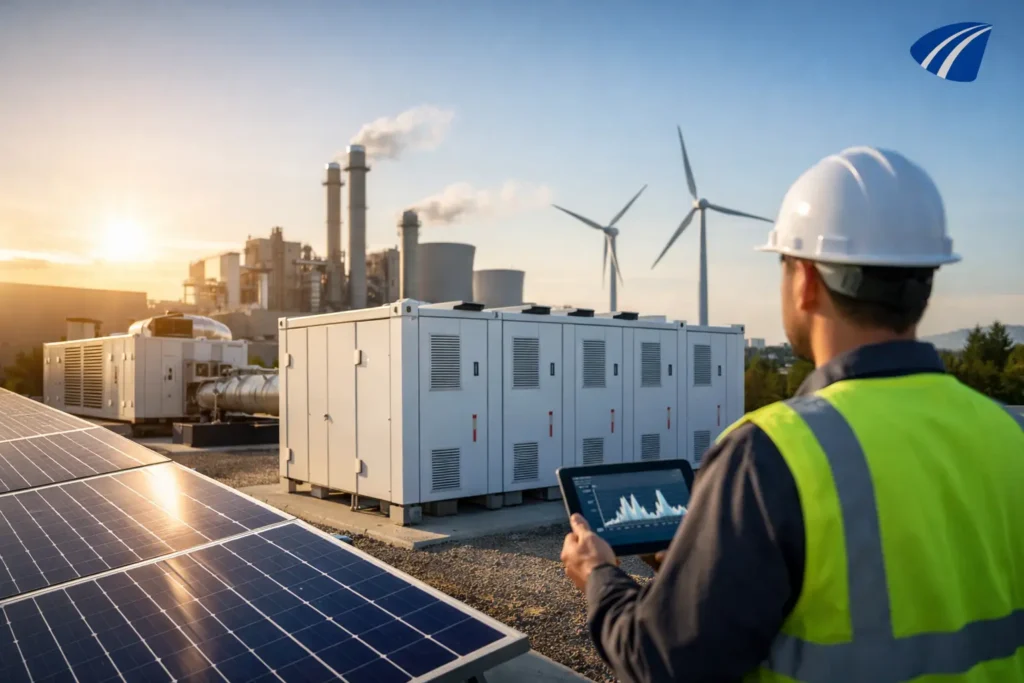
However, when thousands of parked batteries are connected and intelligently managed, they create what energy professionals call a virtual power plant—a distributed energy storage resource that the grid can access whenever needed.
The value comes from several directions.
Energy arbitrage: charging when electricity prices are low and using or exporting energy when prices are high.
Peak shaving: vehicle fleets that return energy during evening peak demand periods help relieve pressure on the grid when consumption is at its highest.
Renewable energy balancing: solar and wind generation are inherently variable, while a network of batteries can absorb excess production and compensate for shortfalls.
And perhaps the most tangible benefit for end users is backup power—a home that continues operating during a power outage using energy stored in the vehicle.
What Still Needs to Mature
It is important to acknowledge that V2G is not yet part of everyday life.
Several pieces still need to fall into place.
One concern is battery degradation. Additional charging and discharging cycles naturally raise questions about battery lifespan. However, controlled charging strategies can keep this impact within acceptable limits, and manufacturers’ warranty policies are gradually adapting to these new use cases.
Standards are still evolving and becoming more harmonized.
Energy regulations and market structures must also allow and compensate energy exported back to the grid, and these frameworks vary significantly from country to country.
Finally, both the vehicle and the charging station must support bidirectional operation—a capability that, for now, remains the exception rather than the rule.
None of these challenges are without solutions. They are simply signs of a technology transitioning from pilot projects into real-world deployment.
Conclusion
V2G fundamentally changes the role of the electric vehicle.
Instead of being solely an energy consumer, it becomes an active participant in the energy ecosystem—a mobile energy storage system that spends most of its time standing idle.
And the gateway through which that energy flows in both directions is the charging station.
The moment a parked vehicle can both receive and return electricity, the question is no longer simply, “How fast can it charge?” but rather, “What else can this vehicle do while it is standing still?”
The answer to that question is only beginning to be written.