Coffee, food and retail where the foot traffic is
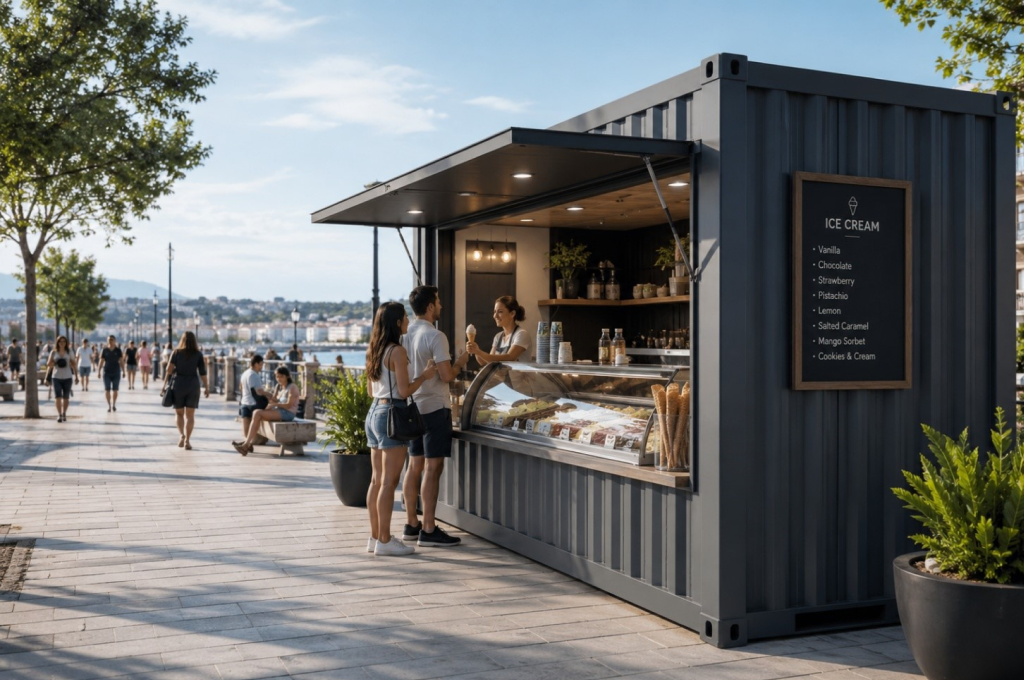
Wherever people walk by, there’s a need for coffee, fast food, ice cream or a quick purchase. A riverside promenade in a transit town, a bus stop halfway between two city centers, the entrance to a national park, the approach to a spa or lake, a beach outside the peak season — every one of these places has foot traffic, and every one of them is somewhere opening a traditional shop is hard. Permits take time, construction drags on, leases lock you in for years, and the season or the direction people move in can shift before your doors are even open.
Between brick-and-mortar and a food truck
A traditional shop solves the problem of presence, but it requires a large upfront investment, lengthy permits and a location that has to predict where people will be moving for the next several years. If foot traffic shifts by five hundred meters or seasonal interest drops, a fixed location stays right where it is.
A food truck solves the mobility problem but creates new ones. It depends on the weather, it’s limited by the size of the kitchen and serving window, it rarely has room for seating, and in practice it closes when winter arrives. To a customer it often doesn’t feel like “a real place”, and for the owner it doesn’t allow building location recognition or installing serious equipment inside.
Between those two extremes, no real solution existed for a long time.
A modular container: stable, yet mobile
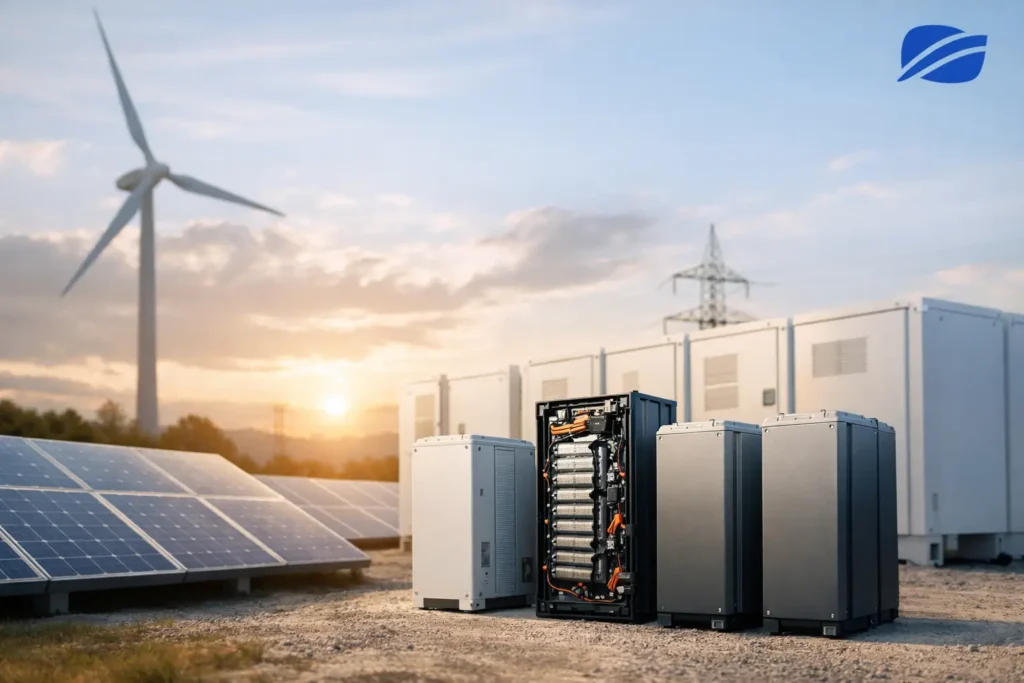
A modular container with an integrated solar system is installed in a matter of days, opens for business the moment it arrives, and looks and operates like a real shop — with a counter, full equipment, staff area and, depending on the configuration, a seating zone for customers. Solar panels on the roof and battery storage enable independent operation without waiting for a grid connection — critical at all those locations where the grid hasn’t arrived or where getting connected takes as long as the whole season.
Where it differs most from a food truck is that it works year-round. Thermal insulation, air conditioning and serious heating equipment mean coffee can be served in January and ice cream in August, from the same spot and without any break in operation. The space is large enough for serious equipment — a real espresso machine, refrigeration units, fryers — and two or three staff on a shift.
And when foot traffic moves or the season ends, the container can be relocated. Not every day like a food truck, but to a new location in the next season or when conditions change — without losing the investment in equipment and without a new project.
Where this makes the most sense
The clearest application is locations with steady foot traffic but no developed commercial infrastructure. Promenades and parks along rivers and lakes, entrances to national parks, popular cycling and hiking routes, approaches to spas and resorts, and seasonal beaches that operate only a few months a year — anywhere people pass through, but where traditional retail has never had the right format or a long enough season to justify itself.
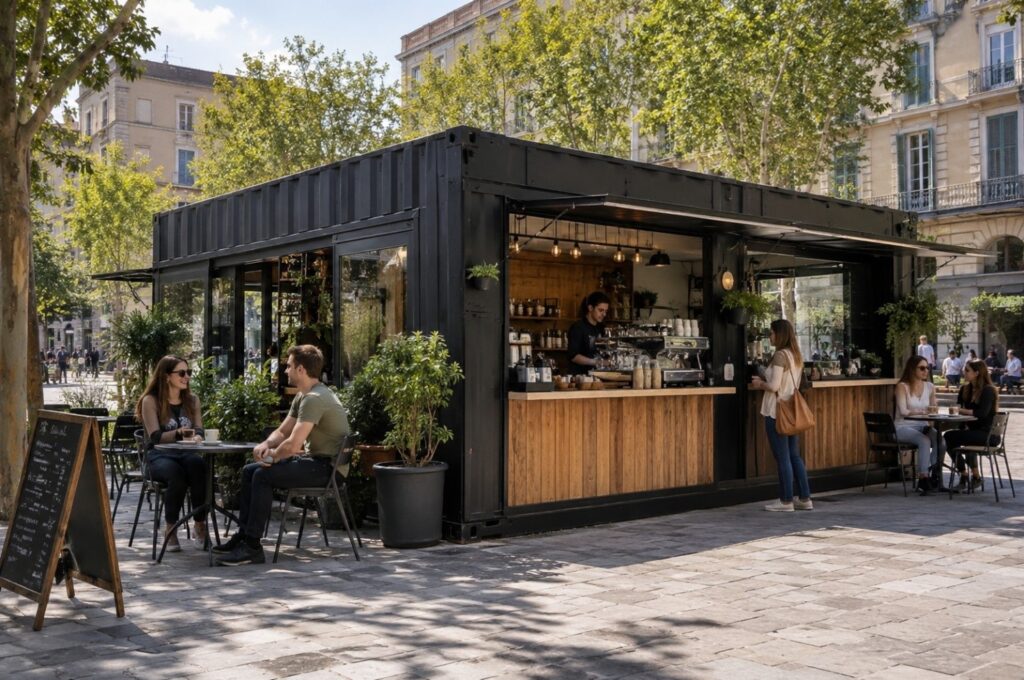
Then there are transit points in smaller and mid-sized towns — around bus and train stations, traffic corridors, entries to industrial zones, newly developing parts of cities — where foot traffic exists but commercial infrastructure hasn’t caught up. Festivals, fairs, markets and other recurring events that come back to the same location year after year also belong in this category, because the container can sit on site for a few weeks of the season and then move on to the next spot.
An investment that isn’t tied to one location
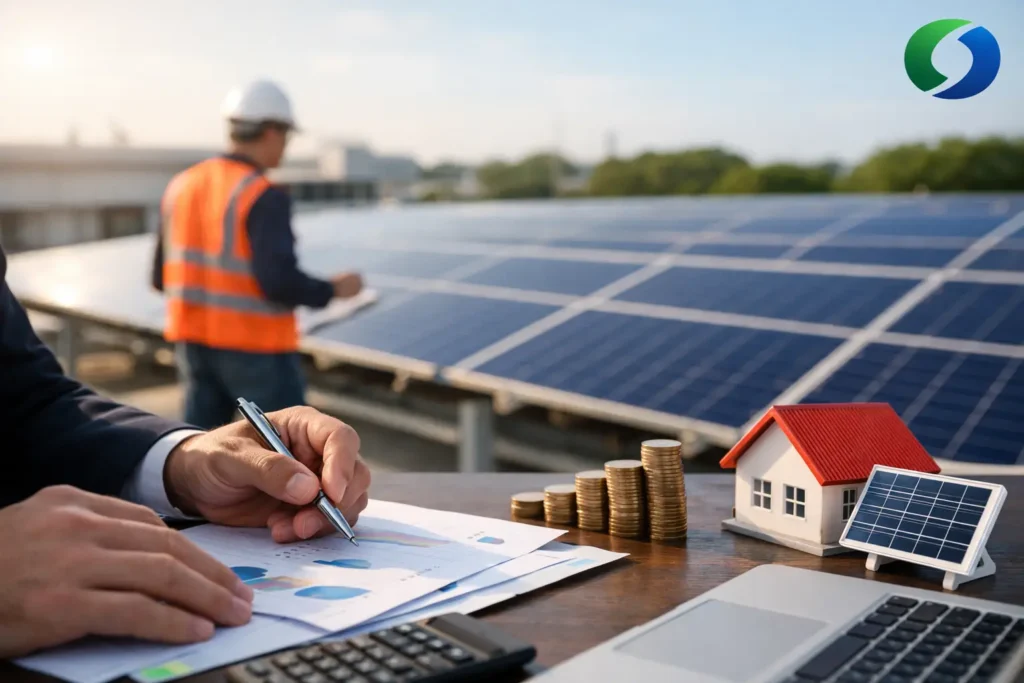
The biggest mistake on projects like these is to see the container as “a smaller shop”. It isn’t. It’s an investment in your own mobile commercial infrastructure — equipment, branding and a workplace — that doesn’t disappear when conditions at one specific location change.
A coffee spot that worked along the river can spend next summer at a fair, and end the season along the walking zone of another town. What you pay for once keeps working for the next fifteen to twenty years, across as many locations as your business needs.
| If you’re considering a new retail spot — for coffee, fast food, retail or a pop-up concept — and traditional construction doesn’t fit you in terms of timeline, cost or flexibility, a modular container is worth a serious look as a real alternative. A container with a solar system runs year-round, opens in a matter of days, and doesn’t tie you to a single location for the entire life of the equipment. Schedule your free feasibility study: nevena.milenkovic@energize.rs |