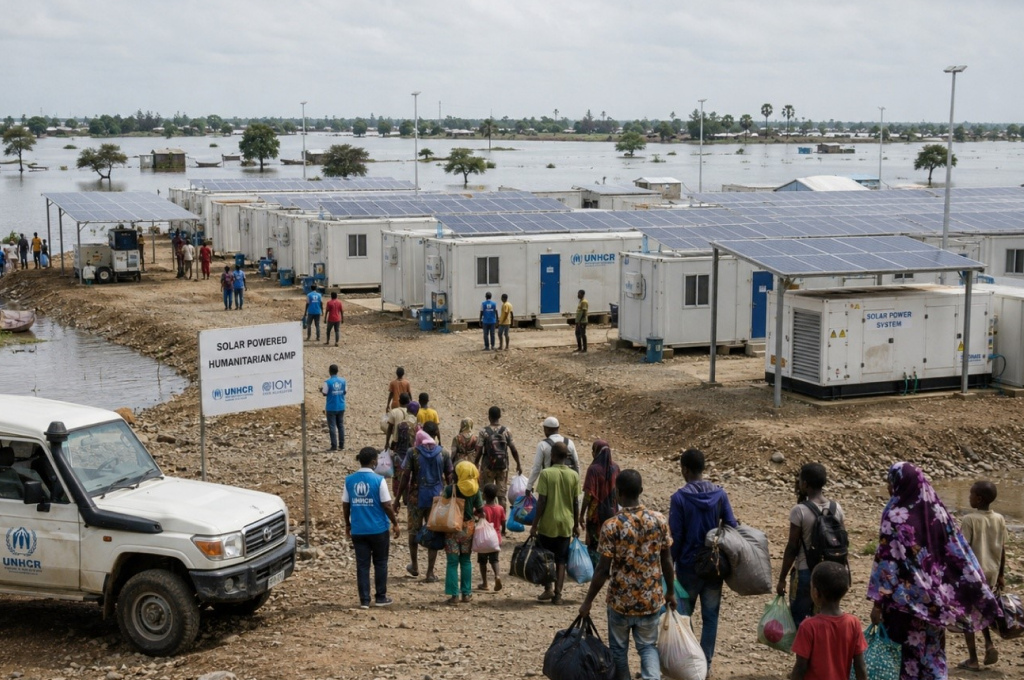
Power that keeps working when the grid is gone
A flood, an earthquake, an ice storm or a major wildfire all share one trait: the first thing to fail is exactly what is needed most. The power goes out, lighting drops, communications break, and access to clean water and hygiene becomes a problem. Roads are often impassable, so neither fuel deliveries nor equipment transport go to plan.
The classic answer — diesel generators and shelter set up in a hurry, under pressure — solves the moment but creates new dependencies: fuel that must keep arriving, noise next to shelters and clinics, and equipment that fails precisely when it must not. There is a different approach: a pre-positioned, rapidly deployable and energy-independent backbone that keeps working even when the grid is gone.
The grid is the first thing to fall
In almost every major disaster, the power grid is among the first systems to give way. Lines come down under ice or wind, substations flood, and a fault in one section cascades into the rest. The instant the power is gone, pumps, lighting, heating and cooling, telecommunications and water systems all stop — that is, exactly what the response depends on.
The diesel generator has been the default answer for decades, but in a real crisis its limits show. It needs an unbroken fuel supply along roads that may be cut, it is loud in a setting where people are already under stress, it requires maintenance and supervision, and it is a single point of failure the whole site relies on. The longer the crisis lasts, the more these limits cost.
What TerraCell delivers in the first hours
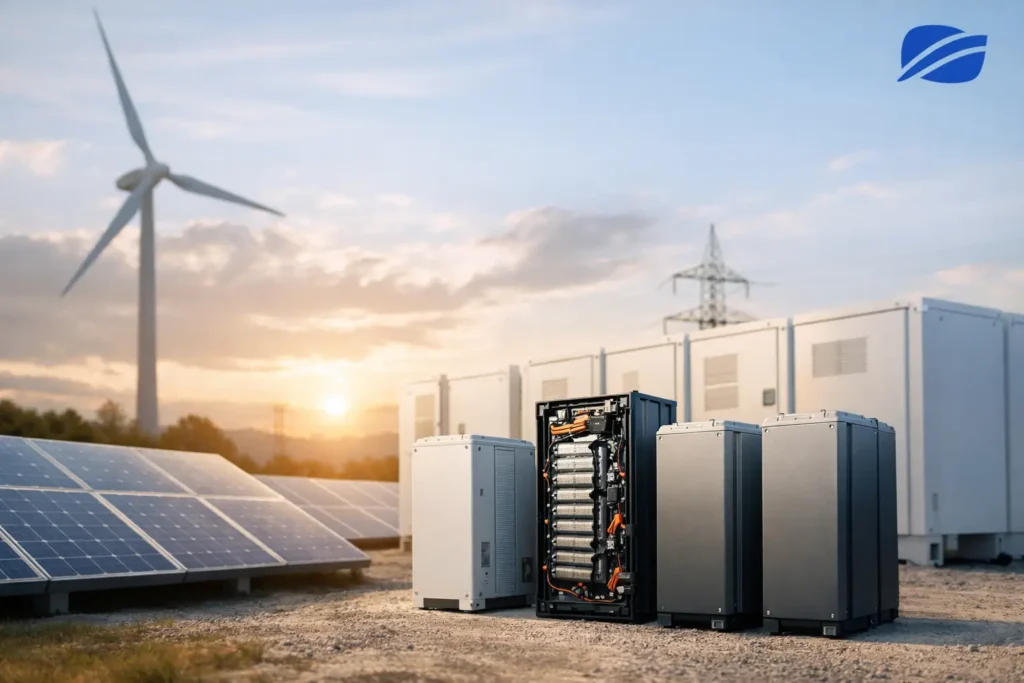
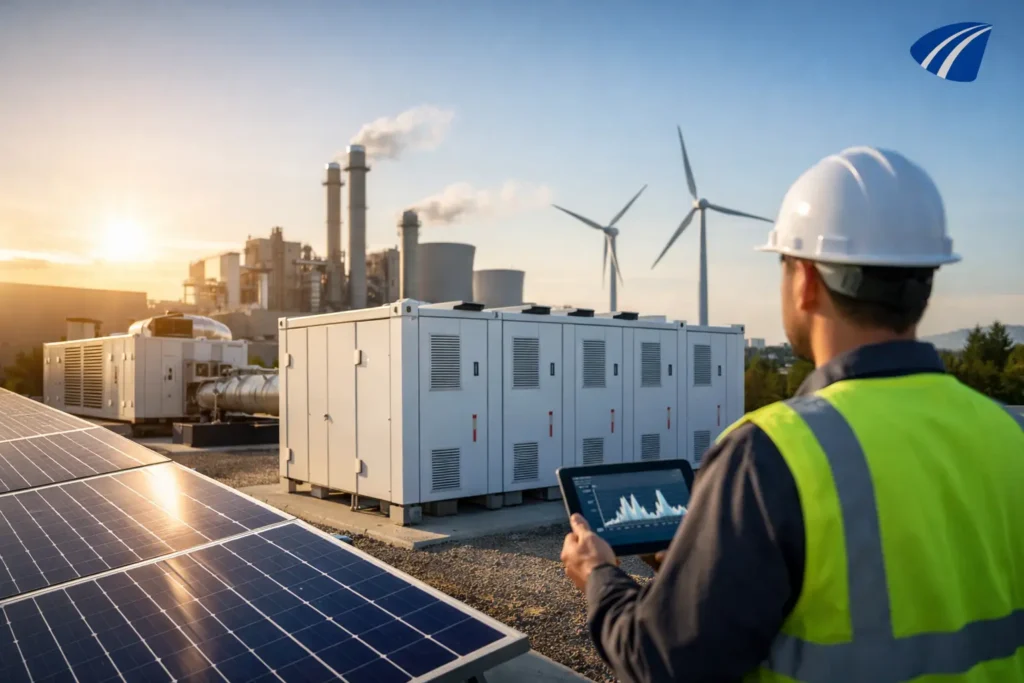
TerraCell is a modular energy unit that combines solar panels, battery storage and smart power management in a compact, transportable format with standard dimensions of 6 × 2.4 m. In an emergency, that means the critical functions can come online without waiting for the grid and without improvisation.
WorkBox becomes the command and coordination centre of the response — stable power for communications, computers, device charging and lighting, on a site where nothing is in place. CoreNest provides an enclosed, lit and temperature-stable space, for deployed teams or for people temporarily left without a home, while Echelon offers a higher level of comfort when recovery drags on. SaniPod handles hygiene with no connection to water or sewage, and in shelters and assembly points the hygiene standard is a direct line of defence against the spread of disease.
And the system runs quietly. Without the constant noise of a generator, the night beside a shelter, clinic or hospital stays calmer, while power for communications, lighting and basic devices remains stable day and night.
From first response to recovery
The value of the modular approach doesn’t end in the first hours. The same unit that served as a command centre in the first phase can become a supply point during stabilisation, and part of a temporary settlement during recovery. Modules are moved, added and reconfigured as the situation changes.
And when the emergency is over, the equipment doesn’t become dead capital. It returns to everyday use — as field power support, a mobile office, a sanitary point at public locations, or a reserve ready for the next need. That’s the key difference from equipment bought for a single crisis.
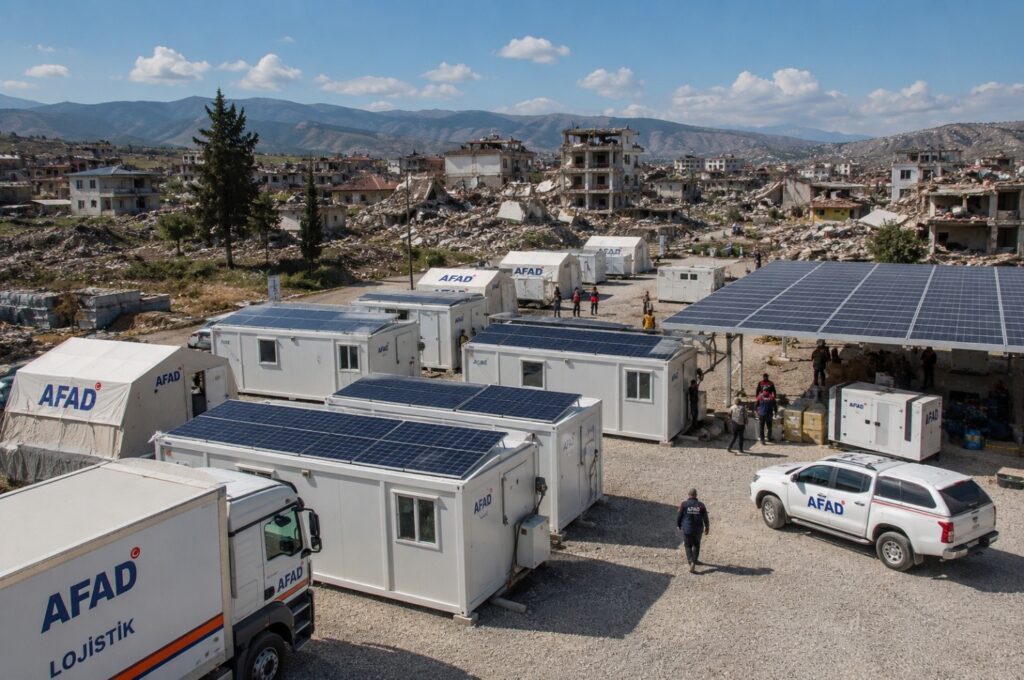
Preparedness over improvisation
The most expensive procurement is the one made in the middle of a crisis. When everything is demanded at once and under pressure, prices rise, deadlines slip and quality is hard to control. A pre-positioned system reverses that logic: the cost is planned calmly, and in the critical moment you use what is already there.
For municipalities and critical-infrastructure operators, TerraCell fits the Total Cost of Ownership logic: the cost is assessed across the full working life of the system, measured in decades, rather than by the initial price alone. It is a dual-purpose asset — one that works every day and stands as a ready reserve in an emergency. Preparedness is therefore not carried as a cost for an event that may never happen, but as an asset that is used regardless.
Why this matters for Serbia and the region
The region carries serious lessons. The catastrophic floods of 2014 showed how quickly energy and utility infrastructure fail once the water arrives. Earthquakes across the wider neighbourhood, ice storms that bring down power lines, and increasingly frequent major wildfires in summer — none of this is an exception, but a recurring pattern that climate change is making more frequent.
At the same time, the expectation grows that the public sector and infrastructure operators be ready — not just to react, but to hold prepared, sustainable and rapidly deployable capacity. TerraCell provides a tangible element of preparedness that is realistic for the budgets, deadlines and field conditions municipalities and services actually work with.
Readiness is built before the crisis
The best response to an emergency isn’t created at the moment it begins. It is prepared earlier — quietly, deliberately, while there is still time. TerraCell brings together what is usually separate under crisis conditions: speed of deployment, energy independence, a hygiene and working standard, and cost control. For municipalities, civil protection and critical-infrastructure operators, the question isn’t whether the next emergency will come, but how ready the site will be when it does.
| If you’re planning how to keep your locations functional even when the grid goes down, a modular off-grid system is worth a serious look before an emergency forces the decision. TerraCell arrives ready, sets up in hours to a few days and runs independently of the grid — and outside a crisis it stays in everyday use. Schedule your free feasibility study: nevena.milenkovic@energize.rs |