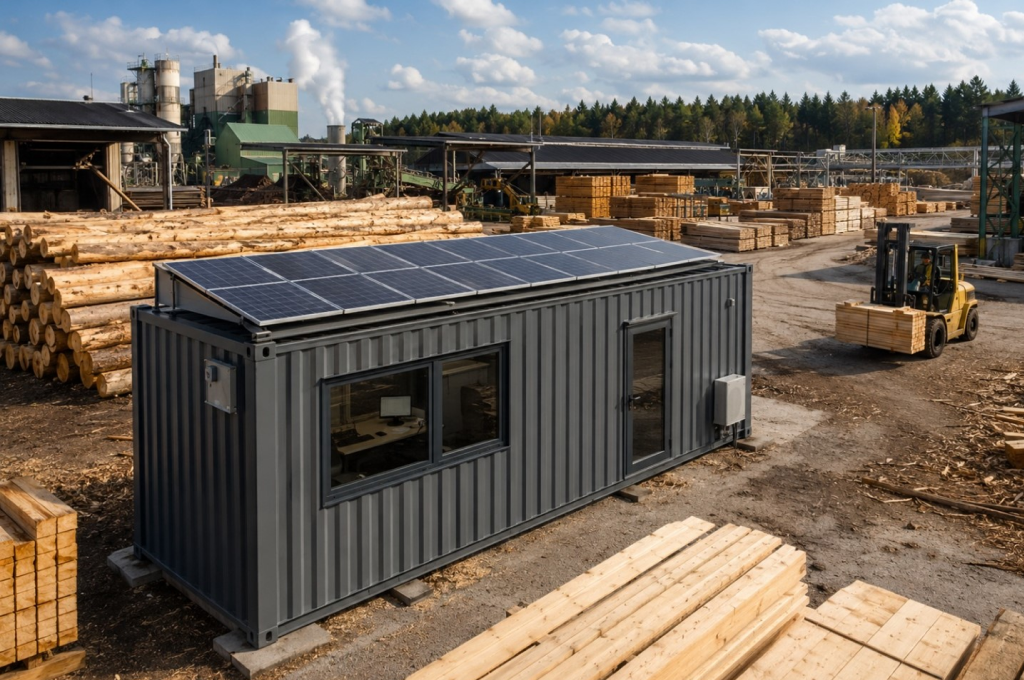
The wood processing industry faces a problem few other industries know to the same degree. Sawmills, drying kilns and forestry operations work where the timber is — deep in forest complexes, mountainous areas and rural regions far from a stable power grid. Often there is no grid at all, or connecting to it is so expensive and slow that it isn’t really an option. For generations the answer has been the same: a diesel generator
Two kinds of pressure, one source
Wood processing is among the most energy-intensive industrial sectors. Industrial drying kilns run continuously, with a stable and high load. Conveyor belts, sanding and sawing machines require constant power throughout the working day. A seasonal field operation for logging and timber transport has parallel needs of its own — worker accommodation, office space, sanitary facilities, tool charging.
Diesel covers all of that, but at a premium. Per kilowatt-hour, a generator costs three to five times more than a solar system with battery storage once you add fuel, service, downtime and supply logistics. A grid connection, where it is even possible, easily exceeds several hundred thousand euros and takes months. And the pressure from the other side keeps rising — EU customers, banks and foreign partners increasingly ask for proof of low emissions as a precondition for working together.
A system that moves with the business
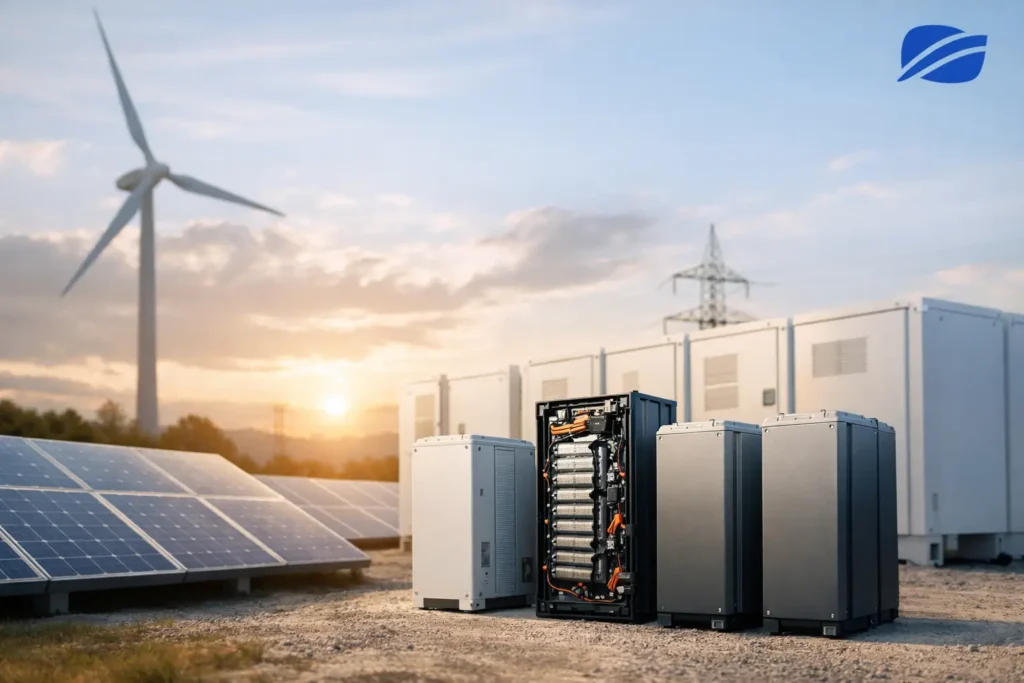
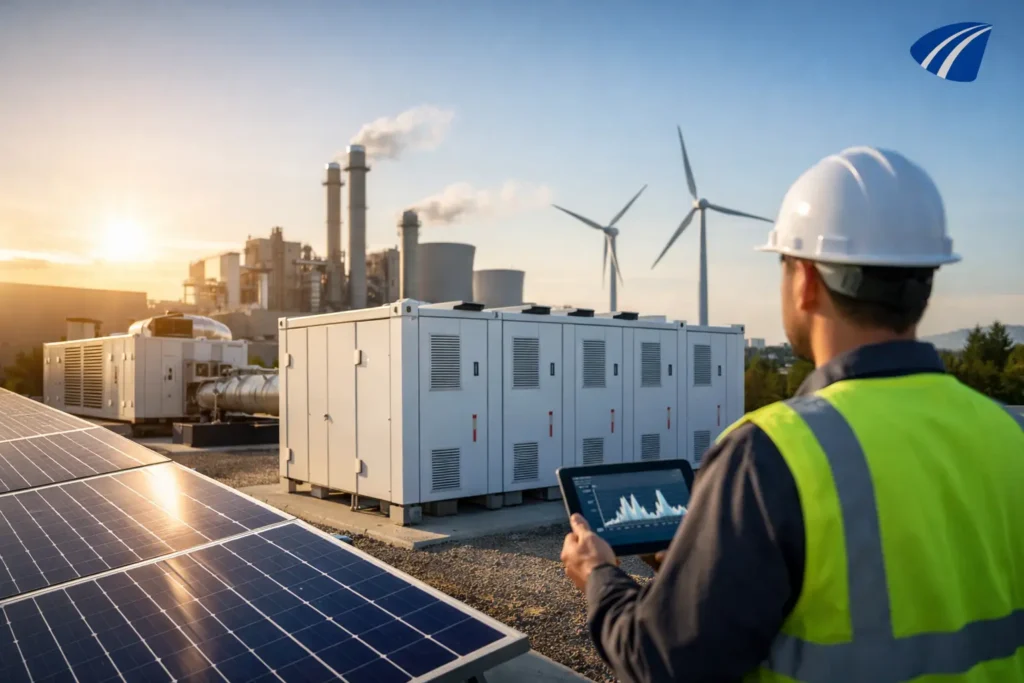
A modular solar system with battery storage changes the math. The system is installed on a site with no grid connection — it collects energy during the day, stores it in batteries and delivers it to the load 24 hours a day. Smart energy management balances production, storage and consumption automatically, without constant supervision.
A standard container format means the system is transported like any other container and installed in just a few days. When a seasonal operation ends and the work moves twenty kilometers down the road, the system moves with it. The investment isn’t tied to one location — it’s tied to the company and the rhythm of its projects.
Which operations benefit most from this
Industrial drying kilns get the clearest value — their consumption is predictable and constant, and it happens mostly during daylight hours when solar delivers the most. The same applies to sawmills with stable daily production, where this kind of system can cover peak consumption and drastically reduce reliance on diesel or expensive tariff periods.
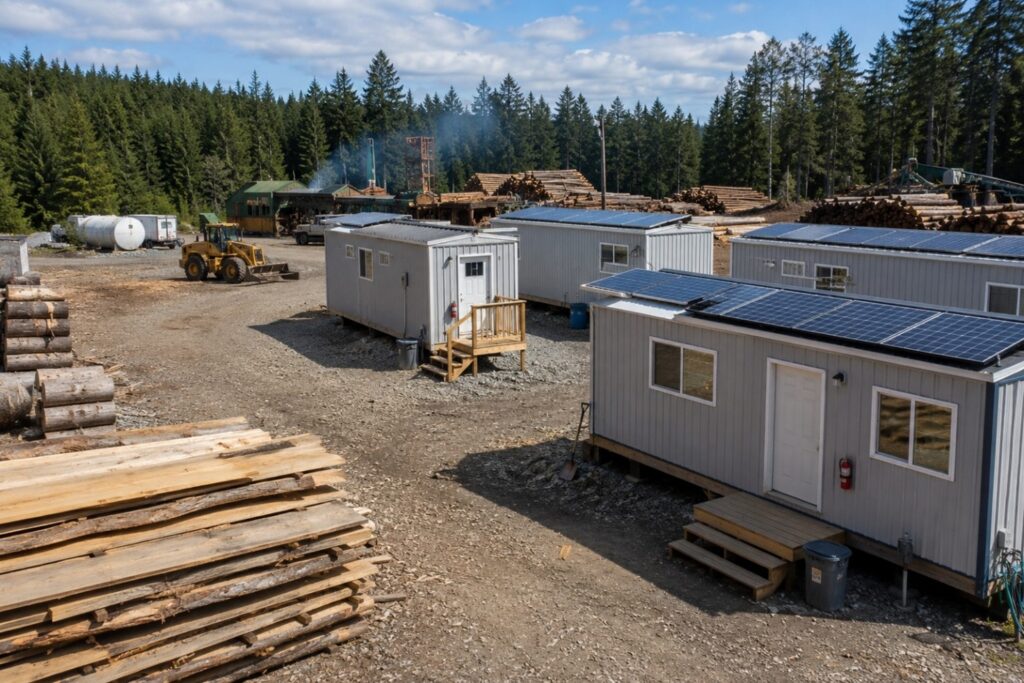
Mobile primary timber processing units, which are increasingly set up directly at the cutting site, gain the ability to operate from day one — without waiting on a grid connection and without depending on fuel deliveries. Forestry operations with field camps use the same principle for worker accommodation, the foreman’s office and sanitary facilities. Existing sawmills with an unstable grid use the same system as an automatic backup — it takes over the power supply in case of an outage without manual intervention and without interrupting production.
Decades, not years
The most common mistake when evaluating this kind of solution is looking only at the initial system cost. The right view is the total cost of ownership across 25 to 30 years of operation — what energy actually costs you over all that time, with every season, every breakdown and every fuel price hike. In that projection, a solar system with batteries isn’t expensive. Diesel is.
There is also a second layer of value that can no longer be ignored. Banks financing expansion, funds taking equity positions and customers signing long-term offtake agreements all ask for proof of low emissions. Solar power is part of that documentation from day one — not something added at the last minute before the contract is signed.