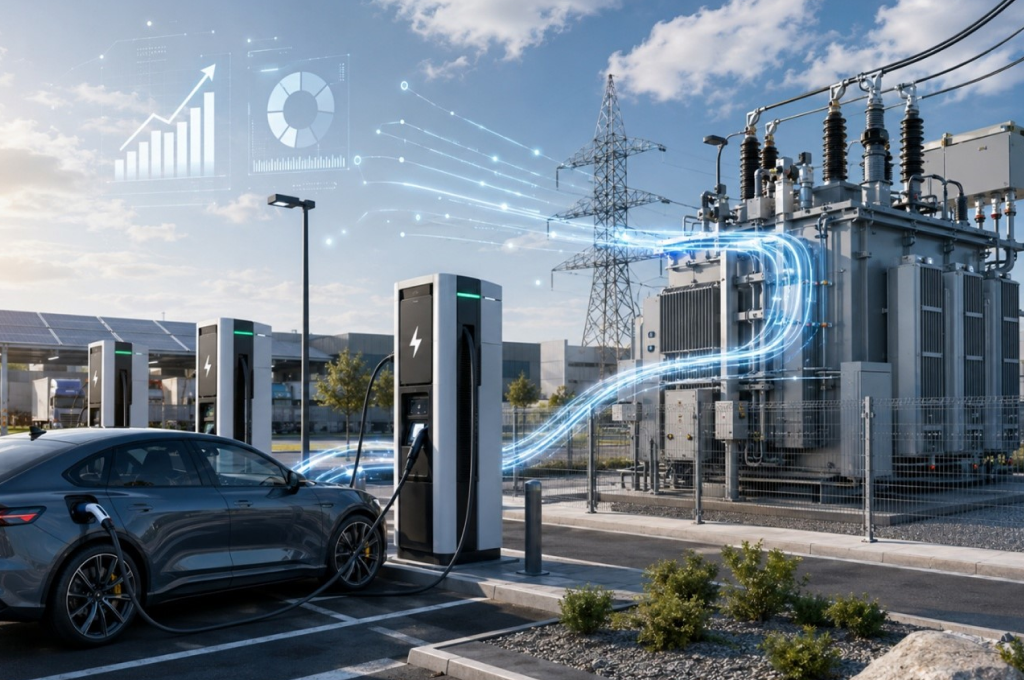
The development of electromobility in recent years has driven the rapid expansion of charging infrastructure, which today no longer consists solely of standard alternating-current power sources but also includes systems for fast and ultra-fast direct-current charging with capacities exceeding three hundred and fifty kilowatts. While the end user focuses on charging time and ease of use, every installed charger represents a concrete demand on the electrical network, one that first passes through the local transformer substation of a commercial or industrial facility. Understanding the actual load that fast and ultra-fast chargers impose, together with its impact on existing or planned transformer substations, has become a critical factor in decisions regarding the construction of modern electromobility infrastructure.
Existing charging infrastructure is divided into several categories according to the supply type and nominal capacity. The simplest solutions are residential and commercial chargers based on alternating current, which typically operate between three and twenty-two kilowatts and represent the standard option for overnight charging or for workplaces with a larger number of employees. Fast direct-current chargers, with capacities between fifty and one hundred and fifty kilowatts, enable charging at public locations within thirty to sixty minutes. Ultra-fast chargers, with capacities ranging from one hundred and fifty to three hundred and fifty kilowatts and above, represent the new generation of equipment designed for motorways and logistics companies, where charging times of ten to fifteen minutes are expected. The latest generation of chargers for heavy transport exceeds one megawatt, a level comparable with smaller industrial facilities.
The installation of fast and ultra-fast charging infrastructure directly affects the sizing and loading of the local transformer substation. A typical industrial transformer substation with a nominal capacity between four hundred and one thousand kilovolt-amperes already uses seventy to eighty percent of its capacity to supply production and commercial processes, leaving very limited room for additional load. The installation of just four ultra-fast chargers of one hundred and fifty kilowatts each generates an additional peak demand of six hundred kilowatts, which for most existing installations exceeds the available reserve capacity and may require substantial reconstruction or complete replacement of the substation. Distribution companies are increasingly refusing to connect new charging infrastructure to existing substations that are not prepared for this type of load, which significantly extends and increases the cost of project implementation.
The electrical characteristics of fast and ultra-fast charging also differ significantly from those of classic industrial consumers. Chargers generate a highly dynamic load that can transition from zero to full capacity within a short time, creating significant transient processes within the system. In addition, the rectifiers that convert alternating current to direct current generate harmonic distortion that must be controlled and filtered before entering the network. The power factor of chargers varies depending on the moment and type of equipment, which places additional pressure on reactive energy compensation systems. All these specific characteristics mean that a transformer substation supplying fast and ultra-fast infrastructure must be equipped with considerably more precise protection, compensation and monitoring systems than classic industrial installations require.
From the standpoint of impact on substation equipment itself, the dynamic load generated by fast charging leads to accelerated thermal cycling of the transformer. Frequent load variations create mechanical and thermal stresses on the windings, insulation and cooling equipment, which can shorten the service life of the transformer if it is not properly sized and protected. Modern generations of transformers are designed for this type of load and feature more robust construction, improved cooling systems and advanced sensors for monitoring temperature and oil in real time. Investment in such equipment, which is typically fifteen to twenty percent more expensive than standard industrial transformers, returns through long-term reliability and the avoidance of costly repairs or premature replacement.
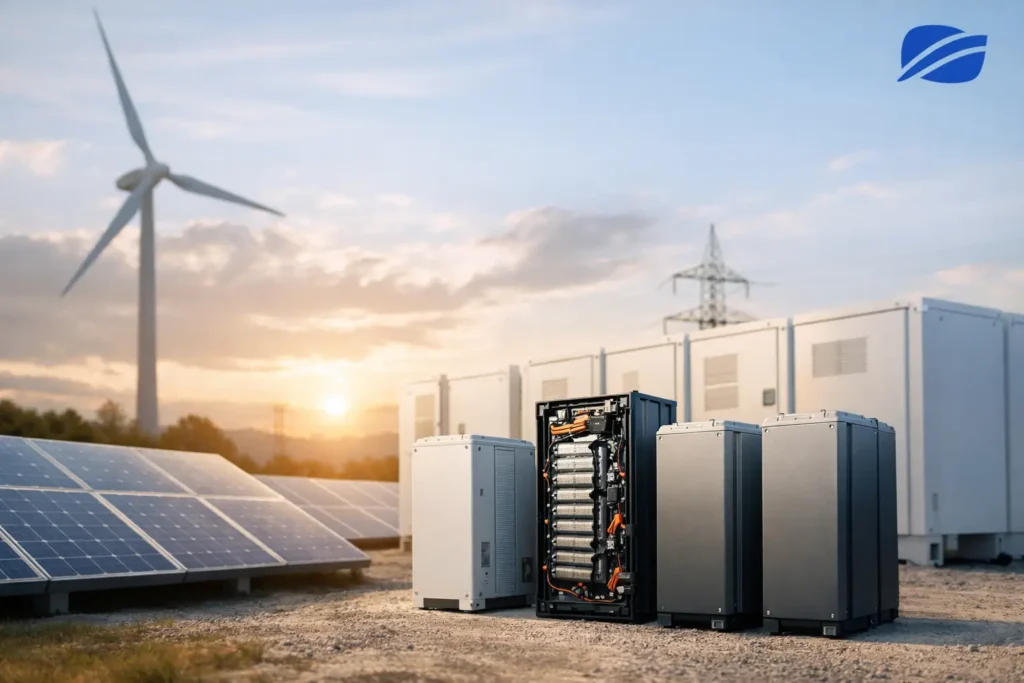
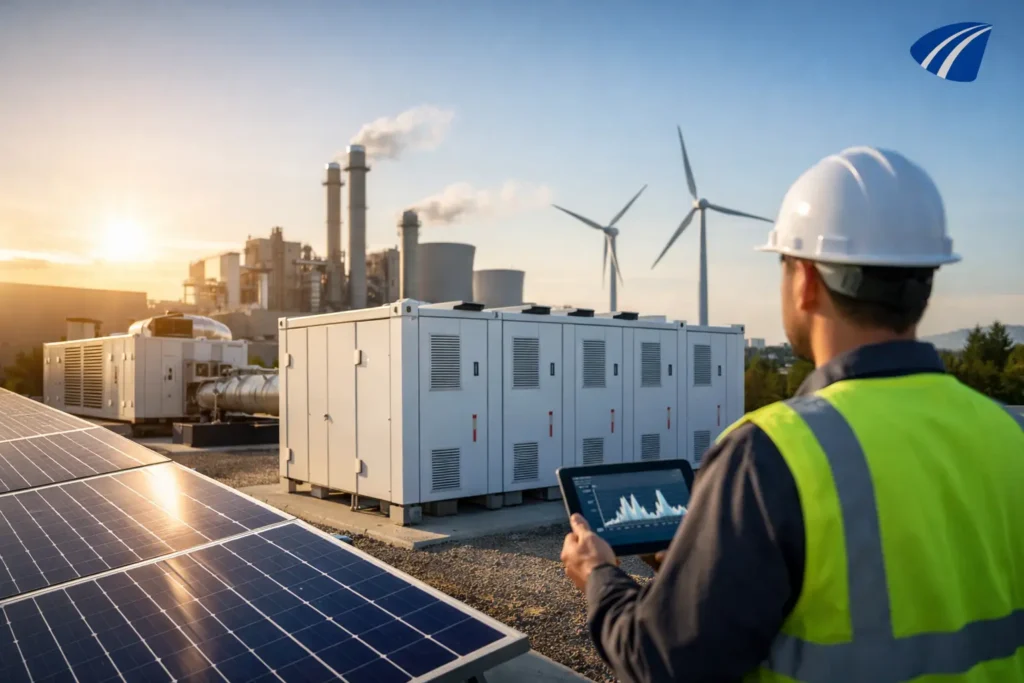
Intelligent load management is becoming a key strategy for reducing pressure on the transformer substation when new charging infrastructure is installed. Energy storage systems, positioned alongside the chargers, can serve as a buffer that absorbs peak demand and distributes the load evenly throughout the day. The combination of a solar power plant, energy storage and intelligent charger management enables a drastic reduction of peak load on the substation, thereby avoiding costly reconstructions or upgrades. Dynamic management of charging speed also represents an effective solution, as it allows the available capacity to be distributed among several vehicles according to need and priority, without exceeding the maximum permissible load of the system.
Proper sizing of a transformer substation for charging infrastructure requires careful analysis of the expected usage profile. The simultaneity coefficient of charger operation rarely exceeds seventy percent under realistic conditions, as not all vehicles charge simultaneously at maximum capacity. In addition, the charging curve of modern electric vehicles is not linear, as batteries reach maximum power only during the first twenty to thirty percent of charging, after which the power gradually decreases. Understanding these patterns enables optimal sizing of the substation that meets actual needs without unnecessary oversizing. A strategic approach also involves planning for future expansion, since the number of chargers at a location typically grows over subsequent years, following the rise in the number of electric vehicles in use.
From an economic perspective, the costs associated with upgrading the transformer substation for fast and ultra-fast infrastructure can represent a significant share of the total investment in a charging project. Distribution companies typically charge for connection according to installed capacity, which at stations with multiple ultra-fast chargers can reach amounts exceeding the price of the chargers themselves. A strategic approach that integrates energy storage systems, on-site solar generation and intelligent load management can significantly reduce the required connection capacity, thereby lowering both the investment in the substation and the costs of the distribution connection. Such an approach not only reduces initial costs but also provides greater operational autonomy and system resilience against fluctuations in electricity prices.
The development of modern electric vehicle charging infrastructure is not an isolated technical task limited to the selection of chargers themselves, but a complex undertaking that includes substation sizing, planning of energy storage systems, integration with solar power plants and the design of intelligent load management systems. Investors planning the construction of commercial or public fast-charging infrastructure must anticipate these requirements at the design stage, as subsequent adaptation of the substation almost invariably leads to multiple costs and significant operational delays. Collaboration with an expert team that understands both charger technology and the characteristics of medium-voltage distribution is essential for the realisation of a project that pays for itself throughout the full service life of the installation, and for the establishment of infrastructure that is prepared for the next generations of electric vehicles and for the growing role of electromobility in everyday business and transport.