
Electricity costs often do not increase because a company consumes “too much electricity” overall, but because it consumes it at the wrong time and in the wrong way. This is exactly where the question of how to reduce peak demand begins—not only to lower monthly energy costs, but also to improve operational stability, reduce stress on internal infrastructure, and gain better control over energy-related risks.
For industries such as manufacturing, logistics, food processing, telecommunications, and data centers, peak demand is not merely an administrative line item on an electricity bill. It is an operational indicator that multiple large consumers are running simultaneously, that the system lacks flexibility, or that consumption is not aligned with tariffs, production schedules, and available energy sources. Combined with rising electricity prices and the need for uninterrupted operation, peak demand management becomes a business decision rather than a simple technical adjustment.
What Peak Demand Actually Means
Peak demand represents the highest level of power that a facility draws from the grid during a given period. In practice, it is the moment when major consumers—compressors, refrigeration systems, HVAC units, furnaces, pumps, chargers, production lines, or server infrastructure—operate simultaneously and create a maximum demand level.
Why does this matter? Because utility billing and distribution models often consider not only total energy consumption in kilowatt-hours but also maximum power demand in kilowatts. In other words, two companies may have similar monthly energy consumption while receiving significantly different electricity bills. The company with higher demand peaks typically pays more.
There is also another layer to the issue. High peak demand increases thermal and mechanical stress on equipment, complicates the sizing of substations and distribution systems, raises the risk of overloads, and may limit future production expansion. That is why a serious analysis goes beyond the electricity bill and examines the entire energy architecture of the facility.
How to Reduce Peak Demand Without Guesswork
The most common mistake is trying to solve the problem blindly—by replacing individual equipment or implementing general energy-saving measures. This rarely delivers meaningful results. If you want to understand how to reduce peak demand in a measurable and financially viable way, the first step is load profiling.
Hourly data is essential, and in many cases, minute-by-minute measurements are even more valuable. Only then does it become clear whether demand peaks are caused by refrigeration systems during morning startup, compressor stations during shift operations, HVAC systems at midday, multiple production lines operating simultaneously, or poorly timed charging of batteries and forklifts. Without this insight, every solution remains an assumption.
In professionally managed projects, the analysis includes historical utility bills, load measurements, operating schedules, seasonality, and future growth plans. The objective is not merely to lower a single peak but to create a more stable and predictable load profile.
Shifting Consumption to Another Time Period
One of the fastest optimization methods is load shifting—moving part of the consumption from peak periods to times of lower demand. In many manufacturing facilities, this means scheduling energy-intensive operations sequentially rather than simultaneously. In cold storage and food processing industries, it may involve adjusting pre-cooling strategies. In logistics, it often means optimizing the charging schedule of electric vehicles or forklifts.
This approach is financially attractive when operational flexibility exists. However, it is not universally applicable. If a facility operates under strict production cycles, critical temperature requirements, or continuous manufacturing processes, opportunities for load shifting may be limited. That is why organizational measures are often combined with technological solutions.
Managing Starting Currents and Equipment Sequencing
A significant portion of peak demand is not caused solely by equipment rated power but by simultaneous startup events. Motors, compressors, chillers, and pumps can draw substantially higher power during startup than during steady-state operation.
The implementation of soft starters, variable frequency drives (VFDs), and sequential startup logic often delivers rapid improvements. This is especially important in facilities where multiple systems start at the same time—at the beginning of a shift, after downtime, or according to automated schedules. Properly configured automation can reduce demand peaks without affecting production output.
Battery Storage as a Peak Shaving Tool
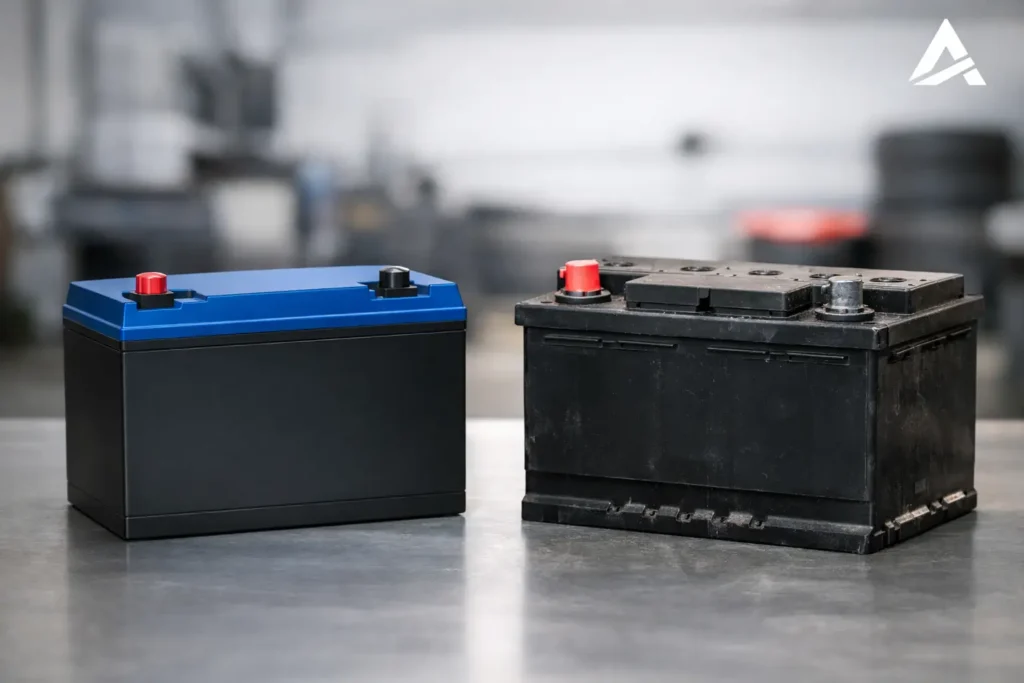
When operational processes do not allow significant load shifting, battery energy storage becomes one of the most effective solutions. The concept is simple: during periods of low demand or when excess solar energy is available, the battery charges. When peak demand occurs, the battery supplies part of the required power, reducing grid consumption.
This is the classic peak shaving model. Its value extends beyond reducing billed demand charges. A BESS system can improve power continuity, increase solar self-consumption, and provide flexibility for future changes in load requirements.
Of course, the business case depends on the load profile, tariff structure, peak magnitude, and frequency of peak events. If demand peaks occur infrequently and only for short periods, an oversized storage system may not be justified. However, if peaks occur daily and significantly affect electricity costs, energy storage often becomes an investment with a clear return.
The Role of Solar Power in Reducing Peak Demand
Solar energy alone does not solve every peak demand challenge, but in a properly engineered system it can play a major role. If daytime demand peaks coincide with periods of high solar production, part of the consumption can be supplied directly from on-site generation, reducing the power drawn from the grid.
However, engineering precision is essential. If a company experiences demand peaks primarily in the morning or evening, the impact of solar without storage may be limited. If peaks are driven by daytime cooling loads, solar can be highly effective. That is why system sizing should not follow the principle of “more panels are always better,” but should instead be based on the actual consumption profile and investment objectives.
The greatest value comes from an integrated approach—solar generation, battery storage, demand management, quality distribution equipment, and automation working together as a single system. In that case, the investment delivers more than energy production; it provides control over energy costs.
Where Companies Most Commonly Lose Money
In practice, three recurring patterns emerge. The first is management focusing only on total energy consumption rather than maximum demand. The second is purchasing equipment in isolation without a unified energy management strategy. The third is evaluating investments solely on upfront cost rather than total cost of ownership.
This often leads to familiar outcomes: part of a solution is installed, but peak demand remains almost unchanged. Or a solar system is installed that looks impressive on paper but has little effect during the most expensive consumption periods. Or a battery storage system is deployed without sufficient data, resulting in a capacity that does not match actual peak requirements.
That is why serious companies do not ask for equipment—they ask for an energy model that works under their specific operating conditions. This is the difference between selling components and delivering an engineering solution.
What the Correct Project Approach Looks Like
The first step is an energy assessment focused on the load profile, consumer structure, and demand peak patterns. The second step is simulating multiple scenarios—organizational measures, automation, storage, solar, or combinations of these solutions. The third step is a techno-economic evaluation that demonstrates not only potential savings but also the impact on reliability, system availability, and future capacity expansion.
For larger systems, it is particularly important to assess how the solution affects existing infrastructure, including substations, protection systems, cabling, backup power systems, UPS installations, and HVAC systems. Peak demand is not an isolated challenge—it is connected to the entire energy topology of the facility.
This is why companies undertaking such projects seek partners capable of handling analysis, engineering, integration, and commissioning as a single scope of work. When responsibilities are fragmented among multiple contractors, the result may be technically acceptable but commercially suboptimal.
When the Investment Delivers the Fastest Return
The fastest returns are typically achieved by companies with frequent and pronounced demand peaks, multi-shift operations, large motor-driven processes, refrigeration systems, or facilities where power continuity is critical. In these environments, reducing peak demand immediately affects operating costs and often improves process stability as well.
Additional value is created when peak shaving is combined with solar generation, backup power systems, and energy optimization measures. In that scenario, a single investment addresses multiple challenges simultaneously—lower energy costs, improved resilience, and more efficient utilization of existing infrastructure.
For companies planning future growth, this becomes even more important. If demand peaks are not controlled today, every production expansion can increase costs and potentially require additional investments in grid connections and internal electrical infrastructure. By keeping peak demand under control, companies create room for growth without unnecessary energy-related constraints.
Energize approaches these projects in exactly this way—as a combination of technical optimization and business security. When peak demand is addressed at the system level rather than through individual components, the result is not only a lower electricity bill but also a stronger foundation for future growth.
If you are considering how to reduce peak demand, do not start with the equipment you might purchase. Start by understanding when, why, and how much power your system demands at its maximum. Only then does it become clear which solution will deliver measurable results and remain cost-effective as your company’s energy needs evolve.