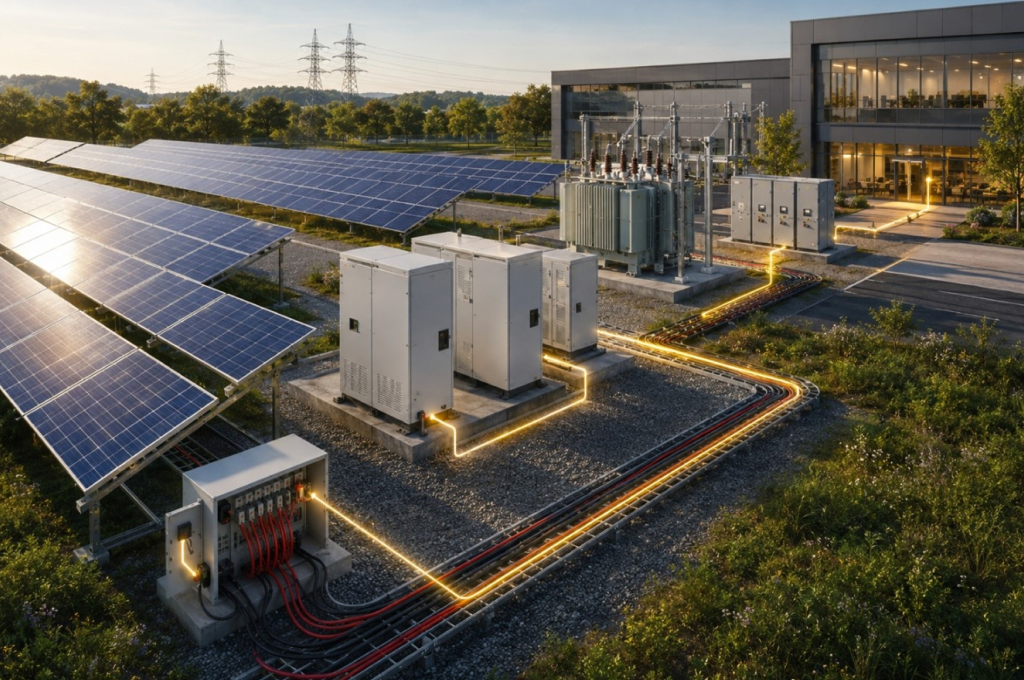
The visual impression of every solar power plant, whether located on the rooftop of an industrial facility or in the form of a ground-mount installation, is dominated by the dark rows of photovoltaic panels that absorb solar energy. These panels represent the face of the solar power plant, but in reality they constitute only the first link in a considerably more complex system that encompasses a series of technical components, each of which performs a specific function essential for the conversion of solar energy into usable electrical energy that reaches consumers or the distribution network. Understanding the entire architecture of a solar power plant, from the panels through the inverter and energy storage systems to the low-voltage and medium-voltage equipment, is essential for investors, engineers and managers who make decisions regarding equipment selection, system design and the long-term economic viability of the project.
The first link in the technological chain of every solar power plant is the photovoltaic panel, which consists of a large number of solar cells most often made of silicon as the basic semiconductor material. The operating principle is based on the photovoltaic effect, a physical phenomenon discovered as early as the nineteenth century, according to which photons of solar light, upon striking atoms of silicon, release electrons from their bonds and propel them in a defined direction through the structure of the material. This directed movement of free electrons generates an electrical current that is by its nature direct, expressed as DC current according to the English abbreviation for Direct Current. The quantity of energy generated depends directly on the intensity of solar radiation, the ambient temperature, the angle at which light strikes the panel and the technical characteristics of the panel itself, which are analysed in detail during the design phase of the solar power plant.
Although panels efficiently produce direct electrical current, virtually all devices used in industrial, commercial and residential facilities, as well as the electrical distribution network itself, are designed to operate with alternating current, known as AC current from the English Alternating Current. Alternating current is the standard across the entire electrical system because it enables efficient transmission of energy over long distances, the straightforward adjustment of voltage levels through transformers and the reliable operation of all classic electrical devices with motors and inductive components. The conversion of direct current from the panels into alternating current of the network represents one of the critical steps in the operation of every solar power plant and is performed by the central device in the system, known as the inverter, which represents the heart and the technical intelligence of the entire installation.
The inverter performs considerably more functions than the simple conversion of DC current into AC current, which qualifies it as the most complex and most intelligent component of the modern solar power plant. The function of maximum power point tracking, known as MPPT according to the English abbreviation for Maximum Power Point Tracking, continuously analyses the output characteristics of the panels and adjusts the operating point so that at every moment the maximum possible energy generation from the available solar radiation is achieved. In addition, the inverter continuously monitors the voltage and frequency of the distribution network, synchronises the output signal with network parameters and activates protections that, in the event of anomalies, disconnect the system from the network. These functions, collectively known as grid-tie functionalities, are essential for the safe operation of a solar power plant connected to the distribution network and for compliance with the standards imposed on all generators of electrical energy.
In modern industrial and commercial installations, simple grid-tie inverters are increasingly being replaced by hybrid inverters that take on the role of an intelligent manager of the entire energy system of the facility. The hybrid inverter simultaneously manages the flow of energy from the panels, the battery storage and the distribution network, and in real time makes decisions about the direction and distribution of energy in accordance with predefined priorities. In typical application scenarios, the hybrid inverter prioritises the direct supply of consumption within the facility from the panels, directs surplus energy to the charging of the battery, and at moments of insufficient generation activates discharging of the battery and, where necessary, supplementary supply from the distribution network. This type of management represents the basis of the implementation of the Zero Feed-In principle and significantly increases the economic value of the solar installation through a maximum level of self-consumption of the generated energy.
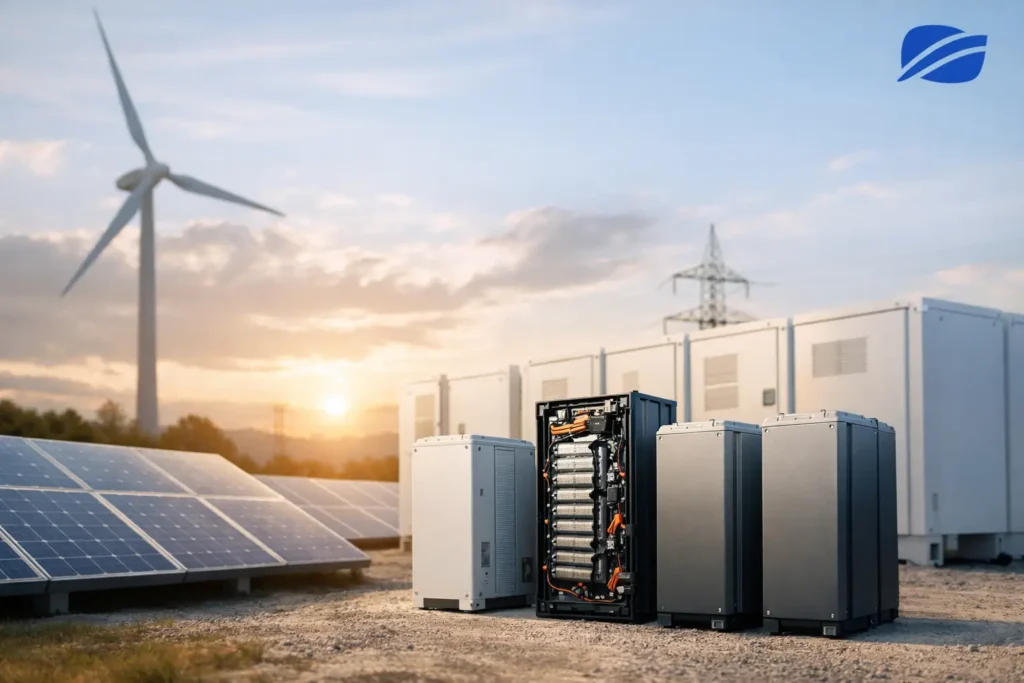
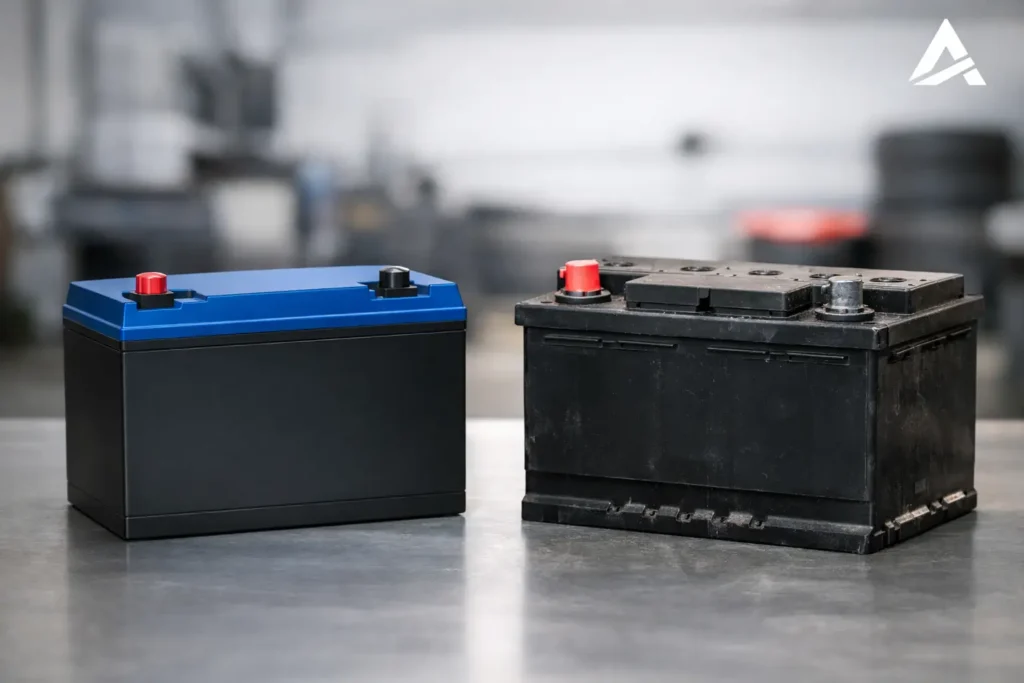
Energy storage systems, known by the abbreviation BESS from the English Battery Energy Storage Systems, represent the component that resolves one of the fundamental challenges of solar energy, namely its variable nature dependent on solar radiation. During the peak of generation, which in typical industrial facilities does not necessarily coincide with the peak of consumption, the surplus energy is immediately directed into the battery system instead of being returned to the distribution network. Later, in moments of increased consumption or insufficient generation from the panels, the battery system releases the stored energy and uses it for the needs of the facility. In addition to the storage function, modern BESS systems play a critical role in the reduction of peak loading, the so-called peak shaving approach, which directly reduces the demand tariff charges for maximum power that distributors increasingly impose on industrial consumers.
Although it is rarely mentioned in public discourse on solar power plants, the low-voltage equipment constitutes the fundamental part of the system through which the generated energy reaches from the inverter to the consumers and the distribution infrastructure of the facility. Smart low-voltage distribution panels, equipped with intelligent circuit breakers featuring electronic protection, distribute energy throughout the facility, protect the installation from overloads and short circuits, and provide continuous monitoring of the system status. Low-voltage cables, properly sized in accordance with the power of the panels and the length of the run, ensure efficient transmission of energy with minimal losses, while specialised DC cables between the panels and the inverter meet specific requirements regarding insulation, resistance to UV radiation and the ability to operate in wide temperature ranges. Although these components are often overlooked in the presentation of solar projects, their quality directly determines the long-term reliability of the entire installation.
In the case of larger industrial solar power plants and ground-mount installations, the generated energy must be raised to the medium-voltage level before reaching the distribution network, which is achieved through transformers and specialised medium-voltage substations. Transformers in collector substations of one to eight megavolt-amperes capacity raise the voltage from the alternating current of the inverter to the medium-voltage level, which is most commonly ten, twenty or thirty-five kilovolts, depending on the configuration of the connection to the distribution network. Medium-voltage installations, equipped with vacuum circuit breakers and advanced relay protections, ensure a safe connection of the solar power plant to the distribution network, respond automatically to all anomalies in operation and meet the strict requirements of the distribution system operator regarding the quality of electrical energy, protection and communication with the central dispatch system.
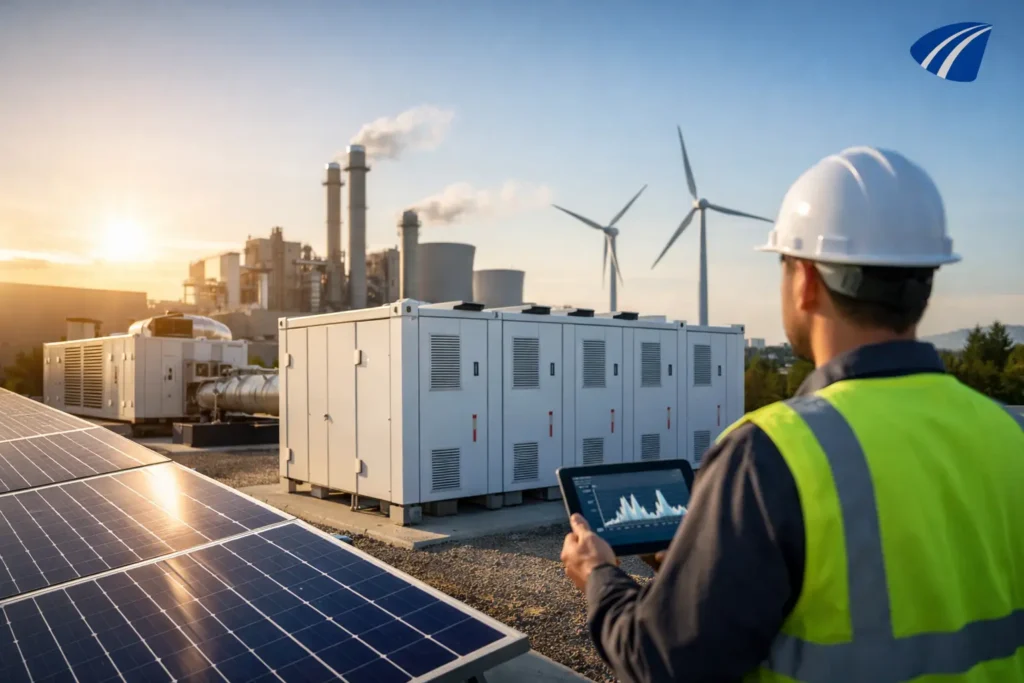
A solar power plant is not an isolated collection of panels, but an integrated technological system in which the photovoltaic effect generates the initial energy, hybrid inverters convert and intelligently direct it, battery systems store it for optimal time-based use, and robust low-voltage and medium-voltage equipment ensures that every kilowatt-hour reaches its destination safely. The reliability of the entire system is determined by the quality of its weakest component, which means that investors who strive for the long-term viability and security of their projects must devote attention to every segment of the system, not only the most visible panels. Collaboration with an expert team that understands all levels of the solar power plant architecture, from photovoltaic cells to measurement instruments in the medium-voltage substation, is essential for the design of a system that, over twenty-five and more years of operation, meets all the technical and economic goals set at the time of investment.