A few seconds of power interruption in an office is an inconvenience. In an industrial facility, the same event can mean production line downtime, raw material losses, quality issues, data loss, and penalties toward customers. That is why this guide to backup power supply for industrial facilities does not start with the question of which equipment to buy, but with a far more important one, what is the actual cost of a single outage, and how quickly must the system respond.
In practice, the biggest mistake is not choosing a “weaker” device, but designing the wrong architecture. Protecting PLC cabinets and SCADA systems is not the same as protecting an entire production block, cold storage facility, server room, fire protection systems, or mixed loads with high starting currents. Backup power must be engineered according to the process, not according to a catalog.
How Backup Power Supply for Industrial Facilities Is Planned
A good system starts with a criticality analysis. The first step is separating what must operate without interruption, what can tolerate a short interruption, and what can be intentionally shut down. Most industrial facilities have at least three priority zones: critical IT and control infrastructure, process equipment sensitive to voltage drops, and consumers that can wait for generator startup or grid restoration.
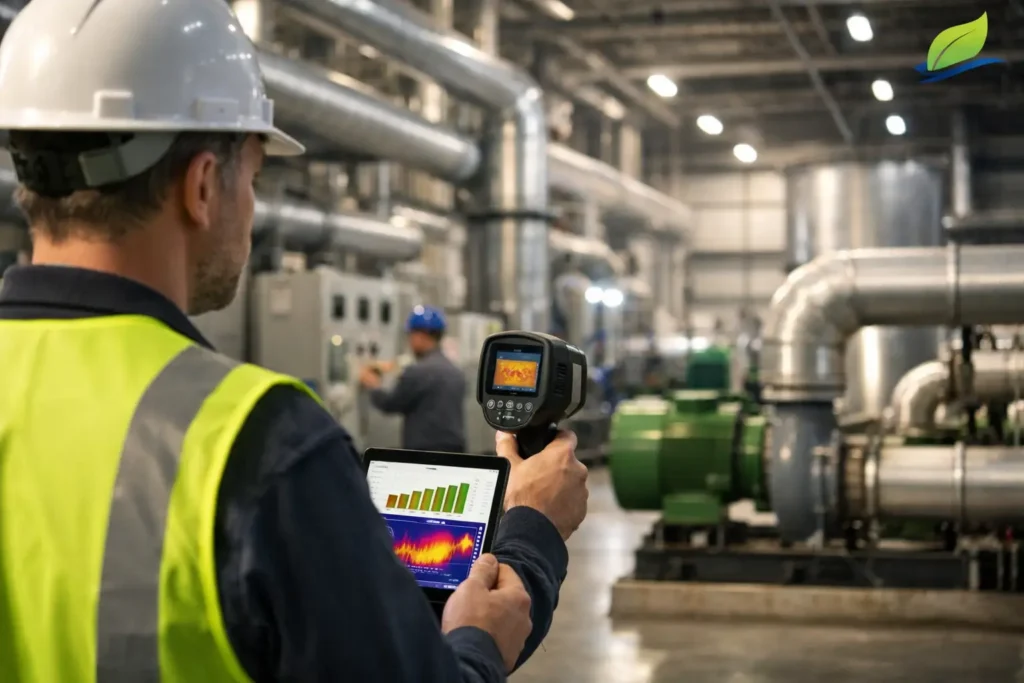
The next step is measuring the actual load. Nameplate power ratings are often insufficient for engineering purposes because they do not provide enough information about peak loads, power factors, harmonic distortion, or motor startup behavior. A facility with variable frequency drives, compressors, pumps, and cooling systems requires a completely different approach compared to a warehouse with lighting, IT equipment, and forklifts charging.
The third step is defining autonomy. Some facilities only need 5 to 15 minutes for controlled shutdown. Others require one hour to bridge short outages and voltage fluctuations. In some cases, the goal is multi-hour operation without the grid, using a generator or a high-capacity battery system. There is no universal solution here. If you require high autonomy for large loads, batteries quickly become a serious investment. If you need long runtime with a more reasonable CAPEX, a generator often offers better economics. If you require both fast response and energy optimization, BESS becomes a logical solution.
Guide to Backup Power Technologies for Industrial Facilities
UPS – for Equipment That Cannot “Blink”
UPS systems are the first line of protection wherever even milliseconds of interruption are unacceptable. This includes servers, network equipment, PLC systems, automation, laboratory and medical equipment, security systems, and process equipment sensitive to power quality. In serious industrial applications, online double conversion UPS systems are most commonly selected because they continuously stabilize voltage and frequency while effectively isolating consumers from grid disturbances.
It is important to understand the limitations of a UPS. It is not designed to carry an entire facility for hours unless it is part of a larger system with significant battery capacity. Its primary value lies in instant response and preserving continuity until another power source activates or until the process transitions into a safe state. In facilities with frequent micro-outages and voltage dips, a high-quality UPS often prevents far more damage than the initial investment might suggest.
Diesel Generator – for Longer Autonomy and Higher Loads
Generators make sense when the goal is to keep the facility operating during extended grid outages. For manufacturing plants, logistics centers, cold storage facilities, telecom sites, and facilities with high availability requirements, generators remain the standard solution. However, selecting a generator is not simply about the kilowatt rating.
It is essential to distinguish between standby and prime operating modes, verify load acceptance behavior, coordinate the system with motor starting currents, and properly engineer automatic transfer switching. If the generator is expected to support the entire facility, selective protection analysis and sequential load activation become critical. Otherwise, you may end up with a system that appears capable on paper but fails in real startup conditions as soon as the largest loads engage.
Battery Systems and BESS – When Backup Power Must Do More Than Backup
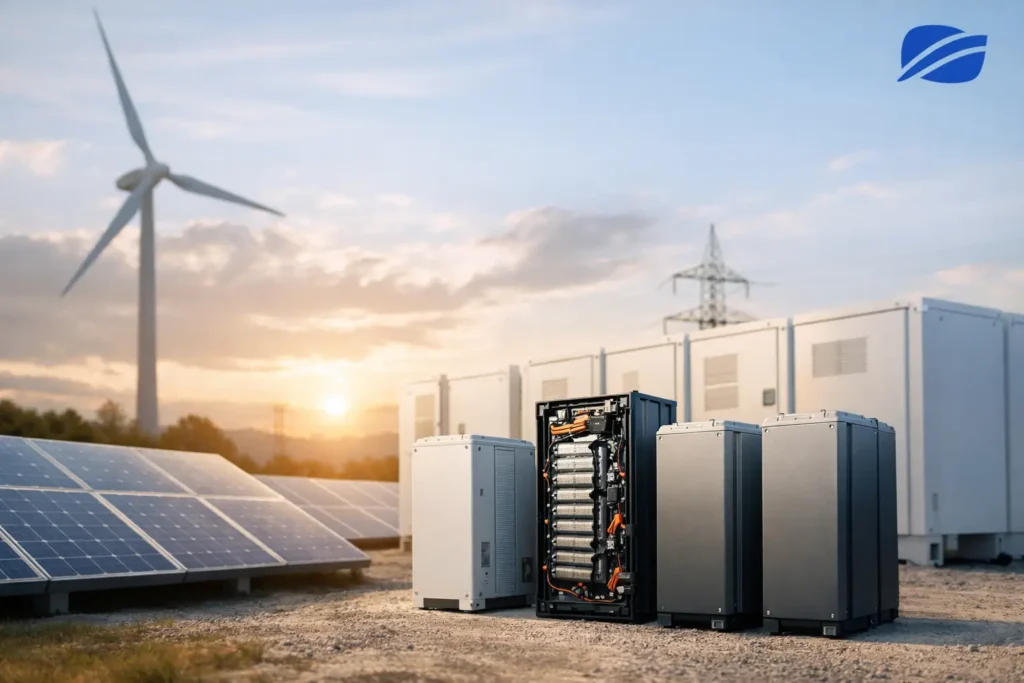
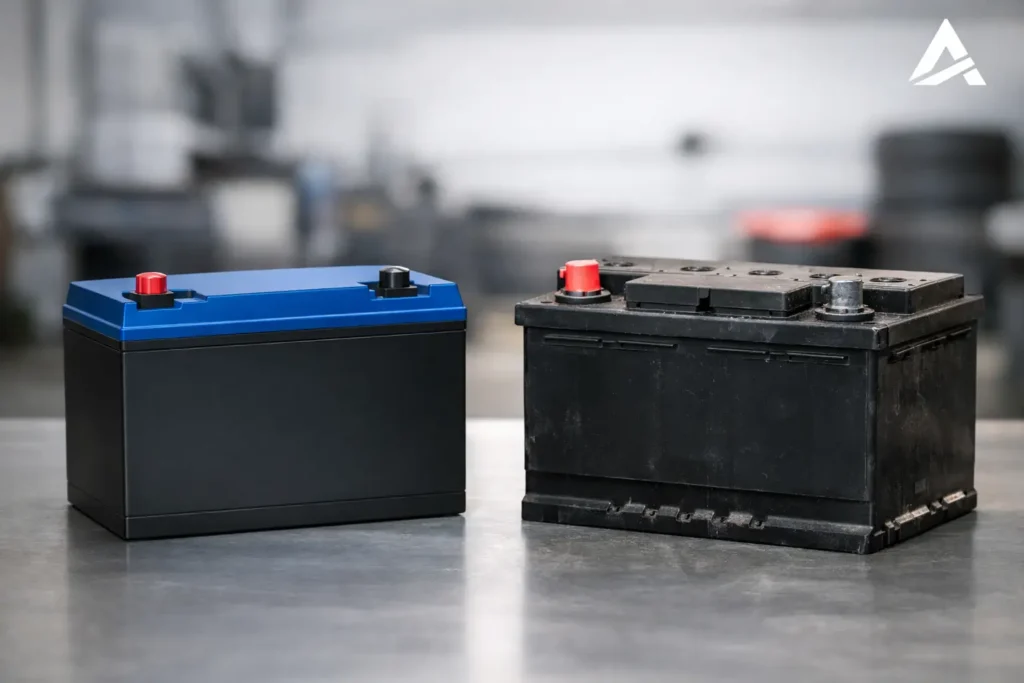
Industrial batteries and BESS systems are changing the logic of backup power. They are not only designed to bridge outages, but can also reduce peak loads, optimize consumption, support solar power integration, and improve overall power quality. For companies evaluating both reliability and total cost of ownership, this is often a more rational approach than purchasing isolated systems that do not communicate with each other.
However, battery systems are not automatically better than generators. If you require many hours of autonomy for large loads, CAPEX increases significantly. If silence, fast response, zero local emissions, and year-round energy management are priorities, batteries offer a clear advantage. In serious projects, the decision is based on load profiles, energy prices, outage frequency, and planned integration with other energy sources.
The Most Common Backup Power Architectures
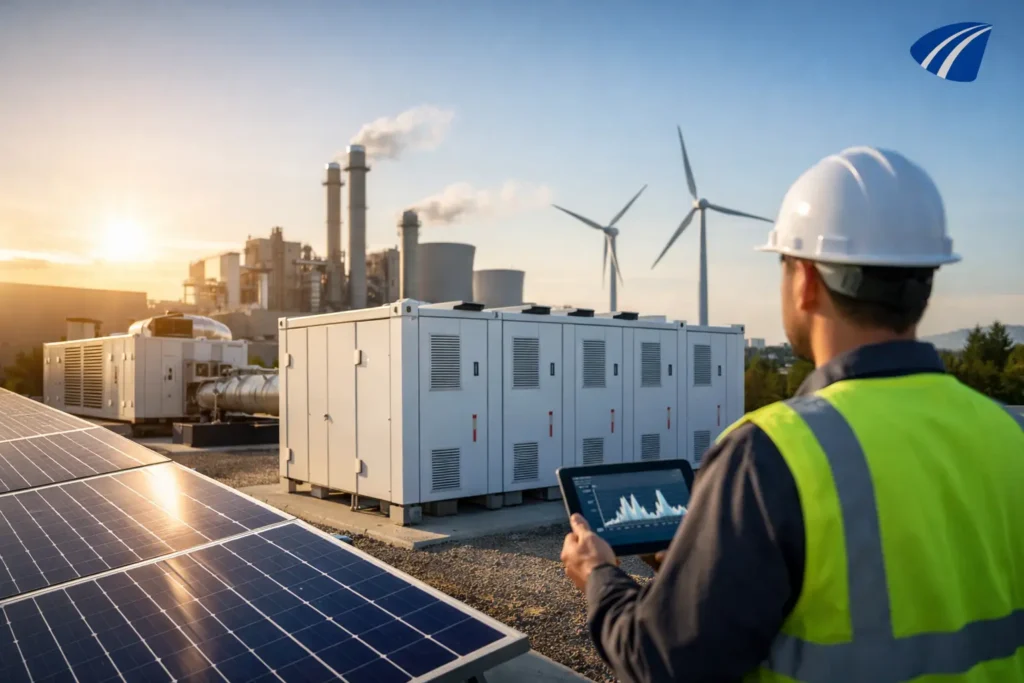
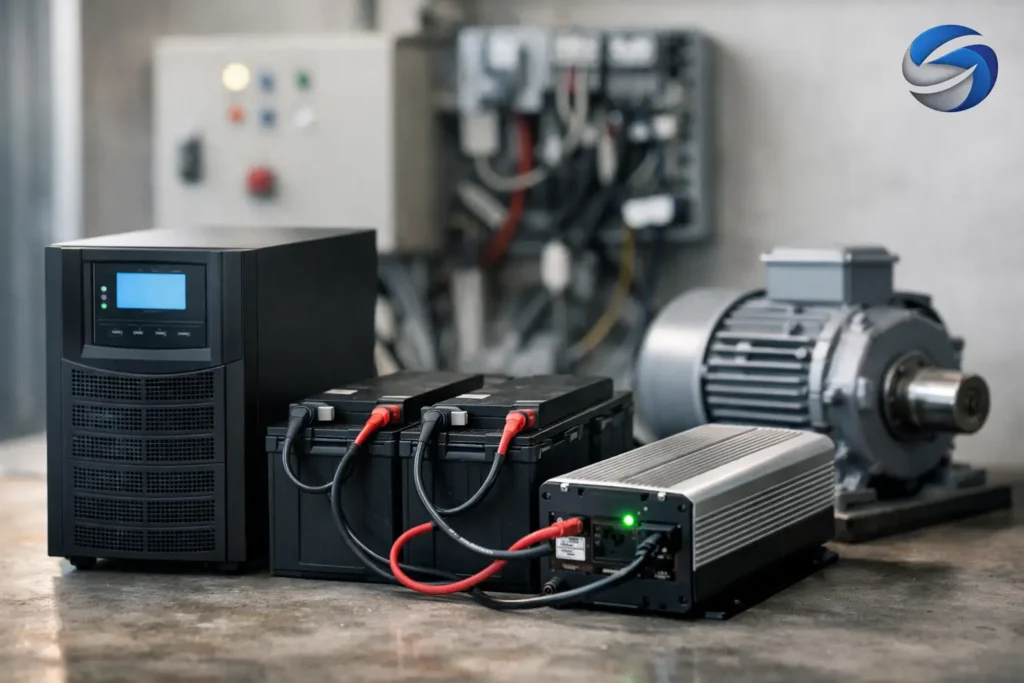
For most industrial facilities, the most reliable solution is not a single device but a combination of technologies. A UPS protects critical loads without interruption, while the generator takes over power supply after a few seconds. In more advanced setups, BESS acts as an intermediate layer – providing instant response, smoothing peak loads, and reducing generator runtime when necessary. This architecture usually delivers the best balance between reliability, operational flexibility, and TCO.
In facilities with solar power plants, backup power gains an additional dimension. Many investors assume solar power will automatically continue supplying the facility during a grid outage. In most standard grid-tie systems, this is not the case. For solar to actively participate in backup operation, the system must be designed for island or hybrid operation, with appropriate inverters, batteries, and control logic. There is no room for improvisation here.
Where Companies Most Commonly Make Mistakes
The first mistake is trying to protect “everything equally.” This increases investment costs while critical system components often remain inadequately protected. It is far more effective to define priority load groups and engineer an appropriate continuity level for each one.
The second mistake is sizing systems according to the sum of nominal power ratings. While this appears simple, it is often inaccurate. Starting currents, power factor, nonlinear consumers, and real operating conditions can completely change the required UPS, generator, or inverter capacity.
The third mistake is neglecting the infrastructure surrounding the power source itself. Backup power is not just a UPS, battery, or generator. It also includes switchgear, ATS systems, cabling, protection, ventilation, fire protection requirements, grounding, SCADA monitoring, and maintenance planning. If one of these elements is poorly engineered, the entire system becomes a weak point.
What a Good Investment Decision Looks Like
If you are a facility owner or director, you are not buying equipment – you are buying process availability. That is why the decision should be based on three questions: How much does one hour of downtime cost? Which loads truly must remain active? How long must operations continue without the grid in order to protect production, contractual deadlines, and safety?
Once those answers are clear, the technical solution becomes much more precise. For short interruptions and high power quality requirements, the focus goes toward UPS systems. For long-duration outages and higher loads, generators become the priority. For facilities seeking both backup capability and energy optimization, BESS and hybrid systems increasingly make sense. The best results usually come from integrated solutions engineered according to real operating conditions rather than assumptions.
A serious partner will therefore first request consumption data, operating regimes, critical process points, and growth plans. Only after that comes equipment selection. This is exactly where the difference is made between simple procurement and true engineering solutions. Energize approaches such projects through the perspective of business continuity, energy efficiency, and long-term TCO, because only then does backup power stop being a cost and become strategic infrastructure.
If you are planning a new investment or want to reduce downtime risk in an existing facility, start with process analysis rather than equipment catalogs. A good backup power system goes unnoticed when everything works properly – but its quality becomes immediately visible the moment the grid fails.