The first mistake when purchasing a UPS system is usually not the choice of model, but the wrong question. The key is not simply how to choose a UPS for your business, but how to select a system that will truly protect operations, critical equipment, and business continuity without unnecessary cost and without a false sense of security.
In practice, companies often look for a UPS only after a voltage drop, short outage, or equipment failure has already occurred. At that point, the damage is done production downtime, IT service disruption, data loss, emergency service interventions, or damaged electronics. That is why a UPS should not be viewed as an add-on, but as an integral part of the energy infrastructure.
How to Choose an UPS Based on Real Needs
The first step is to separate two concepts that are often confused: power protection and backup power. A UPS is not the same as a generator, and not every business requires the same level of autonomy. For some, 5–10 minutes is enough to safely complete processes and shut systems down. For others, 30 minutes or more is required to bridge short outages until a generator or alternative source takes over.
Selection should not start with a catalog, but from an analysis of load and business risk. UPS supporting server rooms, network equipment, surveillance, and control systems has very different requirements compared to production lines, laboratory equipment, POS systems, or telecom nodes. The most expensive UPS is not automatically the best choice the right one is the system that matches real consumption, required protection level, and future growth.
UPS Power Rating Is Not the Same as Load Rating
A common mistake is “rule-of-thumb” sizing. Companies sum up the nominal power of devices and assume that is sufficient. In reality, it is not.
UPS systems must be selected based on active power (kW), apparent power (kVA), load power factors, inrush currents, and load type. IT equipment, motors, compressors, medical devices, and industrial electronics behave differently. With non-linear loads, variable operating modes, or high startup currents, an improperly sized UPS may operate at its limits and fail precisely when needed most.
Best practice is not to size a system exactly to current demand. A reasonable margin is required. In most business environments, a UPS should not operate continuously near 100% capacity. Doing so reduces flexibility, increases thermal stress, and shortens battery and component lifespan.
Topology Defines the Level of Protection
When considering how to choose a UPS, topology is more important than marketing labels. Broadly speaking, three categories exist: offline, line-interactive, and online double conversion UPS.
For home or very simple office use, interactive line systems may be sufficient. However, for serious business environmens especially those with sensitive servers, industrial automation, telecom equipment, medical systems, or critical databases, the standard should be online UPS.
Online double conversion technology continuously processes incoming power and delivers stable output regardless of most grid disturbances. This is not just about outages. More frequent issues include micro-interruptions, voltage variations, harmonics, and electrical noise. These may not immediately stop operations, but they degrade equipment performance and reliability over time.
Autonomy – How Many Minutes Do You Really Need
Autonomy is often chosen emotionally, but it should be defined operationally. If the goal is safe shutdown, a few minutes may be enough. If the goal is uninterrupted operation during short outages, autonomy must match real scenarios. If the UPS is paired with a generator, batteries must bridge startup and stabilization time.
This is also a cost decision. Longer autonomy requires more batteries, more space, higher ventilation requirements, increased system weight, and higher maintenance costs. The rational question is: do you need longer autonomy, or a better-integrated solution combining UPS, generator, and monitoring?
In many cases, this is where the difference lies between buying equipment and designing a system. When viewed holistically, a more efficient solution often emerges with a lower total cost of ownership.
Batteries Are Not a Detail, they Are Core
Many UPS failures are battery failures. Battery type, operating mode, temperature, and maintenance directly impact reliability.
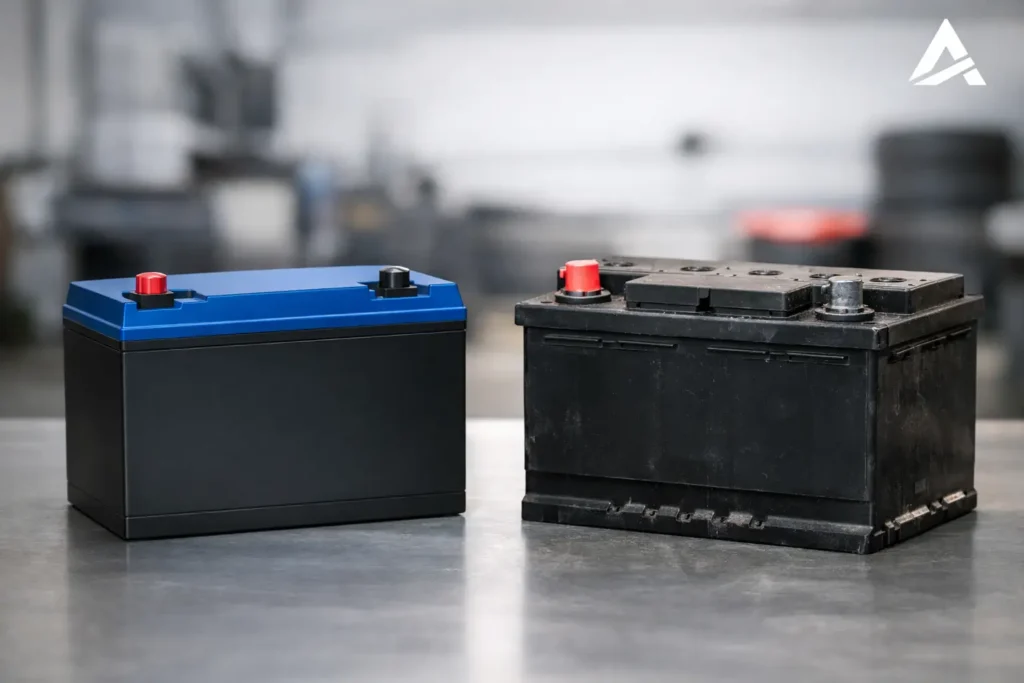
VRLA batteries remain common due to cost and availability, but they are not always optimal. Lithium-ion batteries have higher upfront costs, but offer longer lifespan, lower maintenance, reduced weight, and better space efficiency. In environments with frequent cycling, limited space, or high availability requirements, lithium often provides better long-term value.
Temperature is critical. Every degree above the recommended range accelerates battery degradation. This means UPS selection cannot be separated from cooling, equipment layout, and environmental conditions.
Redundancy and Serviceability
If downtime is only a minor inconvenience, a single UPS may be sufficient. If downtime means production loss, supply chain disruption, application failure, or SLA risk, redundancy must be considered.
This may include N+1 configurations, parallel systems, or segmentation of critical loads. The decision depends on the cost of downtime. In many industries, that cost far exceeds the investment difference between basic and redundant systems.
Service is equally important. A UPS that looks good on paper but requires complex maintenance, expensive parts, or long lead times can become a liability. Serious buyers evaluate not only equipment, but also service support, spare parts availability, warranty terms, and preventive maintenance capabilities.
Integration with Existing Infrastructure
A UPS must fit into the facility not the other way around. This includes verifying electrical parameters, available space, cabling, protection systems, grounding, fire safety requirements, and communication with BMS or monitoring systems.
In larger systems, compatibility with generators, solar installations, battery storage, and energy management systems is also critical. This is where the difference between component procurement and engineering becomes clear. If a company plans expansion, new facilities, or increased digitalization, UPS must be part of a broader energy strategy, not an isolated solution.
Price Matters, but TCO Matters More
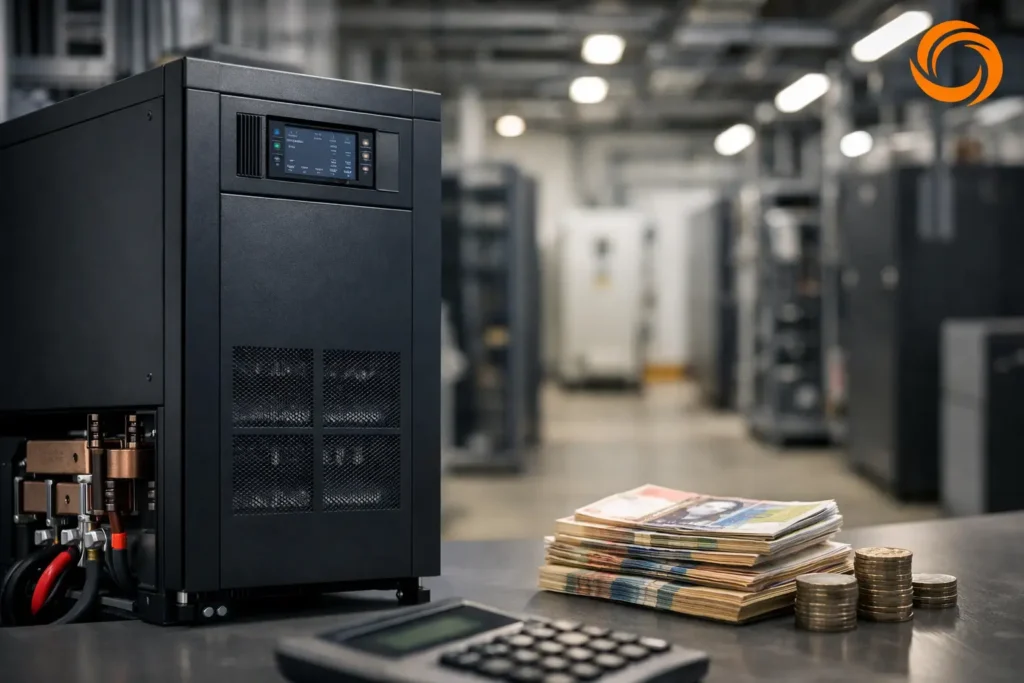
The lowest purchase price is rarely the best decision. UPS systems should be evaluated based on total cost of ownership over their lifecycle. This includes efficiency, operating losses, battery replacement, maintenance, spare parts availability, downtime risk, and expected lifespan.
For example, a lower-cost system with lower efficiency and shorter battery life may cost more over 5–10 years than a higher-quality solution with a higher upfront price. Add even a single major outage, and the difference becomes significant.
The better question is not “how much does it cost,” but “what is the annual cost of reliable operation.”
What Management Should Require Before Purchase
Before making a decision, insist on clearly defined critical loads, required autonomy, expected growth, and operating conditions. Ask for calculations not estimates. Ask for a maintenance plan not just a warranty. And ask for failure scenarios what happens if a module fails, a battery string degrades, or the grid supply is unstable.
A serious partner will also tell you when you do not need a more expensive solution. That is a good sign. A bad sign is when a UPS is offered without analysis, based only on catalog specifications.
The right UPS choice is not visible on the first day after installation. It becomes evident when the grid becomes unstable, when systems operate at full load, and when there is no room for error. That is when you see whether you purchased a device or secured business continuity.