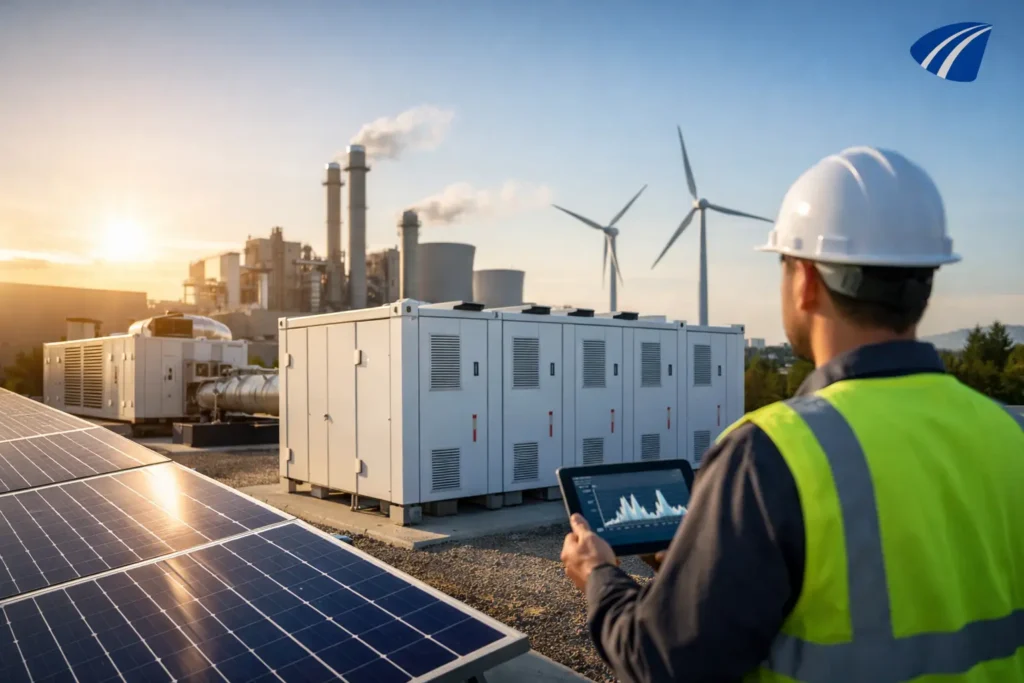
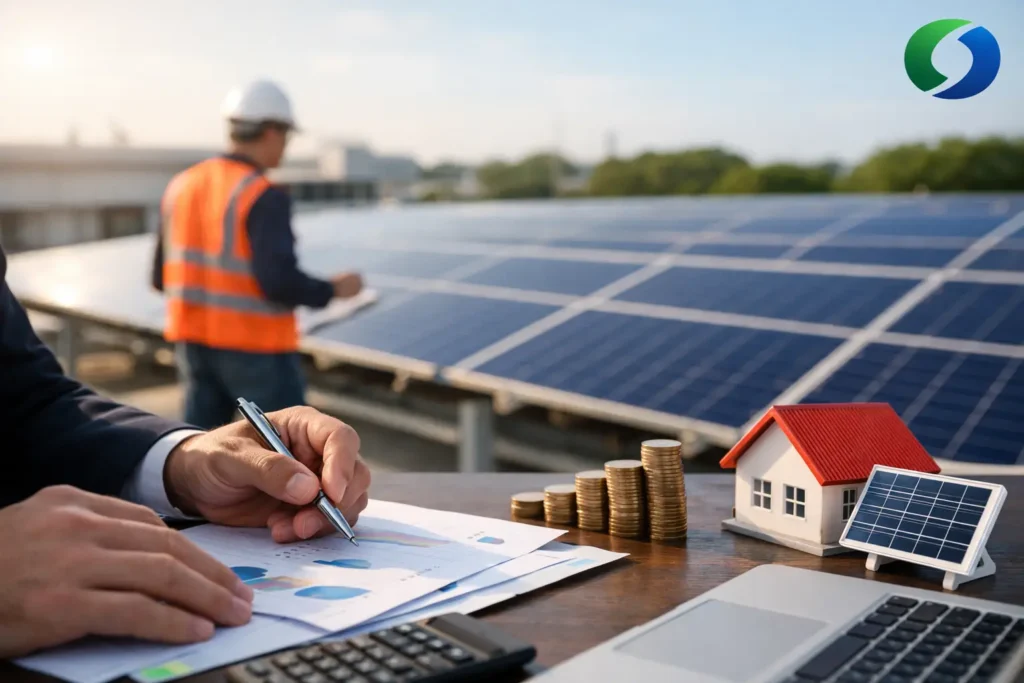
Rising electricity prices do not affect every business equally. The greatest pressure is felt by facilities operating during daytime hours, refrigeration systems, logistics centers, food processing companies, and businesses with large administrative or production facilities. For these companies, photovoltaic systems for businesses are not merely a cost-saving measure, but a strategic decision to gain greater control over one of their key operating expenses.
A well-designed solar power plant generates energy when business consumption is typically at its highest. This reduces electricity drawn from the grid, limits exposure to future price fluctuations, and improves cost predictability. However, the result does not depend simply on the number of panels installed on the roof. It depends on whether the system has been designed according to the facility’s actual consumption profile, technical capabilities, and the company’s business plan.
Photovoltaic Systems for Businesses Start With Consumption Analysis
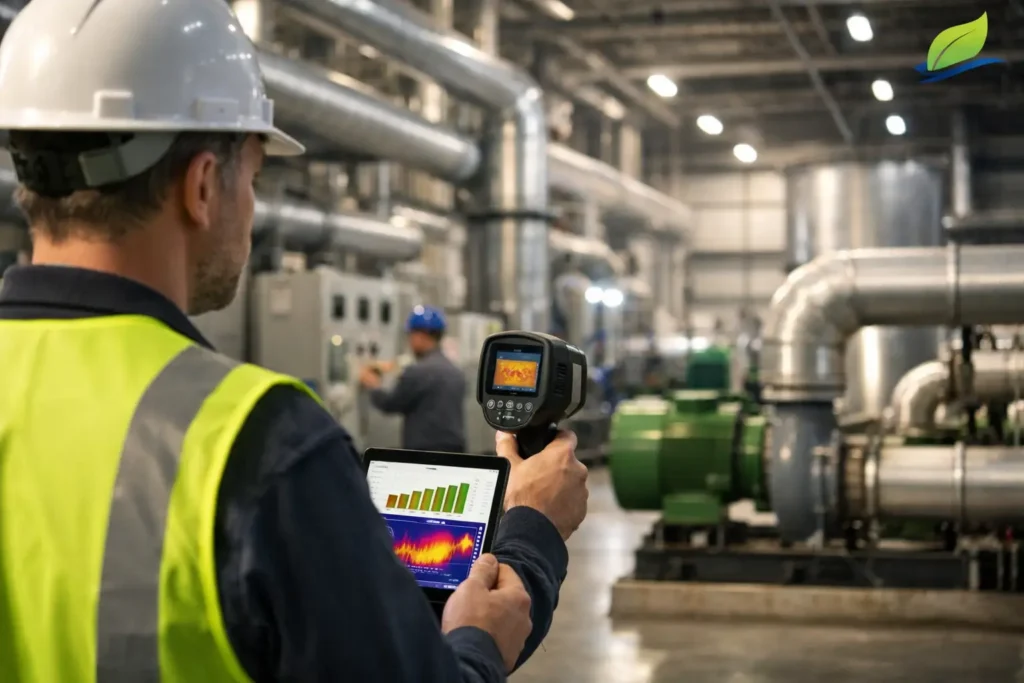
The right question is not how many kilowatts can fit on the roof, but how much solar energy the business can consume at the time it is generated. Analyzing electricity bills is therefore a starting point, but it is not sufficient on its own. Consumption data should be assessed by month, shift, and, whenever possible, by hour.
A company that consumes most of its electricity between 8 a.m. and 5 p.m. often has an excellent load profile for a rooftop solar power plant. Solar generation follows the daily operating cycle, allowing a large share of the generated energy to be consumed directly on site. In contrast, a company with predominantly nighttime consumption can still benefit from solar, but achieving greater energy autonomy requires a different approach – load management, energy storage, or a combination of several solutions.
The analysis should also consider future growth. If the company plans to introduce a new production line, expand a cold storage facility, or increase the number of electrical loads, it is not reasonable to design the solar power plant solely around current conditions. An oversized system may generate surplus energy during periods when it is not economically optimal, while an undersized system may leave a significant portion of the facility’s potential unused.
Roof, Structure, and Grid Connection Define Project Limits
Roof area is the most visible part of the equation, but it is far from the only consideration. Structural load capacity, roofing material, roof age, shading, orientation, and installation access all affect the solution, project schedule, and investment cost. A roof that will soon require refurbishment should generally be renovated first. Installing a solar power plant on a roof that will need replacement within a few years creates additional dismantling costs and increases operational risk.
Shading from chimneys, ventilation units, silos, neighboring buildings, or elevated roof sections can significantly affect projected energy production. A high-quality design therefore starts with an accurate assessment of actual site conditions and detailed simulation rather than an idealized view of the roof. The objective is not to install the maximum possible number of modules at any cost, but to maximize usable energy production throughout the system’s lifecycle.
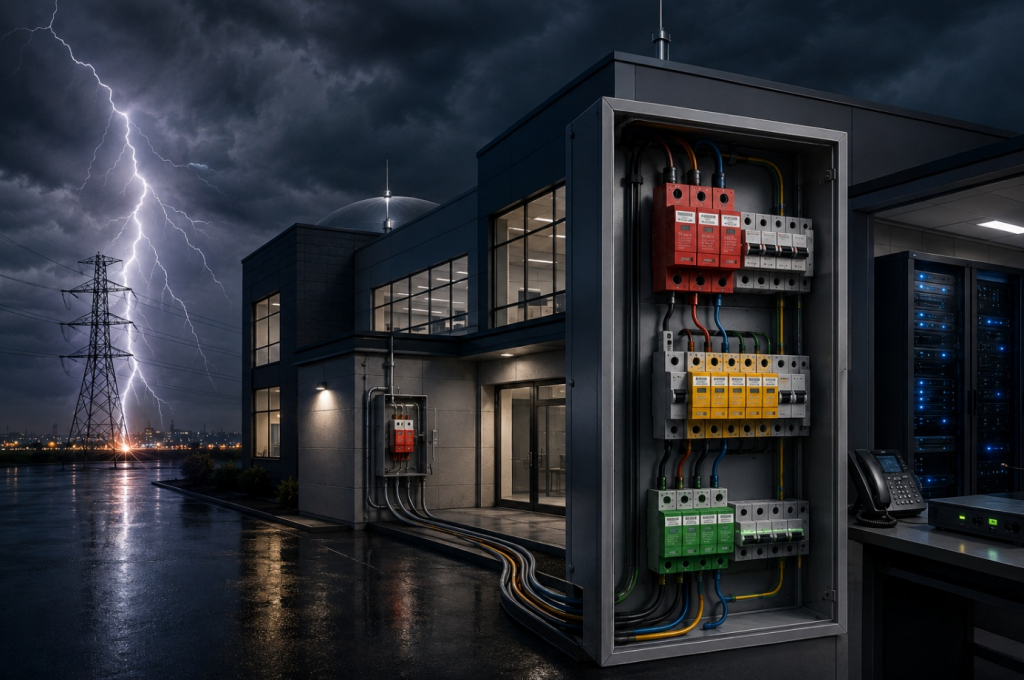
The existing electrical infrastructure is equally important. The condition of the main switchboard, grid connection capacity, protection systems, metering, and the possibilities for connecting the solar power plant to the grid must all be assessed. In industrial facilities, the solar installation must be coordinated with existing loads, reactive power compensation, generators, UPS systems, and other power sources. This is a system integration task, not simply a matter of installing solar panels.
Investment Should Not Be Evaluated Solely by Cost per Kilowatt
The lowest initial quotation is not necessarily the most cost-effective solution. For industrial systems, the actual Total Cost of Ownership includes the quality of modules and inverters, mounting structures, engineering, protection systems, monitoring, warranties, maintenance, potential downtime, and expected energy production over decades of operation.
The difference between two solar power plants with the same nominal capacity may only become apparent after several years. A poorly designed mounting structure, inadequate roof penetrations, limited monitoring capabilities, or an unreliable inverter can result in service interventions and lost energy production. For a company where operational continuity is a priority, such risks have a cost that is not visible in the initial calculation.
Profitability should be assessed through the payback period, but also through Internal Rate of Return (IRR), annual savings, production degradation, and assumptions regarding future energy prices. The financial model should clearly show what happens under conservative, realistic, and optimistic scenarios. A serious investment decision should not be based on a single attractive figure.
Solar Is Not a Substitute for Power Supply Security
A photovoltaic power plant and a backup power system solve different problems. A standard grid-connected solar system generates electricity while the grid is operating, but for safety reasons it shuts down when a power outage occurs. Companies that need to protect production, data, cold storage, or critical equipment should therefore not expect solar panels alone to keep operations running during a grid outage.
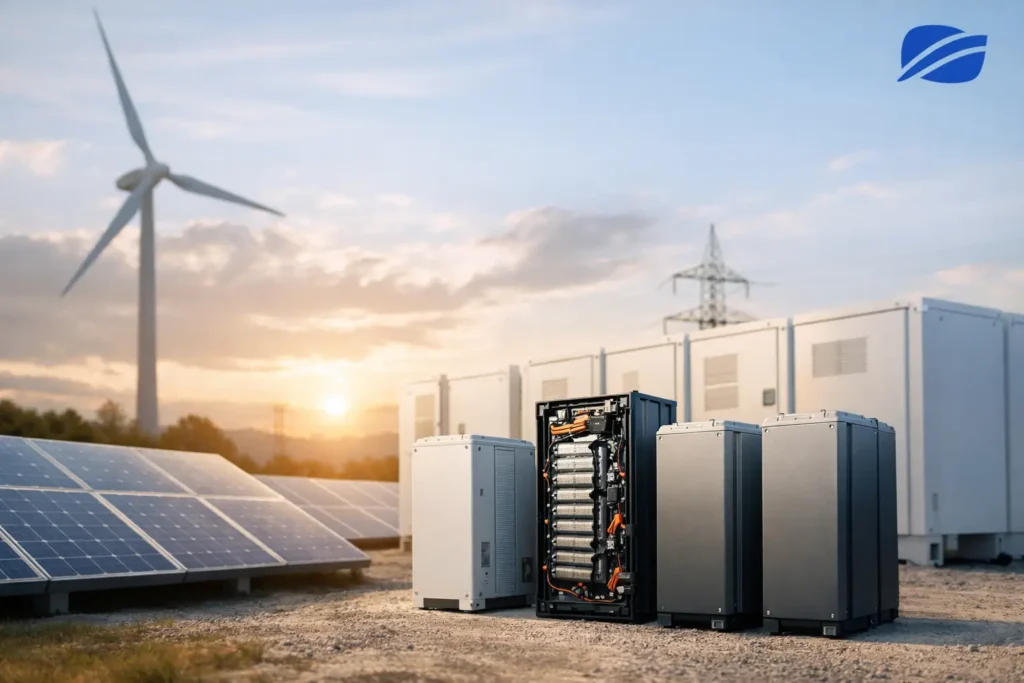
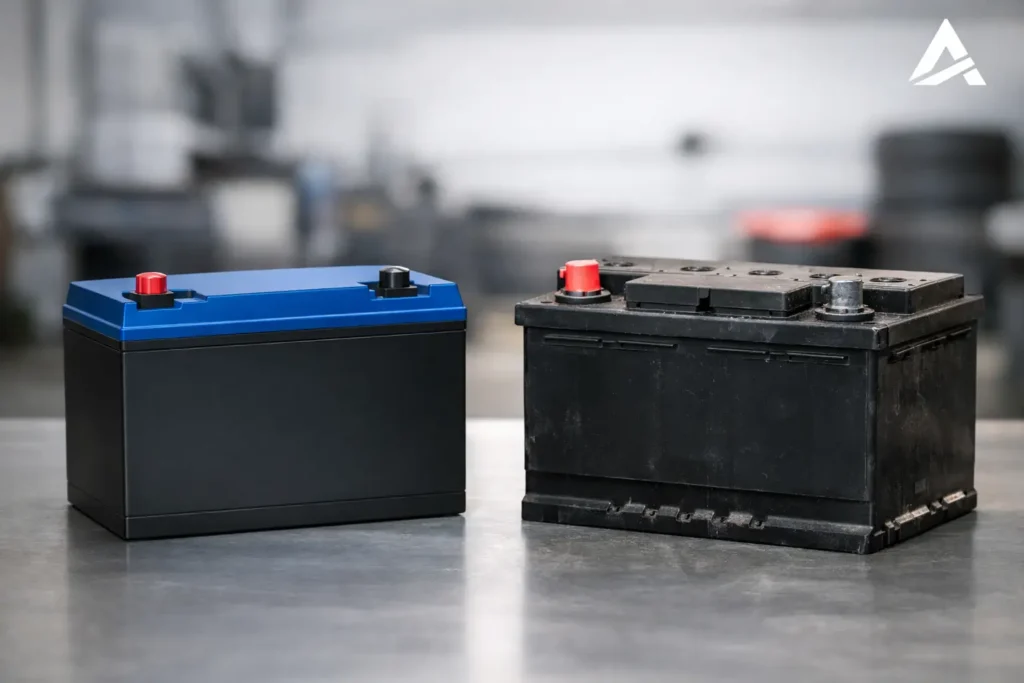
This is where battery energy storage systems, UPS solutions, and diesel generators come into play. The right combination depends on outage duration, the power requirements of critical loads, grid quality, and the company’s objectives. A battery can bridge short outages, manage peak demand, and increase the utilization of solar energy. A generator is often a rational solution for longer emergency operation, while a UPS protects equipment that cannot tolerate even a momentary interruption.
There is no universal answer. A data center, dairy plant, and logistics center have different risk profiles. Solar, energy storage, HVAC, and power management should therefore be considered as parts of a single integrated energy system, particularly when the consequences of downtime exceed the cost of electricity itself.
From Feasibility Study to Commissioning
Implementing a commercial solar power plant involves much more than purchasing equipment. The process begins with a site survey and the collection of energy consumption data. This is followed by a feasibility study that includes the technical concept, estimated energy production, financial model, and identified project constraints.
Once the concept has been approved, project documentation is prepared and the required procedures with the relevant authorities and Distribution System Operator (DSO) are completed. Procurement, installation, electrical connection, testing, and commissioning follow. Finally, monitoring and a structured maintenance plan ensure that the solar power plant continues to deliver the expected results.
For larger industrial projects, there is a clear advantage in working with a partner that assumes responsibility for the entire project lifecycle. When engineering, equipment procurement, installation, and servicing are coordinated within a single engineering model, there is less room for responsibility to be shifted between different contractors. Energize delivers turnkey energy solutions based on this principle – from initial investment assessment to integration with the facility’s existing infrastructure.
When Is the Right Time to Invest?
The right time is not necessarily when the electricity bill is at its highest, but when the company can make a decision based on reliable data. If a facility has stable daytime consumption, sufficient available space, and an operating plan that is unlikely to change dramatically, a feasibility study can quickly determine whether there is a viable business case.
An investment should not be postponed until every future issue has been resolved, but neither should it be rushed without a clear technical concept. A planned roof refurbishment, facility expansion, new substation, or introduction of a battery storage system can change the optimal solution. Proper planning brings these decisions together into a single energy roadmap instead of addressing each one separately.
The most valuable solar power plant is not the one with the largest number of panels. It is the one that matches the rhythm of the business, generates energy reliably, and gives management greater control over costs and risks. Planning such a system starts with real data – and results in infrastructure that works for the business every day.