Energy is no longer just an operating cost.
For manufacturing plants, logistics centers, cold storage facilities, data centers, and large commercial buildings, industrial energy solutions today directly impact margins, operational continuity, and the ability to plan growth without energy constraints.
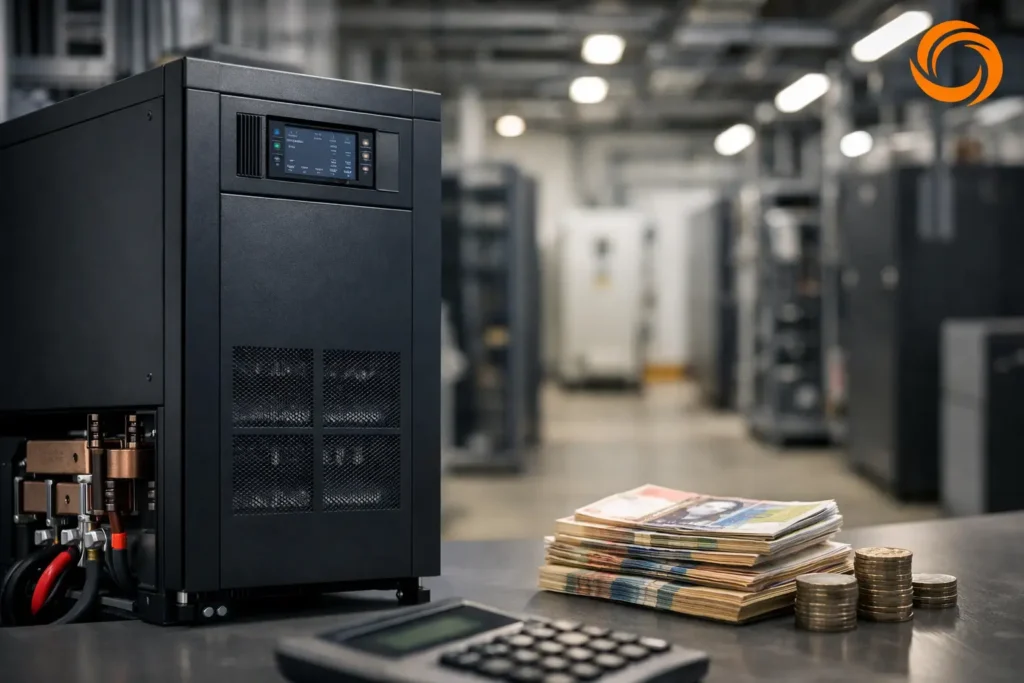
This is where the difference between purchasing equipment and implementing a strategic energy project becomes evident very quickly. When a company views consumption only through the price per kilowatt-hour, it misses the bigger picture. When it considers total cost of ownership, load profiles, downtime risk, and system lifecycle, energy infrastructure becomes a competitive advantage.
Why industrial energy solutions have become a priority
Industry in Serbia operates under pressure from multiple factors at once. Energy prices are volatile, grid quality is not always stable, and the demand for uninterrupted operation is increasing. In many sectors, even a short power interruption is not just a few minutes of downtime it means production losses, equipment faults, process restarts, delayed deliveries, and direct financial impact.
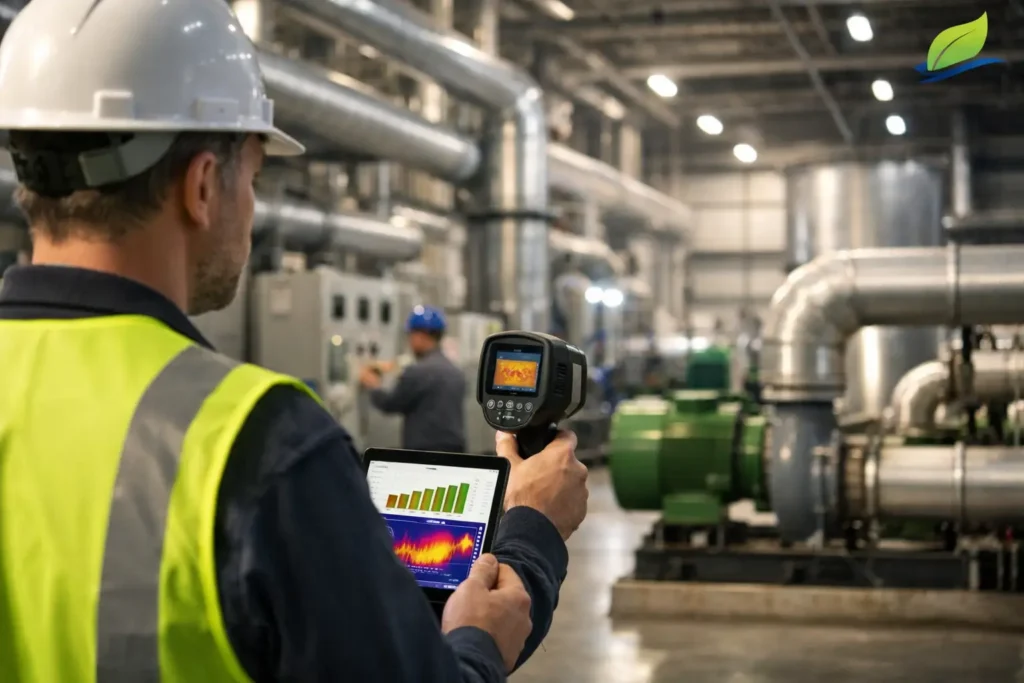
That is why serious industrial energy solutions do not start with selecting panels, batteries, or generators. They begin with understanding how a facility consumes energy, when peak loads occur, what downtime actually costs, and what level of autonomy is truly required.
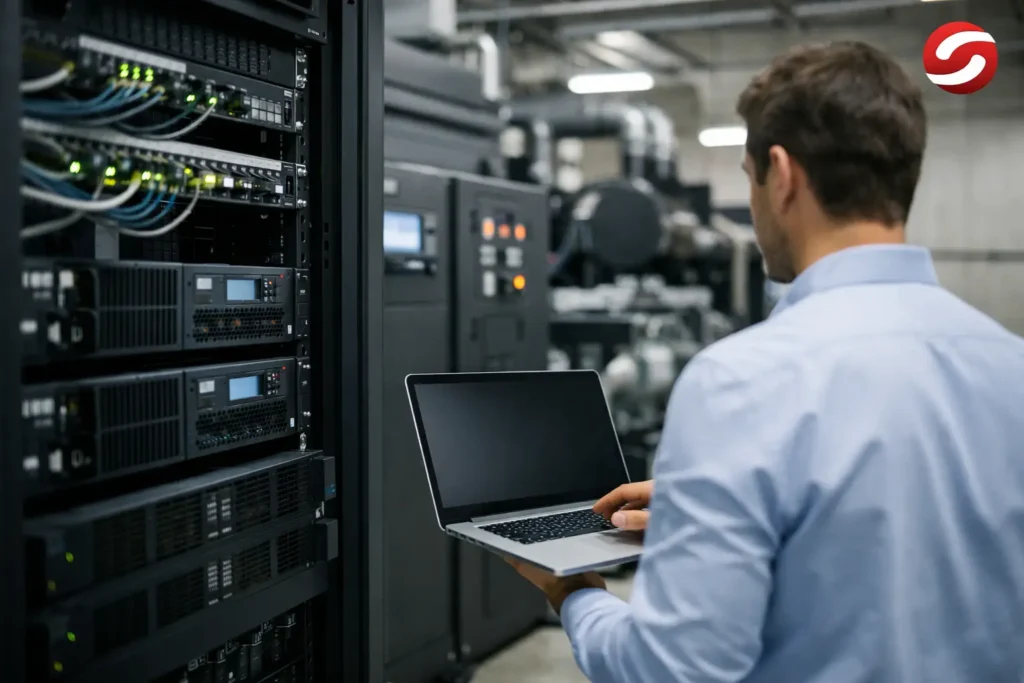
In the food industry, the priority may be refrigeration stability. In manufacturing, it may be protecting automated production lines. In telecom and data centers, the requirement is simple power must not fail.
That is why the right decision rarely looks like purchasing a single product. More often, it is the integration of multiple systems that together address cost, reliability, and energy management.
What modern industrial energy solutions include
In practice, industrial users today combine several technological layers.
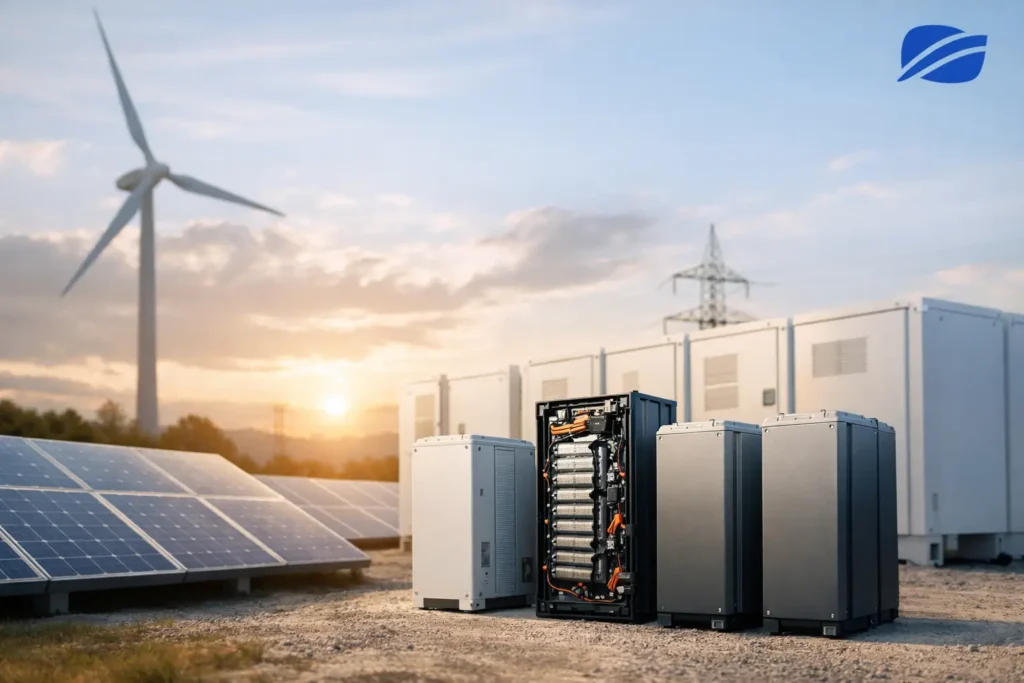
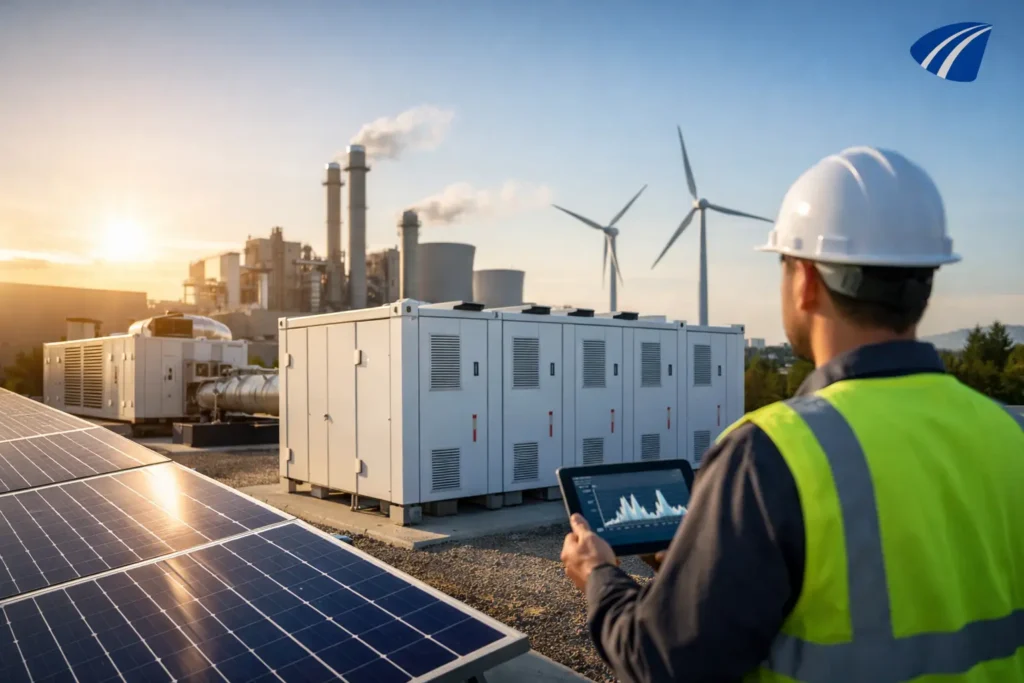
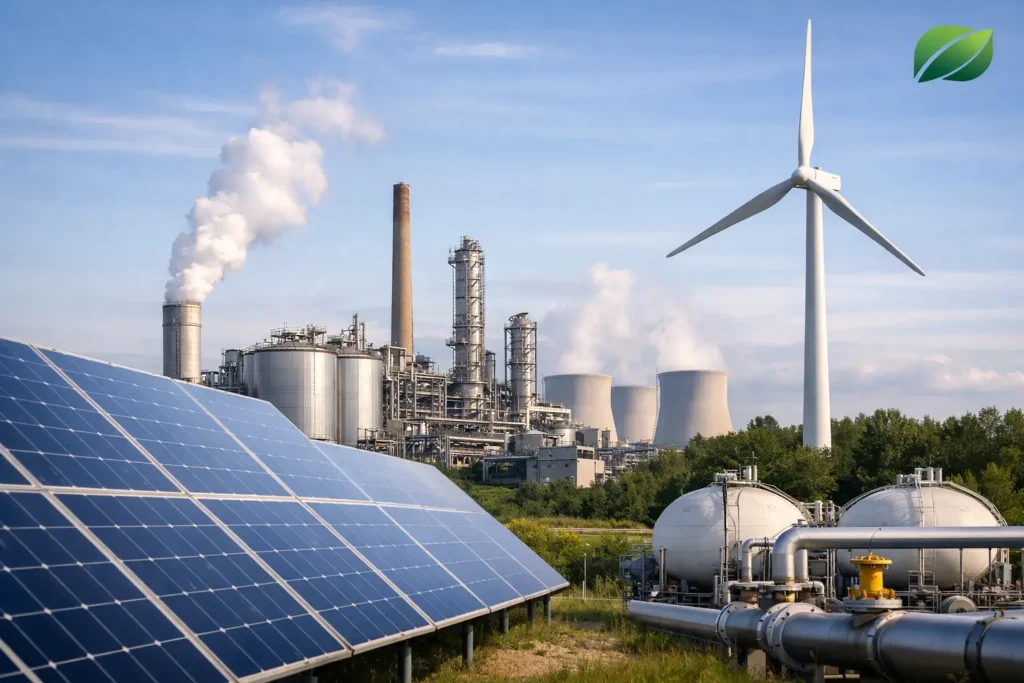
Solar power plants reduce reliance on the grid and improve consumption economics during daytime hours. Battery Energy Storage Systems (BESS) introduce flexibility by enabling load shifting, peak shaving, and increased system resilience. UPS solutions protect critical loads from instant outages and voltage fluctuations, while diesel generators remain an important backup option where longer autonomy is required.
When combined with precisely designed cooling systems for technical rooms, rectifiers, distribution equipment, and energy management systems, this creates infrastructure that operates as a unified whole not as disconnected components.
This is a critical point where many projects either succeed or lose value. Individual equipment may be high quality, but if not properly sized and integrated, the investment will not deliver expected results. Oversized systems unnecessarily increase CAPEX. Undersized systems fail to solve the problem and often require costly corrections after commissioning.
Solar alone is not enough
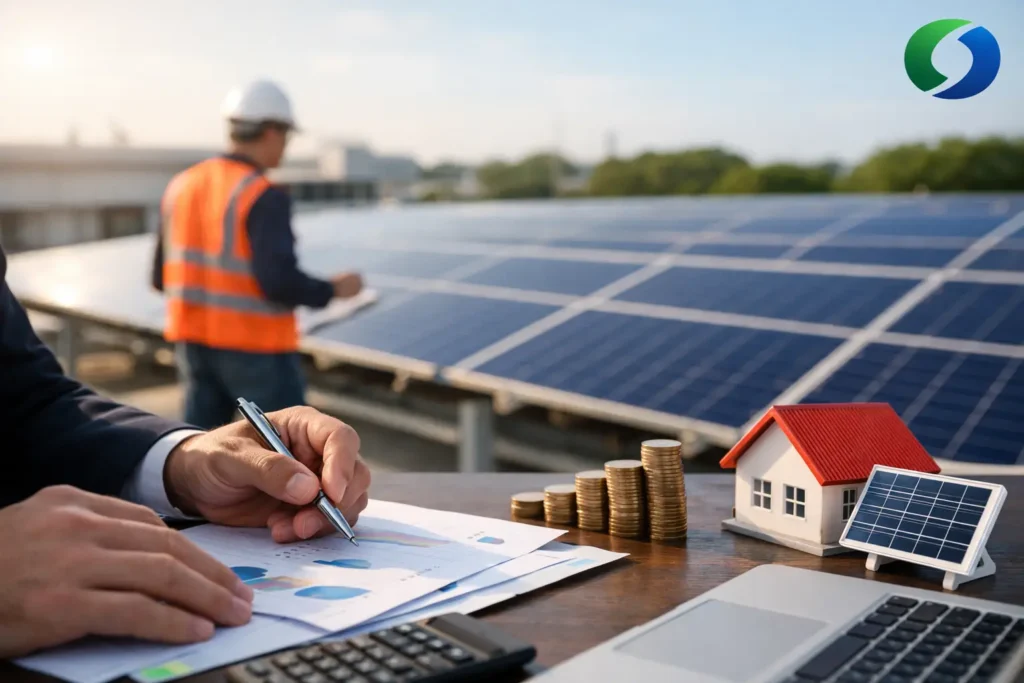
A solar power plant is often the first step because it delivers measurable savings and a clear business case. However, in industrial environments, it rarely solves everything. Consumption is not constant throughout the day, and critical processes cannot tolerate fluctuations or interruptions.
If the goal is only cost reduction, solar may be sufficient in certain consumption profiles. If the goals include stability, peak load control, and greater energy independence, more than generation alone is required.
Storage changes project economics
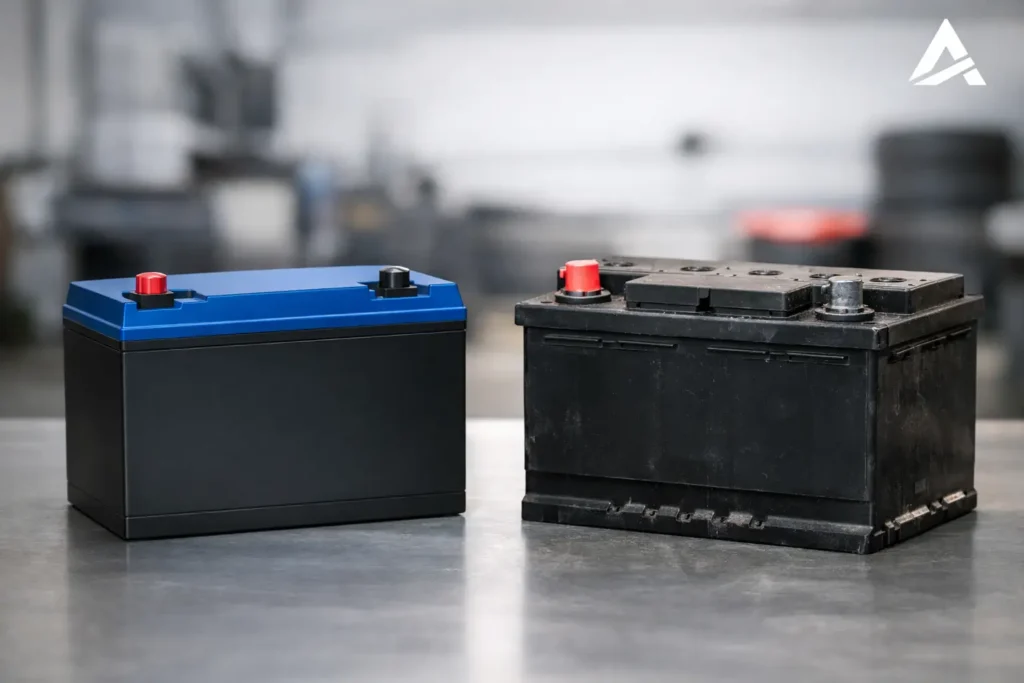
Battery systems are not relevant only for backup power. Their real value in industry lies in load management, peak reduction, and smarter use of on-site generated energy.
However, profitability depends on tariff structures, operating режимs, and expected cycle counts. That is why storage should not be treated as a universal solution, but as a tool that delivers strong value where the numbers support it.
UPS and generators are not the same
This distinction is often oversimplified but it should not be.
UPS systems provide instant, uninterrupted power and protect sensitive equipment. Diesel generators provide longer-duration backup, but with startup delay and a different purpose.
In robust systems, these solutions complement each other. For critical industrial processes, the question is not which is better—but how to combine them correctly.
What a strong industrial energy project looks like
A good project does not start with equipment catalogs, but with a feasibility study.
First comes measurement and analysis of consumption. Then scenario modeling how much energy a solar plant can generate, what the storage potential is, where critical power points are, and what return on investment can be expected.
This is followed by system design aligned with real operating conditions. This includes structural considerations, grid connection, protection systems, backup supply, cooling, load management, and future scalability.
For industrial users, it is essential that the project is not designed only for current needs. If production expansion is planned, the energy infrastructure must support it without costly reconstruction.
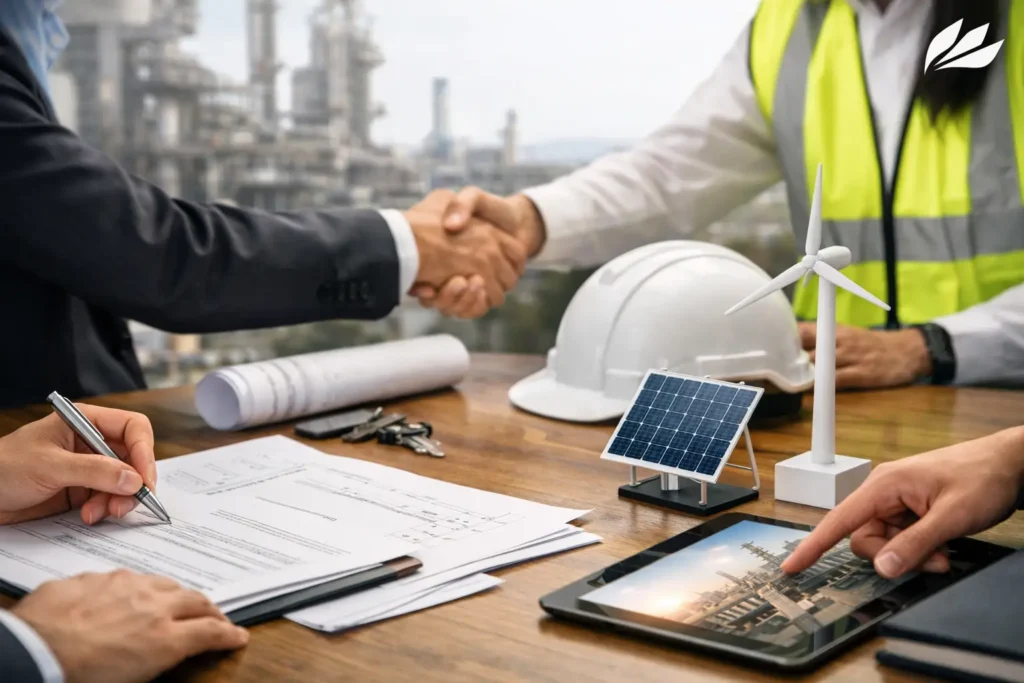
Then come assembly, installation, commissioning, and maintenance. This is where the value of a turnkey model becomes clear. When one partner takes responsibility for the entire system, the risk of fragmented accountability is eliminated. For investors, this means faster execution, clearer quality control, and fewer operational uncertainties.
Where investments deliver the fastest returns
There is no universal answer, as ROI depends on consumption patterns, operating hours, energy prices, and technical configuration. However, certain profiles consistently show strong potential.
These include facilities with high daytime consumption, significant peak loads, costly downtime, or the need for uninterrupted power supply.
Manufacturing plants often benefit most from combining solar generation with power stabilization. Cold storage and food industry facilities gain additional value through process reliability and protection of temperature-sensitive goods. Logistics centers and commercial buildings improve efficiency through the combination of energy generation and HVAC optimization. Data centers, telecom, and critical infrastructure derive the greatest value from reliability where the cost of downtime far exceeds the cost of energy itself.
One business truth stands out: the cheapest solution is rarely the most cost-effective. If a system has a shorter lifespan, lower efficiency, inadequate service support, or does not address real operational risks, total cost of ownership increases.
Industrial energy solutions and the importance of TCO
When evaluating industrial energy solutions, Total Cost of Ownership (TCO) must be the central metric.
This includes acquisition cost, installation, system efficiency, expected lifespan, maintenance, service availability, real-world performance, and the cost of potential downtime.
For example, two battery configurations may appear similar on paper but differ significantly in cycle life, thermal management, and degradation. Two UPS systems may differ in efficiency, redundancy, and bypass quality. Two solar plants may use components with similar nominal power but deliver completely different long-term performance and reliability.
That is why serious decisions are not made based on a single line item, but on how the system performs over 10, 15, or 20 years.
What industrial clients most often underestimate
The first mistake is assuming a project is successful once equipment is installed. Real results are measured through operational performance.
The second is delaying investment until the problem becomes urgent. At that point, timelines are shorter, options are limited, and correction costs are higher.
The third is a fragmented approach. When one company delivers solar, another UPS, a third electrical installation, and a fourth maintenance, the result is often a system without a clear owner of overall functionality.
That is why leading industrial users choose partners who understand the entire energy value chain from consumption analysis and design to implementation and long-term support.
This integrated approach ensures that solar, storage, backup power, and energy infrastructure work in alignment not in parallel.
The market shift
In Serbia, this standard is no longer reserved for the largest systems. More and more companies are seeking integrated solutions that simultaneously reduce costs, increase operational resilience, and enable better control over future growth.
Energize has developed this model specifically for industrial clients who are not looking for equipment but for a partner in complex energy decisions.
If you are planning a new investment, facility expansion, or protection of critical processes, the right time for analysis is not when the next power issue occurs.
The right time is before it while there is still room to design the project rationally, technically precisely, and with long-term profitability in mind.