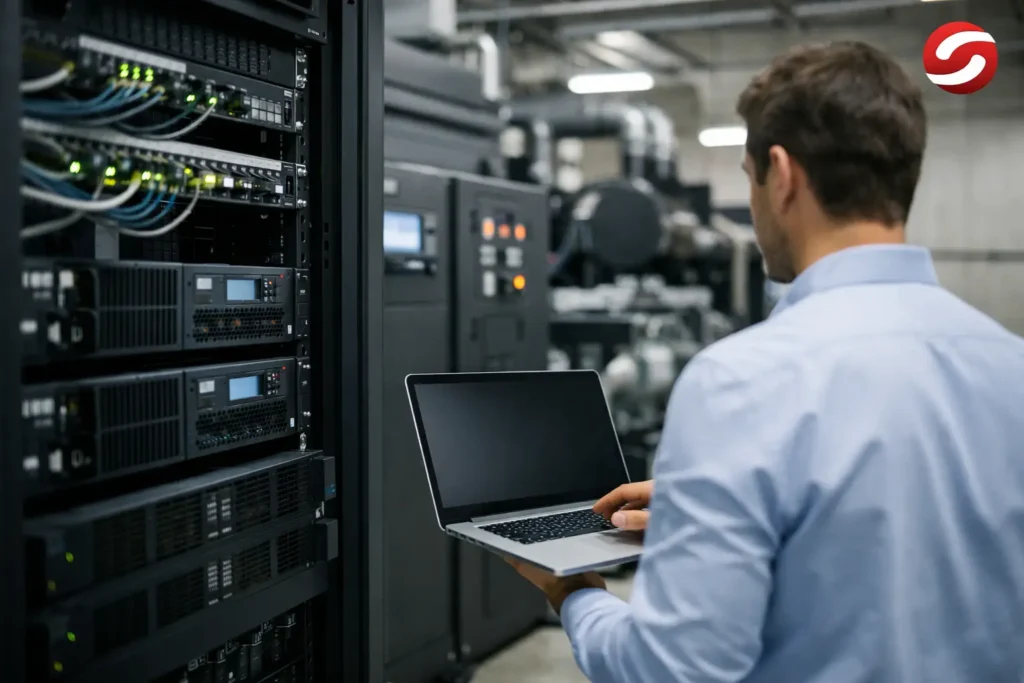
When a production line stops for 15 minutes, the cost is not just lost energy. Delivery timelines are disrupted, the risk of defects increases, equipment is stressed, and in some sectors, the interruption can directly compromise process safety. That is why the question of best backup power solutions should not be raised when a failure occurs, but much earlier, during the planning of energy infrastructure.
For serious systems, there is no universal answer. The right solution depends on the type of load, acceptable downtime, required autonomy, grid quality, and total cost of ownership over years of operation. This is where the difference between purchasing equipment and engineering a system that truly protects the business becomes clear.
How to choose the best backup power solutions
The first common mistake is focusing only on device power. Backup systems are not sized by kilowatts alone, but by load criticality, inrush currents, power factor, required autonomy, and the operational logic of the facility. A server room, cooling system, pumping station, and CNC machine do not have the same requirements even if their nominal consumption appears similar.
The second mistake is evaluating the investment based only on upfront cost. Lower-cost solutions often result in higher maintenance costs, shorter battery life, lower efficiency, or limited scalability. In industrial and commercial environments, TCO matters far more than initial CAPEX, because backup systems must perform reliably for years not just pass procurement.
The third key factor is transfer time. Some loads can tolerate a few seconds of interruption, while others require virtually uninterrupted power. This immediately determines whether a generator is sufficient, whether a UPS is required, or whether a hybrid approach is optimal.
UPS systems — when interruption is not an option
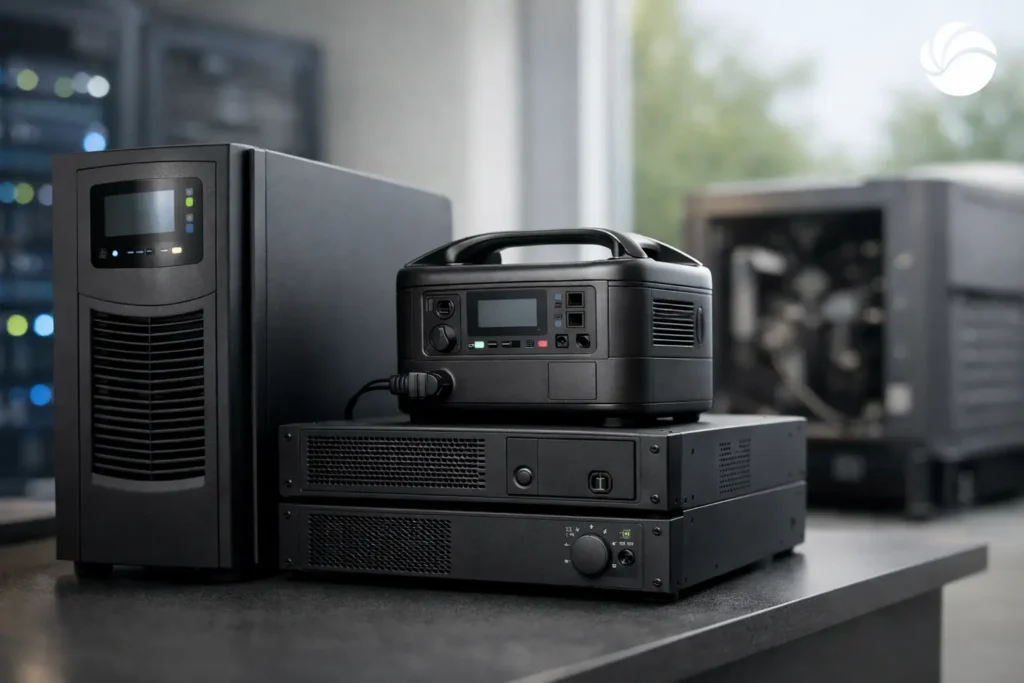
UPS systems are standard wherever even a brief voltage drop is unacceptable. Data centers, telecom systems, medical equipment, SCADA environments, security systems, and sensitive industrial automation require stable output voltage and instantaneous load transfer.
For these scenarios, online double-conversion UPS systems are typically used. Their value is not only in bridging outages, but also in filtering disturbances, stabilizing voltage, and protecting equipment from fluctuations that reduce component lifespan.
However, UPS is not a universal solution. If several hours of autonomy are required for large loads, relying solely on batteries can become capital-intensive. That is why UPS is often the first line of protection, while generators or battery storage systems provide extended backup.
Diesel generators — cost-effective for longer autonomy
When the goal is to maintain operations for hours during outages, diesel generators remain one of the most practical solutions. This is especially true in manufacturing, logistics, construction, telecom, and infrastructure environments where high power and reliable load handling are required.
Their advantage lies in the favorable ratio between investment and available autonomy. With proper sizing and maintenance, generators can cover long outages without the need for massive battery capacity.
However, generators have limitations. They do not start instantly, require regular servicing, fuel management, load testing, and adequate space with proper exhaust, noise, and ventilation solutions. Without proper maintenance and integration, a generator is not a reliable backup but only a potential reserve.
Battery systems and BESS — flexibility that changes the model
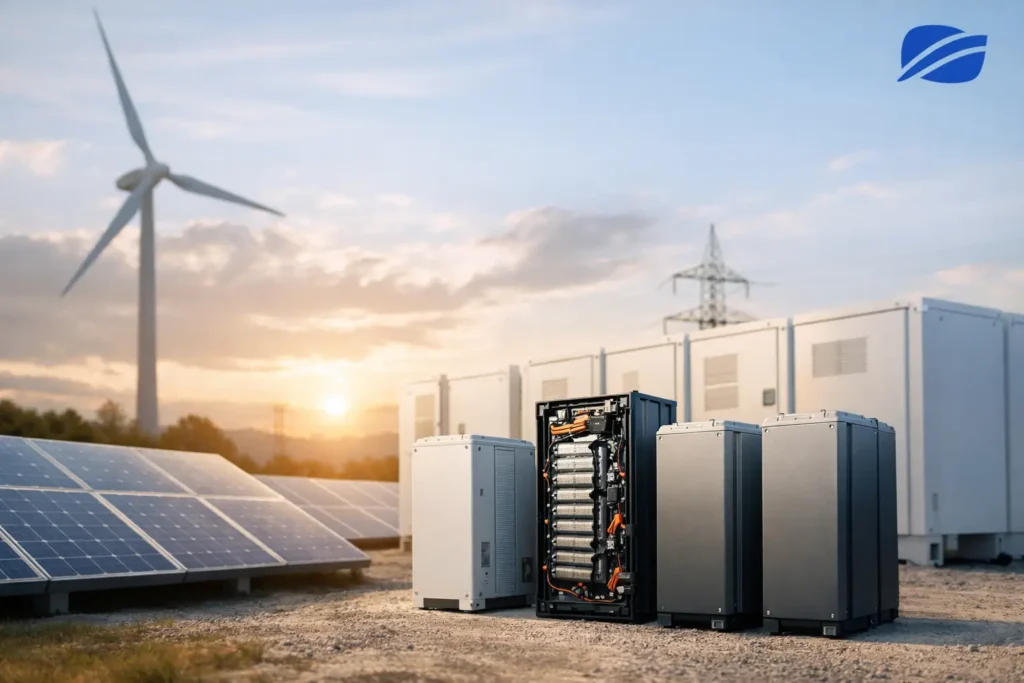
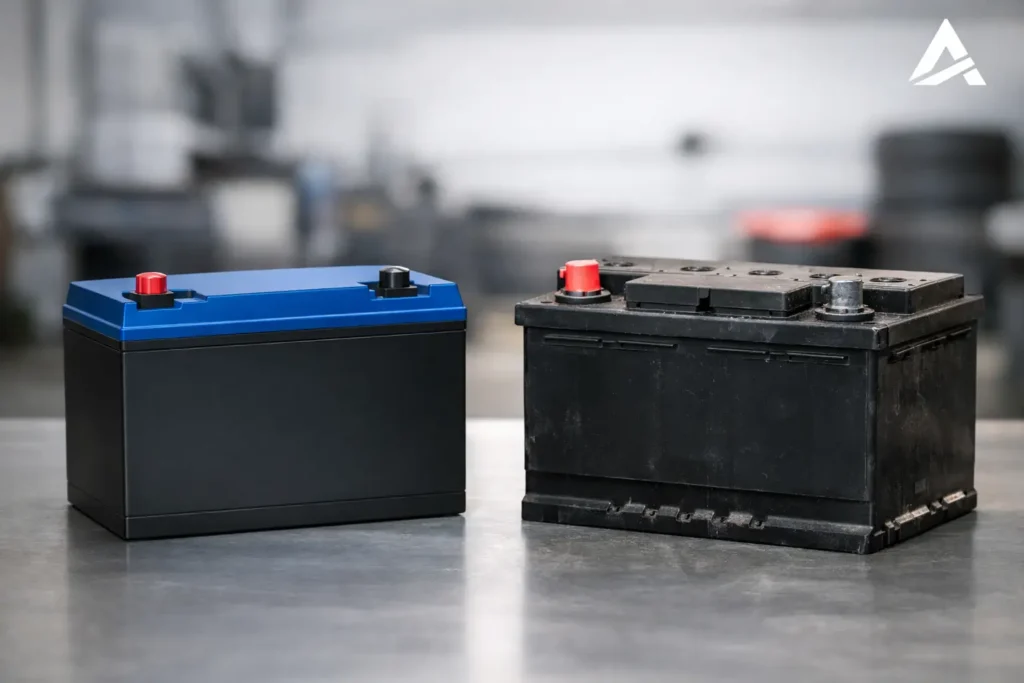
In recent years, battery energy storage systems (BESS) have become a serious option not only for backup, but also for energy optimization.
Their value lies in multifunctionality peak shaving, load shifting, support for critical loads, and integration with solar power systems. For companies that already have or plan to install solar generation, BESS enables a much broader business model than traditional backup alone.
During the day, it can store excess energy; during peak tariff periods, it can reduce demand charges; and during outages, it can supply priority loads. This significantly improves project economics, as the system delivers value even when no grid failure occurs.
Still, the business case depends on tariffs, operating режимs, and cycle expectations. If the goal is only short bridging until generator startup, large battery systems may not be justified. If the goal is energy independence and load optimization, they become highly relevant.
Hybrid architecture is often the optimal solution
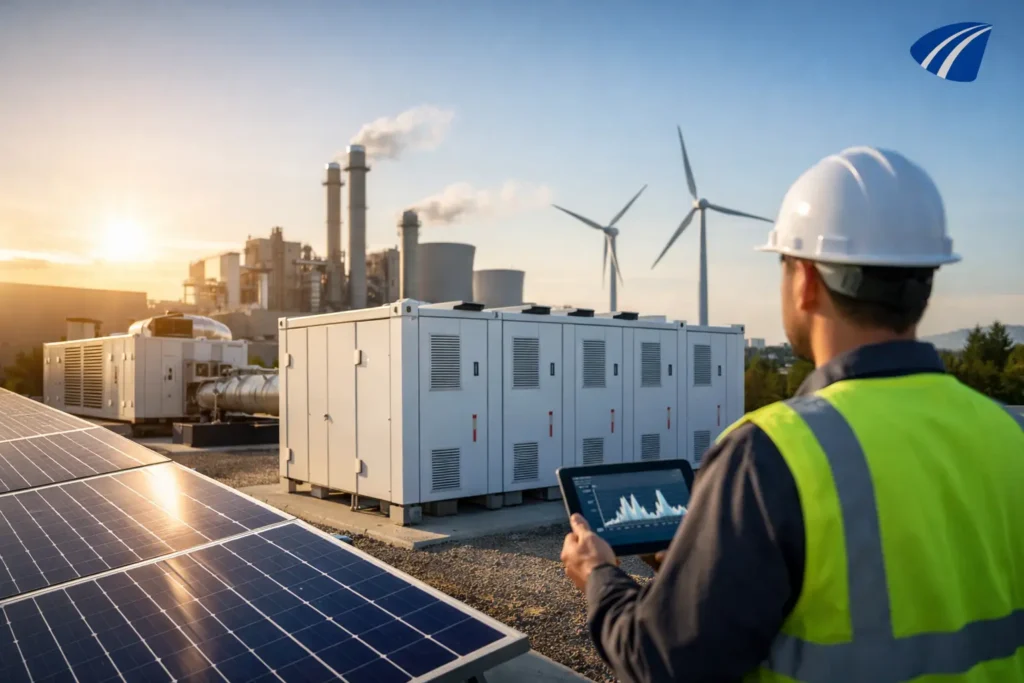
In practice, the best backup power solutions rarely rely on a single technology. The most reliable systems combine UPS, batteries, generators, and, where applicable, solar managed through centralized control with clearly defined load priorities.
A typical example is an industrial facility with critical and non-critical loads. The UPS protects sensitive automation and IT systems, batteries handle transitional and priority loads, and the generator provides long-duration backup. If solar is integrated, part of the daily consumption is offset, reducing overall energy costs.
This approach requires advanced engineering but delivers the best balance of reliability, flexibility, and cost efficiency especially for companies expecting growth and changing load profiles.
What different sectors require
Manufacturing requires process continuity and protection of automation. It is not enough to keep lights on critical machines must be identified, controlled shutdowns planned, and restart impacts analyzed.
In logistics and cold storage, priorities include cooling chains, security systems, and operational continuity. Even short interruptions can lead to product loss or operational disruption.
Data centers and telecom environments demand the highest standards power quality, redundancy, selectivity, and maintainability without downtime. Architectures such as N+1 are not optional, but fundamental.
What a proper investment assessment looks like
A high-quality project begins with consumption and risk analysis not equipment selection.
It requires defining total and priority loads, required autonomy, outage frequency, site conditions, and growth plans. Only then can the appropriate technology and sizing be determined.
Service strategy is equally important. System reliability depends on monitoring, spare parts availability, testing режимs, and service response times especially in critical infrastructure environments.
That is why serious investors choose partners who can integrate design, delivery, implementation, and maintenance. When responsibility is fragmented, issues typically emerge during the first major outage when it is too late to fix them.
Backup power for homes and small systems
Backup power is becoming increasingly relevant for residential and small commercial users, especially in areas with frequent outages or where heating, pumps, security, and communication systems are critical.
However, the approach should remain rational. Designing full-house backup is often unnecessary if only a few critical loads need protection.
A combination of solar, hybrid inverter, and battery storage is often optimal for users seeking both backup and energy savings. If full-house autonomy for extended periods is required, system complexity and budget increase significantly.
There is plenty of equipment on the market, but the real difference lies in how the system is designed, integrated, and maintained.
The best backup power solutions are not those with the highest power ratings on paper, but those aligned with real consumption profiles, risk levels, and long-term business goals.
When backup power is designed as part of a broader energy strategy rather than as a reactive purchase after a failure it becomes a driver of operational stability, cost control, and business growth.