A practical guide
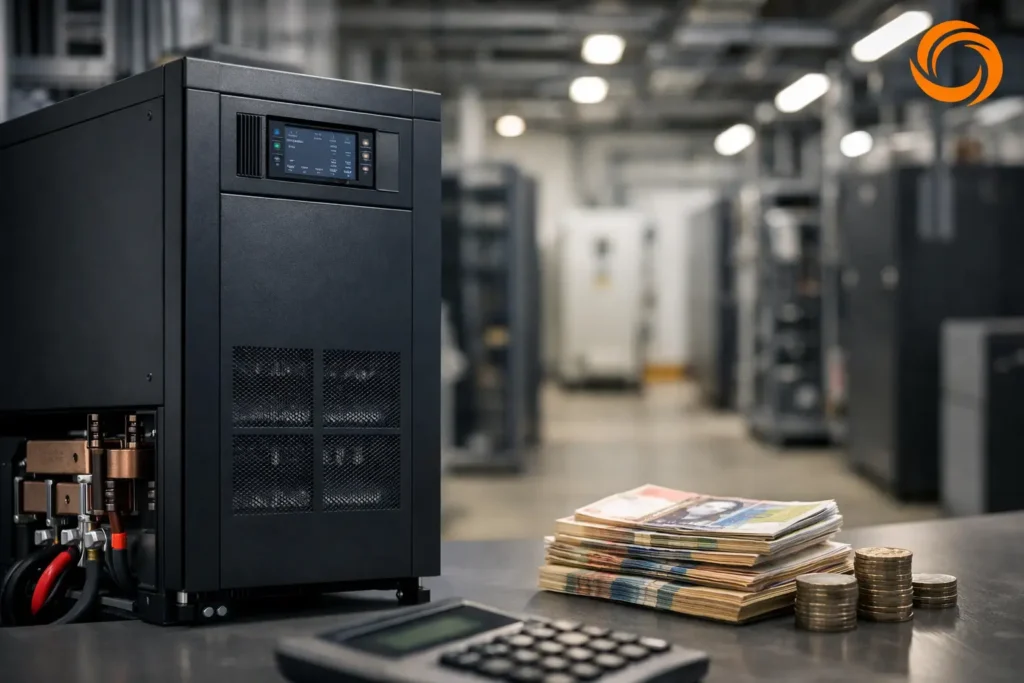
You have a UPS system that works. The batteries are somewhere in the room, charging and discharging, and you notice them only when someone mentions it is time for a replacement. And one day usually somewhere between two faults or two supplier quotes you ask yourself: do I replace like-for-like, or is this the moment to do something smarter?
That question is harder to answer in 2025 than it has ever been but the answer is also more concrete than ever. Lithium-ion battery prices have fallen by 45 percent in a single year. The grid in Serbia and the region is no more stable than it was five years ago. Solar power plants are appearing across industrial zones. And each of those factors changes the equation.
Why 2026 is a different year for this decision
For years, the battery decision was simple: replace old lead with new lead, pay less upfront, repeat in three to five years. That logic has not disappeared but in 2026, several changes have arrived simultaneously that make it less compelling than before.
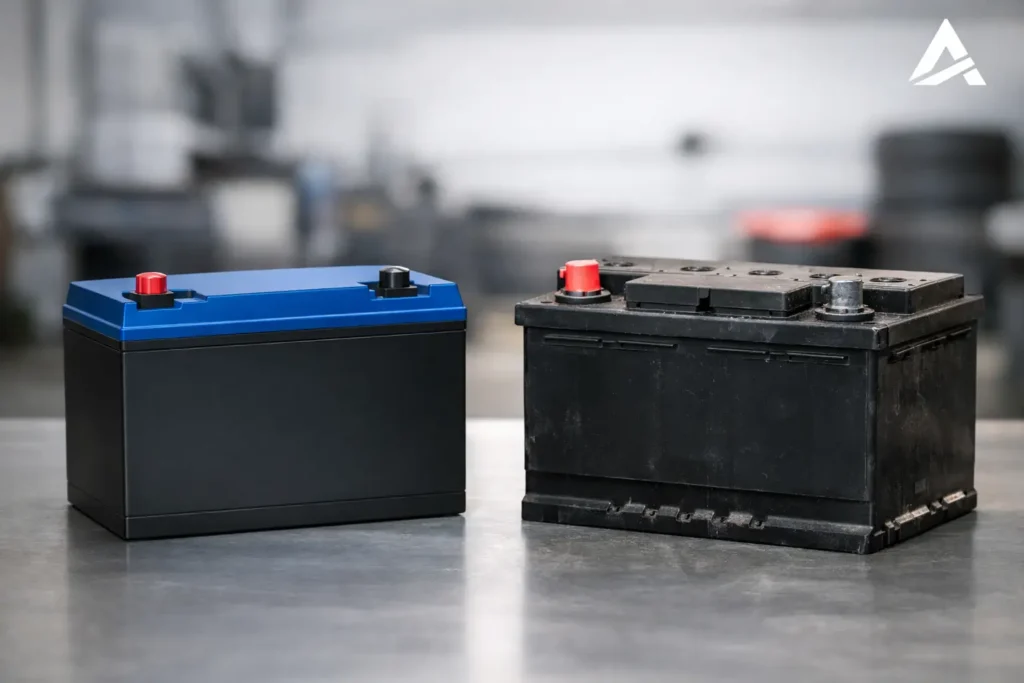
The most significant change is the price of lithium-ion batteries. LFP (lithium iron phosphate) packs the type used in stationary UPS and BESS systems in 2025, that price has fallen for approximately 46%. That is not a small shift: it is a transition from “more expensive than VRLA” to “equal or cheaper over 10 years when replacements are factored in.”
At the same time, power supply instability in Serbia and the region remains a real obstacle for industrial businesses, logistics operations, and facilities with continuous processes. The frequency and duration of voltage disturbances is not declining and the cost of a single extended outage in a modern factory or cold storage facility often exceeds the annual cost of the entire battery system.
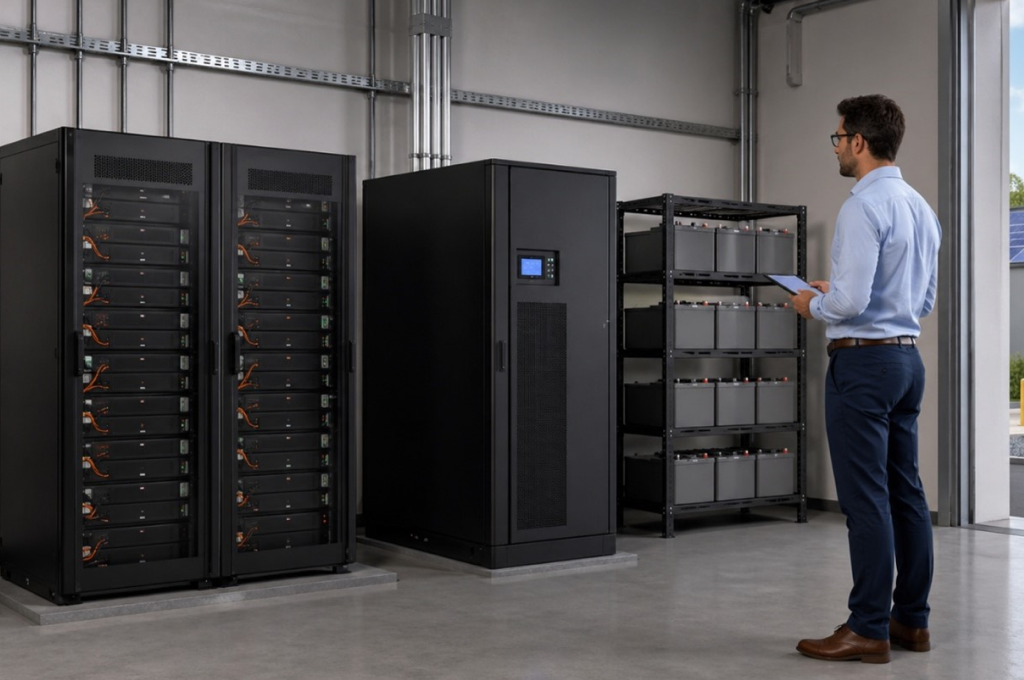
The third factor is solar energy. A growing number of facilities in the region already have or are planning solar power plants. Without a battery system, that energy is in many cases fed back to the grid at low rates. With a battery system operating alongside the UPS, that energy stays on site and is consumed during expensive peak hours.
Four questions that determine your next step
Before speaking with any supplier, it is worth working through four questions. The answers are the starting point for any serious battery conversation and a framework that protects against predetermined solutions.
How old are your current batteries?
VRLA batteries have a design life of five to ten years under ideal conditions, but in a typical industrial environment particularly at temperatures above 25°C or in a space without adequate climate control that period shortens to three to five years. A battery older than four years in such conditions is likely already operating at reduced capacity, even if the alarm system does not show it because the thresholds are not calibrated against the degraded capacity.
If the batteries are under three years old and the system is functioning without issues, there is no pressure for an immediate decision but it is exactly the right time to make a plan for the next cycle. If they are older than five years, the question is not whether to replace, but what to replace them with.
How critical is your system — and what happens when the power goes out?
This is the question many facility managers skip because they think the answer is obvious. But there is a difference between “we cannot have any interruption” and “a brief interruption is acceptable while the generator starts.” The first situation requires an online UPS with confidently sized batteries and tested autonomy. The second can work with a less expensive solution.
The question becomes more important if you have processes that are not purely IT-oriented: cold rooms, medical equipment, automated production lines, SCADA systems. Each of these has a specific autonomy requirement that must be defined before any conversation about battery capacity.
Do you have a solar power plant, or are you planning one?
This question does not directly concern batteries, but if you have or are planning a solar installation, any battery investment that does not account for solar integration is a missed economic and energy opportunity. An LFP battery combined with a BESS system can store solar energy from the midday peak and deliver it during expensive evening hours, reducing the monthly electricity bill.
What is your planning horizon?
This is the most important factor determining the economics of the decision. If you plan to be in this facility or with this equipment for the next three years, VRLA remains a legitimate option lower upfront cost, same protection. If you are planning for ten years or more or if the facility is a long-term investment the mathematics favour LFP: one procurement cycle instead of three, lower maintenance costs, and less replacement planning.
To summarize, facility manager with a UPS carrying VRLA batteries older than four years in 2025 is not asking whether to replace they are asking what. And the answer to that question depends on battery age, system criticality, planning horizon, and whether a solar installation exists or is planned.
None of these decisions should be made from a catalogue or on the basis of a single quote. Proper sizing starts from the real load profile, real temperature conditions, and a realistic facility development plan. Everything else battery chemistry, capacity, system architecture follows from that data.