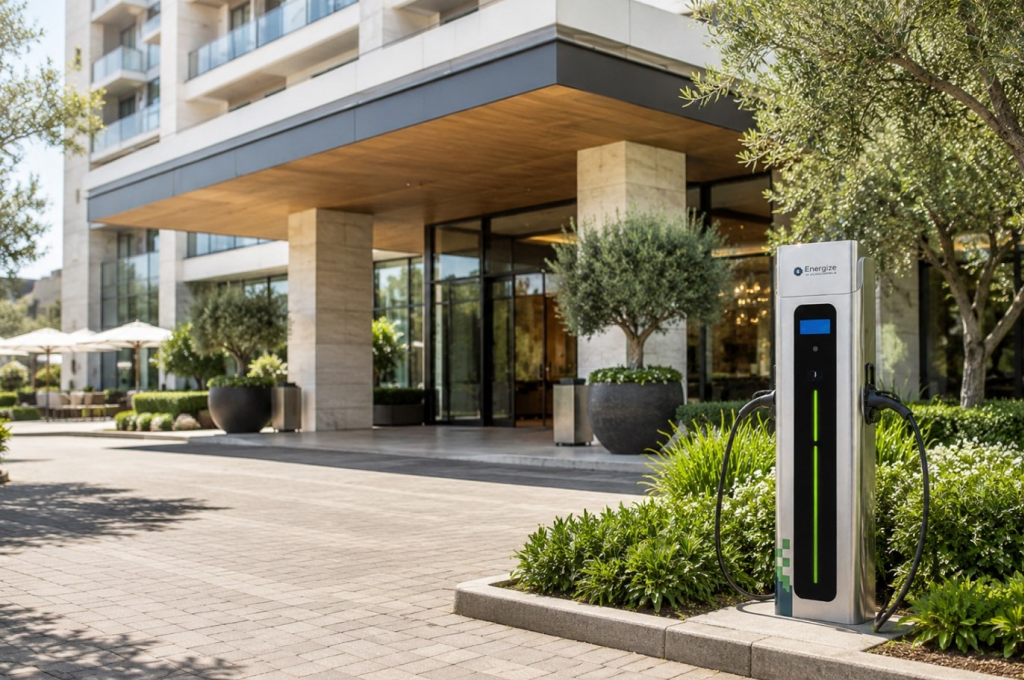
An electric-car driver pulls over to charge the battery. Ahead lie thirty, perhaps forty minutes of waiting. That time will be spent somewhere – a coffee, a meal, a walk through a shop, a booking at that particular hotel because they know they will set off in the morning fully charged. The question is never whether they will spend that time and that money. The only question is – whose business will capture them.
Here lies a twist many site owners still fail to see: a charger is not a line in the cost column, but a tool for attracting guests. It does not sell electricity – it sells a reason to choose you.
Charging Time Is Time Spent With You
The beauty of charging is that it takes a while. What is a drawback with petrol – the slow business of filling up – becomes an advantage here, because charging time aligns almost perfectly with the time a guest already spends at your location.
A restaurant or café: the driver eats while the vehicle charges, and may well choose your place precisely because they can charge there. A shopping center: the longer a guest stays, the more they spend – and charging extends that stay quite naturally. A hotel: overnight charging is an ideal match, because the vehicle sits until morning anyway, and more and more guests filter accommodation by whether it offers charging. In all three cases, the charger does not generate profit in itself, but by prolonging and encouraging the very thing the guest actually comes for.
A Pin on the Map That Drivers Actively Seek Out
There is also an effect a petrol station never had. Chargers appear on navigation and dedicated route-planning apps, and drivers actively search for them before setting off. Your location thus becomes a point someone is looking for – one that navigation literally brings to your doorstep.
This is a form of advertising you do not pay for per click. Instead of drawing the guest toward you, the driver chooses you on their own, because you solve a specific need of theirs. In a competitive setting, being the only place in the area with available charging is a difference that gets remembered.
The Right Charger for the Right Pattern
The magnet, of course, only works if it is well placed. The key is to match the charger type to how long the guest stays. A hotel with overnight stays is perfectly suited to calm AC charging, since there is time to spare. A restaurant or shop, where the visit is measured in an hour or two, benefits more from faster charging that can get real work done in that window.
And one warning, because a magnet can turn against you: a charger that reads “available” on the map but does not actually work is worse than none at all. A guest who comes for charging and finds a broken unit loses more than a charge – they leave with a poor impression of your entire business. Reliability here is not a technical detail, but a part of hospitality.
Where the Profit Actually Is
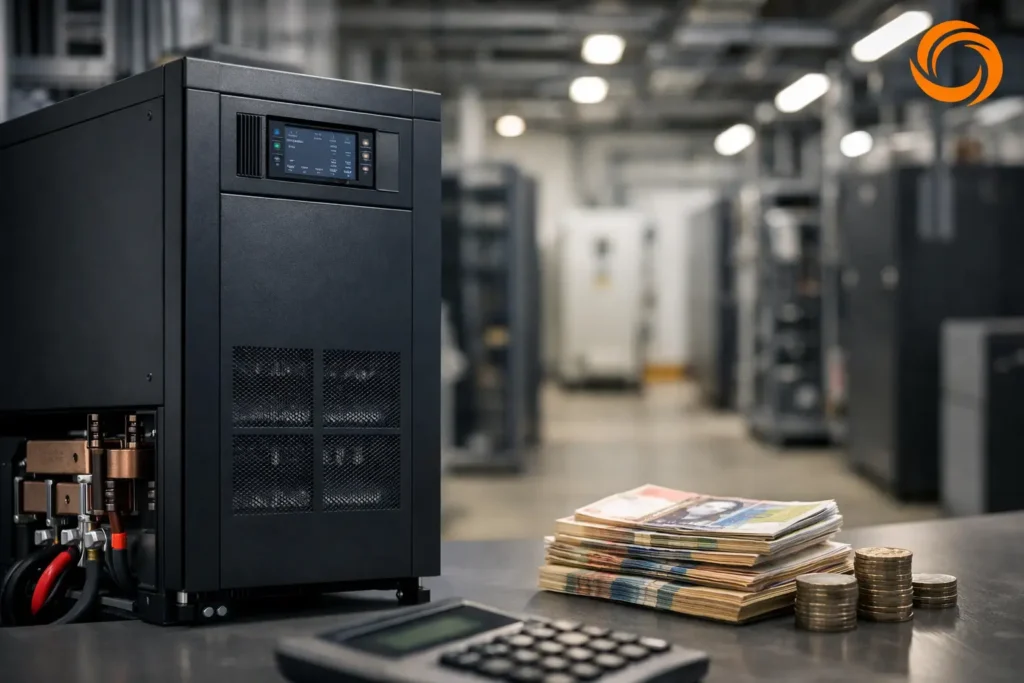
The most common mistake is to view the charger as a device that must pay for itself through the sale of electricity. The margin per kilowatt-hour is modest and rarely recoups the investment on its own. The real profit is indirect: in the extra coffee, the longer lunch, the booked room, the fuller basket. A charger pays for itself not through what it charges for energy, but through what it brings to your core business.
Seen this way, the calculation changes at its root. You no longer ask “how much will I earn on electricity,” but “how many guests, and how much of their time, does the charger bring me.”
Conclusion
A driver charging a battery has time and has money, and will spend both – that much is certain. The only open question is whose location will draw them in.
A charger, placed in the right spot and reliable when needed, answers that question in your favor. It does not sell electricity. It sells a reason for the driver to turn in at your place, stay a little longer, and leave satisfied – and that is a magnet no other sign above the door can match.