A hall, a canopy and modular containers as a ready business, no conventional permit and no waiting for a grid connection
A good plot can sit empty for years. Land on a busy road, the corner of a yard, a parcel near a zone or a town, it has value, but it brings in nothing. The reason is almost always the same: conventional construction is a big, slow, uncertain decision. A permit, a design, a connection, capital up front. So many people put it off, and the location just waits.
The question is really twofold: what to start on that location, and how to do it fast enough that it begins to pay off. The modular approach answers both, it offers the idea and the solution: a structure that goes up fast, powers itself, and doesn’t require a conventional building permit.
The site as one system
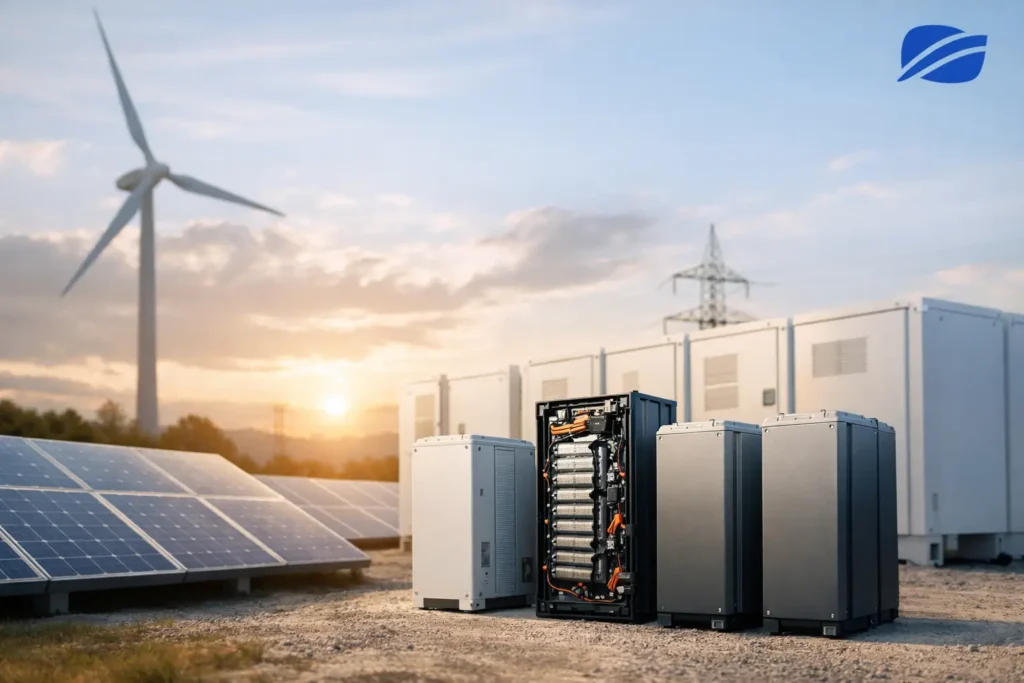
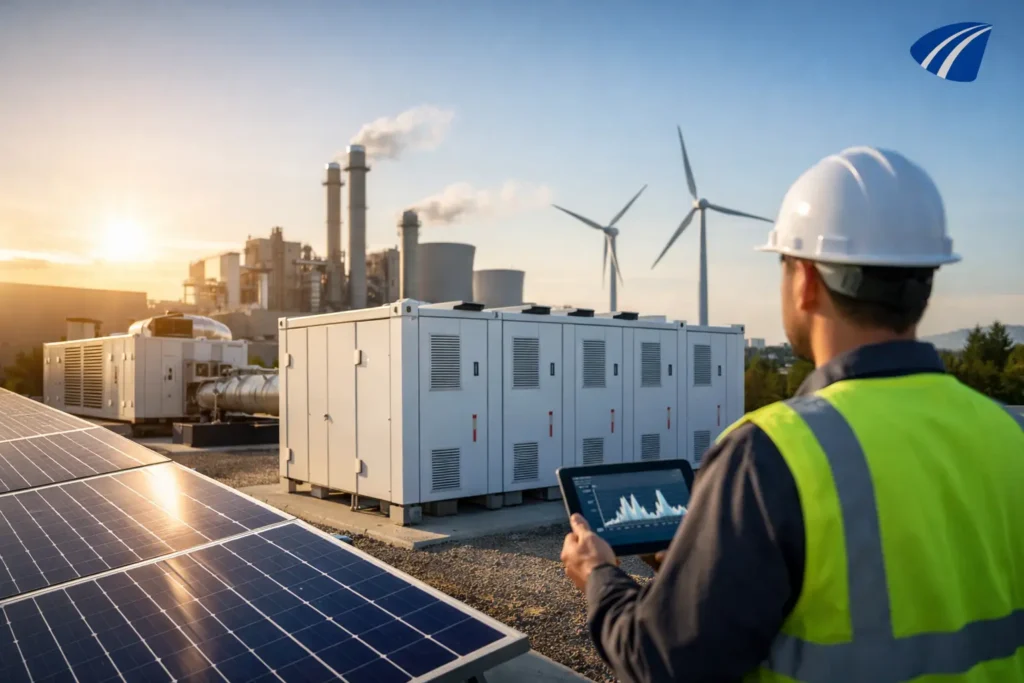
Instead of buying a hall separately, a container separately and power separately, the location is planned as one whole with three clear roles. The large roof, a hall or a canopy, is the surface that generates power. The container, whether a WorkBox, SaniPod or CoreNest, brings space and function: an office, sanitary facilities, accommodation or retail. A battery and smart management tie them into one and keep the site running day and night, on-grid or off.
Everything is modular, so it goes up fast and extends later. And because these are temporary structures, as a rule there is no conventional building permit and no lengthy design phase.
Three businesses you could start on it
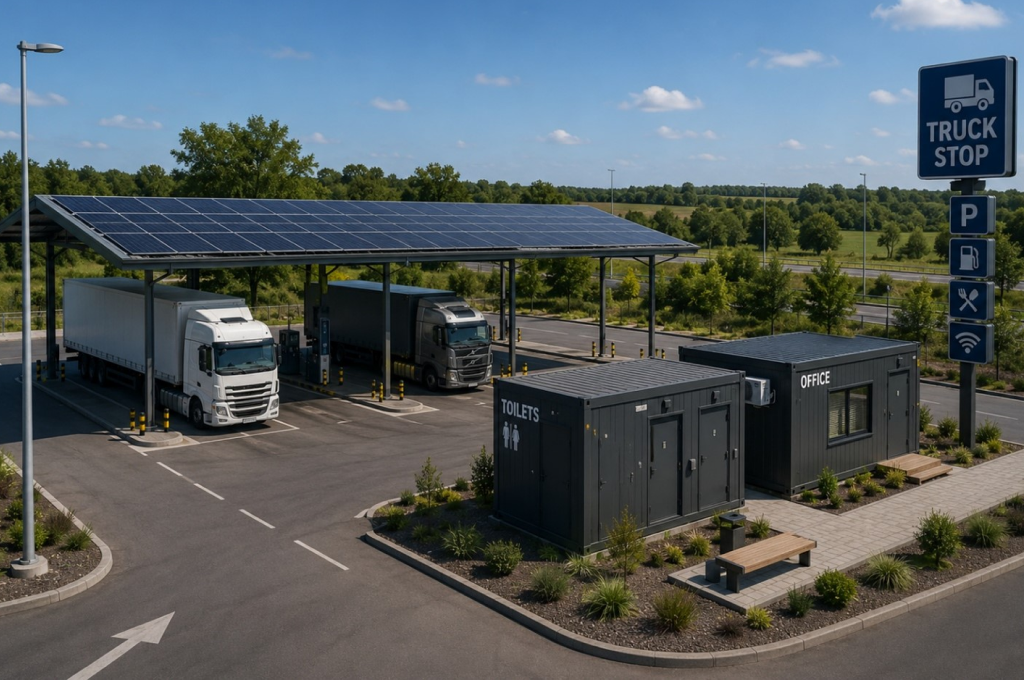
A roadside stop (truck stop). A solar canopy shelters the parking and carries chargers for electric vehicles. A SaniPod handles toilets and showers with no connection to water or sewage. A small container becomes a kiosk, a shop or a staff room. A plot on a busy road turns into a point that earns from charging, a break and a sale, and it runs without waiting for a grid connection.
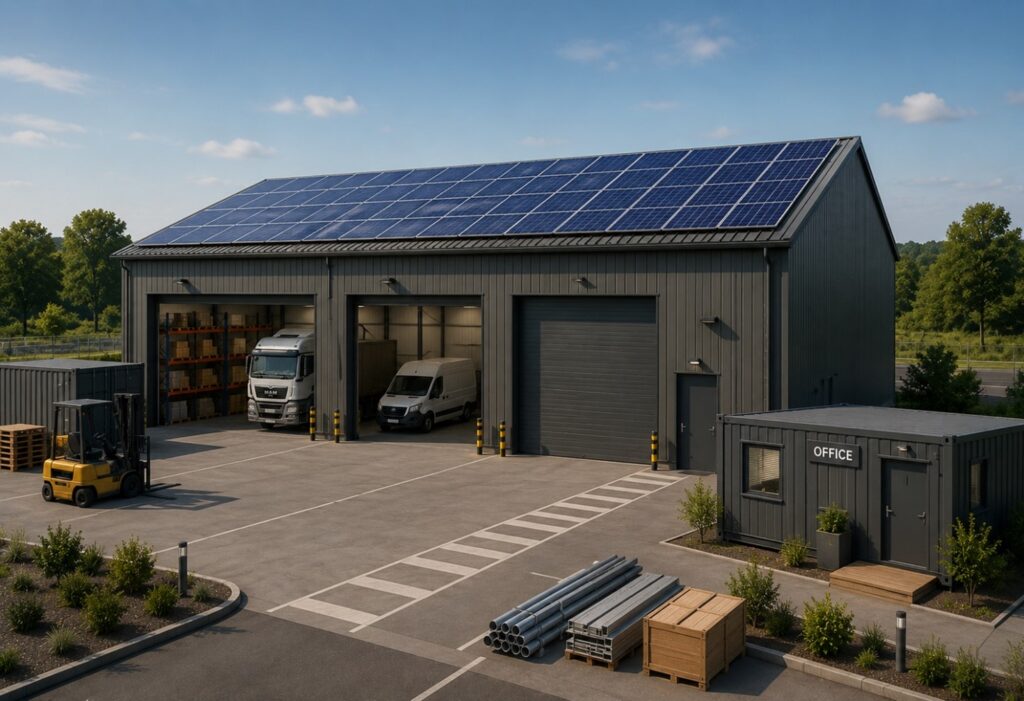
Warehouse space to rent out. A hall with a rooftop solar system becomes storage you lease. The solar cuts exactly the costs a tenant cares about, lighting, climate control, forklift charging, and makes the space easier to rent. It goes up fast and extends as demand grows.
A retail or service point. A canopy and a container together make a showroom, a sales point or a seasonal spot, say along a tourist route, with its own power and a recognizable look, set up in a matter of weeks rather than a season.
No permit, no waiting for a connection
Two of the biggest blockers in a conventional project simply fall away. A modular structure is, as a rule, treated as temporary, so it doesn’t require a building permit the way brick construction does. And the energy connection stops being a bottleneck, because the system powers the site from the start, the grid link comes later, or isn’t sought at all. That is the difference between “I’m operating in a few weeks” and “maybe I’ll open in a year or two”.
Why the whole, not three separate purchases
One properly sized system is almost always cheaper than three small, independent ones: no duplicated equipment, no permanent fuel line, and a lower cost per kilowatt when everything is planned together. Construction can be phased on the same energy base, start with a canopy and a container, add the hall later. Seen through total cost, across a working life measured in decades, one system to maintain and extend is almost always more sensible than three separate ones.
| If you have a location sitting empty, the real question isn’t only what to build, but what can start working fastest and pay off. The hall or canopy generates power, the containers provide space and function, and it all goes up without a conventional permit and works from day one — on-grid or off. |