When an investor asks when a charger will pay for itself, the answer usually starts with two figures: the price of the unit and the margin per kilowatt-hour. Both are real, and both are the wrong place to begin. The economics of a charging station rest not on what the charger costs or what it charges per kilowatt-hour, but on how often it runs.
The Cost Is Almost Entirely Up Front
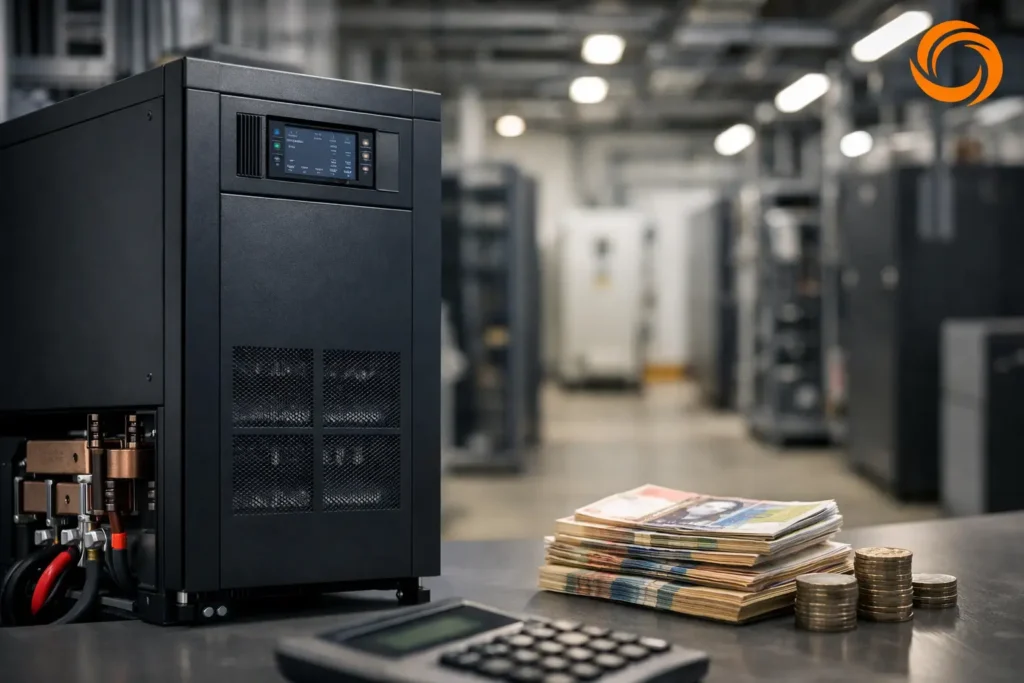
A charging station is a high-fixed-cost, low-marginal-cost asset. Most of the money is spent before the first vehicle arrives: the charger itself, but alongside it the civil works, the excavation, the foundations, the cabling and — often the most expensive item of all the grid connection. At many sites, the civil work and the connection exceed the price of the unit. Once the station is running, the cost of each additional session is little more than the energy it delivers.
That changes the whole logic. If almost all the cost is already paid, profitability comes down to one question: how many vehicles pass through. This is why two stations with the same hardware and the same per-kilowatt-hour price can have completely different outcomes, one pays back in a few years, the other never does.
Utilization Is the Master Variable
Utilizatio, the number of sessions and kilowatt-hours dispensed per day decides everything. A charger sitting idle earns nothing, no matter how good it is or how high the margin per kilowatt-hour. And because fixed costs dominate, small changes in utilization move the payback period dramatically: the difference between three and six sessions a day isn’t twice as good, it is often the difference between a loss and a profit.
Two things determine utilization above all. The first is location traffic, habits, proximity to whatever already makes a driver stop. Location is chosen once and is hard to correct afterward: a poorly placed station can’t be “fixed” with a better price or a faster charger. The second is reliability. A broken charger earns nothing while it’s down, and a driver who once found it out of order is usually lost for good. Uptime, then, isn’t a technical detail, it’s revenue, measured directly.
The Trap in Operating Costs
There is a part of the calculation that often surprises investors. At low utilization, the demand or peak-power component can dominate the energy bill, you pay for capacity to cover a peak burst that is rarely used. This is exactly where an energy storage system (BESS) changes the picture: buffering keeps peak power low, so a station with a modest connection also carries a lower fixed operating cost. Similarly, a solar installation lowers the cost of the very energy being resold.
AC and DC Are Not the Same Business
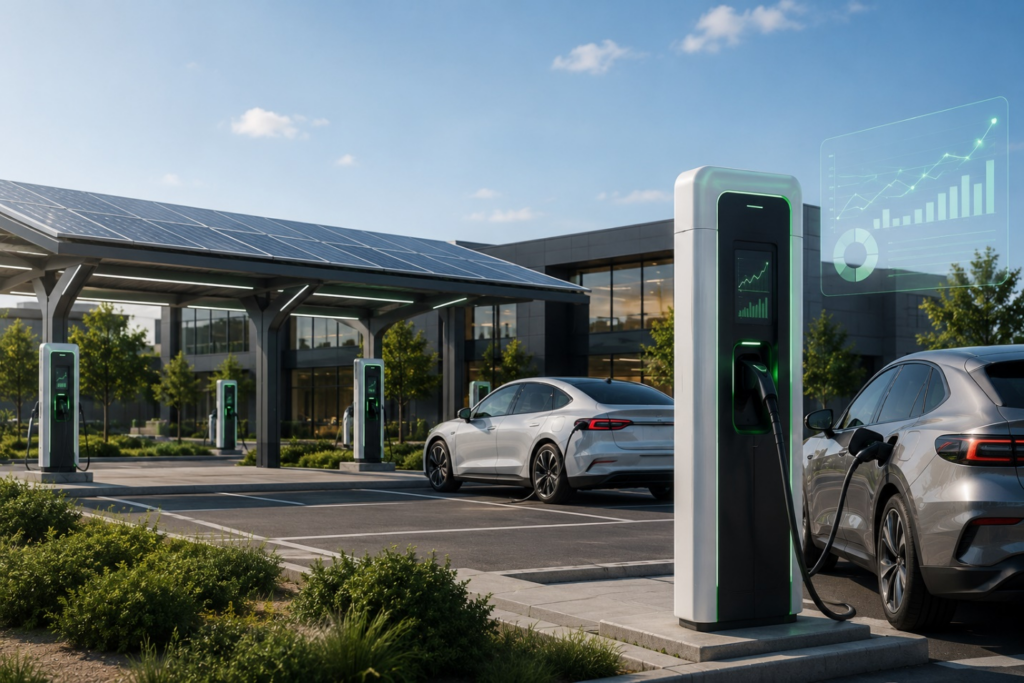
A common mistake is to carry one model onto the other. An AC charger at a destination — a hotel, a shopping center, a car park has low CAPEX, modest power and a long dwell time; it tends to pay off through convenience and the footfall it supports, not through the volume of energy delivered. A DC station on a corridor has high CAPEX and demands throughput: without enough sessions, that high fixed cost is never covered. Apply AC logic to a DC station and you will overestimate the return.
What Actually Moves the Numbers
In the end, the payback period isn’t shortened by a cheaper unit or a higher price per kilowatt-hour, but by a handful of levers: a well-chosen location, high uptime, peak-power management, cheaper energy from your own generation, and, where possible, pairing with whatever draws vehicles to the site on its own. Operational monitoring that catches a fault in time and tracks utilization isn’t administrative overhead, it protects the very variable everything depends on.
A station doesn’t pay off because the charger is cheap or the price is high. It pays off because it’s busy and because it works. The investment decision, when it all comes down to it, is a decision about location and about who will run it.