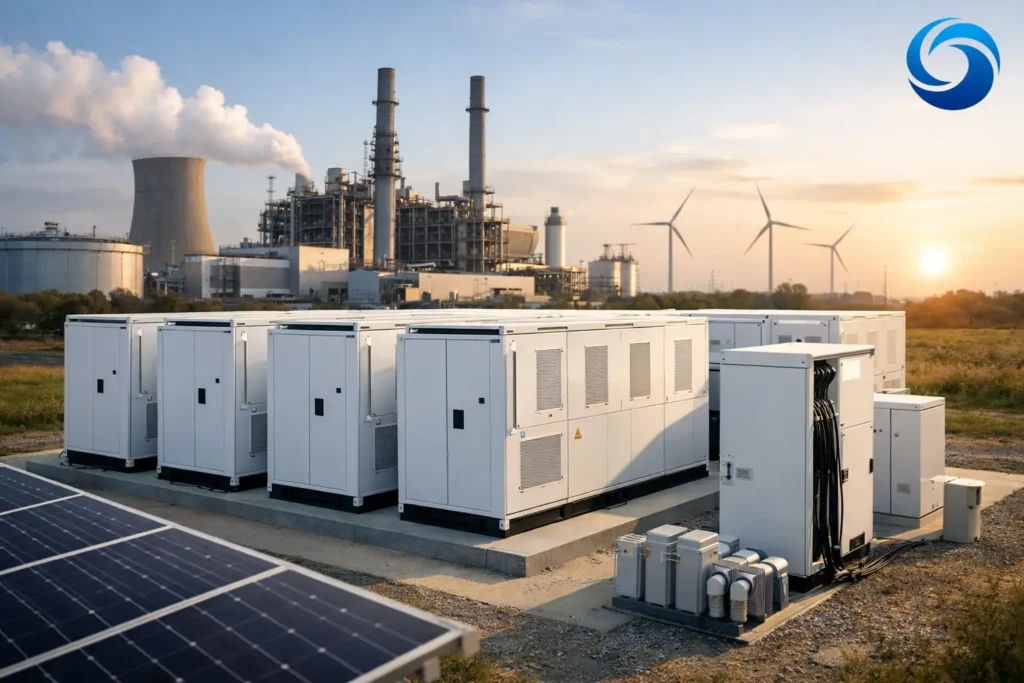
A manufacturing plant does not pay for electricity solely through the kilowatt-hours it consumes. Energy costs are also driven by peak demand charges, production downtime, unused energy generated by on-site solar power plants, and the risk that a single grid disturbance can interrupt processes that may take hours to stabilize. That is why a Battery Energy Storage System (BESS) for manufacturing is far more than a high-capacity battery. It is an intelligent energy management solution that transforms how industrial facilities purchase, utilize, and secure electrical power.
For production, finance, and maintenance managers, the key question is not whether energy storage is an impressive technology. The real question is whether it addresses a specific operational cost or business risk while delivering a clearly defined return on investment. The answer depends on the facility’s load profile, grid connection capacity, production processes, local grid conditions, and existing or planned solar generation.
What Does a BESS Solve in Manufacturing?
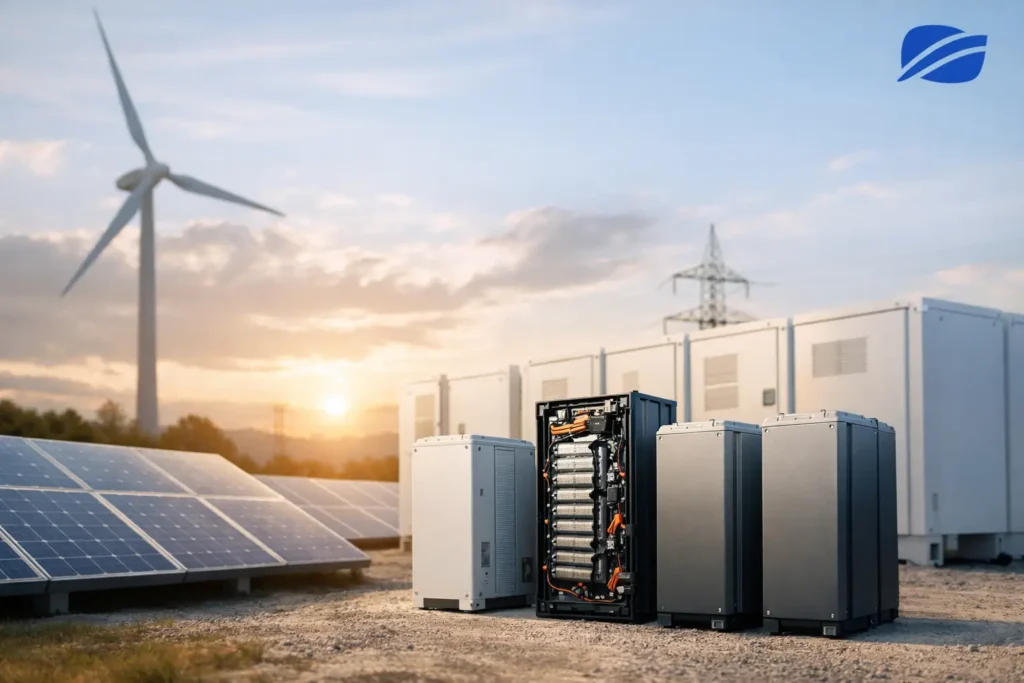
A Battery Energy Storage System (BESS) integrates battery modules, bidirectional power conversion systems (PCS), battery management systems (BMS), protection equipment, HVAC, and intelligent monitoring software. Its role extends well beyond storing electricity. The system continuously monitors facility demand, solar generation, and grid conditions, charging and discharging batteries according to predefined operational strategies.
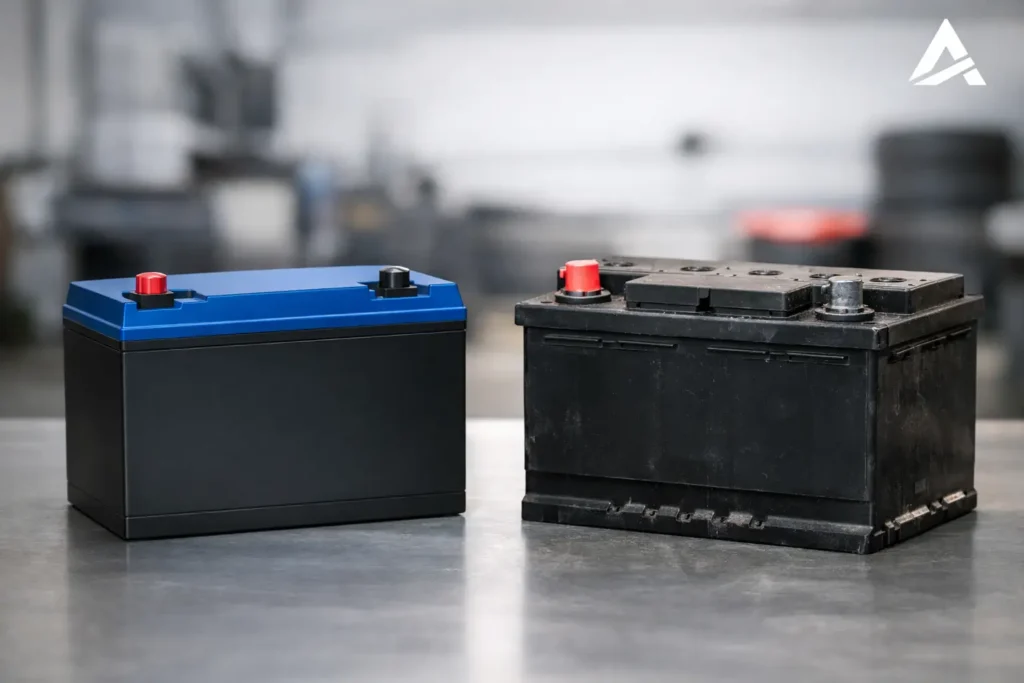
Lithium-ion batteries—particularly Lithium Iron Phosphate (LFP) chemistry have become the preferred technology for industrial applications thanks to their long service life, thermal stability, and high safety standards. However, battery chemistry is only one component of a successful project. Equal attention must be given to container or enclosure quality, fire protection systems, HVAC design, energy management software, and seamless integration with the existing electrical infrastructure.
One of the most common applications is peak shaving. When major electrical loads such as compressors, furnaces, refrigeration systems, pumps, presses, or processing lines operate simultaneously, a BESS can temporarily supply part of the demand during critical minutes or hours. This reduces the amount of peak power drawn from the grid and lowers demand-related electricity costs wherever such tariff structures apply.
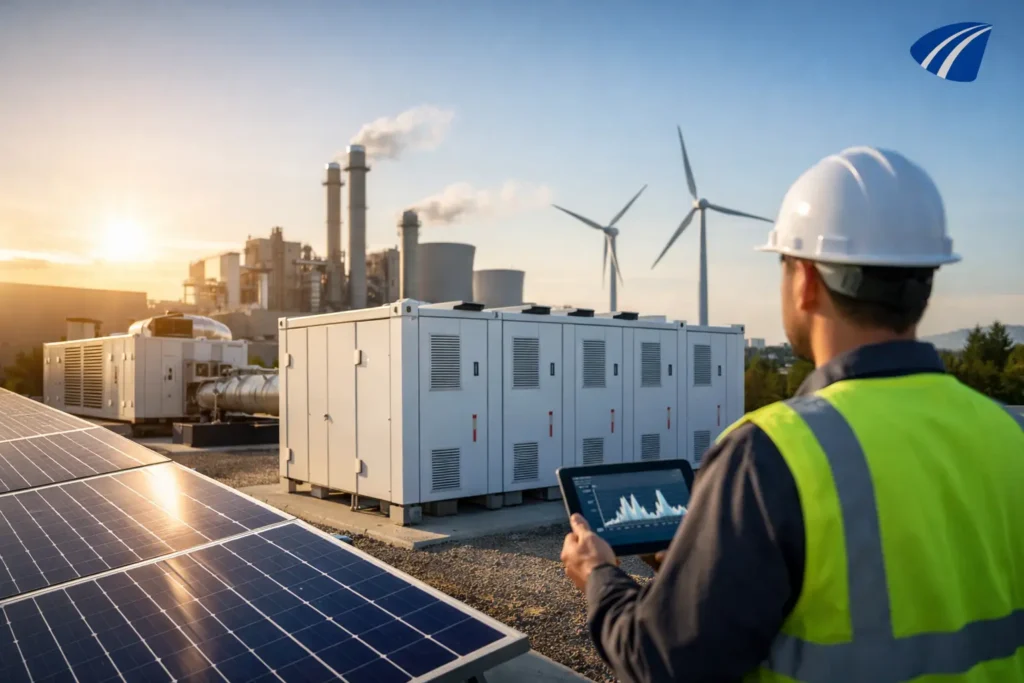
Another major advantage is increasing solar self-consumption. Industrial solar power plants often generate their highest output during periods when facility demand is relatively low. Without storage, surplus energy is exported to the grid or constrained by grid connection limitations. A BESS stores this excess energy during the day and supplies it back to the facility later when solar production declines but electricity demand remains high.
A third critical application is business continuity. A BESS responds significantly faster than a diesel generator during short grid disturbances, bridges the transition period before backup generators start, and protects sensitive loads from power interruptions. However, a BESS should not be considered a replacement for an Uninterruptible Power Supply (UPS). Critical equipment requiring uninterrupted power still depends on a properly engineered UPS system. Instead, a BESS serves as part of a broader energy infrastructure, with power and storage capacity designed around the operational priorities of the facility.
BESS Should Be Sized Based on Data, Not Building Size
One of the most common and costly mistakes is selecting a storage system based solely on the facility’s connection capacity, building size, or monthly electricity bill. A factory may consume large amounts of energy annually while offering few economically viable opportunities for battery discharge. Another facility with lower overall consumption may experience frequent and significant demand spikes, making energy storage highly cost-effective.
A proper feasibility study begins with detailed load measurements, typically recorded at 15-minute intervals, while facilities with rapidly changing processes often require even higher-resolution data. Engineers must identify when demand peaks occur, how long they last, which equipment causes them, and whether operational adjustments could reduce their impact. Ideally, consumption data should cover at least one full year, since seasonal variations in cold storage facilities, food processing plants, agricultural production, or HVAC-intensive operations can substantially influence system economics.
Power and Capacity Are Not the Same
Every BESS is defined by two key parameters: power, measured in kilowatts (kW) or megawatts (MW), and energy capacity, measured in kilowatt-hours (kWh) or megawatt-hours (MWh). Power determines how quickly the system can charge or discharge energy, while capacity determines how long it can sustain that output.
For example, reducing a 1 MW demand peak lasting only 15 minutes requires high power but relatively modest energy capacity. Conversely, shifting solar generation from midday into the evening production shift requires considerably greater storage capacity and a different operating strategy. In practice, the optimal balance between power and energy should always be determined through simulations based on actual consumption data rather than generic design rules.
Proper engineering must also consider allowable depth of discharge, battery degradation over time, expected cycle life, converter losses, and auxiliary power consumption for cooling systems. The nominal capacity listed on a datasheet rarely represents the usable energy available throughout the system’s operational lifetime.
Solar, Batteries, and Generators Serve Different Purposes
Manufacturers that already operate solar power plants often view battery storage as the natural next step. While this is frequently true, it does not automatically guarantee the strongest business case. If the facility’s largest demand peaks occur early in the morning or overnight, a battery charged exclusively from solar generation may not address the primary challenge. In such cases, it is essential to evaluate whether charging from the grid is technically permitted and economically justified, as well as which control strategies deliver the greatest overall benefit.
Each technology fulfills a distinct role within the energy infrastructure:
- Solar power plants generate electricity when sunlight is available.
- BESS stores energy and manages when it is used.
- Diesel generators provide extended backup during prolonged outages.
- UPS systems ensure uninterrupted power for critical equipment.
An effective energy strategy assigns each technology a clearly defined function rather than treating them as interchangeable solutions.
For example, a data center or automated production line may require a UPS for seamless power transfer, a BESS for power balancing and bridging, and a generator for multi-hour backup operation. Cold storage facilities may benefit primarily from peak shaving and maximizing solar self-consumption, while manufacturing plants with large thermal loads often achieve the highest value through precise demand management during energy-intensive production cycles.
The Energy Management System Determines Real Value
Without an advanced Energy Management System (EMS), a battery is simply an energy reservoir. The EMS provides the intelligence behind the system, deciding when batteries should charge, how much energy they should discharge, which loads receive priority, and which operational limits must never be exceeded.
In industrial environments, the EMS must communicate with electricity meters, solar inverters, main switchgear, backup generators, UPS systems, and, where applicable, SCADA or Building Management Systems (BMS). Static operating schedules are insufficient for facilities where production varies between shifts, customer orders, or seasonal demand. Instead, the system should prioritize production reliability first while continuously optimizing energy costs.
For instance, a properly configured EMS will avoid discharging batteries to achieve small morning savings if historical data indicates a significant demand peak during the afternoon shift. Likewise, it will avoid maintaining batteries at maximum state of charge unnecessarily, reducing long-term degradation. The energy management strategy must always support the facility’s operational objectives.
Safety, Grid Integration, and Total Cost of Ownership Must Be Considered from the Beginning
A successful BESS project requires a comprehensive approach to safety. This includes selecting an appropriate installation location, implementing fire detection and suppression systems, designing adequate ventilation or HVAC, ensuring proper zoning, maintaining service accessibility, and complying with all applicable electrical, construction, and fire protection regulations. High-quality battery cells alone cannot guarantee a reliable system if the overall design is inadequate.
Grid integration is equally important. Short-circuit capacity, protection coordination, voltage quality, harmonics, reactive power compensation, and island mode capability all directly influence system architecture. In existing industrial facilities, integrating a BESS often requires more engineering effort than installing the battery container itself.
Investment decisions should therefore be based on Total Cost of Ownership (TCO) rather than initial purchase price. Beyond equipment costs, organizations should evaluate civil and electrical works, system controls, maintenance, warranty conditions, expected battery degradation, component replacement, insurance, and realistically achievable operational savings. The lowest-cost system per kilowatt-hour is not necessarily the most economical solution for a factory where production interruptions are unacceptable.
From Feasibility Study to Reliable Operation
A successful BESS project begins with a detailed energy assessment and clearly defined objectives. Whether the priority is reducing peak demand, protecting critical processes, increasing solar self-consumption, or achieving a combination of these goals, every project should start with measurable operational requirements.
The next steps include analyzing real operating data, simulating system performance, selecting the optimal architecture, developing the technical design, preparing the financial model, and planning implementation without disrupting production.
At Energize, BESS projects are engineered as part of a fully integrated energy infrastructure alongside solar power plants, UPS solutions, backup generators, HVAC systems, and advanced power management technologies wherever required. This integrated EPC approach minimizes coordination between multiple contractors while ensuring that system performance is optimized across the entire facility rather than at the level of individual components.
The true value of a BESS is realized when it operates in sync with the rhythm of the factory reducing demand peaks before they become costs, storing energy when it has the greatest value, and protecting production whenever the grid cannot provide the required level of reliability. The first step is not selecting a battery capacity from a catalogue, but conducting a detailed analysis of your facility’s energy profile and operational processes.