When a production facility stops for 20 minutes due to a voltage drop, the cost is not measured only in unconsumed kilowatt-hours. Losses occur in production, logistics, cold chain operations, product quality, and delivery deadlines. That is why BESS energy storage systems are no longer viewed as an add-on to energy infrastructure, but as a critical tool for controlling costs, reliability, and operational risk.
For companies with high energy consumption, significant peak loads, or on-site solar generation, BESS changes how energy is used. Instead of being a passive cost dependent on the grid and tariffs, energy becomes a manageable resource. This is the fundamental difference between simple equipment procurement and strategic energy planning.
What BESS Energy Storage Systems Are
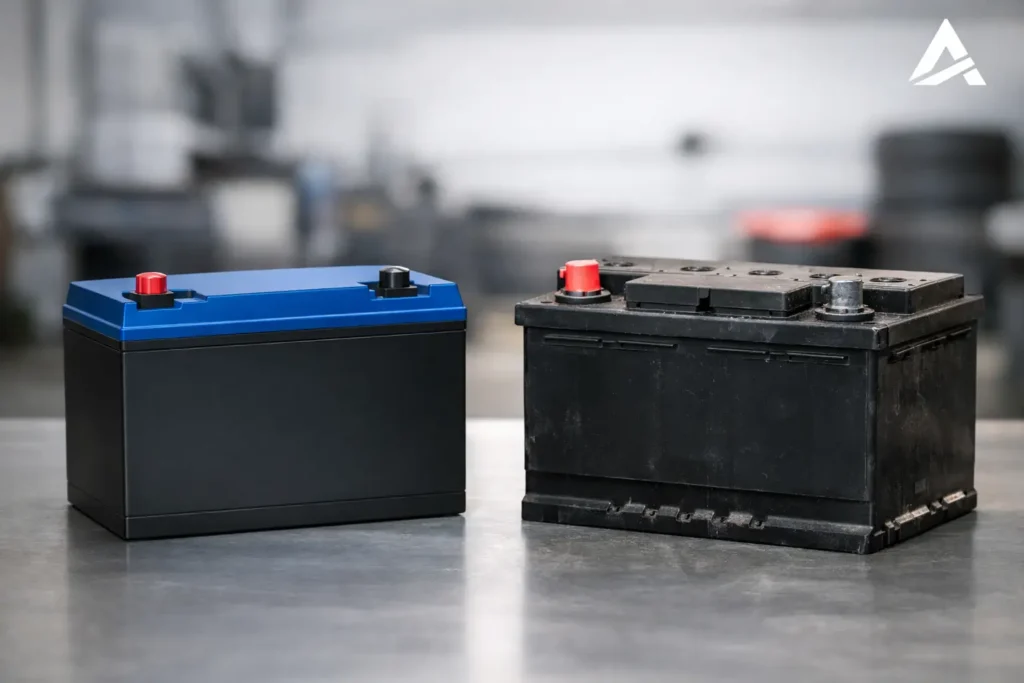
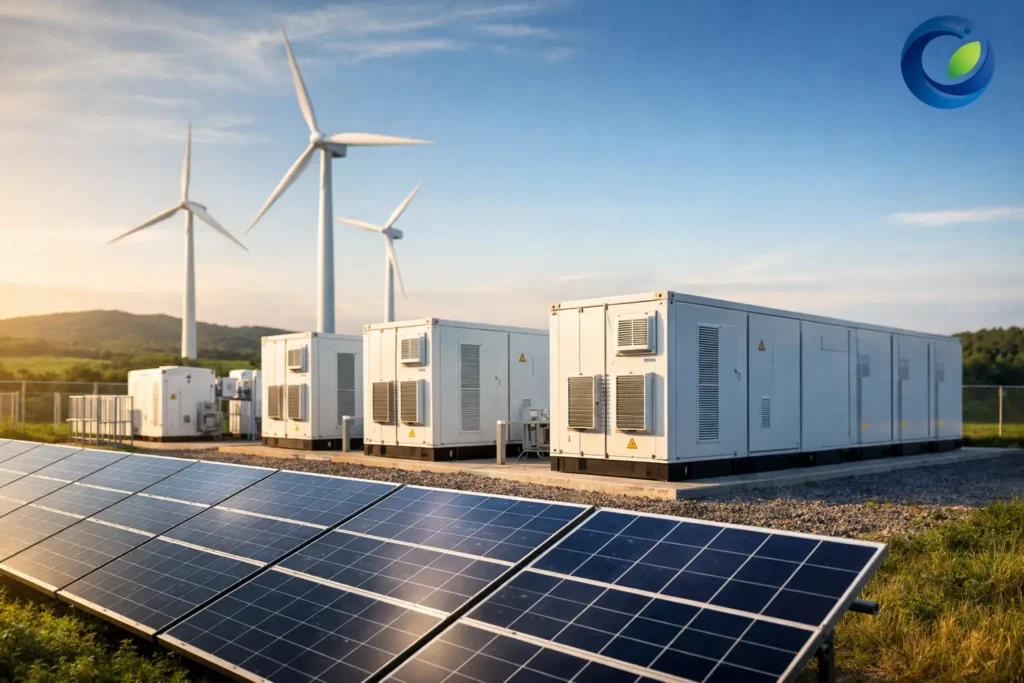
BESS stands for Battery Energy Storage System. In practice, it is not just a battery. The solution includes battery modules, inverters, a battery management system, monitoring, protection systems, cooling, fire safety systems, and operational logic that determines when the system charges, discharges, and how it prioritizes energy use.
This distinction is important because the value of BESS does not lie in the battery cells alone, but in how the entire system is designed and integrated with existing infrastructure. A poorly sized storage system can be expensive and underutilized. A properly designed system does exactly what the investor needs reduces peak demand, shifts consumption away from expensive periods, stores excess solar energy, and increases power availability when the grid is unstable.
Where BESS Delivers the Most Value
The greatest impact of BESS is seen where consumption is uneven and unpredictable. In manufacturing, this includes facilities with high inrush currents, cyclical loads, and costly downtime. In logistics and cold storage, continuity of operation is critical. In data centers and telecommunications, storage also plays a key role in maintaining power quality and extending the autonomy of critical loads.
For users with solar systems, BESS addresses another common challenge the mismatch between production and consumption. Solar generates most energy during daylight hours, while many facilities experience peak demand early in the morning, in the evening, or in short intervals throughout the day. By storing excess energy and using it at the right time, self-consumption increases and reliance on the grid decreases.
However, this does not mean BESS is automatically cost-effective in all cases. If consumption is stable, without peaks, without power quality issues, and without local generation, the business case must be carefully evaluated. Storage has a clear logic, but only when aligned with the facility’s consumption profile and operating conditions.
How Investment Profitability Is Calculated
A common mistake in the market is evaluating BESS solely based on cost per kilowatt-hour of storage. This is too narrow. Profitability must be assessed through total cost of ownership and the actual operational impact the system delivers over time.
The first step is analyzing the consumption profile when peaks occur, how long they last, the difference between base and peak load, and how consumption varies daily, weekly, and seasonally. Next comes tariff analysis, including demand charges, opportunities for energy arbitrage between low and high tariff periods, and the potential to store excess solar energy for later use.
The third level of analysis focuses on risk and operational continuity. In certain industries, a single outage can result in greater financial loss than a monthly electricity bill difference. In such cases, storage is not just a cost optimization tool, it becomes part of a business resilience strategy.
This is why a serious project does not begin with selecting a battery, but with a feasibility study. Only after evaluating consumption, infrastructure, production processes, regulatory frameworks, and future growth can the appropriate system capacity, power rating, and operating mode be defined.
BESS and Solar – The Most Powerful Combination
For facilities that already have or are planning solar installations, BESS often provides the best balance between technical performance and financial return. Solar alone can significantly reduce energy costs, but storage adds control and that is the key difference.
When solar production exceeds real-time consumption, excess energy may be exported to the grid or lost, depending on system configuration and local constraints. With BESS, this energy is stored and used when demand is higher, when electricity is more expensive, or when the grid is under stress. This increases energy independence and reduces exposure to price fluctuations.
For industrial users, peak shaving is particularly valuable. The system absorbs part of the load during peak demand periods, reducing demand charges and relieving internal infrastructure stress. In practice, this can delay costly grid upgrades or reduce contracted capacity costs.
Technical Factors That Determine Project Success
In BESS projects, system size is not the only parameter. Equally important are C-rate, cycle life, depth of discharge, operating temperature, fire protection, control logic, and the quality of integration with the facility’s electrical system.
For example, a system designed to handle short, high load peaks is very different from one designed to deliver energy steadily over longer periods. The same applies to facilities with UPS systems, generators, solar plants, or sensitive loads. In these cases, storage must be part of a broader energy architecture not an isolated component.
Operational strategy also matters. Some users prioritize daily cost optimization, others prioritize backup power, while some require a hybrid approach. Each objective affects system sizing and expected return on investment.
What Investors Often Underestimate
Two aspects are most commonly underestimated integration and maintenance. On paper, BESS may seem straightforward: batteries, inverters, and control systems. In real-world applications, the complexity is significantly higher. Protection systems, communication protocols, EMS logic, cooling requirements, service accessibility, and safety procedures must all be properly aligned.
If the system is not well integrated with the facility’s network, it may result in operational constraints, reduced efficiency, or unnecessary battery wear. If charging and discharging strategies are poorly defined, the system will underperform. This is why the integrator is just as important as the equipment itself.
The second issue is focusing only on upfront costs. A cheaper system is not necessarily more economical when considering lifespan, service availability, cell quality, warranty conditions, safety, and real-world utilization. In energy storage, the most expensive mistakes rarely appear at the time of purchase but during operation.
When Is the Right Time to Invest
The timing varies for each company, but certain indicators are clear. If electricity costs are rising faster than operational processes can absorb, if peak loads are significant, if grid stability is insufficient, or if a solar system is already planned storage deserves serious consideration.
The same applies to companies planning capacity expansion. In such cases, BESS can be part of a broader energy strategy relieving grid connection constraints, supporting new loads, and reducing the need for expensive infrastructure upgrades. Sometimes it is a purely financial decision; other times, it protects business growth.
For investors seeking precise answers, the most rational approach is a technical and economic evaluation before procurement. On the website of Energize, this step is given the highest priority assuring that investments are based on real consumption data, load profiles, and expected performance, rather than generic specifications.
Why BESS Is Not Universal But Is a Powerful Tool
BESS will not solve every energy challenge on its own. It will not compensate for poor internal infrastructure, incorrectly sized solar systems, inadequate metering, or the absence of an energy strategy. However, when properly integrated, it delivers what is most valuable today greater predictability, stronger control, and reduced exposure to energy risks.
For serious business users, the question is no longer whether energy storage will play an important role, but how to design it so that the investment aligns with the company’s operational model. The best projects are those where storage is not purchased as a trend but implemented as an engineering solution to a clearly defined problem. That is where its true value begins.