
Cost and Financial Analysis
If you ask today how much a residential solar power system costs, you will likely get three different answers, one approximate, one sales-driven, and one accurate. When discussing the cost of a residential solar system, the only answer that truly matters is the one based on actual consumption, property characteristics, roof condition, and grid connection model. Everything else is a rough estimate that can make the investment appear either cheaper or more expensive than it is.
For family homes in Serbia, systems typically range between 4 and 10 kW. Within this range, the investment depends on the quality of panels and inverters, mounting structure, cable routing length, protection equipment, design documentation, and installation. This is why it is more accurate to speak about the total project cost rather than the price of panels alone. Panels are just one part of the system. The plant must operate reliably for 20+ years, not just look affordable on paper.
What Determines the Cost of a Residential Solar System
Installed capacity has the greatest impact on price, but it is not the only factor. A house with optimal roof orientation, simple installation conditions, and well-organized electrical infrastructure may have a lower cost per kilowatt than a property that requires structural modifications, electrical upgrades, or more complex roof access.
Another key factor is equipment selection. There is a significant difference between systems built with mid-range components and those designed with higher-quality equipment, stronger warranties, and more stable performance in high temperatures. This difference is not only reflected in the upfront price, but also in energy production, failure rates, maintenance, and overall cost of ownership.
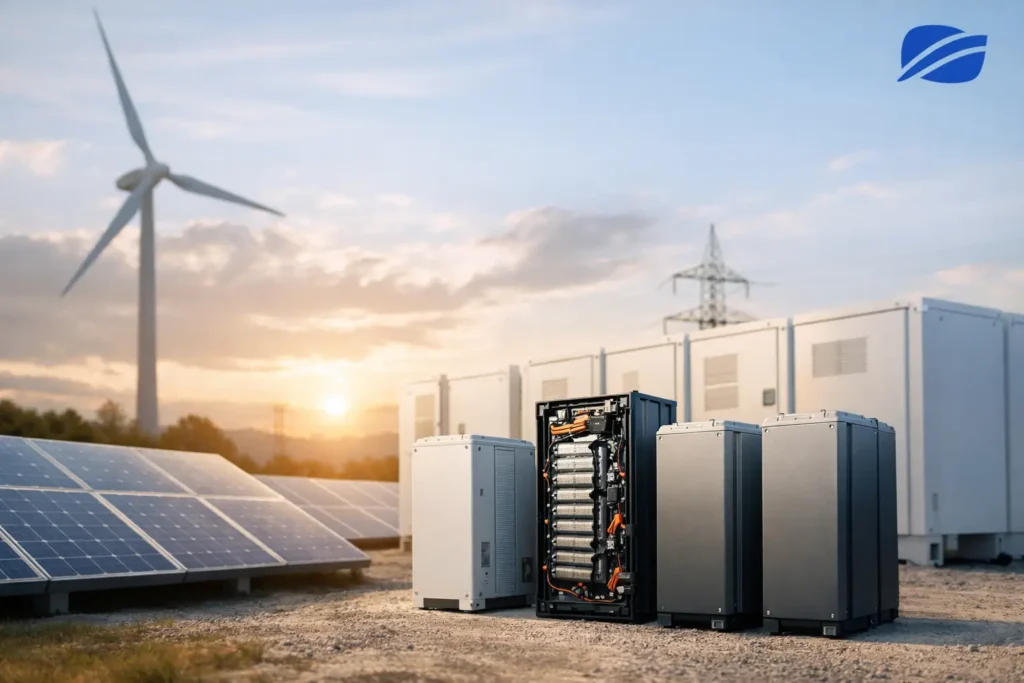
The third factor is whether the system is a standard on-grid solution or includes battery storage. For most households without frequent power outages, on-grid systems are financially more rational. If backup power is also a priority, battery storage makes sense, but significantly increases the investment. In practice, batteries should be selected based on real energy needs, not as a “complete system” add-on.
Typical Costs in Serbia
In the Serbian market, small residential systems are usually designed based on annual consumption and available roof space. A household consuming around 5,000 to 6,500 kWh per year typically considers a system of approximately 5 kW. For such systems, the investment usually falls within a range that depends on the specific configuration and installation conditions, but generally amounts to several thousand euros, without compromises or low-quality equipment.
For homes with higher consumption, electric heating, heat pumps, or EV charging, systems in the 8 to 10 kW range are more common. In these cases, the cost increases not only due to more panels, but also because of a more powerful inverter, additional protection equipment, and sometimes more complex grid connection requirements. This is why two houses of similar size can receive completely different offers.
If you come across a “fixed system price,” that is usually a warning sign. A properly engineered proposal cannot exist without analyzing consumption, inspecting the roof, and evaluating electrical conditions. A serious contractor does not sell several panels, they design a system that delivers predictable results.
Cost per kW vs. Real Cost
One of the most common mistakes is comparing projects based solely on cost per installed kilowatt. While this seems practical, it can be misleading. A 6 kW system on a well-oriented south-facing roof with minimal shading can outperform a larger system installed under unfavorable conditions. If production is not optimized, a lower upfront price quickly loses its value.
It is equally important to consider what is included in the price. Does the offer cover system design, structural analysis (if required), surge protection, high-quality mounting systems, commissioning, and administrative support? Or are some of these costs deferred? The most expensive system is often not the one with the highest initial price, but the one that leads to downtime, reduced output, or unexpected service costs over time.
When the Investment Pays Off
Return on investment is a valid question but there is no universal answer. The payback period depends on annual consumption, billing models, electricity prices, self-consumption rates, and system design quality. In practice, well-dimensioned systems often achieve payback within a range of several years to approximately a decade.
A household that consumes most of its energy during the day typically achieves better financial results than one that primarily uses electricity in the evening. This is why analyzing consumption habits is just as important as analyzing the roof. If the household plans to introduce a heat pump, a higher-capacity electric boiler, or EV charging, that future demand must be included in the calculation. The system is not designed only for today but for the next 20 years.
Cost vs. Equipment Quality
The market offers a wide range of equipment, but in residential systems, the biggest differences come from the inverter, panels, mounting structure, and protection systems. While panels are the most visible part of the system, the inverter is often the critical point that determines long-term reliability. If it is not properly selected or installed, losses and downtime can significantly reduce expected savings.
Warranties are important but only when they are backed by companies capable of delivering service, support, and replacement within a reasonable timeframe. In serious projects, the price also reflects engineering responsibility. This is especially important for homeowners who do not want to coordinate between equipment suppliers, installers, and electricians.
This is why the “turnkey” model is increasingly in demand. It reduces operational risk, shortens implementation timelines, and ensures clear accountability for the entire system. For the user, this means less uncertainty and for the investment, greater predictability.
Do Subsidies Change the Equation?
Subsidies and local incentive programs can significantly improve project economics, but they should not be the sole reason for investing. If a system is poorly designed, subsidies cannot compensate for a bad decision. Conversely, a well-designed system remains viable even without ideal financing conditions.
The best approach is to first establish a realistic estimate of production and consumption, and only then include potential incentives in the calculation. This helps avoid a common mistake chasing a “discounted price” while overlooking the factors that determine real project performance.
How to Recognize a Reliable Offer
A good residential solar proposal is not the shortest, it is the clearest. It should define system capacity, estimated annual production, key components, scope of work, and timelines. Without this information, it is difficult to assess whether the price is justified.
It is also important to evaluate whether the contractor understands the broader energy context of the property. A house with average consumption today may soon change its profile due to a heat pump, additional cooling systems, or EV charging. A system that does not allow such changes may appear cost-effective only at first glance.
For homeowners seeking a reliable implementation, the greatest value comes from working with a partner who combines design, equipment supply, installation, and post-commissioning support. This approach is standard among companies that view solar not as a standalone product, but as part of a broader energy infrastructure. Energize builds its projects on this model through detailed analysis, technical precision, and full accountability for results.
A Better Question Than “What Does It Cost?”
The more relevant question is not “what is the price,” but “what do I get for that price over the next 20 years.” Once framed this way, the conversation becomes more meaningful. Instead of comparing numbers on a quote, the focus shifts to production, warranties, system availability, installation quality, and overall financial performance.
A residential solar power system is not an impulse purchase. It is an energy investment designed to reduce costs, increase predictability, and protect households from future price volatility. That is why the best decision is not based on the lowest price but on the most accurate calculation. If you want a reliable answer, start by planning the system then compare the numbers.