When a company invests in a solar power plant, solar panels usually receive most of the attention. In practice, however, the inverter is where the system’s true efficiency, stability, and long-term profitability are determined over the next 10 to 15 years. That is why an overview of solar inverters for businesses should not be reduced to comparing unit prices, but should instead assess their overall impact on energy production, energy management, maintenance, and future system expansion.
For industrial facilities, logistics centers, the food industry, data centers, and sites with critical loads, an inverter is not simply a device that converts direct current into alternating current. It is the control center of the power plant. Its characteristics determine system losses, behavior during voltage fluctuations, monitoring quality, battery compatibility, and service response speed in the event of downtime.
Overview of Solar Inverters for Businesses: What Really Matters
The most common mistake in the early planning phase is focusing on nominal power as the only selection criterion. Power rating is important, but it is not enough. Two companies may have the same installed solar capacity while requiring completely different inverter solutions due to their consumption profile, load type, roof layout, and need for integration with existing energy infrastructure.
For business users, the most important criteria include real-world operating efficiency, the number and configuration of MPPT inputs, thermal tolerance, protection quality, communication protocols, remote monitoring capability, and service support. Another important question is whether the system will remain strictly grid-tied or whether it should be ready for hybrid operation with a BESS solution.
If a company operates in one shift and consumes most of its energy during the day, the selection logic will differ from that of a cold storage facility, manufacturing plant, or telecommunications site requiring high availability 24/7. This is why inverters should not be selected from a catalog, but from the facility’s energy model.
Central, String, and Hybrid Inverters
String inverters dominate commercial projects today, but that does not mean they are always the best choice. Each architecture has its own application.
String Inverters
String inverters are the most common choice for commercial and industrial rooftop solar power plants. Their main advantage is modularity. They are easier to adapt to facilities with multiple roof surfaces, different tilt angles, and partial shading. If one unit fails, the rest of the system usually continues to operate, reducing operational risk.
For businesses, this is important because it simplifies servicing and allows phased system expansion. In larger facilities, string layout and MPPT inputs can be optimized in detail, which often results in higher yield than a single centralized solution on a complex roof.
Central Inverters
Central inverters make the most sense in large ground-mounted solar power plants and projects with uniform operating conditions. Their advantage lies in a simpler system topology at larger capacities and often a lower cost per installed kilowatt. However, for business users with complex rooftops and different orientations, they may be less flexible.
It is also important to consider that failure of a central inverter has a greater impact on total production. For that reason, choosing this option must be supported by a serious availability analysis and a well-defined maintenance plan.
Hybrid Inverters
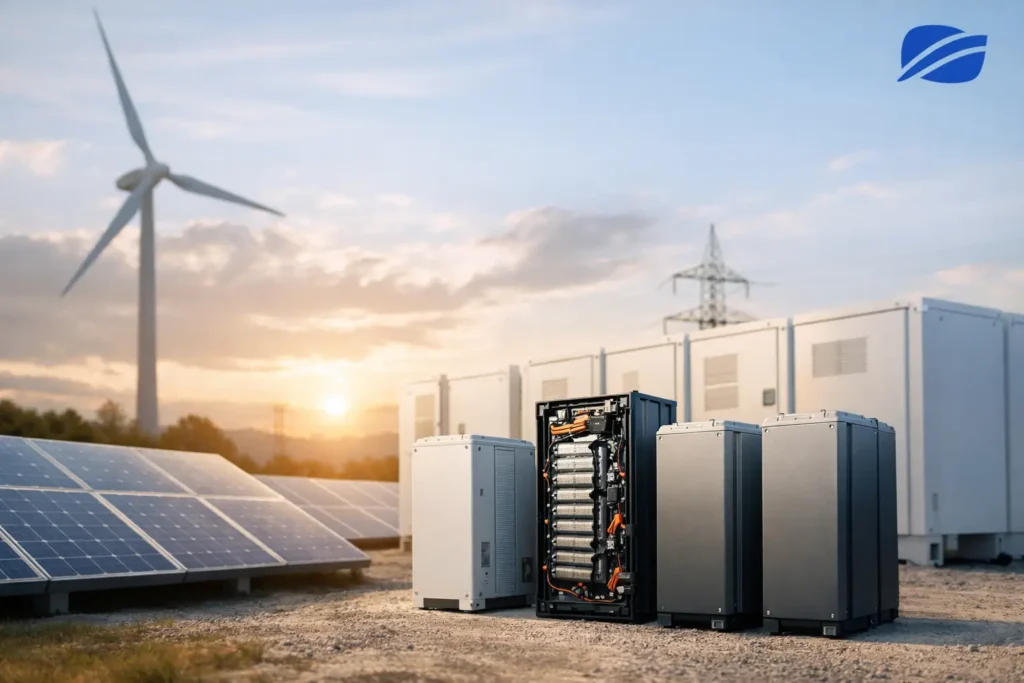
Hybrid inverters are becoming increasingly relevant for companies thinking beyond electricity generation alone. They are especially important for businesses considering energy storage, peak shaving strategies, and protection against rising electricity costs. Hybrid inverters enable integration between a solar power plant and battery systems, and in certain configurations they provide better control over consumption during peak hours.
Precision is important here. A hybrid system is not automatically justified for every company. If there is no clear business case for storage, the investment may extend the payback period. However, for users with high peak demand, grid fluctuations, or a need for greater energy autonomy, a hybrid architecture may be strategically more appropriate than a conventional grid-tied solution.
Technical Characteristics That Make the Difference
On paper, many inverters appear similar. In real-world operation, the differences become highly visible.
Efficiency is the first factor, but maximum efficiency from a brochure should not be the only reference point. For businesses, European efficiency and performance across real operating load ranges are more relevant. If a solar power plant operates below peak output for most of the year, the catalog maximum does not tell the full story.
The number of MPPT inputs is another key factor. On facilities with multiple roof orientations, ventilation units, skylights, or shadows from neighboring buildings, more MPPT channels directly improve system utilization. Simply put, better segmentation means lower losses.
Thermal performance is often underestimated. In industrial halls, on highly reflective rooftops, and during summer peaks, inverters operate under demanding conditions. If output derating at higher temperatures is greater than acceptable, the company loses production precisely when it expects the highest yield.
Protection features and grid compliance are not administrative details they are operational necessities. Anti-islanding functions, surge protection, arc fault detection, DC and AC protection quality, and compliance with distribution system operator requirements must be part of the basic specification. When these factors are overlooked, problems often appear later during grid connection, operation, and maintenance.
Software, Monitoring, and Energy Management
For businesses, monitoring is not an add-on it is a mandatory part of the system. Management does not only need to know how much electricity the power plant produced yesterday. Businesses need string-level visibility, real-time alarms, historical data, integration with EMS or BMS platforms, and a clear basis for decision-making.
A good inverter must support a serious level of communication, from standard industrial protocols to remote service access. This is especially important for companies with multiple locations, as well as for sectors where downtime has a direct financial impact.
In practice, software quality often determines whether a fault or performance drop is detected within one hour or after three weeks. That difference is measured not only in lost kilowatt-hours, but also in organizational risk.
How to Choose an Inverter Based on Company Profile
A manufacturing company with significant daytime consumption usually requires high efficiency, a well-balanced DC/AC sizing ratio, and reliable monitoring. If the facility has large motor loads and a sensitive internal grid, additional attention should be given to synchronization quality and operating stability under variable conditions.
Cold storage facilities, food processing plants, and sites with continuous loads more often require deeper analysis of storage integration. In these cases, the inverter must be part of a broader energy concept rather than an isolated component. The same logic applies to data centers, telecommunications, and critical infrastructure, where solar power is considered together with UPS systems, batteries, and backup power.
Logistics centers and commercial buildings with large roof areas usually benefit from modular string solutions, especially when phased expansion is planned. Construction and infrastructure projects, on the other hand, often require greater attention to environmental conditions, IP protection, enclosure durability, and service accessibility in the field.
Price Is Not the Same as Cost
The cheapest inverter often becomes the most expensive decision over the system’s lifetime. The reason is not only the possibility of more frequent failures, but also weaker software, slower service, shorter warranty coverage, poorer local support, and higher operational losses.
Companies that plan investments seriously look at Total Cost of Ownership. This means comparing purchase price, expected energy production, downtime costs, spare parts availability, warranty conditions, and upgrade potential. If an inverter with a higher initial price delivers better availability and lower operational risk, it is often the more rational choice.
Warranty terms should also be viewed realistically. A longer warranty on paper is not the same as a warranty backed by a service network capable of responding quickly. For a company with a production schedule, intervention speed is more valuable than a marketing phrase from a catalog.
Where Businesses Most Often Make Mistakes
The first mistake is using an undersized or poorly configured inverter relative to the actual conditions of the facility. The second is choosing equipment without analyzing future system development, making later upgrades expensive or technically difficult. The third is ignoring integration with batteries, UPS systems, or load management, even when the company already faces issues with peak demand or power quality.
Another common mistake is purchasing equipment separately from the engineering project. When multiple parties divide responsibility between design, equipment supply, installation, and commissioning, the company may receive a lower initial price, but also significantly higher risk later. In energy systems, that is a poor trade-off.
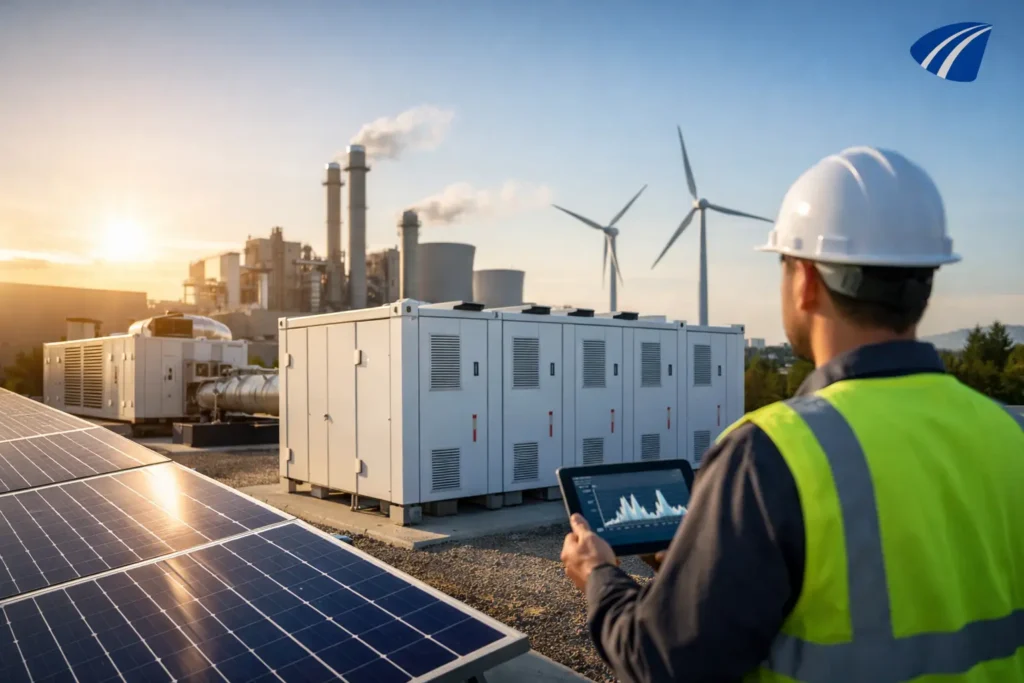
That is why a serious overview of solar inverters for businesses must also include the question of who stands behind the solution. Not only who sells the device, but who can assess feasibility, correctly size the system, integrate storage and other infrastructure, perform commissioning, and take responsibility for the final result. This is the difference between purchasing equipment and making a strategic energy investment.
If you are planning a solar power plant for your business, treat the inverter as a business decision, not a technical line item. When the selection is based on the consumption profile, Total Cost of Ownership logic, and reliable integration of the entire system, the solar power plant stops being just an expense and becomes a tool for controlling energy, risk, and future operating costs.