A brief voltage drop may go unnoticed in an office building. In a data center, the same event can trigger a chain of serious problems from IT equipment shutdowns and service interruptions to data corruption, client penalties, and significant reputational damage. That is why data center power supply is not a matter of simply purchasing a UPS device, but an engineered system that must operate without improvisation.
When a company is planning a new data center or modernizing an existing one, the question is not only how much power is required today. The real question is how to ensure operational continuity under full load, during grid disturbances, maintenance interventions, capacity growth, and changes in cooling requirements. This is where the difference begins between partial equipment procurement and a properly engineered energy solution.
What Data Center Power Supply Really Includes
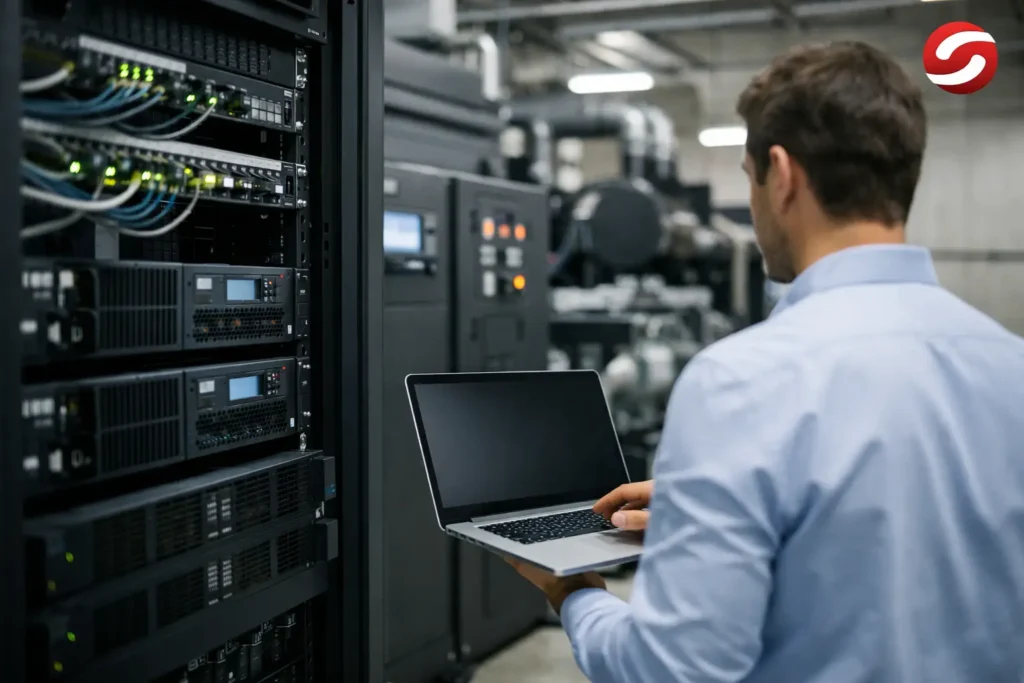
Data center power supply includes the entire energy chain, from the utility grid connection to the power distribution branches serving the racks themselves. There are no unimportant links in this chain. Transformers, distribution systems, UPS units, batteries, diesel generators, ATS and STS switches, monitoring, grounding, and cooling systems must operate as one integrated whole. If just one element is underestimated, the consequences are felt across the entire facility.
In practice, the biggest mistake is designing based only on nominal power. A data center is not sized simply by adding up the kW ratings of servers. The design must also account for simultaneity factor, inrush currents, reserve capacity for future growth, UPS efficiency at different load levels, battery autonomy, generator behavior during transition periods, and the impact of cooling on the overall energy balance.
This is why a high-quality solution begins with load and criticality analysis. An enterprise data center, edge location, telecom node, and colocation facility with contractually defined SLA parameters all require different approaches to redundancy, autonomy time, and maintenance organization.
Redundancy Is Not a Luxury, but Business Protection
In serious environments, data center power supply is not designed to “mostly work.” It is designed so that a single failure, scheduled maintenance event, or loss of one component does not compromise critical operations. This is where concepts such as N, N+1, 2N, and 2(N+1) become important but these are not just technical labels. They directly define the level of business risk.
An N configuration may be acceptable for auxiliary systems or less critical applications, but for high-demand environments it is often insufficient. N+1 provides a basic level of protection by allowing one component to fail without interrupting operations. A 2N architecture, on the other hand, introduces two fully independent power paths, significantly increasing availability, but also investment cost. This is precisely where engineering assessment matters, because the most expensive solution is not automatically the most rational one.
Redundancy must be consistent across the entire system. There is little value in a 2N UPS topology if the distribution board, cable routes, or ATS points become bottlenecks. The same applies to cooling. IT equipment does not depend only on electricity, but also on a stable thermal environment. If cooling does not have properly reserved power supply, formal redundancy becomes just a number on paper.
Where Mistakes Most Often Occur
Some investors still focus primarily on equipment purchase price instead of total cost of ownership. This is a short-term approach. A UPS with a lower initial price, but weaker efficiency, higher maintenance costs, and a shorter battery lifecycle, can become significantly more expensive over time than a higher-quality system.
Another common mistake is underestimating required autonomy. Excessively long battery autonomy is not always rational if there is a reliable generator and clearly defined startup time. However, autonomy that is too short is equally unacceptable, especially where grid quality varies or where multiple transfer and stabilization stages are involved. The correct balance depends on the facility’s operating profile, service strategy, and expected failure scenarios.
UPS, Batteries, and Generators: A Relationship That Must Be Coordinated
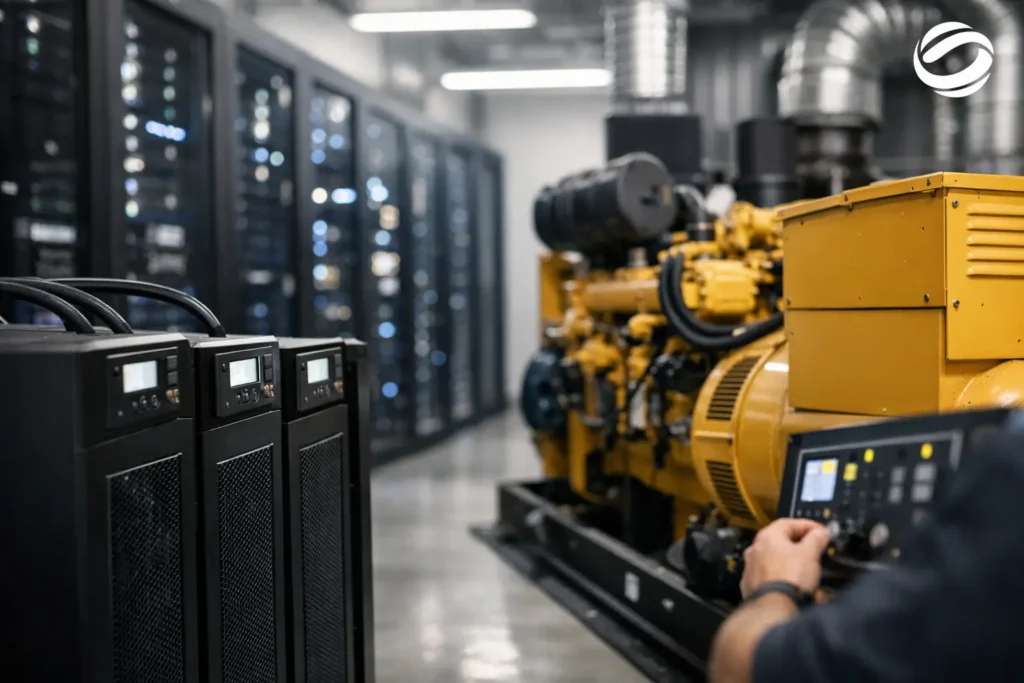
The UPS absorbs the first impact of grid disturbances. It filters voltage dips, micro-outages, frequency variations, and ensures continuity until the generator takes over the load or the grid stabilizes. However, the UPS should never be viewed in isolation. Its performance depends on proper battery selection, bypass configuration, protection selectivity, and communication with the rest of the system.
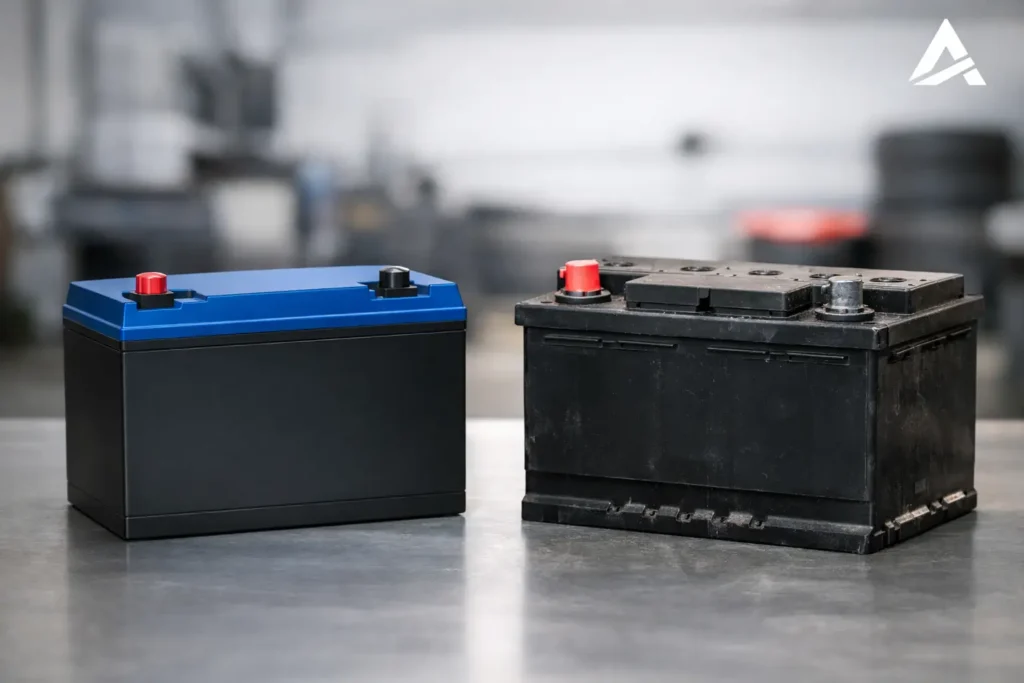
Battery technology selection is no longer a routine decision. VRLA batteries still have a place in certain projects due to their accessible initial cost, but lithium-ion batteries are becoming preferred where space efficiency, longer service life, lower weight, advanced BMS functionality, and more predictable operating parameters are important. However, lithium is not automatically the best choice for every facility. If environmental conditions are inadequate or the service strategy is not aligned with the technology, part of the expected investment value may be lost.
The diesel generator is the next critical element. Its role is not simply to start when utility power fails, but to take over the load in a stable manner without unwanted oscillations that could affect the UPS or sensitive downstream equipment. This requires precise coordination of generator capacity, load dynamics, regulation quality, and testing procedures. In a data center, there is no room for a generator that looks well selected on paper but performs poorly during real transient conditions.
Energy Efficiency Is No Longer Secondary
For many years, energy efficiency in data centers was treated as secondary to availability. Today, that is no longer sustainable. Energy prices, pressure on operating costs, and growing expectations for more sustainable operations have changed investor priorities. Data center power supply must now support both reliability and efficiency.
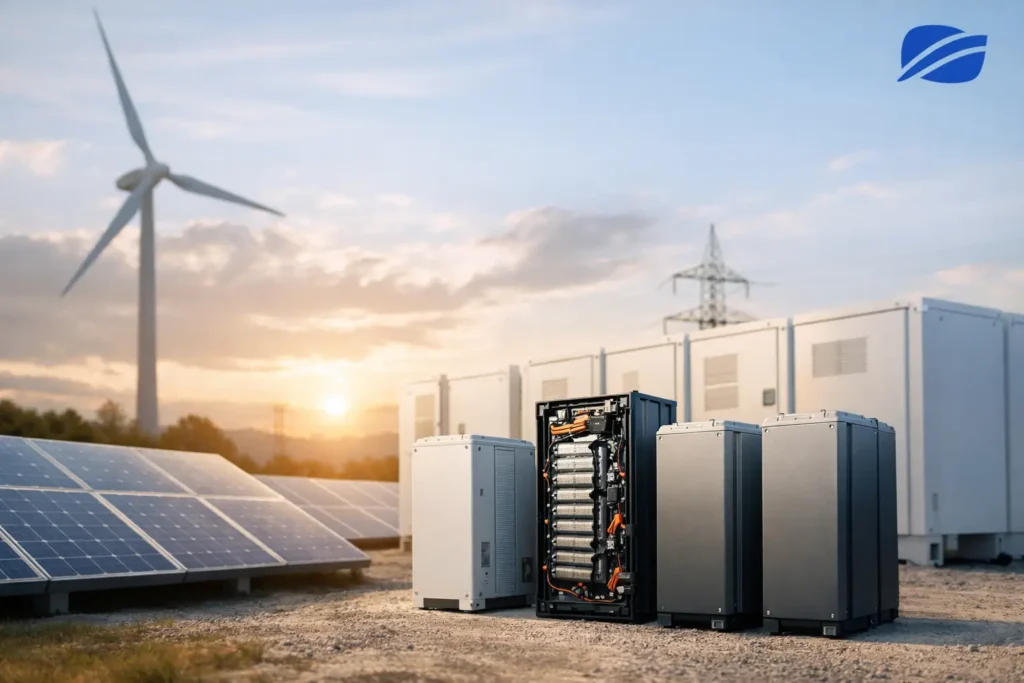
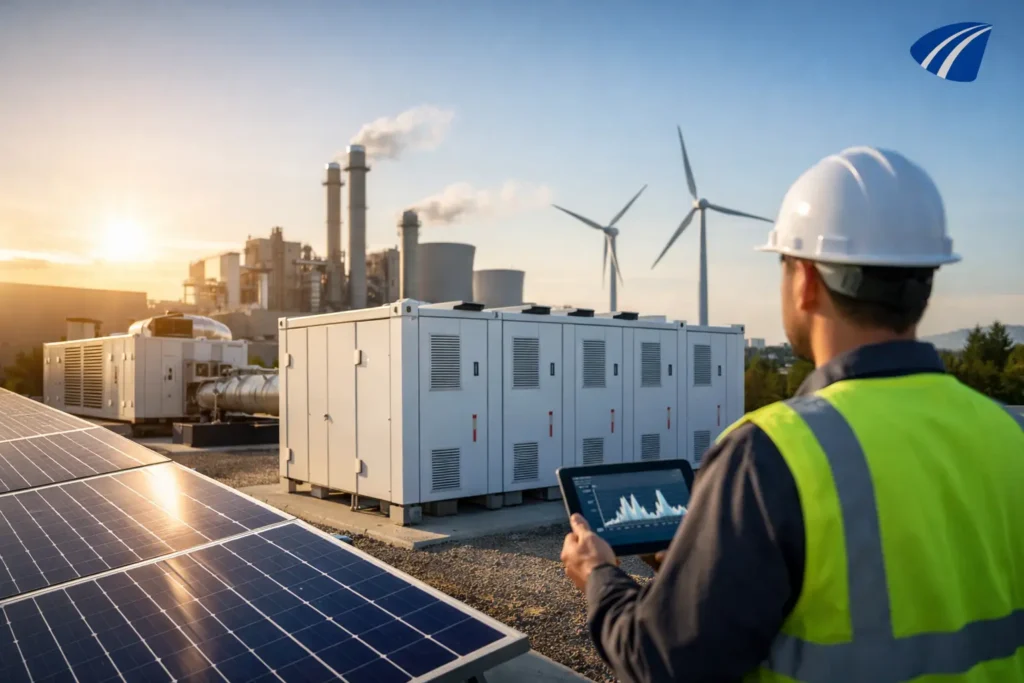
High-efficiency UPS systems in online mode, effective load management, modular architecture, and precise monitoring reduce losses without compromising safety. In larger systems, integration with BESS solutions and solar power sources can create additional opportunities for optimizing peak demand, backup power, and electricity costs. Such solutions are not universal and should not be applied automatically, but for certain consumption profiles they can have a significant impact on TCO.
It is important to remain realistic. Solar power alone is not a replacement for critical data center power supply. It can be part of a broader energy strategy for the facility, but it cannot provide millisecond-level power continuity. Renewable sources and battery storage should therefore be introduced as a carefully engineered optimization layer, not as a replacement for the core infrastructure that guarantees availability.
Monitoring and Maintenance Determine Real Reliability
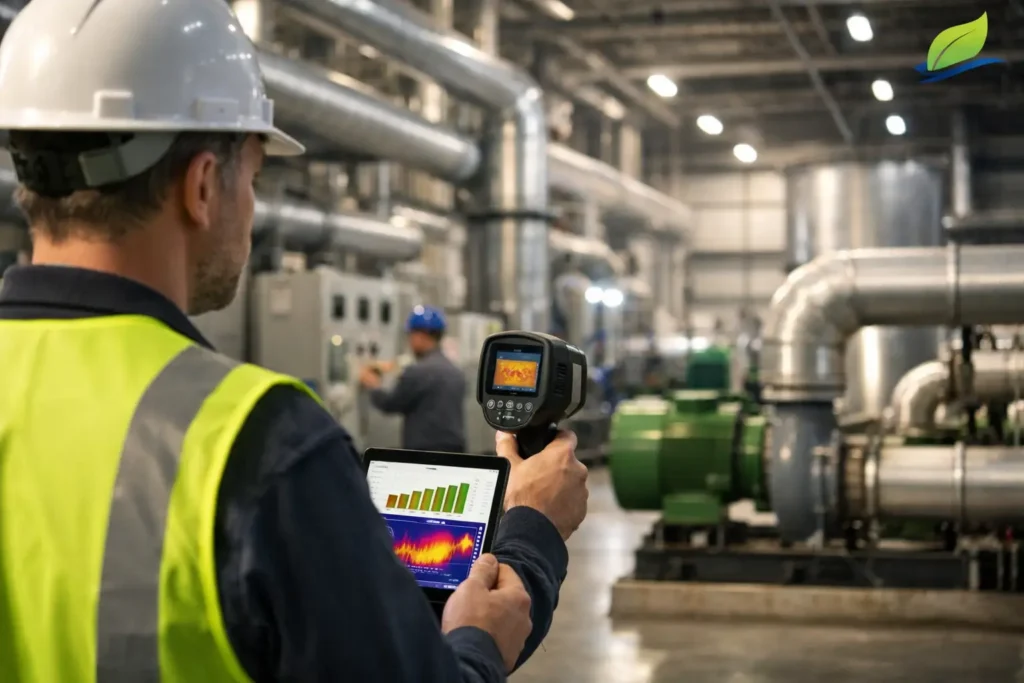
Most problems do not begin with major failures, but with small deviations detected too late. Rising temperature in a battery block, phase load imbalance, degradation of a single module, poor electrical contact, or irregular generator testing can gradually develop into serious operational risk.
That is why monitoring must never be treated as a decorative feature. A professional system monitors key electrical and environmental parameters in real time, records trends, and enables timely intervention. Maintenance must also be planned and documented. A data center cannot rely on a service model that responds only after a problem has already occurred.
It is especially important for the service model to match the system architecture. A modular UPS, for example, only makes sense if organized maintenance, spare parts availability, and clearly defined hot-swap procedures exist. Otherwise, the theoretical advantage of modularity remains unused.
How to Make the Right Investment Decision
When making an investment decision, the most useful starting point is three questions: what is the cost of one outage, how quickly must the center return to stable operation, and what capacity growth is expected over the next five to ten years? These three answers usually make it clear whether the focus should be on minimum initial investment or on a sustainable system with controlled risk.
This is where the difference between purchasing equipment and engineering a solution becomes visible. When the system is evaluated through TCO, the analysis includes energy losses, battery lifespan, service availability, downtime duration, expansion potential, and the coordination of all subsystems. This approach provides a realistic picture of the investment.
For companies managing critical infrastructure, the right partner must understand both electrical engineering and the operational logic of the facility. This is exactly where Energize creates value by integrating UPS systems, generators, battery solutions, cooling, and the broader energy infrastructure into one unified project with clear responsibility from design to maintenance.
If you are planning a new facility or modernizing an existing one, do not begin by asking which device to buy. Start by asking what level of availability your business truly requires and how much every minute of downtime costs. When power supply is designed at that level, the data center stops being a point of risk and becomes a reliable foundation for growth.