A BESS is not a solution that can be selected based on a single catalogue price. When companies ask how much a BESS costs, the proper answer starts with a few additional questions: how much power does the facility draw, how long should the system operate, will it store energy from a solar power plant, reduce peak demand, or provide backup power? Only then does the price become part of an investment model rather than a simple equipment estimate.
For industrial projects in Serbia, the indicative price of a fully integrated BESS most commonly ranges from approximately €300 to €700 per kWh of usable capacity. Larger systems may achieve a lower cost per kWh, while smaller projects, complex sites, and higher availability requirements can increase the overall price. The range is broad because the battery container itself is not a complete solution.
How Much Does a BESS Cost and What Is Included?
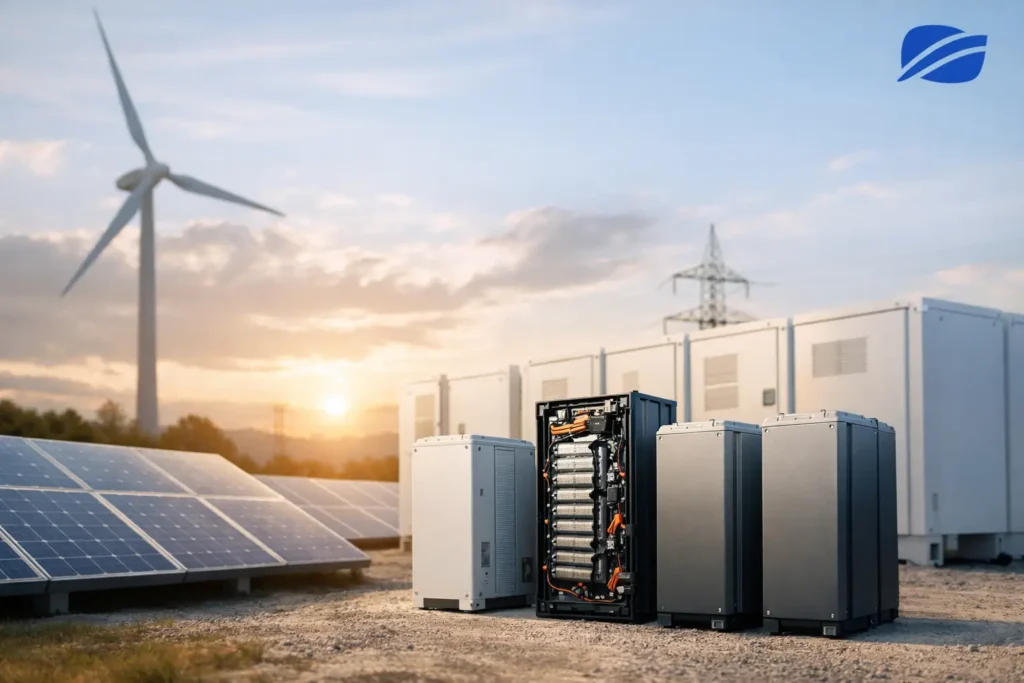
A Battery Energy Storage System (BESS) integrates battery modules, a Battery Management System (BMS), Power Conversion Systems (PCS), an Energy Management System (EMS), protection equipment, cooling or air conditioning, fire protection, communication, and connection to the facility’s internal electrical network. For a commercial or industrial user, the system’s value lies not only in how much energy it can store, but also in how reliably and quickly it can respond under real operating conditions.
In a 100 kWh project, fixed costs such as engineering, protection, controls, and grid integration account for a significant share of the total budget. This is why smaller BESS projects often have a higher cost per kWh than systems of 1 MWh or more. Larger systems, on the other hand, require more comprehensive electrical studies, civil works, transformer integration, permitting, and coordination with existing infrastructure.
For realistic budgeting, it is useful to distinguish four main investment categories:
- battery modules and cabinets or containers
- power conversion equipment, controls, protection, and monitoring
- HVAC and fire protection systems
- engineering, installation, grid connection, commissioning, and maintenance
A proposal that shows only the battery price may initially appear more competitive, but it says little about whether the system is actually ready for operation. An industrial BESS must be engineered as part of the site’s electrical infrastructure, with clearly defined operating modes, responsibilities, and performance requirements.
Capacity and Power Are Not the Same
One of the most common mistakes when estimating investment cost is looking only at capacity in kWh or MWh. Capacity defines how much energy the system can store, while power in kW or MW defines how quickly that energy can be delivered to the grid or facility loads.
A production facility aiming to reduce short-term demand peaks may require a high power-to-capacity ratio. For example, it may need a 1 MW system with one hour of autonomy. A facility that wants to shift solar energy from daytime into evening operation may be better suited to a longer-duration system, such as 500 kW / 2 MWh.
Higher power requires larger PCS equipment, cables, protection systems, and connection infrastructure. Therefore, two systems with the same 1 MWh capacity may have very different prices. A 250 kW system and a 1 MW system play fundamentally different roles in the electrical network and consequently require different architectures and investment levels.
Indicative Budget Examples
A smaller commercial BESS in the range of 100 to 250 kWh may be justified for facilities with critical loads, smaller solar installations, or load management requirements. In this range, fixed project costs have a substantial impact, so the total project price rarely follows a simple capacity-times-battery-cost calculation.
For an industrial BESS between 500 kWh and 1 MWh, intended for peak demand management, higher solar self-consumption, and production continuity, the investment is typically evaluated through a ten-year or longer business model. At this scale, the most important factors are the facility’s load profile, tariff structure, grid connection limitations, and the number of cycles the system is expected to perform each year.
Systems with capacities of several MWh belong to the category of major energy infrastructure. Their economics can be highly attractive due to a lower cost per kWh, but only when the facility has sufficient energy demand, a clearly defined operating strategy, and infrastructure capable of supporting the integration.
BESS Application Determines the Return on Investment
A BESS should not be purchased simply because it has a certain price. It should be installed because it solves a measurable business problem. For a manufacturing company, this may mean reducing billed demand and peak loads. For a logistics center, it may mean maintaining continuity for critical loads. For a solar investor, a BESS may increase self-consumption and reduce the mismatch between energy production and demand.
The most common use cases include peak demand management, energy shifting, higher solar self-consumption, backup power, and internal grid stabilization. A single system can perform several functions, but priorities must be clearly defined. A battery reserved for backup cannot be used without limits for daily energy arbitrage if that compromises its availability at a critical moment.
For this reason, return on investment should not be calculated based on electricity prices alone. The analysis should also include avoided downtime costs, reduced peak demand charges, the value of higher production availability, potentially deferred investment in grid connection capacity, and expected battery degradation over the system’s service life.
Battery Technology and Safety Affect the Final Cost
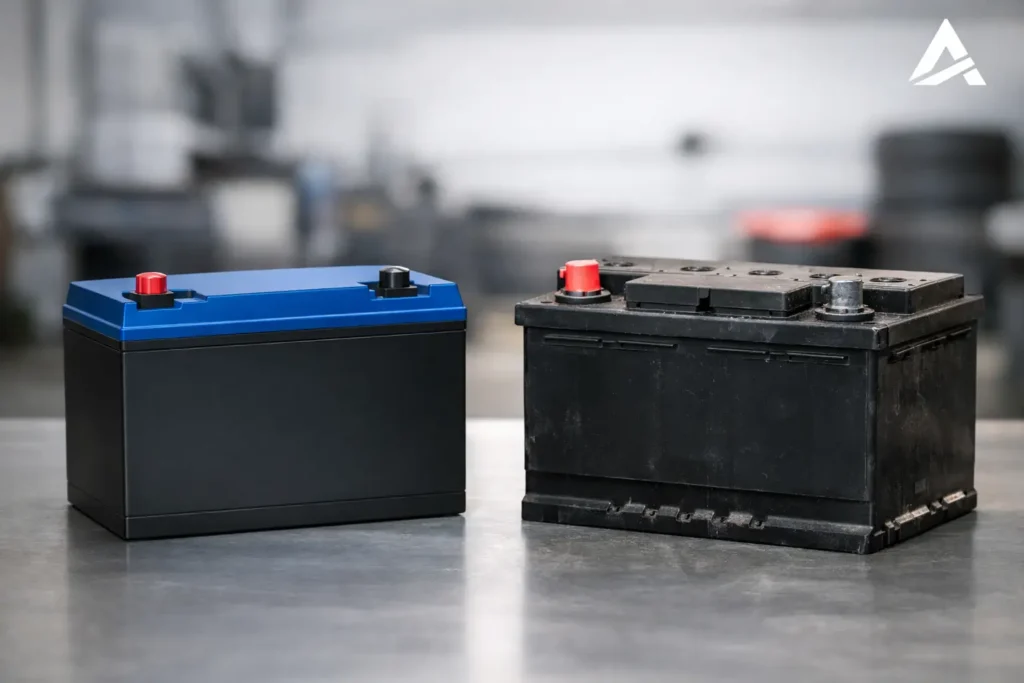
Lithium Iron Phosphate (LFP) is a common choice for stationary BESS applications today because of its safety, long cycle life, and stable performance. However, battery chemistry alone is not enough to compare two proposals. Important parameters include permitted cycle count, depth of discharge, guaranteed remaining capacity at the end of the warranty period, operating temperature, and the conditions under which the warranty applies.
Safety architecture is particularly important in factories, warehouses, data centers, and facilities with continuous processes. The total price may include gas and smoke detection, localized fire suppression, system segmentation, ventilation, air conditioning, remote monitoring, and emergency response procedures. Reducing costs by removing these elements may increase both technical and insurance risk, which is not an acceptable form of optimization for a serious energy infrastructure project.
The system must also be designed for the site’s actual environmental conditions. High summer temperatures, dust, humidity, and limited installation space all directly influence enclosure selection, HVAC design, and maintenance requirements. A BESS may look strong on a technical datasheet, but without adequate thermal management its performance can decline and battery life may be shortened.
Integration with Solar Power and Existing Facility Infrastructure
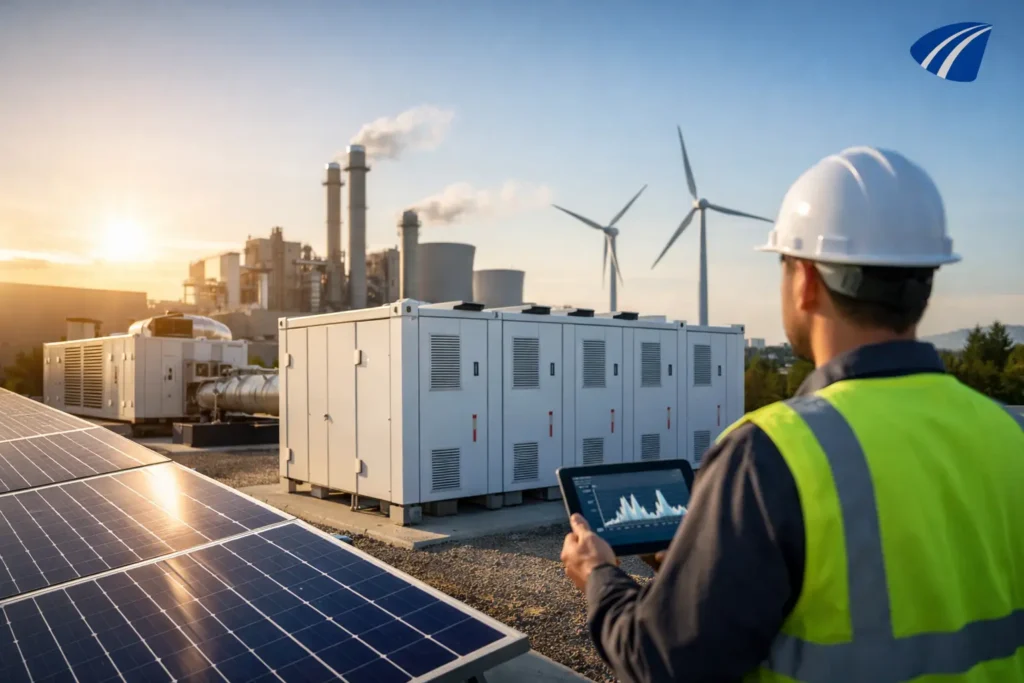
A BESS creates the greatest value when it is integrated with the company’s entire energy system. Solar generation is highest when sunlight is available, while production processes, chargers, refrigeration systems, or compressors may create peak demand at different times. The EMS must determine when the battery charges, when it discharges, and which function has priority.
For existing solar power plants, the integration assessment should include connection topology, transformer capacity, protection systems, inverter communication, and dispatch control capabilities. For new projects, solar and storage should be designed together. This approach helps avoid duplicated equipment and improves investment utilization from the first day of operation.
Energize evaluates BESS projects through energy consumption analysis, grid constraints, solar potential, and Total Cost of Ownership. This matters because the system with the lowest purchase price is not necessarily the one with the best economics over the next ten or fifteen years.
How to Obtain a Price That Makes Business Sense
A reliable cost estimate starts with measurement, not with selecting a battery model. Required inputs include consumption data at least at 15-minute resolution, electricity bills, data from the existing solar plant, and the facility’s single-line diagram. Critical loads, required autonomy, and the business value of each operating mode must then be clearly defined.
A high-quality proposal should specify usable, not only nominal capacity, available power, guaranteed performance, scope of supply, delivery schedule, maintenance conditions, and responsibility for system integration. It is particularly important to confirm whether civil works, cabling, transformer infrastructure, fire protection, remote monitoring, and commissioning are included in the quoted price.
Before asking only for the price per kWh, determine the cost of one hour of downtime, the cost of peak demand, and the amount of solar energy your facility is currently unable to utilize. That is where a BESS project begins not as an equipment expense, but as a controlled investment in safer, more predictable business operations.