How to read a transformer nameplate

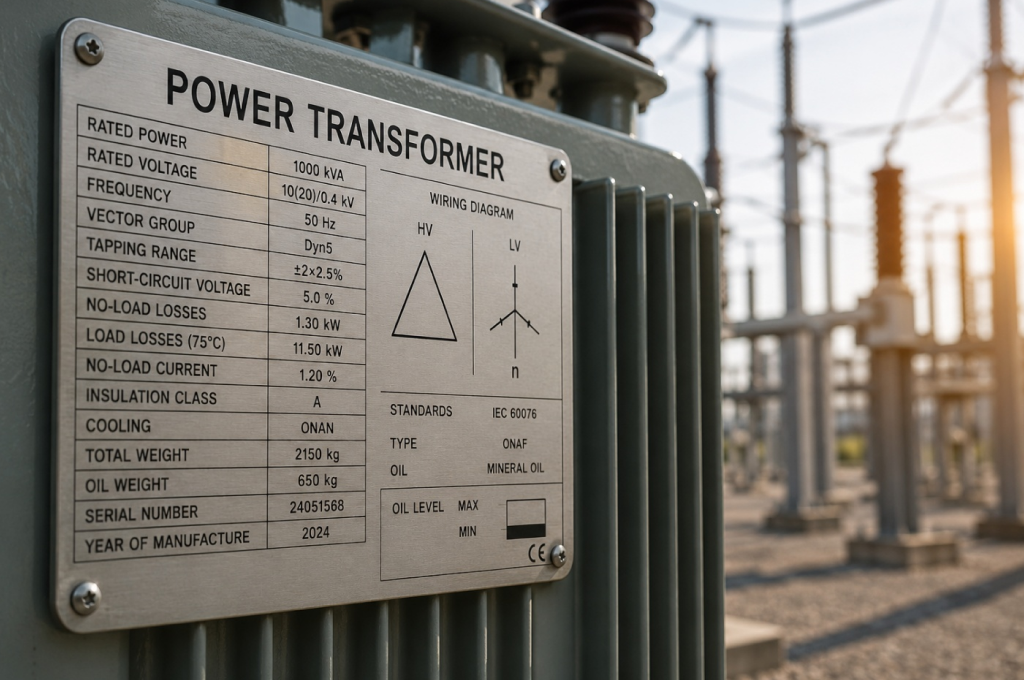
Every transformer carries a metal plate covered in numbers and markings that look like a code meant for the initiated. Yet it actually states everything worth knowing about the machine: how much it can deliver, how it is connected, and how it is cooled. Here is a translation of the most important fields into plain language.

The first thing the eye looks for is the rated power, expressed in kilovolt-amperes, kVA. This is apparent power, the machine’s total capacity, while the useful power in kilowatts depends on the power factor of the load. The practical consequence: a facility with a poor power factor draws fewer useful kilowatts from the same transformer, which is why reactive power compensation frees up substation capacity without replacing a single piece of equipment.

The next field is the rated voltages, for example 10(20)/0.4 kV. The number in brackets indicates a dual ratio: the machine can operate at both 10 and 20 kV, which is standard today given the grid’s gradual transition to the higher voltage. Alongside this there is usually a tapping range, typically several tap-changer positions in steps of plus and minus two and a half percent, used to adjust the output voltage to conditions in the grid on distribution transformers, with the unit de-energized.

A designation such as Dyn5 describes the winding connection. The capital D says the higher-voltage winding is connected in delta, the lowercase y that the lower-voltage side is in star, n that the neutral point is brought out — the one that makes single-phase loads possible, and the number 5 is the clock number, the phase displacement between the two sides expressed as a position of the clock hand. Why this matters: transformers operating in parallel must have the same vector group and clock number, the same ratio and a similar short-circuit voltage, otherwise circulating currents flow between them.

The short-circuit voltage, uk, expressed as a percentage, typically around four to six, tells you how much the machine limits short-circuit currents and how it behaves under load, and it is a key figure for protection design and for parallel operation.

Cooling designations such as ONAN stand for natural circulation of oil and air, ONAF the same with fans added, while dry-type transformers carry air-cooling designations.

The plate also lists the insulation class, weight, year of manufacture and serial number details that become worth their weight in gold the day a replacement is urgently needed. Which is why a photo of the nameplate of every machine in the company is the cheapest insurance policy there is: it costs nothing and fits in a phone.
Surge Protection for Buildings: Lightning Does Not Have to Strike the Building to Cause Damage

After every major storm, service technicians see the same wave of failures: damaged routers, variable-frequency drives, boiler control systems, inverters, and cash registers.

How to Read Your 15-Minute Load Profile

Every company with semi-direct or indirect metering already possesses one of the most valuable documents about its own energy use, yet most have never opened it.

Where Can a Substation Be Located on a Site?

The location of a substation is often decided last, after the layout of the buildings has already been drawn, leaving the station to occupy whatever corner remains.

How to Plan Energy Redundancy for an Industrial Facility

A power interruption lasting only a few seconds can stop an automated production line, bring down server infrastructure, disrupt the cold chain, or generate significant scrap.

Air Conditioning for Server Rooms Without Downtime

A server room rarely fails because of a single major fault.

HVAC for Data Centers Without Compromising Performance

The cooling system in a data center does not operate in the background.

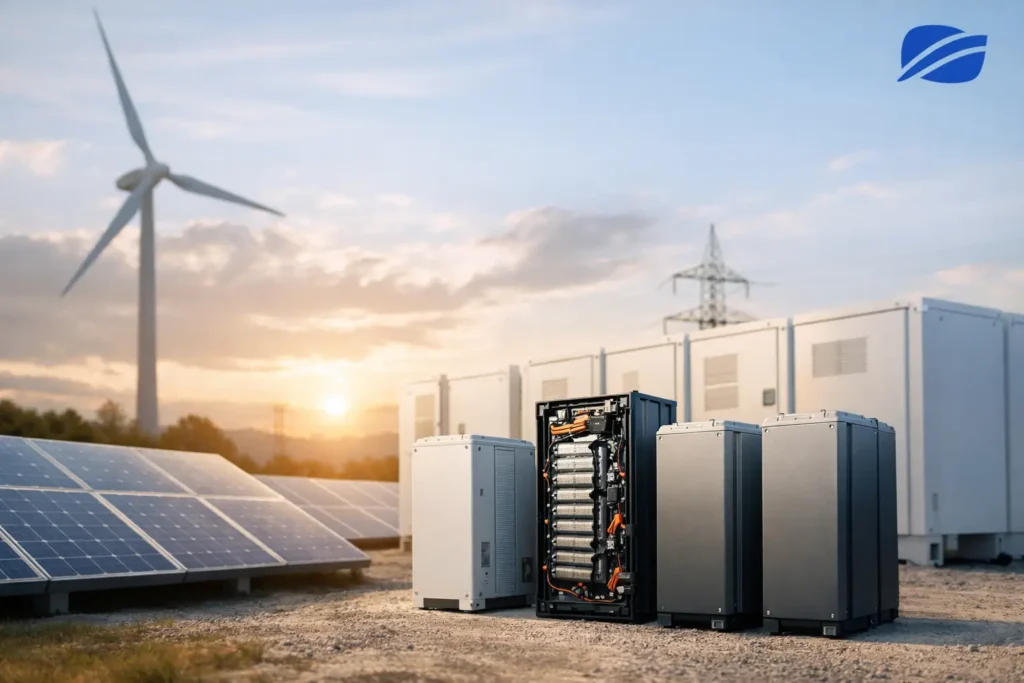
How Much Does an Industrial BESS Cost in Serbia?

A BESS is not a solution that can be selected based on a single catalogue price.

HVAC Retrofit in a Building That Cannot Stop

When the Empire State Building went through its landmark energy retrofit, the building did not close for a single day.

Learn more

Enter your information to receive more information on the selected topic

Planiraj svoju elektranu

Odgovorite na pitanja ispod kako bi naš inženjerski tim mogao da uradi studiju izvodljivosti nakon koje će vas kontaktirati.

Nakon dostavljanja podataka, naš stručni tim će analizirati Vaš zahtev i pripremiti personalizovanu ponudu sa predlogom optimalnog solarnog sistema za Vaš objekat. Kontaktiraćemo Vas kako bismo predstavili predloženo tehničko rešenje, očekivanu proizvodnju električne energije i odgovorili na sva Vaša pitanja u vezi sa realizacijom projekta.

Solarna elektrana omogućava dugoročno smanjenje troškova električne energije, veću energetsku nezavisnost domaćinstva i doprinosi očuvanju životne sredine korišćenjem energije iz obnovljivih izvora.

Planiraj svoju elektranu

Odgovorite na pitanja ispod kako bi naš inženjerski tim mogao da uradi studiju izvodljivosti nakon koje će vas kontaktirati.

Nakon dostavljenih podataka za izradu studije izvodljivosti, i kada naš inženjerski tim uradi studiju izvodljivosti, predlažemo da organizujemo sastanak gde bismo Vam prezentovali studiju. Takođe, tom prilikom ćemo detaljnije pričati o samoj investiciji i benefitima ulaganja u obnovljive izvore energije, kao i o mogćim otpisima putem dostupnih fondova (IPARD, RAS, EBRD).  

Pored uštede električne energije, solarnom elektranom možete generisati i dodatne benefite kao što su direktran uticaj na smanjenje emsije CO2 što može direktno uticati na konkurentnost prilikom izvoza na tržištu EU, kao i dodatne benefite uštede hlađenja.

Planiraj svoju elektranu

Izaberite tip objekta za koji želite da planirate solarnu elektranu