When a solar power plant is commissioned, the job is not finished this is when the phase begins in which the investment is protected, measured, and optimized. That is why solar power plant maintenance is one of the key considerations for any company relying on stable production, predictable ROI, and long equipment lifespan.
In practice, the biggest mistake is not failure. The most costly issue is an invisible performance drop that lasts for months. Panels are still generating, the inverter shows no critical alarms, the system is technically operational but the plant delivers less than it should. In industrial and commercial systems, such deviations directly impact energy costs, production planning, and overall financial performance.
What solar power plant maintenance includes
Professional maintenance goes far beyond occasional panel cleaning. It is a combination of preventive inspections, performance monitoring, system measurements, electrical checks, and timely interventions. The goal is not just to keep the system operational, but to ensure it performs within designed parameters.
Depending on the type of installation, location, and operating режим, the scope of maintenance varies. A rooftop system on a logistics center does not face the same challenges as a ground-mounted plant in a dusty industrial environment, or a system integrated with battery storage or critical infrastructure. That is why generic service approaches are often insufficient.
Maintenance is typically divided into preventive, corrective, and monitoring-based. Preventive maintenance includes scheduled inspections and measurements. Corrective maintenance addresses faults or deviations. Monitoring ensures continuous tracking of performance and system status allowing issues to be detected before they turn into operational or financial losses.
Why regular maintenance is critical for performance
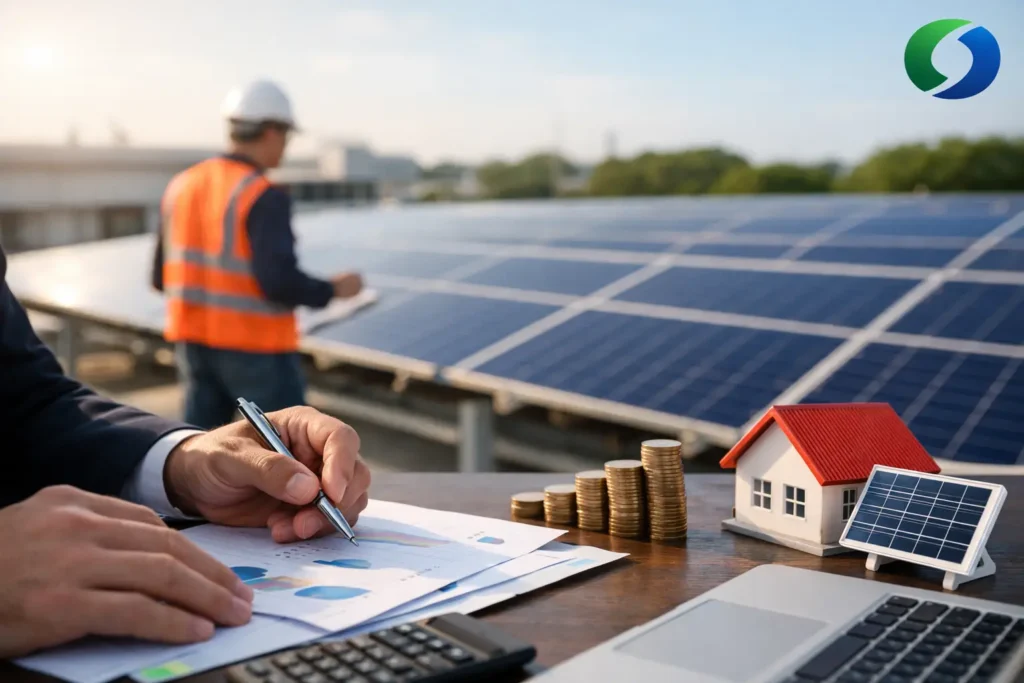
A solar power plant is a long-term infrastructure investment. From a total cost of ownership perspective, maintenance is not an additional expense it is a mechanism for protecting yield.
A system producing 3–7% less annually due to soiling, poor connections, faulty strings, or suboptimal inverter performance can significantly delay ROI. For large consumers, this is not an abstract percentage it is a measurable loss in kilowatt-hours, savings, and planned reduction of grid consumption.
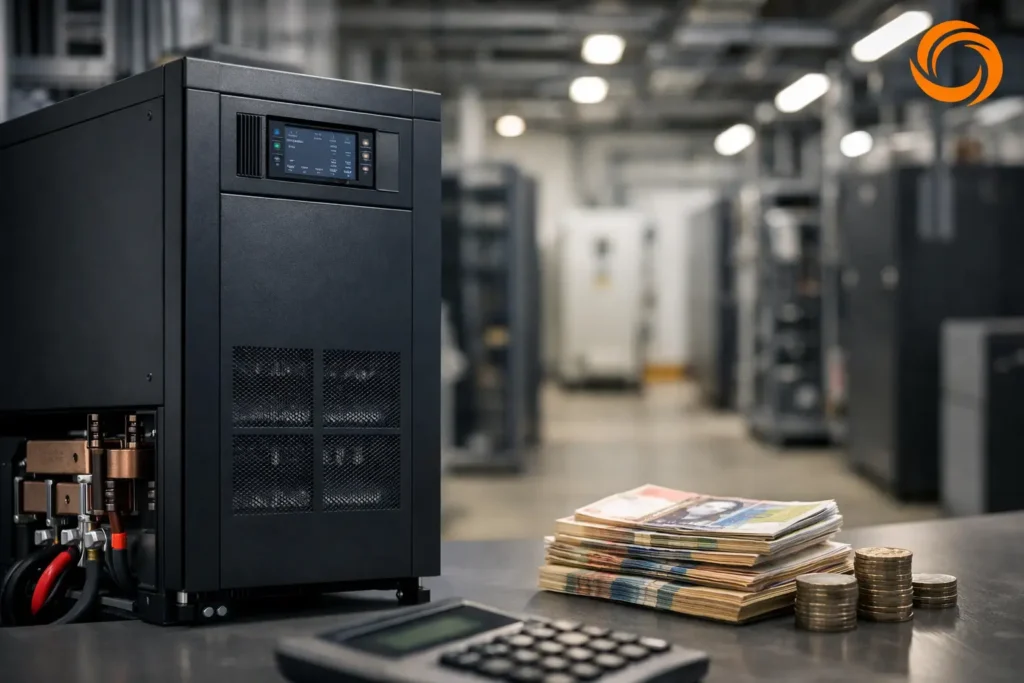
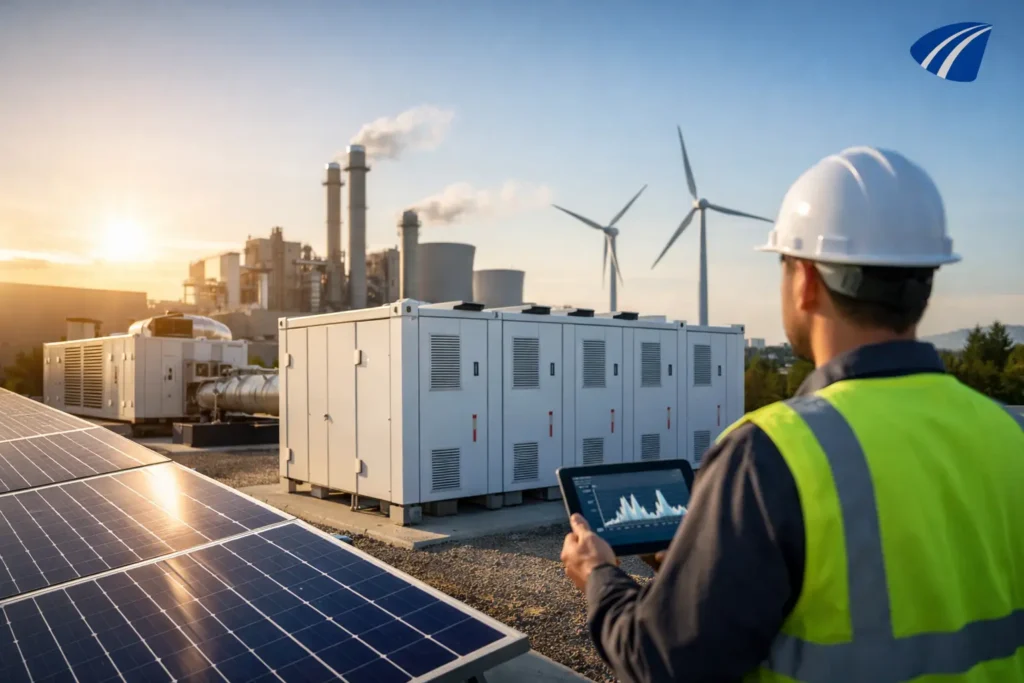
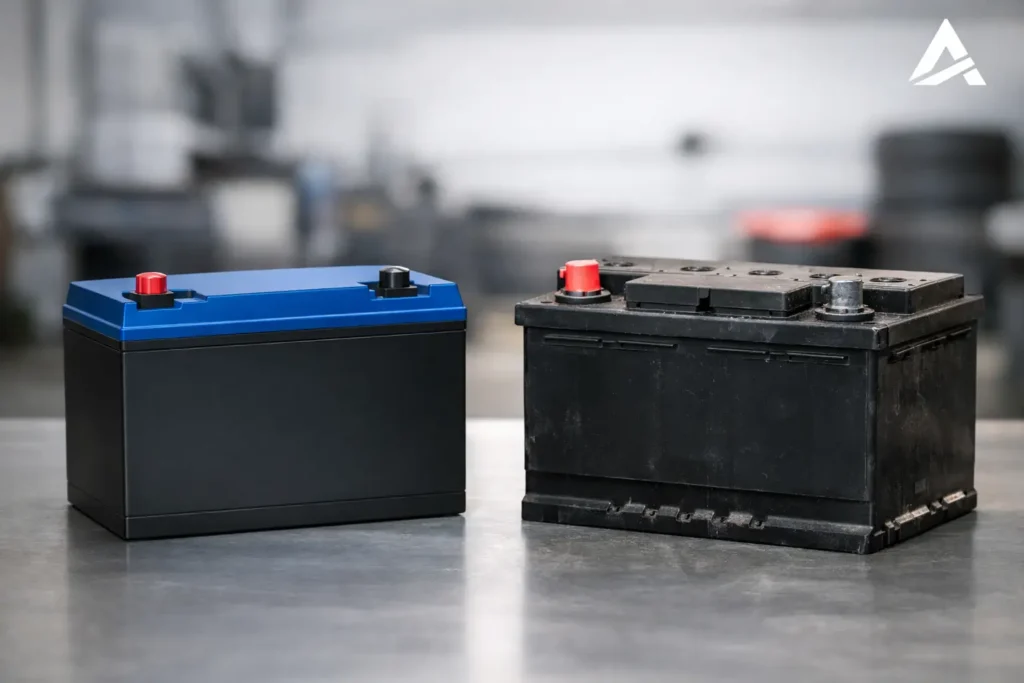
If the plant is part of a broader energy strategy including BESS, UPS, or backup systems maintenance also becomes a matter of operational continuity.
There is also a regulatory dimension. Regular inspections, service records, and documented system conditions are important for compliance, insurance, and warranty claims. Without a clear maintenance history, it becomes more difficult to determine the root cause of issues and enforce guarantees.
Where problems most often occur
Most failures do not happen suddenly. Systems usually provide early warning signals but the key question is whether someone is monitoring and correctly interpreting them.
A drop in production from a single string, intermittent inverter alarms, increased connector temperatures, or performance differences between arrays often indicate early-stage issues.
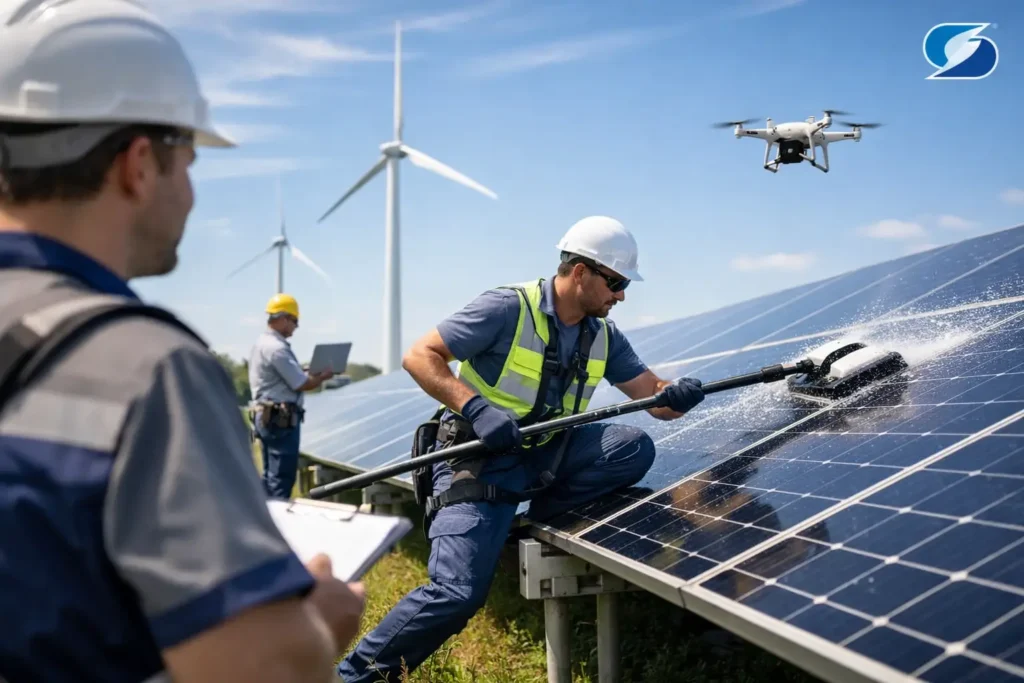
Soiling is a common cause of reduced output, but not always the most critical one. In some environments, losses are minimal and cleaning is done as needed. In industrial zones with dust, soot, or oily particles, more frequent cleaning has clear economic value. There is no universal rule decisions should be based on location, seasonal conditions, and measured impact.
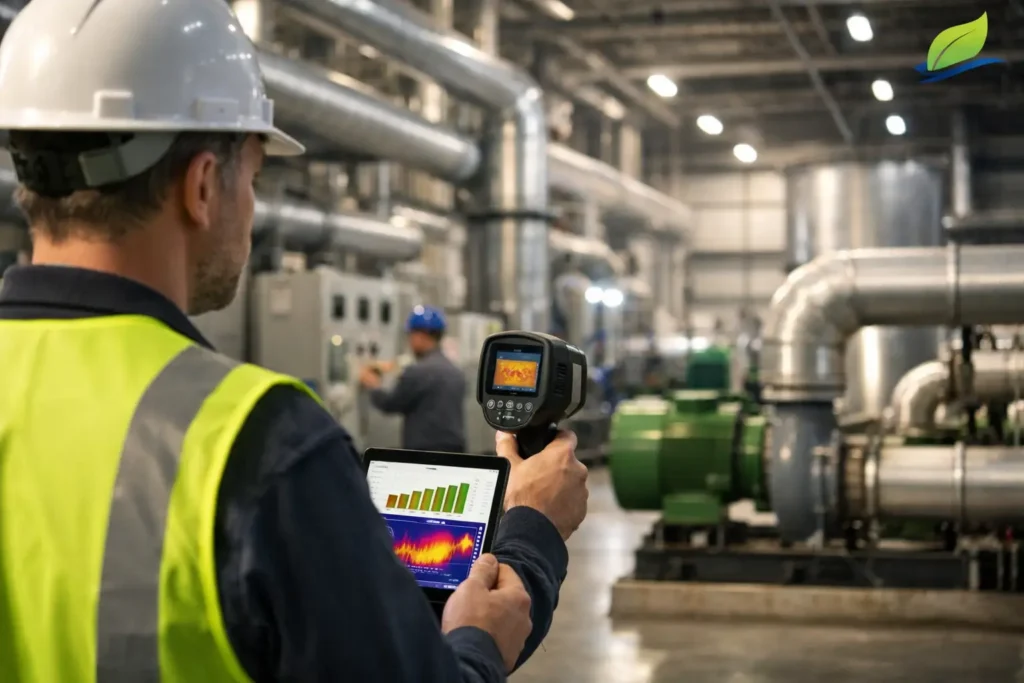
Another critical area includes connections, distribution boards, DC cables, and protection equipment. Poor contact may not immediately cause failure, but can lead to overheating, accelerated wear, and increased safety risk. This is why thermographic inspections are especially important in larger systems.
Inverters are the central operational point and require regular checks. Ventilation, temperature, software status, MPPT performance, and grid conditions all directly affect efficiency and reliability. In demanding operating environments, trend analysis often reveals issues long before physical component failure.
What a professional service approach looks like
Serious maintenance starts with proper baseline documentation. Without design data, single-line diagrams, equipment specifications, commissioning records, and reference values, it is difficult to assess whether the system is performing correctly.
A strong partner treats maintenance not as an isolated task, but as a continuation of engineering responsibility throughout the system’s lifecycle.
On-site, this includes visual inspection of modules, structures, cabling, grounding, and protection systems. This is followed by electrical measurements, inverter diagnostics, production analysis, and comparison with expected performance.
For larger systems, thermography, IV curve testing, and detailed string diagnostics are used when degradation or faults are suspected.
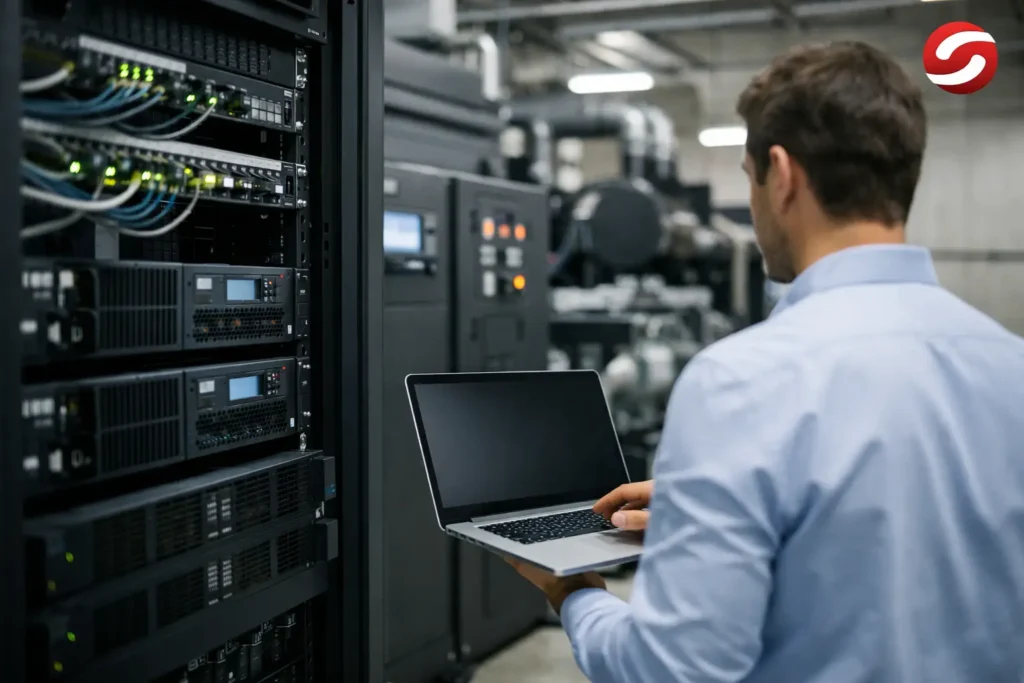
Equally important is remote monitoring. Real-time supervision allows deviations to be detected immediately not only in monthly reports. However, data alone is not enough. Its value lies in expert interpretation that distinguishes between temporary anomalies and systemic issues.
How often should a solar power plant be serviced
The short answer is it depends on the system and environment.
For most commercial and industrial systems, preventive inspections are recommended at least once or twice per year, combined with continuous monitoring. If the site is exposed to dust, high temperatures, aggressive environments, or mechanical stress, service frequency must be higher.
For residential systems, maintenance is simpler but not unnecessary. Periodic production checks, visual inspections, and servicing according to manufacturer recommendations remain important, especially after storms, hail, or strong winds.
For investors managing larger portfolios, the key metric is not just frequency but defined SLAs, response times, and reporting methodology. In other words, maintenance must be structured to reduce risk and enable predictable asset management.
Maintenance as part of a broader energy strategy
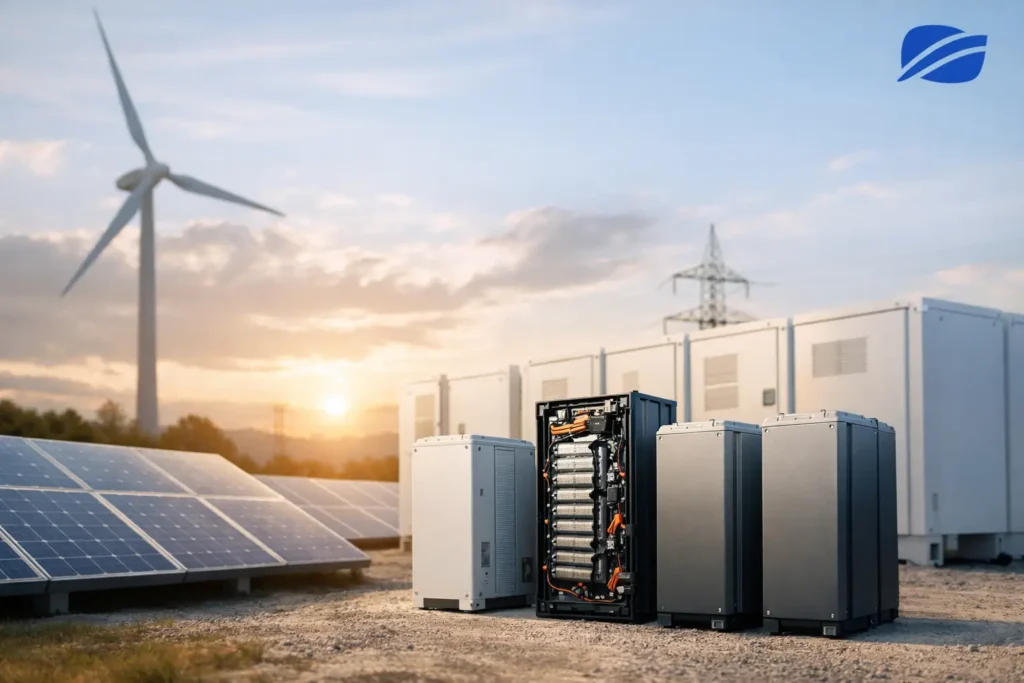
In advanced systems, solar is rarely a standalone asset. It is increasingly integrated with battery storage, peak load management, backup systems, HVAC consumption, and internal energy balancing.
In such environments, solar maintenance must be aligned with the entire energy infrastructure. For example, issues in metering, communication, or grid parameters may appear as solar faults, while the root cause lies elsewhere in the system.
This is where the difference between a service provider and a strategic partner becomes clear. Companies planning long-term investments need more than reactive service they need predictable performance, transparent data, and a maintenance model aligned with business and energy goals.
How to choose a maintenance partner
The first question is not the cost of a single service visit, but the partner’s ability to take responsibility for system performance. The service team must understand design, commissioning, electrical protection, monitoring, and multi-vendor equipment environments.
Second, the partner must ensure fast response capability and structured service procedures. For business users, downtime has a measurable cost.
Third, the approach must be performance-driven not checklist-driven. The value of maintenance lies not in confirming that everything was inspected, but in ensuring that the system produces as expected and that issues are resolved before they become costly.
For companies seeking full control over their energy infrastructure, this approach is no longer optional it is the standard. Energize views maintenance as an integral part of long-term investment management, not as a secondary service after installation.
A solar power plant delivers the best results when treated as a production asset not as passive equipment on a roof or site.
If you want to achieve expected yield, stability, and long-term performance, your maintenance strategy must be as clearly defined as your installation plan.