The Role and Importance of Substations
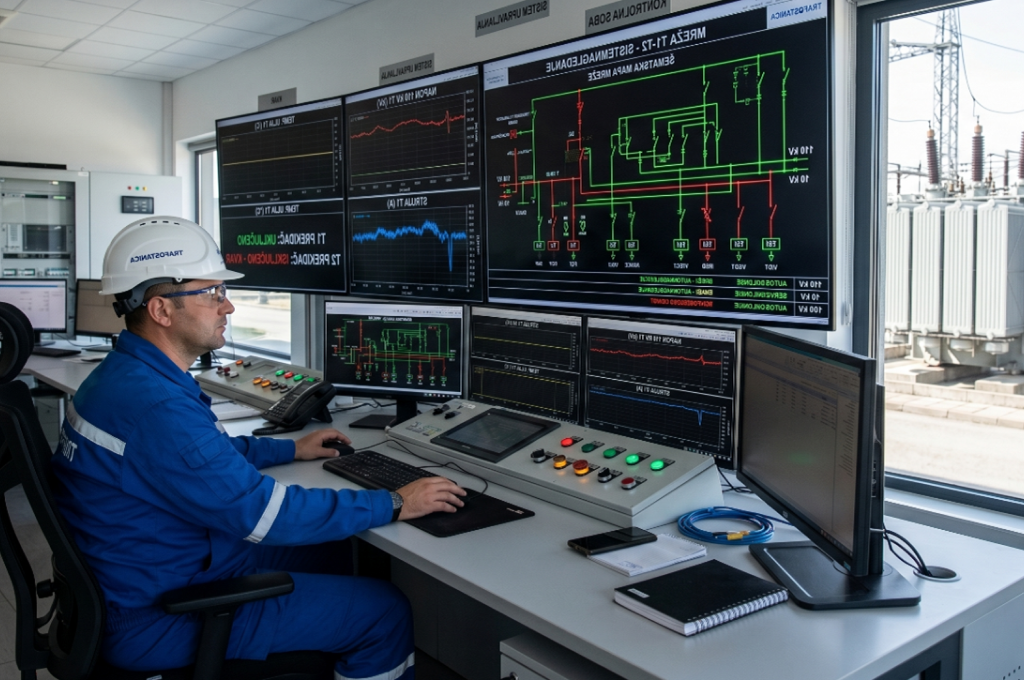
Substations represent a critical link in the process of transmitting electrical energy from generation facilities to end-users. Their primary function is adapting voltage levels to the specific requirements of the distribution grid, thereby ensuring system stability and the uninterrupted operation of equipment.
The efficient transmission of energy over long distances requires the application of high voltage. At lower voltage levels, a significant portion of energy would be lost in the form of heat due to conductor resistance. By increasing the voltage, the current required to transmit the same power is reduced, which directly minimizes energy losses and enables more economical energy transport. For this reason, transmission lines carry electrical energy at levels of 110 kV, 220 kV, or 400 kV, while in the immediate vicinity of populated areas, this voltage must be stepped down to the standard 230 volts to be safe for use.
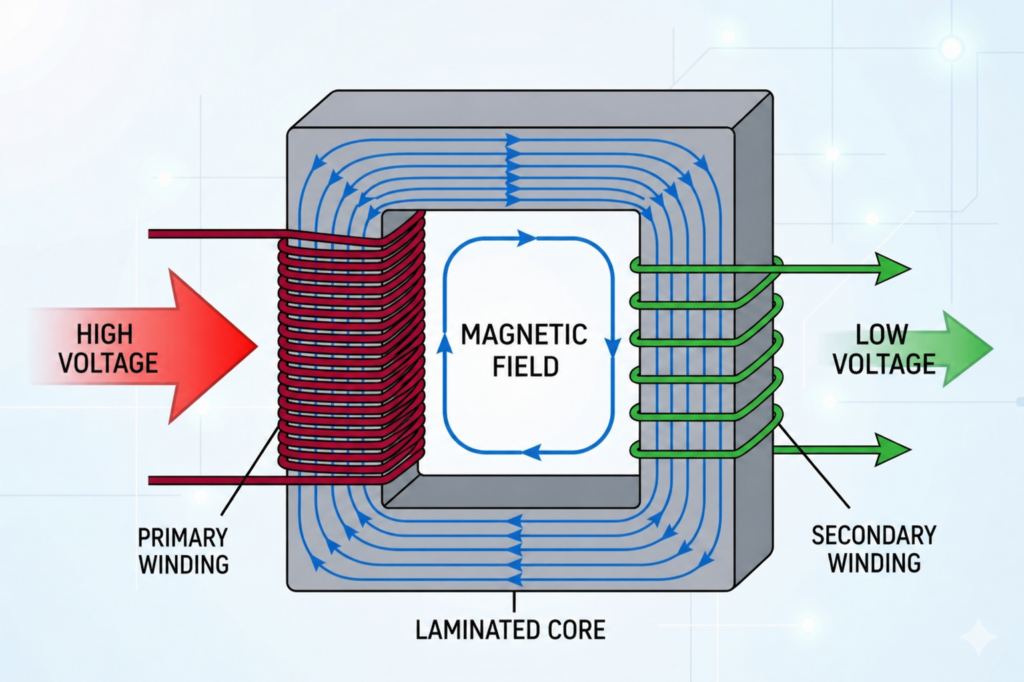
The central component of every substation is the transformer, a device that operates on the principle of electromagnetic induction. The process of voltage transformation takes place through the interaction of the primary and secondary windings placed on a common core. When high-voltage alternating current flows through the primary winding, it creates a changing magnetic field that induces a current in the secondary winding. The ratio of the number of turns on these two sides of the transformer precisely defines the output voltage, enabling its reduction to levels suitable for widespread consumption.
In addition to the transformer, the functionality and safety of a substation are ensured by the integration of additional elements designed for system protection and control. Circuit breakers serve to instantaneously interrupt the electrical circuit in the event of faults or overloads, preventing severe damage to expensive infrastructure. Disconnectors allow technical personnel to physically isolate segments of the grid for safe maintenance, while surge arresters protect the facility from sudden voltage spikes caused by atmospheric discharges. Energy flows within the facility itself are directed via busbars, which act as central nodes for distributing energy to further parts of the grid.
Substations represent the technological foundation of modern energy stability. Their role in bridging the gap between high-voltage transmission and the needs of end-users is crucial for the functioning of the economy and society. The continuous improvement of this infrastructure and the application of advanced solutions in voltage level management guarantee a reliable and safe energy supply under all conditions.