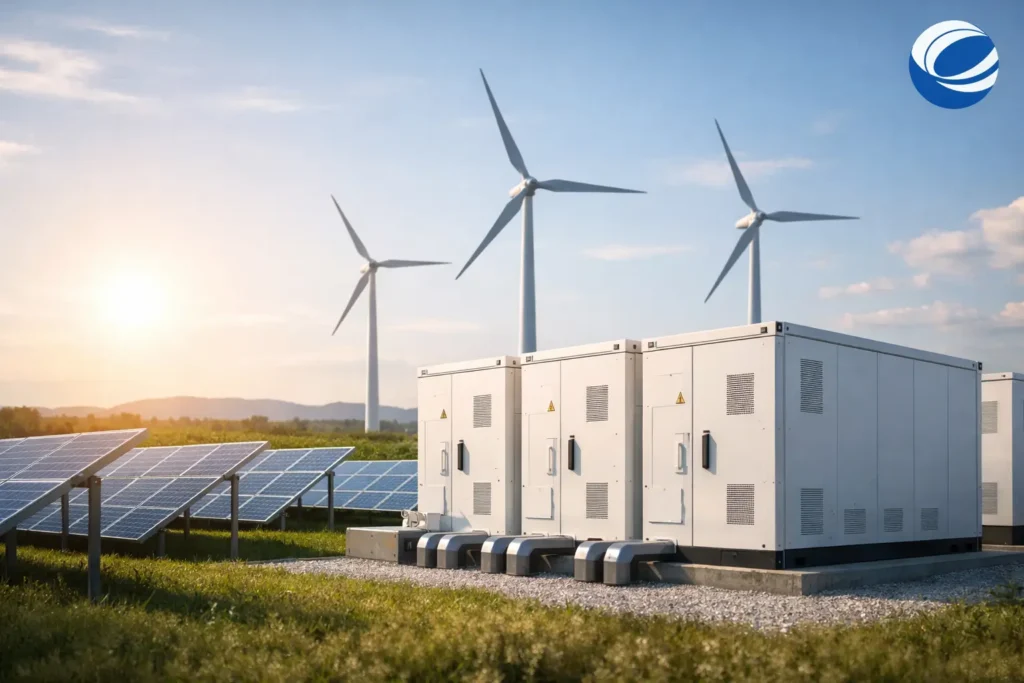
Electricity bills often rise not because a facility operated at a higher level throughout the entire month, but because several critical loads were running simultaneously at the wrong time. Compressors, refrigeration systems, pumps, furnaces, forklift chargers, and HVAC equipment can create demand peaks that significantly increase energy costs and place additional strain on the facility’s internal electrical infrastructure. This is precisely where BESS projects create business value: energy is stored when it is available and more affordable, then used when it is needed most.
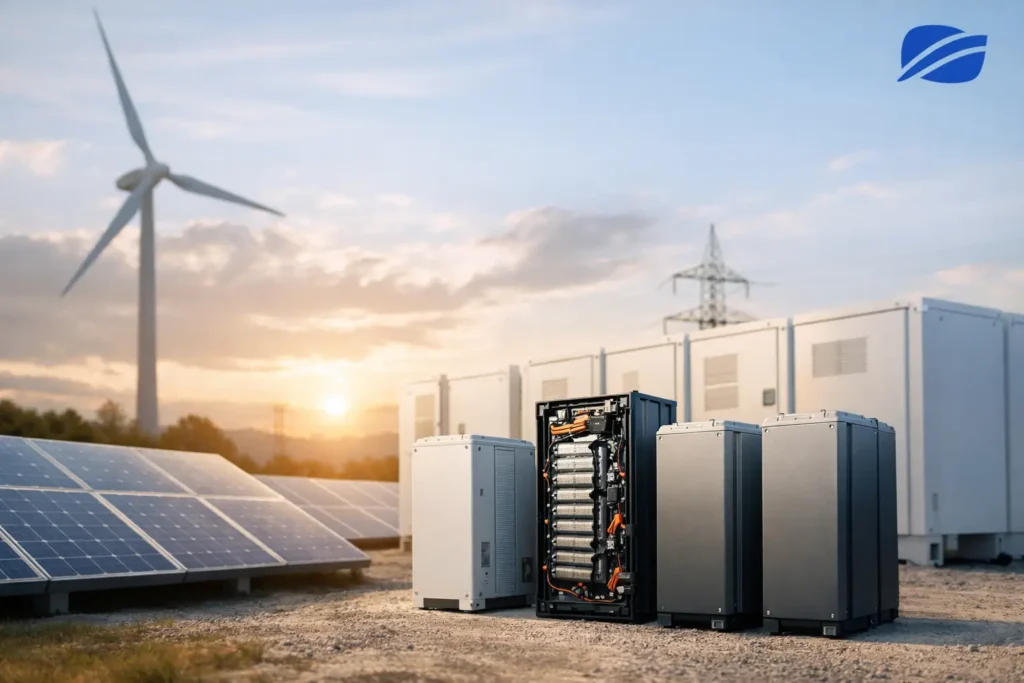
A BESS Battery Energy Storage System is not simply a large battery pack installed next to a substation. It is an intelligent energy system that integrates battery modules, power conversion equipment, control software, protection systems, cooling, fire protection, and communication with the existing grid connection, solar power plant, and facility loads. When properly engineered, a BESS reduces peak demand, improves the utilization of solar generation, and protects the continuity of critical processes.
When BESS Projects Deliver the Greatest Value
The most common mistake is to start with battery capacity before clearly defining the business problem the system is expected to solve. A BESS is not a universal replacement for the grid, a generator, or a UPS system. Its financial viability depends on the facility’s load profile, tariff structure, power quality, grid connection capacity, available solar generation, and the required operating strategy.
For manufacturing companies, the first common application is peak shaving, or reducing the maximum power drawn from the grid. The system continuously monitors facility demand and automatically activates when consumption exceeds a predefined threshold. This helps avoid costly demand peaks and allows the existing grid connection to support production growth for longer without an immediate upgrade.
The second application is increasing solar self-consumption. Without storage, a solar power plant often produces the most energy at times when some industrial loads are operating at lower intensity. Surplus energy may therefore have limited value or may not be used optimally. A battery stores this excess during the day and supplies it later, when the production facility, warehouse, or commercial building requires more energy.
The third application is operational continuity. In industrial environments, even an interruption lasting only a few seconds can have serious consequences. It may stop an automated production line, generate scrap, disrupt the cold chain, or complicate process restart. A BESS can bridge the interruption until a backup source becomes available or, in certain system architectures, support predefined critical loads. However, for equipment requiring absolutely uninterrupted power, BESS and UPS systems should be engineered as complementary rather than identical solutions.
BESS Projects Begin with Data Analysis, Not an Equipment Proposal
A serious project begins with measurement. Monthly electricity consumption data is not sufficient for system sizing because it does not show how demand behaves at 15-minute, one-minute, or one-second intervals. Reliable analysis requires information on energy consumption, peak demand, the operating patterns of major loads, voltage quality, and grid availability. The more detailed the load profile, the more accurate the assessment of potential benefits.
The next step is to define priorities. Is the primary objective to reduce peak demand charges? Does the investor want to store surplus solar energy? Is the main priority the protection of specific production processes? In most cases, there is more than one objective. A system may simultaneously perform peak shaving, optimize solar energy use, and provide backup power, but priorities must be clearly established so that the battery is not discharged before it is needed for a critical function.
Based on these priorities, two different parameters must be defined parameters that are often incorrectly treated as the same: power and capacity. Power, expressed in kW or MW, indicates how quickly the BESS can deliver or absorb energy. Capacity, expressed in kWh or MWh, indicates how long it can sustain that operation. A facility with short, high demand peaks may require high power and relatively low capacity. A cold storage facility with several hours of evening demand will require a different power-to-capacity ratio.
Sizing Based on Actual Operating Conditions
Consider a facility that occasionally exceeds its preferred grid demand limit by 400 kW, typically for 90 minutes. The battery does not necessarily need to match the facility’s total daily electricity consumption. For this specific function, a capacity of approximately 600 kWh may be relevant, with additional reserve for system losses, operating limits, and planned degradation. However, if the same system is also required to support critical loads during a grid outage, the calculation changes.
A properly engineered BESS should therefore never be selected from a catalogue based on a single figure. Sizing must account for depth of discharge, ambient temperature, expected cycle count, system availability, auxiliary cooling consumption, and charging strategy. An oversized system unnecessarily ties up capital. An undersized system fails to cover demand peaks, discharges too quickly, or delivers lower savings than expected.
Economics: Revenue and Savings Are Not the Same as Battery Capacity
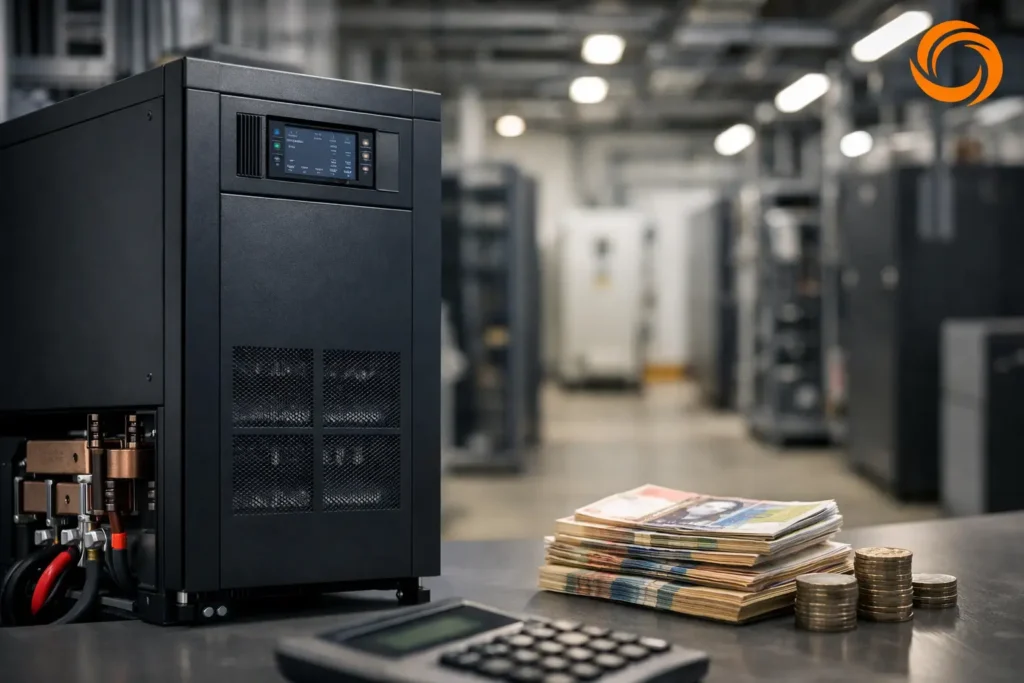
The business case for a BESS investment cannot be assessed solely on the basis of cost per kWh. The analysis must include the Total Cost of Ownership (TCO), from engineering and grid connection to civil works, electrical equipment, maintenance, component replacement, and system management throughout the entire lifecycle.
Potential benefits include avoided peak demand costs, higher utilization of on-site solar generation, reduced downtime, and the possibility of delaying an upgrade to a higher-capacity grid connection. The last of these may be particularly valuable at locations where connection upgrades are technically complex, time-consuming, or capital-intensive.
However, return on investment depends heavily on the operating strategy. A battery that cycles every day to generate savings will have a different degradation profile from a system that spends most of its time preserving capacity for unplanned outages. The financial model must therefore be aligned with the operational strategy. It is not sufficient to present the best-case scenario; the analysis must also test how performance changes under different electricity prices, solar generation levels, and future load growth.
Integration with Solar Power and Existing Infrastructure
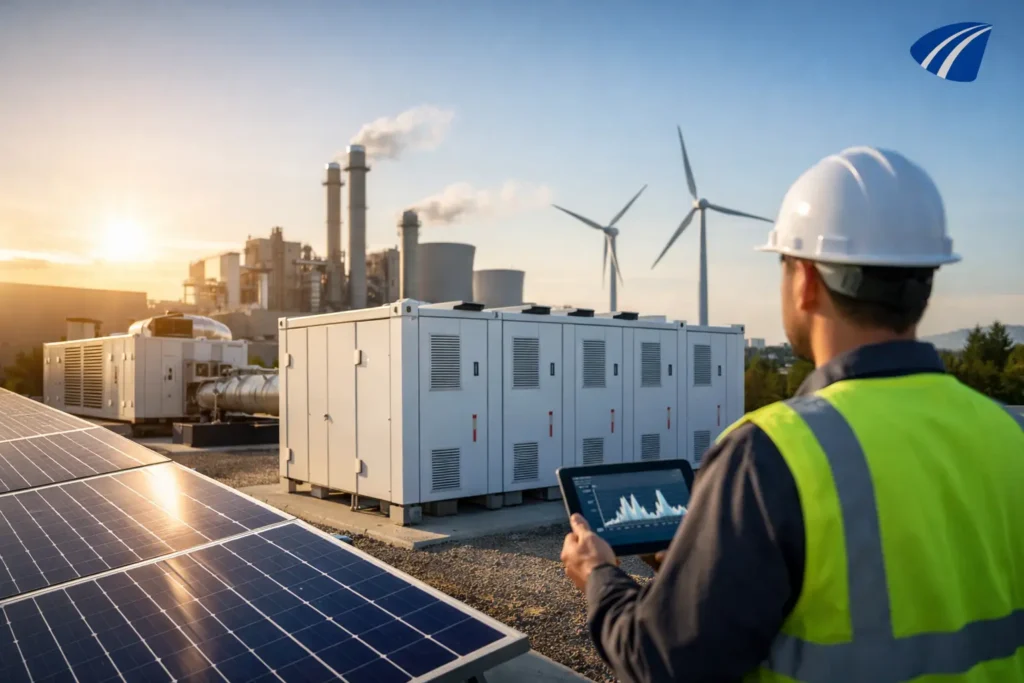
BESS often delivers the greatest value as part of an integrated energy system. The solar power plant generates electricity, the battery shifts its availability over time, and the energy management system continuously monitors facility demand, grid conditions, and operating priorities. Such an architecture allows every generated kilowatt-hour to be used with greater commercial efficiency.
The choice between an AC-coupled and DC-coupled configuration depends on whether the system is being added to an existing solar power plant, whether a new PV system is being built, and what the facility requires. AC-coupled solutions are often practical for retrofitting existing systems. A DC-coupled architecture may offer advantages when a new solar power plant and storage system are planned together, but it requires careful coordination of equipment and operating modes.
Particular attention must be given to the substation, protection devices, short-circuit power, grounding, protection selectivity, and communication with existing SCADA or BMS platforms. A BESS that operates technically but is not properly integrated into the facility’s electrical infrastructure will not deliver its full value or the required level of safety.
Safety and Maintenance Must Be Addressed from the Beginning
An industrial BESS must be engineered as a complete system with a clearly defined strategy for thermal management, gas and smoke detection, fire protection, ventilation, physical security, and remote monitoring. Cell chemistry, container or cabinet arrangement, system location, and fire protection design all influence safety, permitting, and operational reliability.
The service structure is equally important. The control system should record operating parameters, alarms, temperature, and state of charge, while preventive maintenance reduces the risk of unplanned failures. Warranty terms should not be evaluated only by their duration, but also by guaranteed performance, operating conditions, permitted cycle count, and the clearly defined responsibility of the system integrator.
From Feasibility Study to Commissioning
A BESS project requires a single coordinated engineering framework: energy analysis, technical concept, financial modelling, detailed design, equipment supply, installation, testing, commissioning, and maintenance. When these activities are divided among multiple contractors, the investor assumes the risk of mismatched interfaces and unclear responsibility for overall performance.
Energize approaches energy storage as a complete system rather than an isolated component. This means that the solar power plant, BESS, HVAC, protection systems, and load management are evaluated together, according to the real requirements of the site and the long-term cost of ownership.
The first step is not choosing a container or battery module. The first step is asking a precise question: how much does energy cost your business when it is unavailable, when it is too expensive, or when it is used at the wrong time? The answer to that question is where a project begins one that can deliver measurable control over consumption and support safer, more predictable business growth.