Electricity costs are no longer determined solely by the number of kilowatt-hours consumed. For industrial facilities, logistics centers, cold storage facilities, data centers, and commercial buildings, peak demand, power quality, and the cost of every minute of downtime can be equally important. This overview of BESS technologies explains where energy storage creates measurable business value and where a battery system without precise engineering remains little more than an expensive asset.
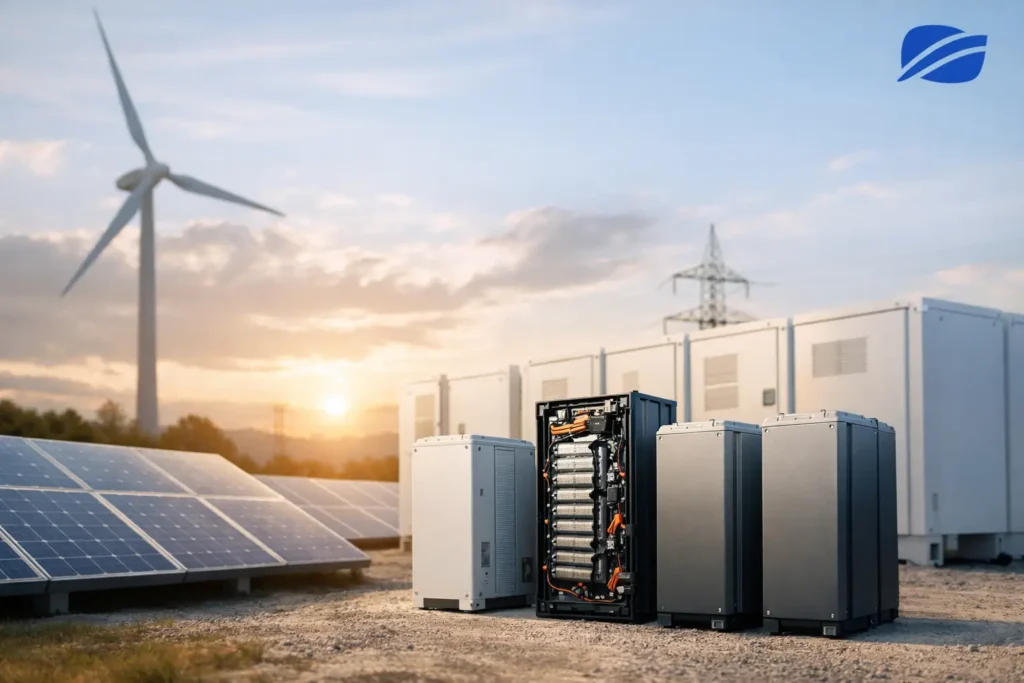
A Battery Energy Storage System (BESS) is not simply a battery connected to a facility. It is an integrated energy system comprising battery modules, power conversion systems, a battery management system, control software, protection equipment, HVAC or liquid cooling, fire protection, and grid connection infrastructure. Its value depends on how effectively all these components operate together with the existing electrical connection, facility load profile, and solar power plant.
BESS Technology Overview: What Is Actually Being Selected?
When an investor says that a battery is required, the first question should not be the price per kilowatt-hour. The first step is to determine whether the system is intended to reduce peak demand, increase solar self-consumption, provide backup power for critical loads, support energy flexibility, or combine several functions.
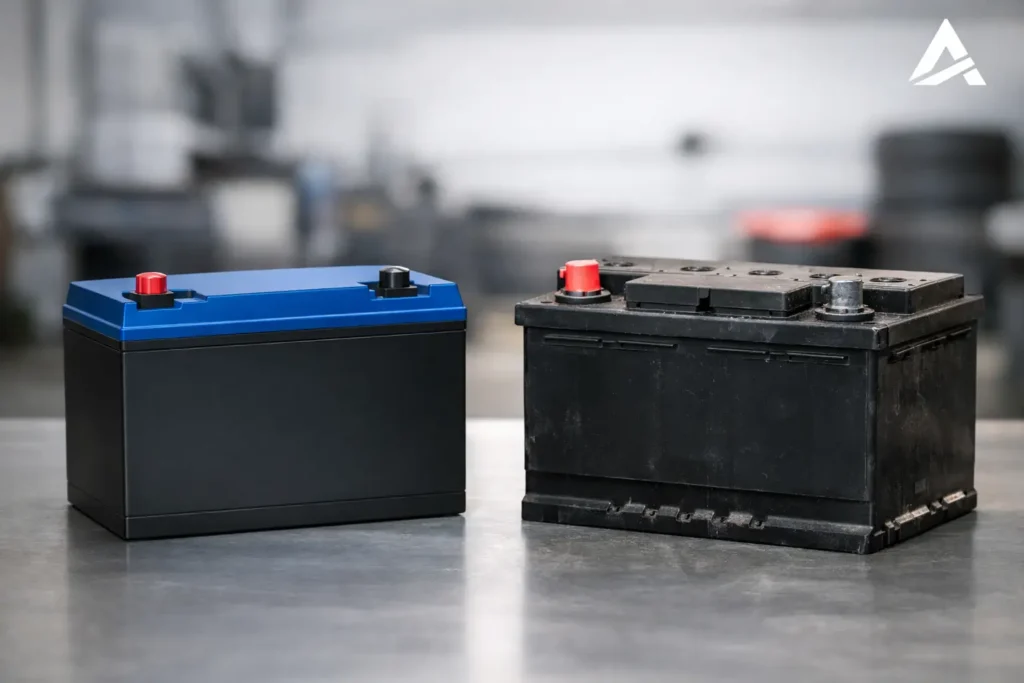
Lithium-ion systems currently dominate most commercial and industrial applications, particularly Lithium Iron Phosphate (LFP) batteries. They offer long cycle life, strong thermal stability, and a favorable balance between usable capacity, safety, and cost. Nickel Manganese Cobalt (NMC) chemistry may offer advantages where energy density is the primary concern, but it requires a more rigorous approach to thermal management and safety. Battery chemistry should therefore be selected according to the system’s operating profile rather than market trends.
The power conversion architecture is equally important. An AC-coupled BESS connects to the alternating-current side of the electrical installation and is often a practical choice when adding storage to an existing solar power plant. A DC-coupled configuration connects the solar array and battery on the direct-current side, which can reduce certain conversion losses and improve the utilization of solar generation when PV inverters are constrained. Neither architecture is inherently superior. The correct choice depends on the existing system, grid connection capacity, expansion plans, and demand profile.
Power and Capacity Are Not the Same
Two parameters define the fundamental purpose of a BESS: kW or MW indicate power, while kWh or MWh indicate energy capacity. A 1 MW / 2 MWh system can theoretically deliver 1 MW for approximately two hours under specific operating conditions. However, the actual usable energy depends on the permitted depth of discharge, temperature, battery state of health, degradation, and the reserve allocated for backup operation.
A facility with short but significant demand peaks may require high power and relatively short duration. A cold storage facility seeking to shift consumption away from expensive tariff periods, or a factory aiming to store solar energy for evening operation, may require a larger energy capacity. Sizing a system according to average consumption is a common and costly mistake. Interval load data, preferably at 15-minute resolution or finer, provides the foundation for a reliable techno-economic assessment.
Where BESS Delivers the Greatest Value
The most widely recognized application is peak shaving, or the reduction of peak demand. The battery charges when facility demand is lower or when the solar power plant produces excess energy, and discharges during periods of high demand. The objective is not to replace all grid consumption, but to control short and costly peaks that place pressure on the grid connection and tariff structure.
Another important application is increasing solar self-consumption. Without energy storage, solar generation often reaches its maximum when facility demand is lower. A BESS captures surplus energy and uses it later, after PV generation has declined. This is particularly relevant for companies with lower weekend demand, daytime administrative loads, or processes that can be partially shifted in time.
A third application is operational continuity. A BESS can provide backup power for predefined critical loads, including automation systems, servers, communications, security systems, process equipment, or selected production lines. However, a BESS is not automatically a replacement for a UPS or diesel generator. A UPS responds almost instantaneously and protects sensitive loads, while a generator provides longer-duration backup as long as fuel is available. In complex facilities, the optimal solution often combines UPS systems, BESS, generators, and intelligent load management.
Solar, BESS, and the Grid Must Operate as a Single System
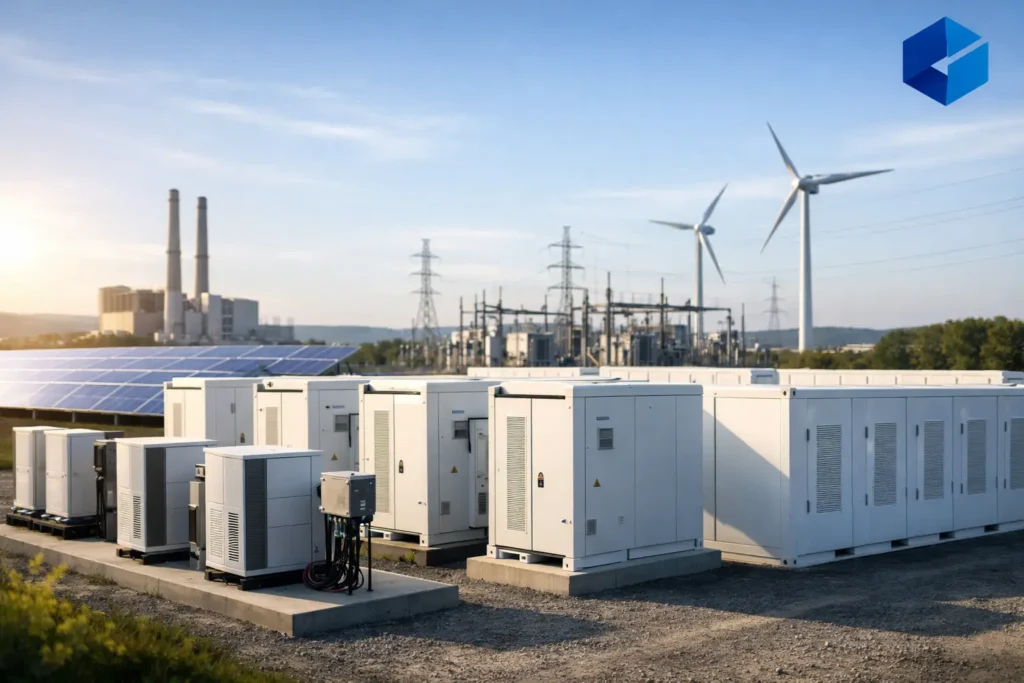
The greatest financial and operational benefits are achieved when the solar power plant, energy storage system, and grid connection are engineered as one integrated solution. The energy management system can then make decisions based on priorities defined by the user, such as limiting grid demand, maximizing solar charging, preserving backup reserves, or protecting critical processes.
Software is not an optional component to be selected at the end of the project. It determines when the battery charges and discharges, how much capacity remains in reserve, and how unnecessary cycling is avoided. Poor control logic can accelerate battery degradation and reduce expected savings even when the hardware itself is of high quality.
Safety and Service Life: The Decisive Criteria
BESS safety begins with the choice of battery chemistry, but it does not end there. Reliable BMS and EMS platforms, battery rack segmentation, gas and smoke detection, fire protection, temperature control, ventilation, and clearly defined operating and maintenance procedures are all essential. Requirements differ between outdoor containerized systems and indoor installations, which is why installation location must form part of the engineering decision from the outset.
Service life should not be assessed solely by the number of warranty years. Important factors include the guaranteed remaining capacity at the end of the warranty period, permitted cycle count, operating temperature, maximum C-rate, depth of discharge, and system availability. A battery may be technically capable of operating under an aggressive cycling regime, but that does not mean such operation is economically optimal if it accelerates degradation.
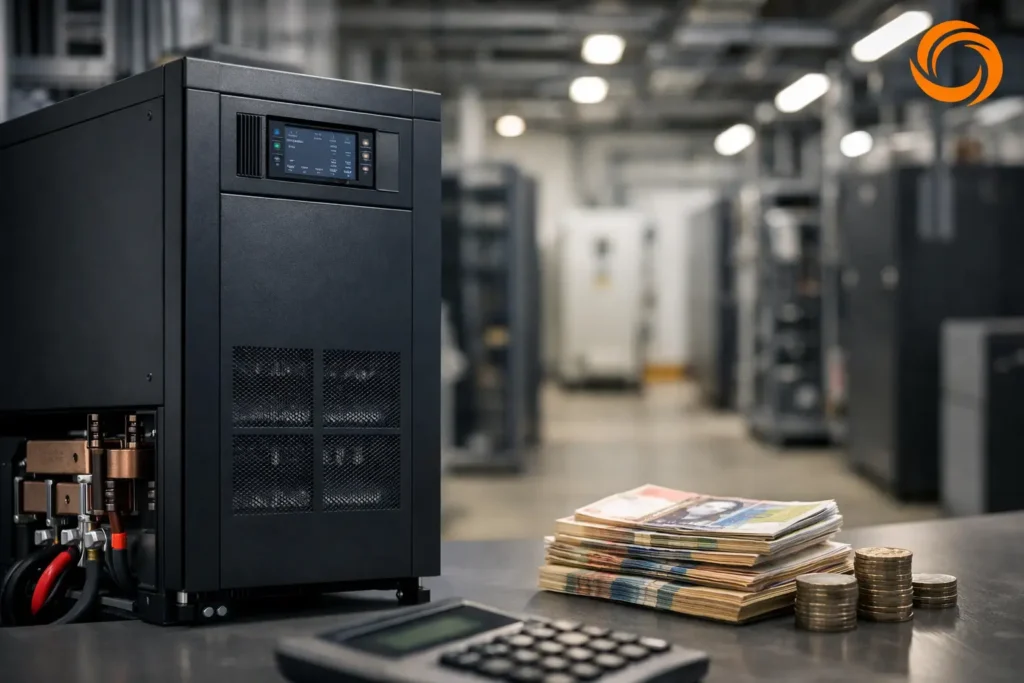
For this reason, the investment should be evaluated through Total Cost of Ownership (TCO). The initial equipment price represents only one part of the total cost. Engineering, civil and electrical works, grid connection, protection systems, monitoring, servicing, component replacement, capacity degradation, and the long-term operating strategy must all be included. A lower-cost system without clearly defined service responsibility may become the more expensive option after the first major failure.
How to Assess the Financial Viability of a BESS Project
The financial viability of a BESS cannot be assessed accurately based on a single monthly electricity bill. A proper analysis requires interval consumption data, billed peak demand, existing tariffs, solar generation data, expected load growth, and a clear definition of critical loads. Facilities with variable operating patterns must also account for seasonality, shift work, and planned changes in production.
A robust feasibility study should present multiple scenarios rather than a single optimistic payback estimate. One scenario may prioritize peak demand reduction, another may focus on increasing solar self-consumption, while a third may emphasize operational continuity. Where production downtime is particularly costly, the value of backup power may exceed the direct savings achieved on the electricity bill.
Regulatory requirements, distribution system rules, and grid connection conditions can also influence the technical design. A BESS should therefore not be selected from a catalogue. It should be engineered according to actual site constraints and the investor’s objectives.
When BESS Should Not Be the First Step
Energy storage is not a universal solution. If a facility has uncontrolled consumption, outdated reactive power compensation, undersized cables, or an unknown load profile, the basic electrical infrastructure should be addressed first. The same applies when a solar power plant produces little or no surplus energy and demand peaks are too rare or too short to justify the investment.
In such cases, the first step should be detailed measurement, load optimization, and an assessment of the grid connection. A BESS delivers value when it forms part of a broader energy strategy, rather than being installed in response to a single high electricity bill or occasional grid outage.
Energize approaches BESS projects through this integrated methodology from load assessment and feasibility studies to engineering, installation, commissioning, and maintenance. The objective is not simply to supply a battery, but to deliver an energy solution whose value can be measured through lower costs, higher availability, and controlled operational risk.
The right time to invest in a BESS is not necessarily when batteries become cheaper. It is when a company understands exactly how much each demand peak, every unused kilowatt-hour of solar energy, and every minute of downtime costs. At that point, energy storage becomes essential business infrastructure rather than merely a technology investment.