When a data center goes down for even a few seconds, the impact is not just a technical fault. It means service disruption, contractual risk, potential data loss, and a very real financial cost. That is why power management for data centers is not about selecting a single UPS unit or backup generator. It is about designing a complete energy architecture capable of keeping every critical system under control under normal conditions, during peak loads, and throughout grid disturbances.
In practice, the biggest issue arises when energy infrastructure is planned in isolation. One contractor delivers the UPS, another the generator, a third the cooling, and a fourth the monitoring system. This approach almost always creates gaps in responsibility. In a data center, that is unacceptable because reliability depends not on individual components, but on how the entire system performs.
What Power Management for Data Centers Involves
Power management for data centers encompasses the design, control, and optimization of all energy flows within the facility. The core objective is simple to ensure uninterrupted power supply to IT equipment while maintaining efficiency, autonomy, and cost control.
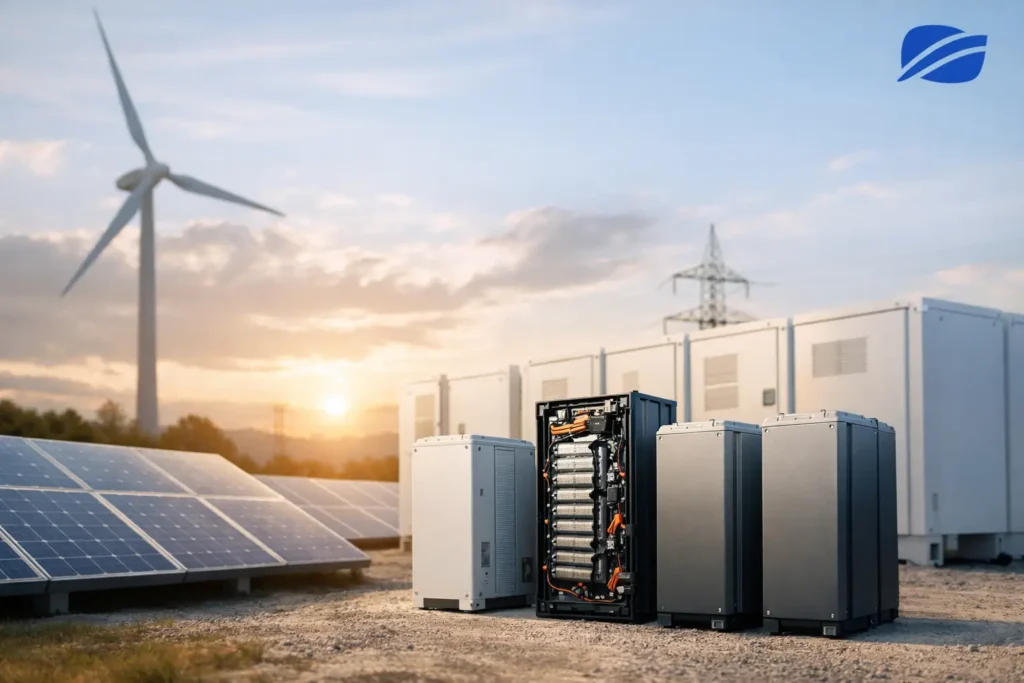
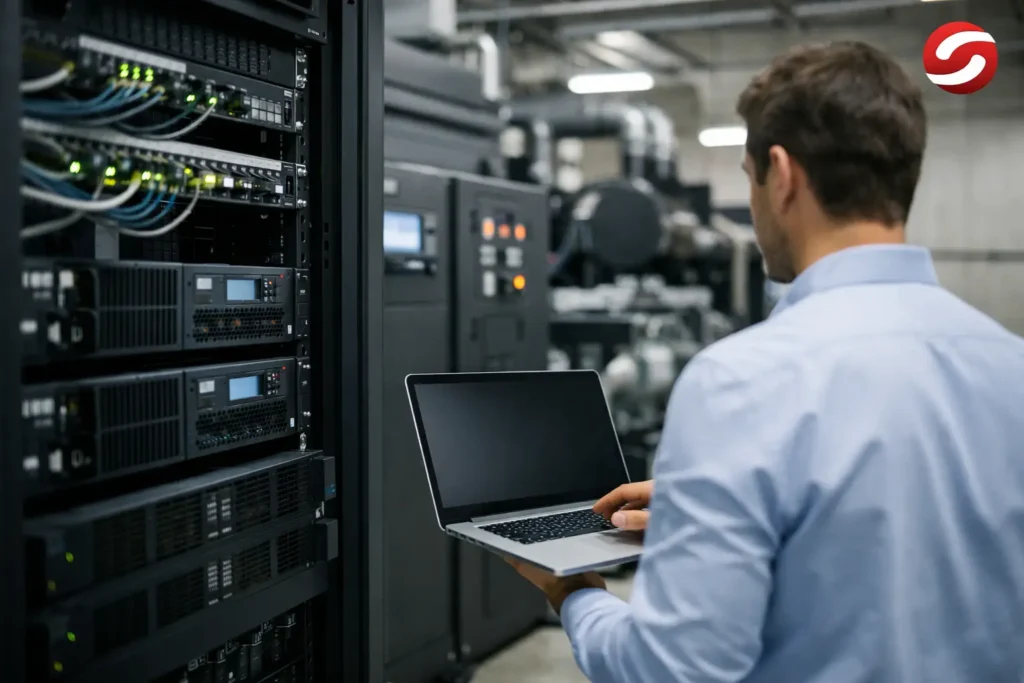
This includes utility input, power distribution, UPS systems, battery installations, diesel generators, static transfer switches, branch-level metering, and coordination with HVAC systems. Increasingly, modern data centers also integrate BESS (Battery Energy Storage Systems) and local generation sources such as solar, particularly when investors aim to reduce total cost of ownership and improve energy resilience.
It is important to emphasize that not all data centers are the same. Tier requirements, load density, service criticality, available space, parallelization capabilities, and expected capacity growth all directly influence system architecture. A solution suitable for an edge facility is not the same as one for a central enterprise or colocation environment.
Where the Biggest Risks Occur
The most expensive failures rarely result from a single major outage, but from poor system coordination. If the UPS does not provide sufficient autonomy to bridge the actual generator startup time, redundancy exists only on paper. If cooling systems are not aligned with the backup power operating mode, IT equipment may remain powered but exposed to thermal risk. Without granular monitoring, management sees total energy consumption, but not where efficiency is actually lost.
Another common issue is improper sizing. Oversized systems increase CAPEX unnecessarily and often operate outside optimal efficiency ranges. Undersized systems create constant operational stress, limit scalability, and increase the risk of incidents. In critical facilities, sizing must reflect real load profiles, growth scenarios, and redundancy requirements.
A third risk is the absence of centralized monitoring. Without a unified view of power quality, branch loads, battery health, generator performance, and environmental conditions, response times increase and in a data center, delayed response means higher cost.
Architecture That Ensures Continuity
Effective power management starts with an energy model not equipment procurement. The first step is defining critical vs. non-critical loads, required availability, autonomy targets, and recovery strategy. Only then does it make sense to select UPS topology, battery type, generator configuration, and switching logic.
For some facilities, N+1 architecture provides a rational balance between reliability and cost. For more demanding environments, 2N or distributed redundancy may be justified. However, higher redundancy does not guarantee better outcomes if maintenance, monitoring, and testing are not equally robust.
UPS systems remain the core of short-term protection. Their role is not only to maintain power during outages, but to stabilize energy quality for sensitive IT equipment. The choice between modular and monolithic systems depends on scale, space, and expansion plans. Modular UPS often provides advantages when phased capacity growth is required.
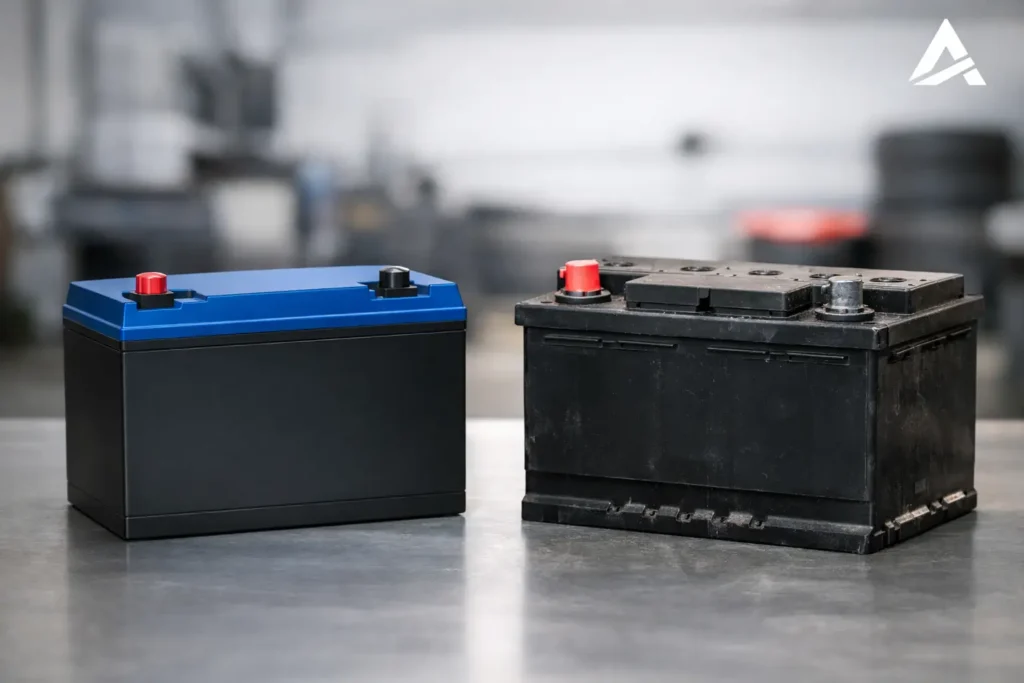
Battery systems form the next critical layer. While VRLA batteries are still used, lithium-ion technologies are increasingly dominant due to longer lifespan, lower weight, better cycling performance, and reduced maintenance. However, the choice is not universal lithium systems require higher initial investment and carefully engineered safety systems, while VRLA may still be suitable in more conservative scenarios.
The Role of Generators, BESS, and On-Site Generation
Diesel generators remain the standard for long-duration backup and protection against extended outages. However, their effectiveness depends on more than rated power. Critical factors include load acceptance time, startup reliability, synchronization, testing mode, and fuel availability. A generator that is not regularly tested under real load conditions cannot be considered reliable.
BESS systems introduce a new dimension. They can absorb peak loads, extend autonomy, relieve UPS and generator loads, and optimize energy consumption based on tariffs or operational strategies. For investors looking beyond basic backup, BESS provides flexibility and improved total cost of ownership.
When combined with solar, an additional layer of resilience and cost control is achieved. Solar is not a replacement for backup power in data centers its output is variable. However, when integrated with storage and advanced energy management, it can significantly reduce daytime energy demand and improve overall system efficiency.
Why HVAC Must Be Part of the Same Energy Strategy
One of the most costly misconceptions in data center design is treating IT load separately from cooling. Power management cannot function properly without HVAC integration. Every kilowatt consumed by IT equipment generates heat that must be controlled.
This means backup power must also support critical cooling systems, circulation, control, and monitoring. Otherwise, infrastructure may remain powered while thermal conditions become critical. At higher rack densities, this coordination becomes essential.
Proper energy management also provides visibility into PUE, cooling behavior under varying loads, and optimization opportunities. Often, the fastest savings come not from reducing safety margins, but from more precise operational control.
Monitoring, Control, and Data-Driven Decisions
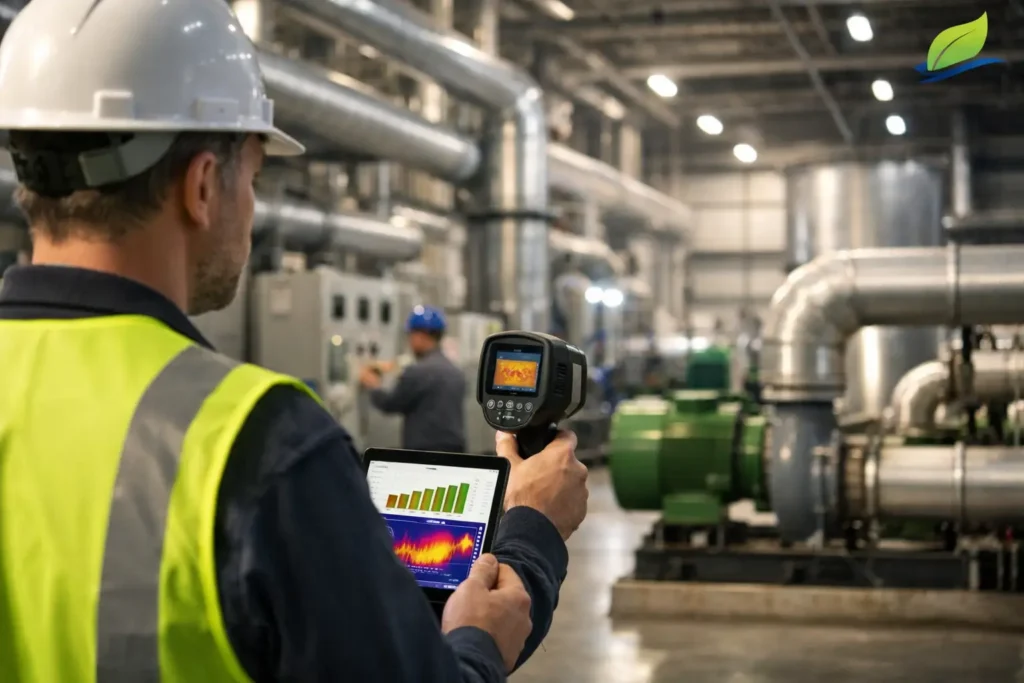
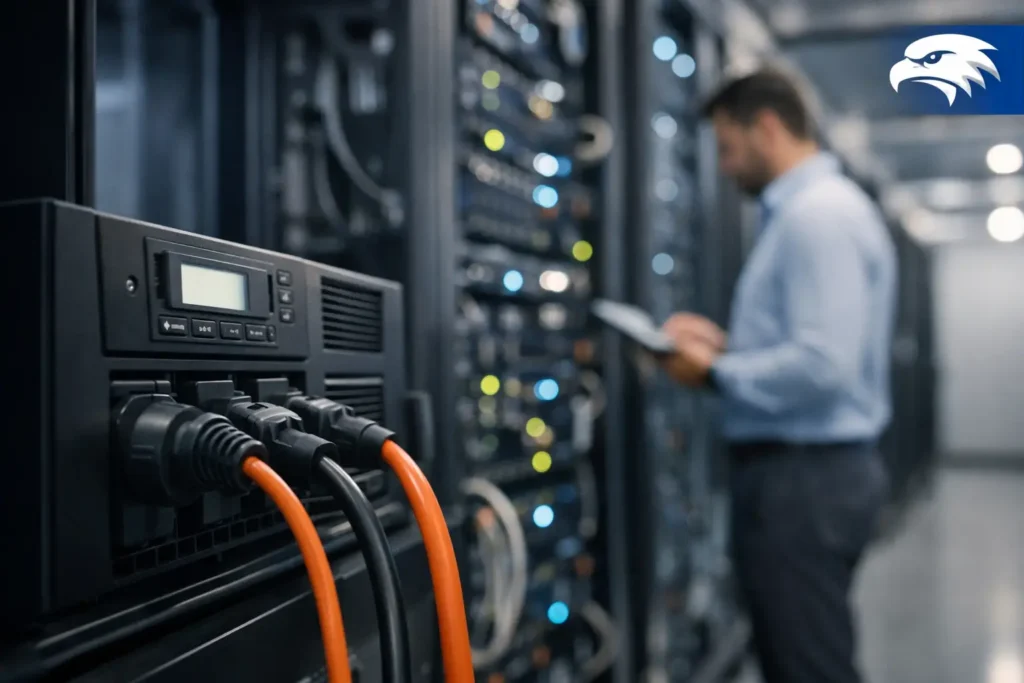
Without advanced monitoring, there is no effective energy management. Monitoring is not an administrative add-on it is an operational tool. It must track grid quality, branch loads, UPS efficiency, battery condition, generator performance, temperature, humidity, and switching events.
When these data points are integrated, management can anticipate maintenance needs, identify bottlenecks, and make decisions based on trends rather than assumptions. This is especially important in environments with gradual capacity growth, where every new IT load changes the facility’s energy profile.
A serious partner in this domain delivers not only equipment, but also monitoring logic, alarm systems, testing procedures, and maintenance strategies. This is where the difference lies between an installed system and a functional infrastructure.
Investment Is Measured Through Availability and TCO
In data centers, the most expensive solution is not the one with the highest initial cost, but the one that leads to downtime, inefficiency, and costly interventions. That is why investment must be evaluated through total cost of ownership energy consumption, maintenance intervals, battery replacement, efficiency at partial loads, spare parts availability, and scalability.
There is no universal solution. In some cases, higher investment in modularity and lithium battery technology is justified. In others, more conservative architecture combined with stronger monitoring and maintenance discipline is more rational. The key is that decisions must be engineering-driven not based solely on upfront cost.
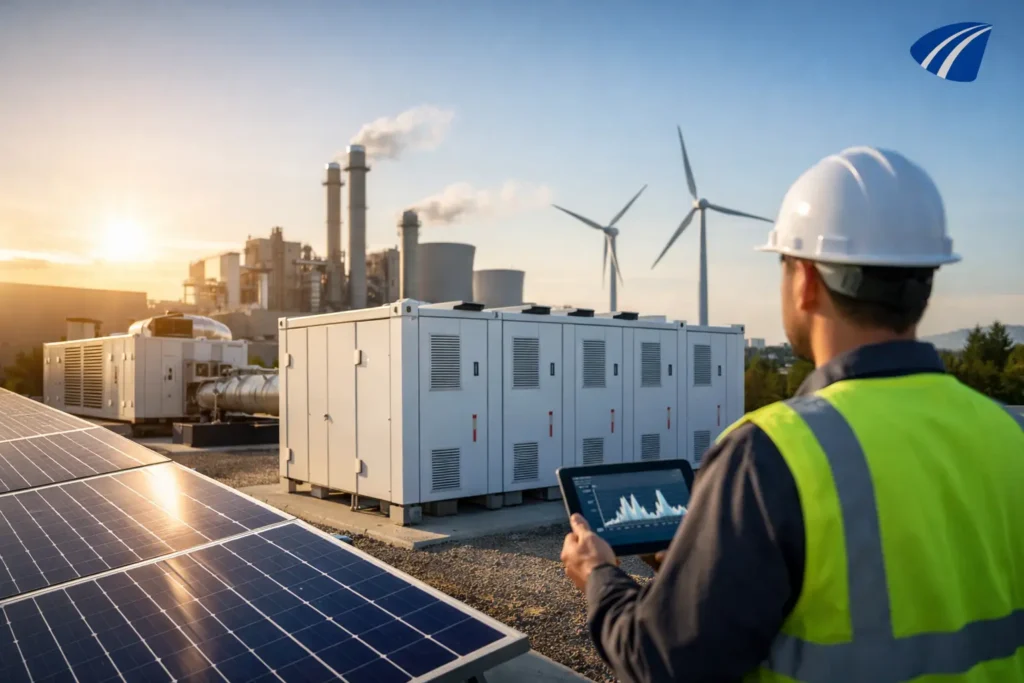
Companies planning new data centers or upgrading existing facilities achieve the best results when the project is treated as a unified energy system. This is the approach taken by Energize from feasibility studies and design to integration of UPS, BESS, generators, HVAC, and full monitoring systems. When a single partner takes responsibility for the entire system, technical risk is reduced, implementation is faster, and the infrastructure can support business growth.
If you are planning a data center investment, the key question is not just how much power you need today. It is how much control, autonomy, and resilience you require when the grid fails, loads increase, and failure is no longer an option.