How a canopy changes the pace and order of work
Many companies do a significant share of their work outdoors, loading and unloading, material prep, equipment repair, vehicle servicing, sorting, packing, small-scale production. All of it seems like a natural part of the day, until it starts to rain. Work stops, people look for shelter, equipment gets moved under cover, and the day’s pace collapses to half of what was planned. The next day the same scenario plays out with a new weather signal, except this isn’t the exception anymore, it’s the norm.
The cost of working without a roof
Weather always dictates the pace of work that happens outside enclosed space. Summer sun above forty degrees Celsius creates unsafe conditions for physical work, rain stops operations and damages materials, winter snow blocks access to work zones. In the short term it all looks like a normal part of the job. Over time, the sum of lost hours, damaged equipment and frequent reorganization makes a real difference in operational capacity.
That cost is the hardest to spot because it isn’t a single big line on a report, it’s twenty small ones scattered across the year. Half a day lost to heavy rain. A shift ending an hour early because of heat. Material that dried for two days instead of half a day. A tool left outside that didn’t work the next morning.
A roof that changes the pace
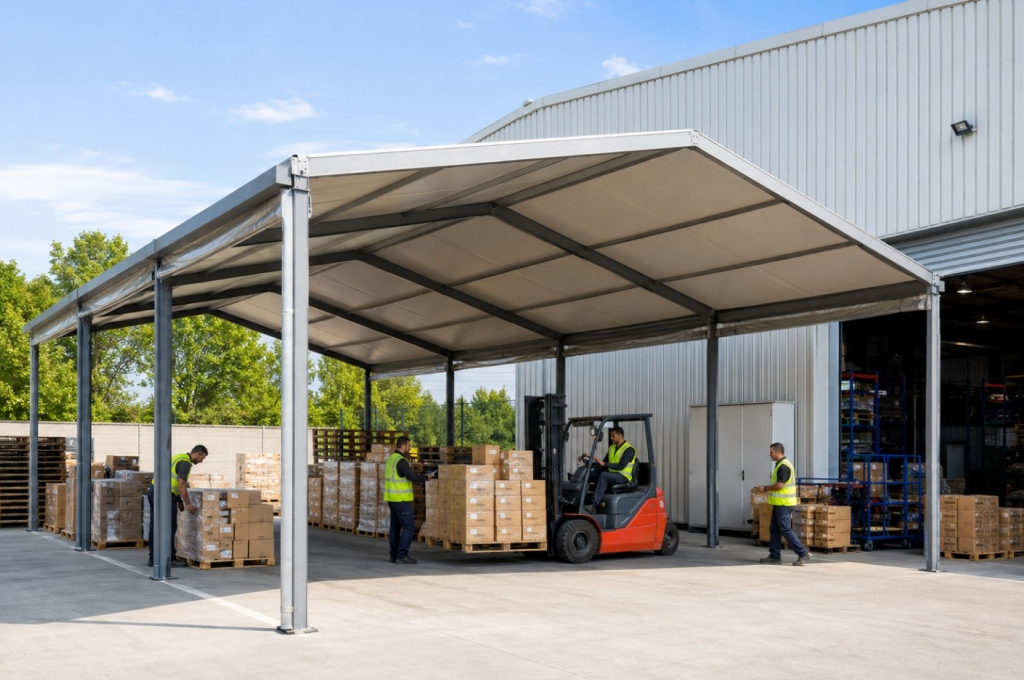
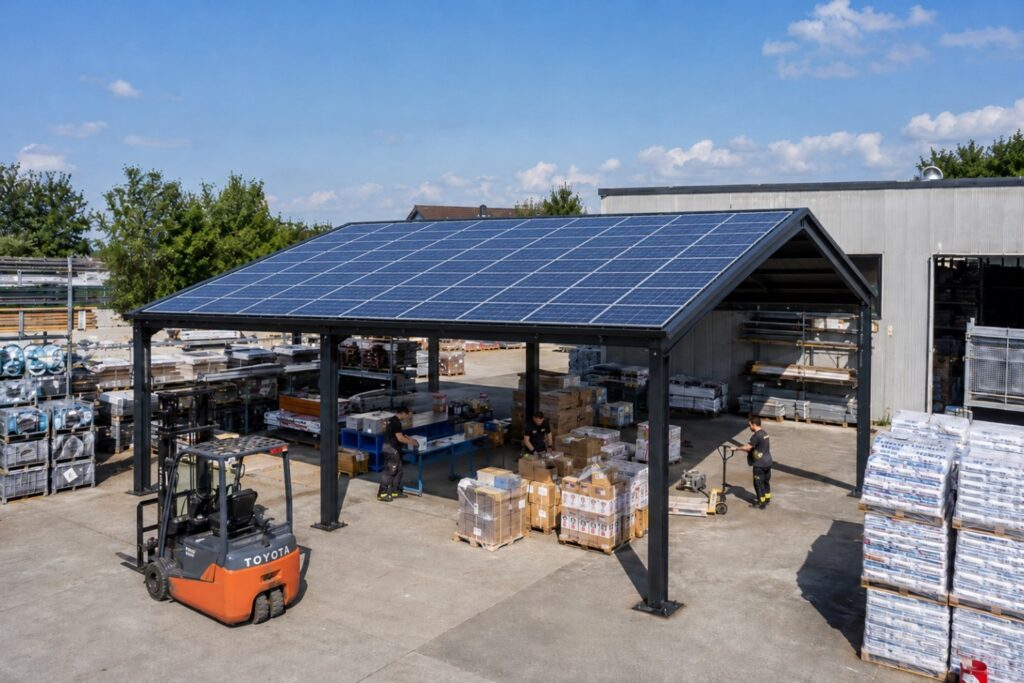
A solar canopy is an infrastructure move that solves this problem without a major construction decision. A structure of metal and panels forms a covered area above work zones, with no need for walls or a full warehouse build-out. Work continues uninterrupted in rain or snow, while the shade in summer drops the temperature of the work area by ten degrees or more.
The second value is organizational. Uncovered work zones have a definition problem, anything can go anywhere, tools get left wherever people stop, materials aren’t really classed as “put away” or “in use”. A defined covered space creates natural zoning: this is where we work, this is where we prep, this is where we store. That doesn’t just change how the site looks, it changes how people behave on it.
The third benefit comes from the panels on top of the structure. A covered work zone consumes energy, lighting, charging hand tools, smaller devices, fans, and that’s exactly where solar production naturally overlaps with consumption. Energy gets used at the same time it’s produced.
Which companies benefit most from this
The clearest application is companies with significant outdoor work as part of regular operations. Industrial yards with loading and unloading zones, vehicle and heavy-equipment service shops with prep areas, construction companies with zones for equipment and materials, recyclers and sorting stations, agribusinesses with seasonal fruit and vegetable sorting and packing, sawmill operations with open zones for timber preparation.
The same applies to logistics-oriented companies, distributors loading and unloading trucks on their own sites, warehouses with cross-dock operations, and production plants that handle part of the process outdoors because of equipment or material size. What these companies share is a significant part of the day spent in a zone where they can’t control the weather but feel its effects on every bill and every schedule.
An investment that shows up every quarter
The biggest mistake on projects like these is to see the canopy as just a building. It isn’t. It’s an operational intervention that changes how many days a year the company can run at full capacity, how many hours are lost to unplanned stoppages, how long equipment lasts, and how productive employees are. Those effects aren’t measured in square meters of canopy, but in operational metrics tracked every quarter.
The solar part of the same investment becomes an additional source of value, producing electricity for the work happening under the roof, lowering grid bills, and locking in a predictable operating cost for the next twenty-five years.
| If your company regularly does part of its work outdoors, loading, prep, servicing, sorting, light production, weather doesn’t have to dictate the pace of the day anymore. A covered work zone with an integrated solar system changes how many days a year you operate at full capacity, how long your equipment lasts, and what every heavy rainstorm costs you. Schedule your free feasibility study: nevena.milenkovic@energize.rs |