From a single stall to the full canopy: how a covered market produces its own power (in numbers)
Markets, covered marketplaces and wholesale produce markets use more electricity than people assume. Lighting all day, scales, card terminals, and above all refrigeration, because fruit, vegetables, meat and fish are kept cold. On top of that, many markets sit on sites with a weak connection, or run a cable to each stall separately. Energy is the quiet bottleneck almost nobody plans for in time.
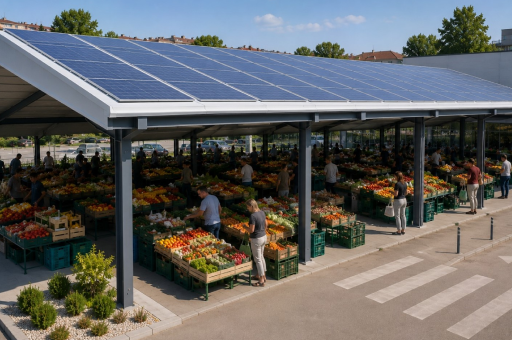
And above the whole market there is usually a large canopy already. The same one that shelters shoppers and goods can generate power. The question isn’t whether, but how much: how much power you actually need decides how much surface has to catch the sun, and the solution scales from a single stall to the whole roof.
A stall or container as a standalone unit
A single stall, a kiosk or a small container can be fully self-sufficient. With about 3 kWp of panels and a battery, it covers its own basics: lighting, a scale, a card terminal, phone charging and a small fridge or chilled display. Where there is no connection, or where running a cable to every stall would be expensive, such a unit works off-grid, from day one.
For seasonal and temporary markets that is often a complete solution in itself: each unit carries its own energy, with no shared installation and no generator.
The large canopy is the real power plant
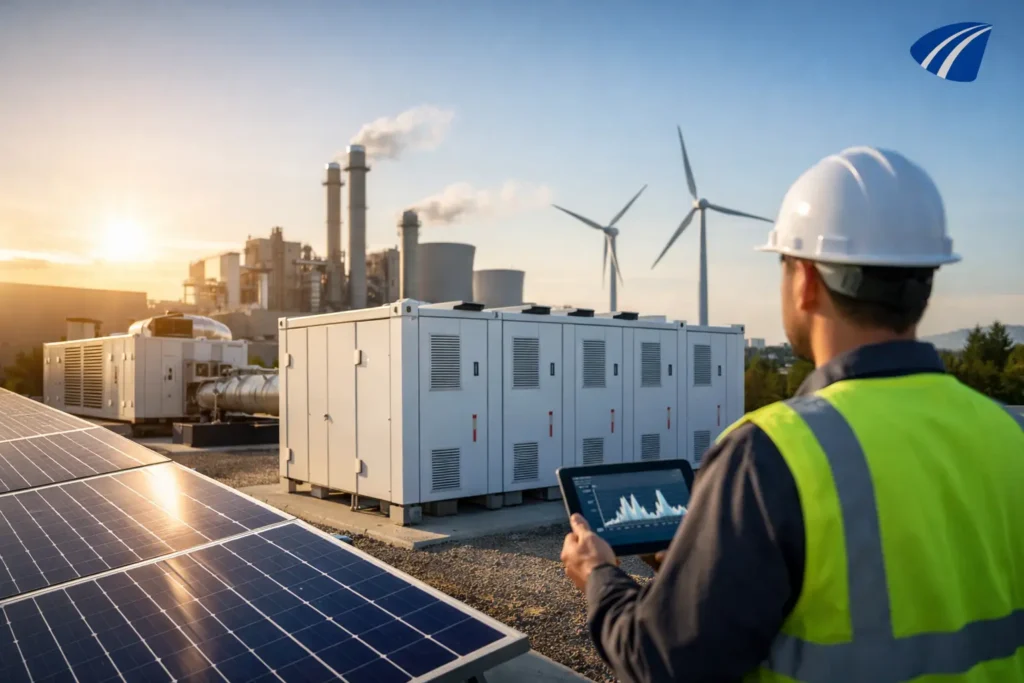
Once needs go beyond a single stall, the roof enters the picture. Since output grows with surface, about 188.8 Wp per square meter, a large market canopy becomes a serious source. A canopy of about 1,000 m² at that density carries close to 190 kWp, enough to power shared cold storage, lighting for the whole market and supporting facilities.
The roof does double duty: it shelters shoppers and goods while generating power. It is the largest surface the market already has, simply unused until now.
Refrigeration is the biggest cost
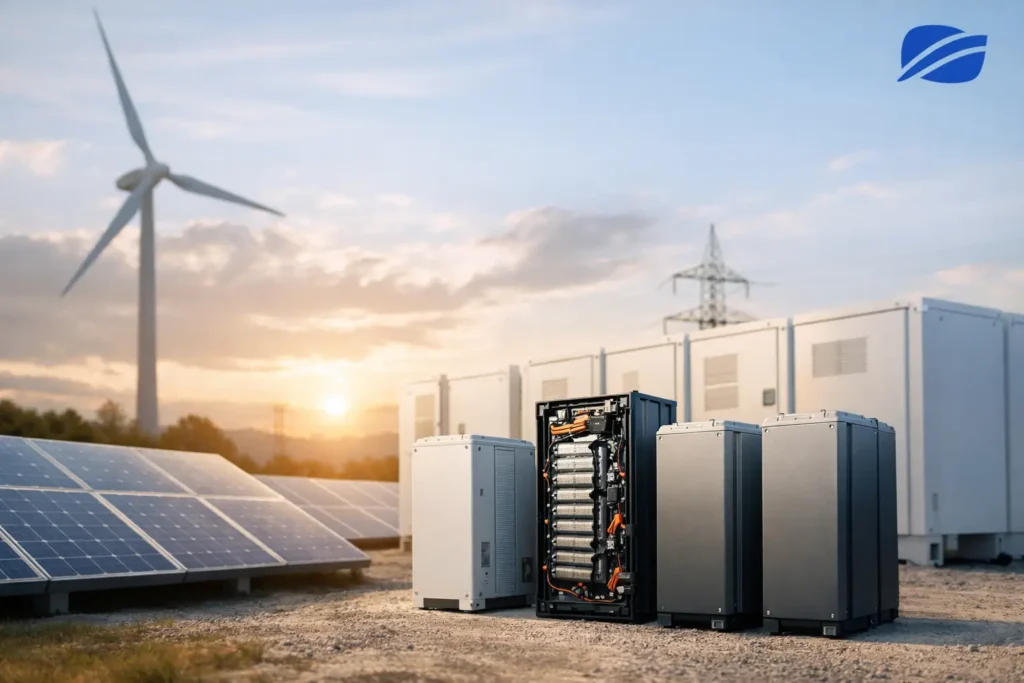
At a market, most of the electricity goes to the cold chain, and cold storage runs around the clock. That is where solar and a battery have the strongest effect: cooling runs on its own production during the day, while the battery carries part of the energy into the night and the morning peak, when the market opens. As a bonus, if the grid fails, the goods in cold storage stay safe.
Two options, one logic
A stall and a canopy aren’t opposed; they are two points on the same scale. A single unit carries its own energy for its own needs. A large roof lifts the same logic to the level of the whole market. In both cases a battery ties the system together and shifts the power to the moment it is actually needed. Toilets are handled by a SaniPod unit, which works with no connection to water or sewage, a common problem at markets.
Why this suits markets in particular
Two big obstacles of conventional construction fall away here. A canopy and modular units are, as a rule, treated as temporary structures, so they don’t require a building permit the way brick construction does. And because the system powers the site itself, a new market can start working before grid reinforcement arrives. Everything is fast to deploy and, if the market relocates or expands, relocatable and scalable.
A market that grows with the need
The advantage is that you don’t have to solve everything at once. You start with what you need today, even if that is just self-sufficient stalls, and the system later grows to a full canopy that powers the entire market. The same technology, the same logic, simply scaled to the need.
| Whether you’re opening a few stalls or covering an entire market, the first step is to work out how much power you actually need and how much roof you have available. A single stall with solar and a battery runs on its own and off-grid, while a large canopy over the market becomes a power plant for cold storage, lighting and supporting facilities. Schedule your free feasibility study: nevena.milenkovic@energize.rs |