A facility with a large roof area does not automatically guarantee significant savings. When considering how to plan a solar system for an industrial facility, the decisive factor is not the number of panels that can fit on the roof, but the relationship between the facility’s energy consumption, the building’s technical limitations, grid connection conditions, and the business objectives of the investment. A properly designed solar power plant can reduce energy costs for years. An incorrectly sized system can result in low utilization, grid connection complications, and unnecessarily tied-up capital.
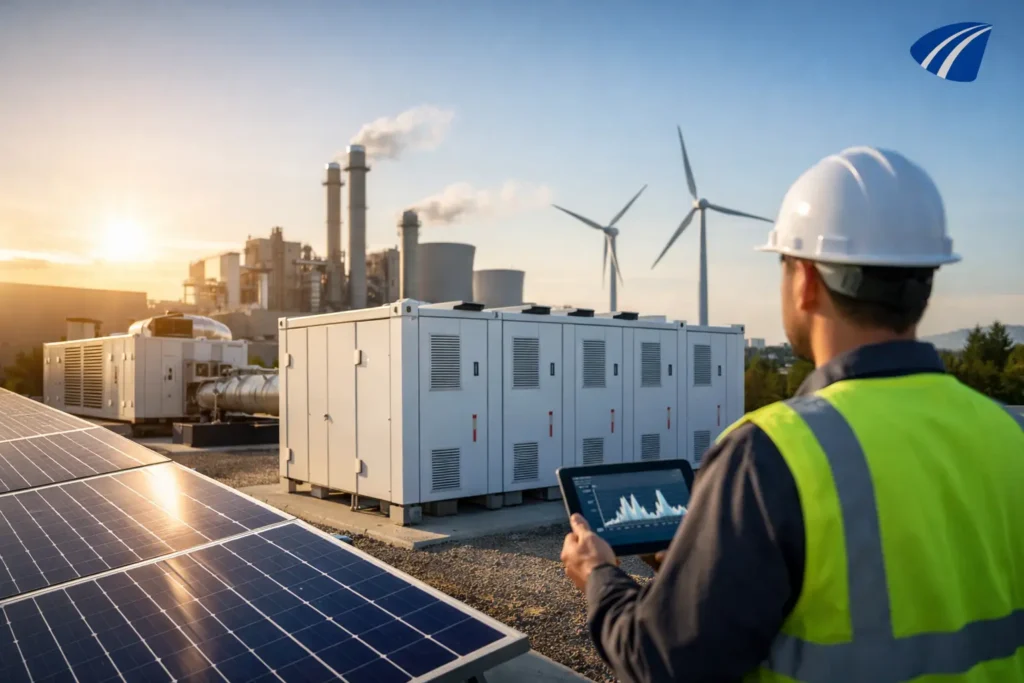
For an industrial facility, solar is not a standalone rooftop installation. It is part of an energy infrastructure that must operate in coordination with production, the distribution grid, existing transformer stations, reactive power compensation, backup power, and, where justified by the consumption profile, an energy storage system.
Planning Solar for an Industrial Facility Starts With Consumption, Not the Roof
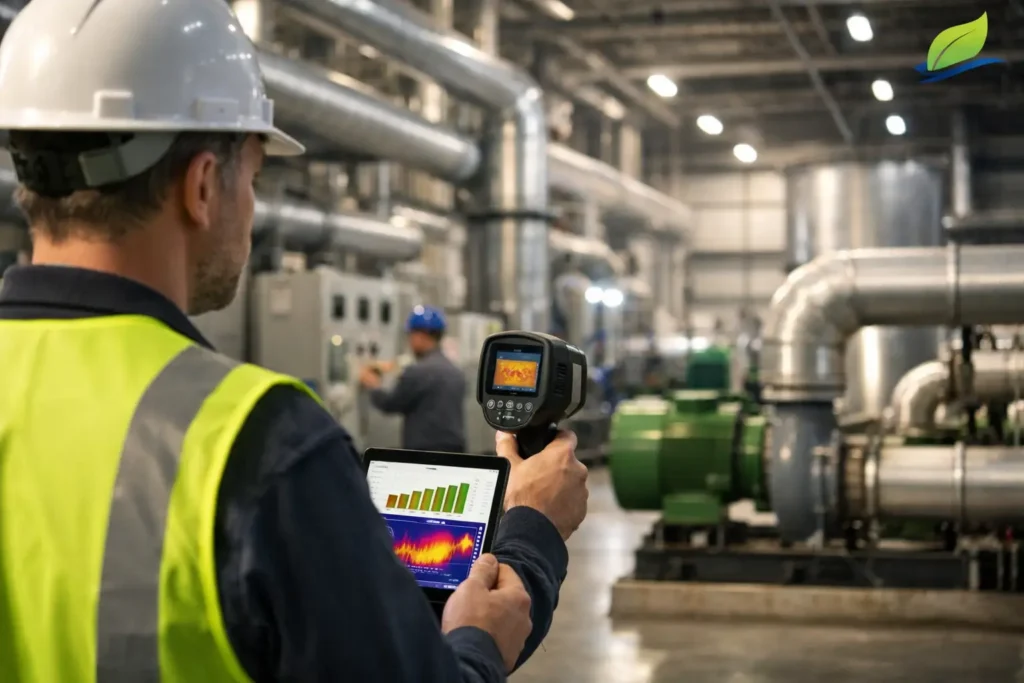
The first documents to review should not be roof drawings, but electricity bills and consumption measurements. At least 12 consecutive months of data should be analyzed, and an even longer period for facilities with seasonal production. The objective is to determine when the facility consumes energy, the level of its base load, where peak demand occurs, and how closely consumption aligns with solar generation.
A production facility operating in two or three shifts usually has an excellent profile for direct consumption of solar energy. On the other hand, a warehouse that uses most of its energy at night will not achieve the same effect without careful system sizing or an energy storage solution. Solar generation is highest around midday, so it provides the greatest economic value when it directly supplies machinery, refrigeration systems, ventilation, compressors, pumps, or charging equipment during that period.
The analysis should include active and reactive energy, maximum demand, interval load profiles where available, and planned changes in production. A new production line, expansion of cold storage capacity, or fleet electrification can completely change the optimal power plant capacity within only two years. The project should therefore not be planned according to yesterday’s consumption, but according to a realistic energy scenario for the facility in the years ahead.
The Roof Is a Structure, Not Just Available Space
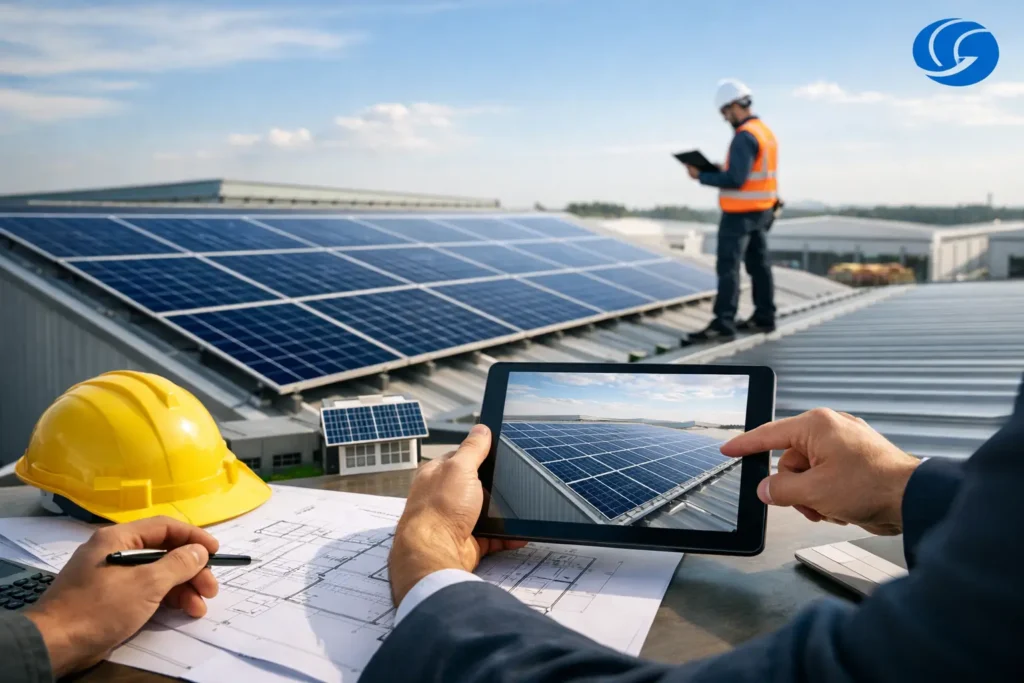
The roof of the facility must undergo a structural assessment before the module layout is defined. Steel structures, sandwich panels, trapezoidal metal sheets, flat roofs with waterproofing, and roofs on older buildings all have different limitations. The weight of the panels and mounting structure is only one part of the calculation. Wind, snow, higher wind uplift zones along roof edges, loads from maintenance walkways, and any ballast required on flat roofs often determine how much capacity can be installed safely.
The available area is further reduced by skylights, ventilation openings, chimneys, smoke vents, air-handling units, and mandatory maintenance access routes. Panels must not obstruct access to critical equipment or compromise the facility’s fire safety. On buildings with complex roof geometry, a well-designed module layout can significantly improve generation and reduce shading losses.
Roof orientation also requires an engineering assessment. A south-facing orientation provides the highest annual yield per installed kilowatt, but east-west orientations may be more commercially beneficial for companies whose consumption rises early in the morning and later in the afternoon. Maximum annual generation is not the only criterion. More important is the amount of energy the company can consume at the time it is generated.
Power Plant Capacity Is Determined by the Economics of Self-Consumption
The most common mistake is sizing the system according to the available roof area. A facility may physically accommodate a solar power plant with a capacity of several hundred kilowatts, but this does not mean that such a system is optimal for the investment. If a significant share of generated energy is exported to the grid under less favorable conditions or creates grid connection limitations, a larger system is not necessarily a better investment.
The calculation should show the relationship between directly consumed solar energy, energy imported from the grid, and surplus generation during every part of the year. In industrial applications, decisions are not made solely on the basis of estimated annual yield, but also through cash flow analysis, expected energy prices, maintenance costs, module degradation, equipment warranties, and business risks.
For some companies, it is rational to begin with a system that covers the stable daytime base load while allowing for phased expansion. For facilities with high daytime demand, installing a larger power plant immediately may be justified. The correct answer depends on the specific metering point, not on a universal formula based on the facility’s square footage.
Grid Connection and Electrical Infrastructure Determine Feasibility
Before equipment is purchased, the condition of the facility’s internal electrical system and grid connection capabilities must be assessed. This includes the existing transformer station, transformer capacity, main distribution boards, protection devices, cables, grounding quality, and communication with the distribution network. The solar power plant must be designed so that protection systems respond correctly in all operating modes, including the loss of grid voltage.
Industrial facilities often require partial reconstruction of their distribution systems, installation of additional metering devices, or adjustments to protection settings. These are not secondary costs that should be left until the end of the project. They are an integral part of the investment and directly affect the implementation schedule, budget, and operational safety of the facility.
Special attention must be given to coordination with UPS systems, diesel generators, and existing automatic transfer switches. For safety reasons, a standard grid-connected solar power plant shuts down when the public grid fails. If the facility must continue operating during a power outage, an integrated solution must be designed with an appropriate battery system, load management, and clearly defined priorities for critical loads.
When a BESS Changes the Investment Economics
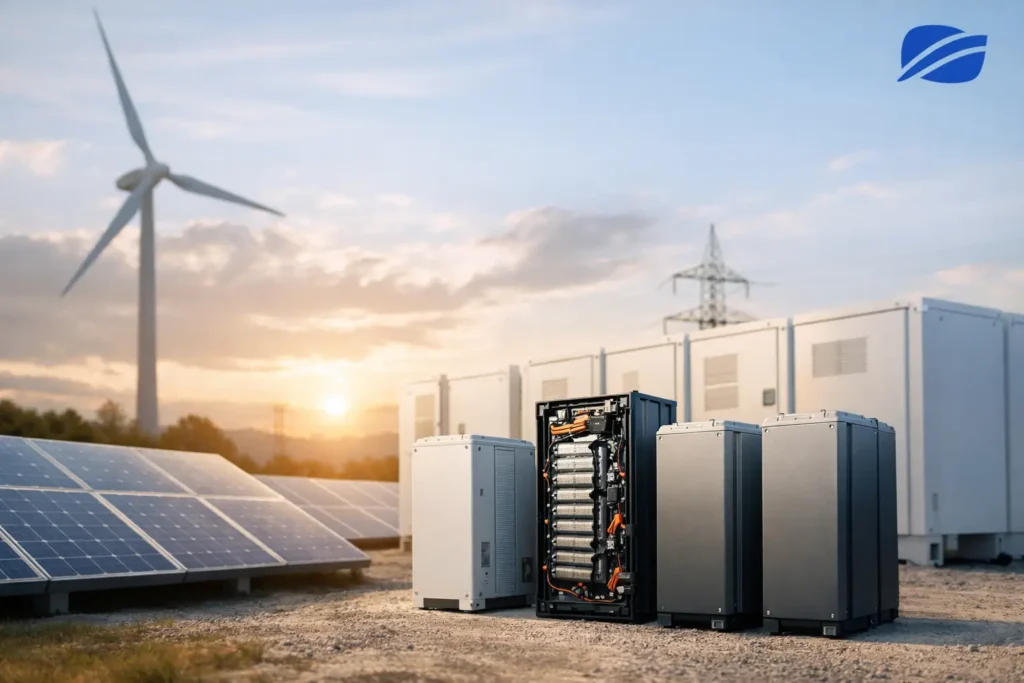
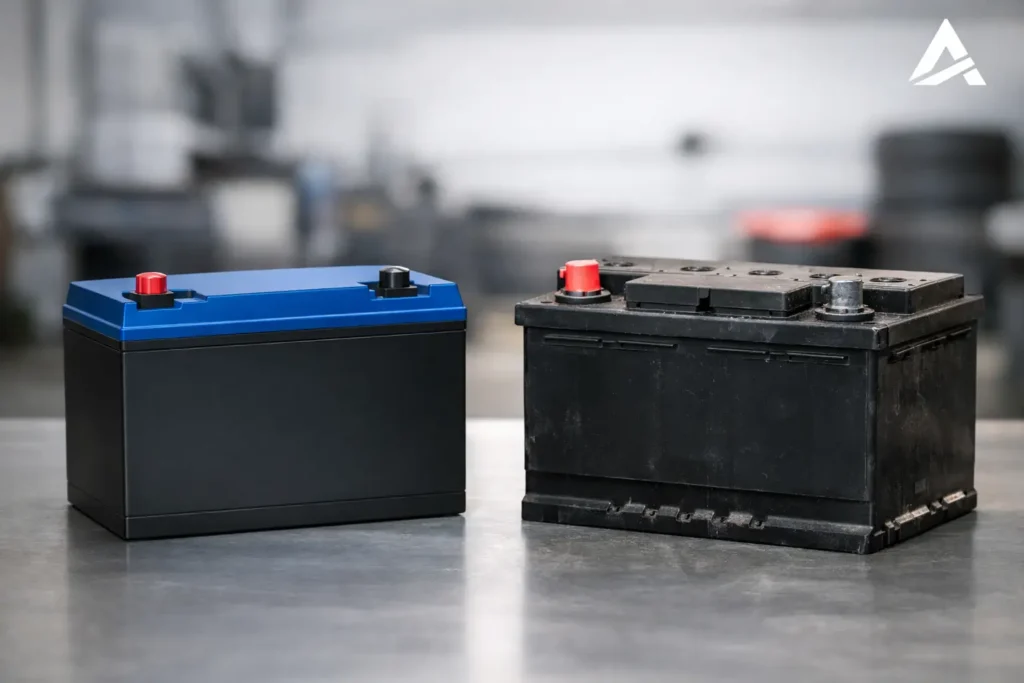
A BESS, or Battery Energy Storage System, is not a mandatory addition to every solar power plant. It becomes valuable when a company wants to increase the utilization of its own solar generation, reduce peak demand, maintain power for critical loads, or manage consumption during periods with less favorable tariffs.
In cold storage facilities, logistics centers, food production plants, data centers, and operations where downtime carries significant operational risk, storage should not be evaluated solely through the cost of each stored kilowatt-hour. Its value is measured through process continuity, protection of goods, avoided downtime, and greater control over energy use. However, the battery must be sized according to the power and duration of critical loads, not according to the desire to “store all surplus” solar energy.
A Feasibility Study Turns Assumptions Into an Investment Decision
A serious project begins with a feasibility study that connects energy, construction, electrical engineering, and finance. It should include a site survey, consumption analysis, roof and structural assessment, generation simulation, grid connection concept, bill of quantities, implementation schedule, and projected financial performance.
Equipment quality is important, but it is not sufficient. Modules, inverters, mounting structures, surge protection, cables, and remote monitoring systems must form a coordinated system. More importantly, the contractor must assume responsibility for design, installation, commissioning, and maintenance without shifting key risks between multiple suppliers.
Energize approaches projects on a turnkey basis because results are not measured by the number of installed panels, but by energy generation, system availability, and the long-term total cost of ownership. For an industrial facility, the lowest initial offer is rarely the lowest cost over the lifetime of the power plant.
Before approving the investment, request a scenario that clearly shows what happens if consumption increases, production shifts change, the facility expands, or grid power is interrupted. Solar for an industrial facility is a decision about the company’s energy strategy, which is why it should be planned with a partner who understands the entire system, not only the rooftop installation.