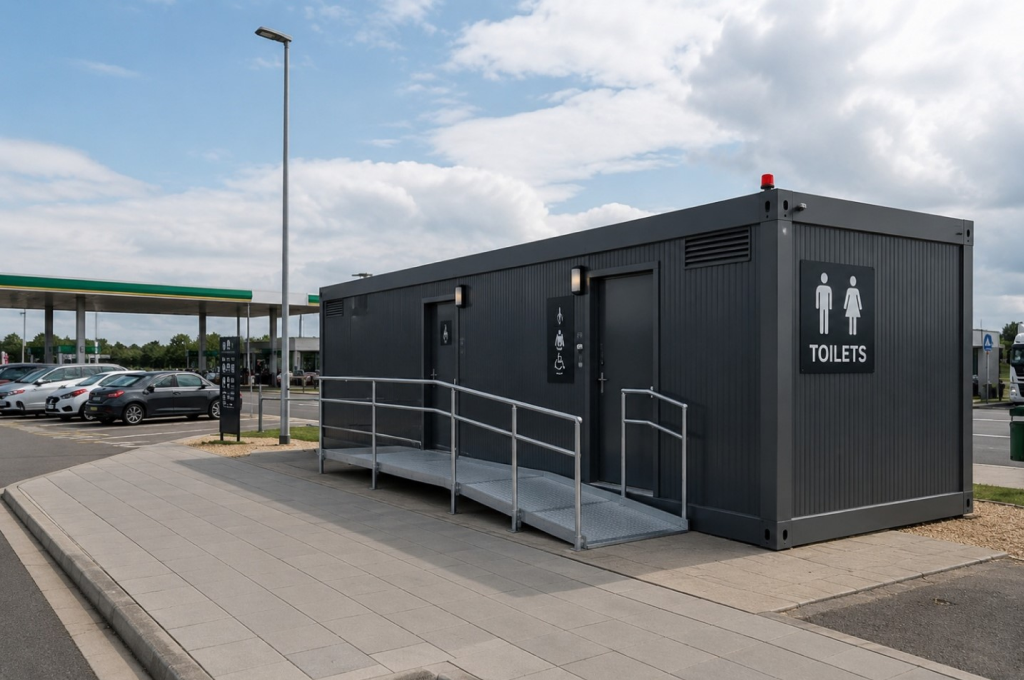
At good locations along highways and regional corridors, providing parking and a toilet is no longer enough. Travelers expect lighting, proper hygiene, device charging, Wi-Fi, a sense of safety, and the impression that the space is well thought out. This kind of infrastructure is often needed exactly where bringing in stable power is most expensive or slowest — at new locations still preparing to open, at seasonal stops, or in zones where connecting to the grid takes months and costs many times more than planned.
Locations run on their own schedule, the grid runs on its own
For operators of highway rest stops, truck stops and transit zones, this creates pressure from two directions. On one side, customer expectations are rising and competition between locations is growing — whoever opens first captures the traffic and the reputation. On the other, the opening window is often limited by a season, a concession agreement, or the simple logic of traveler flows that won’t wait.
Within that timeframe, a standard grid connection often isn’t feasible. Where a new location is being built on open ground, running the access network can take a quarter or longer, and the cost may exceed what the project can absorb in its first stage. A temporary diesel-generator solution brings its own set of problems — fuel, service, noise, breakdowns, and the impression left on the guest.
An energy foundation that arrives before the grid
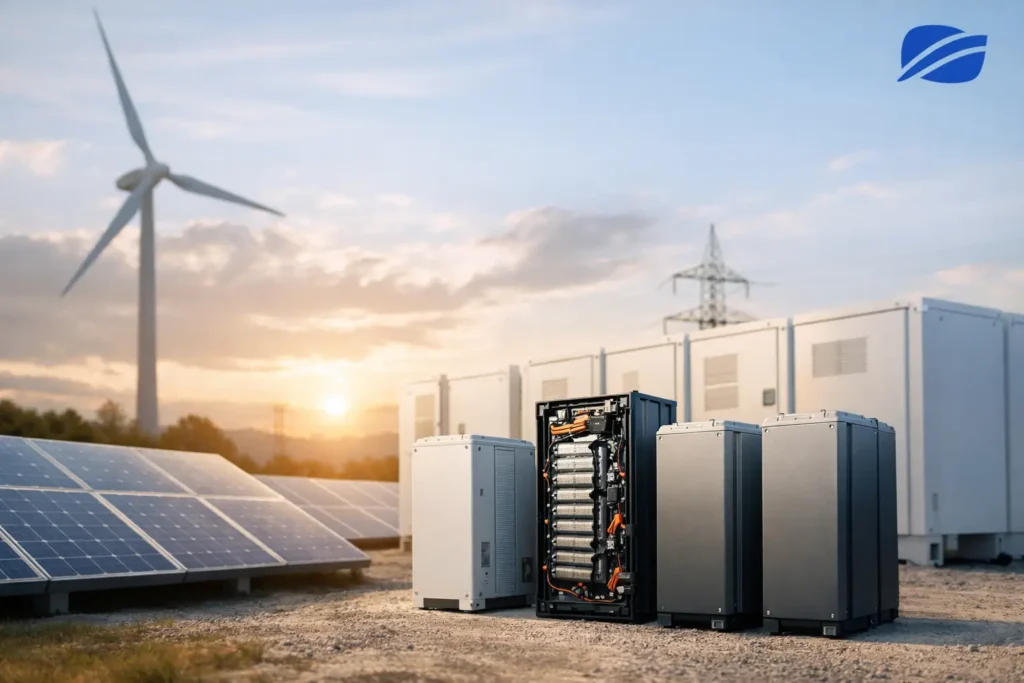
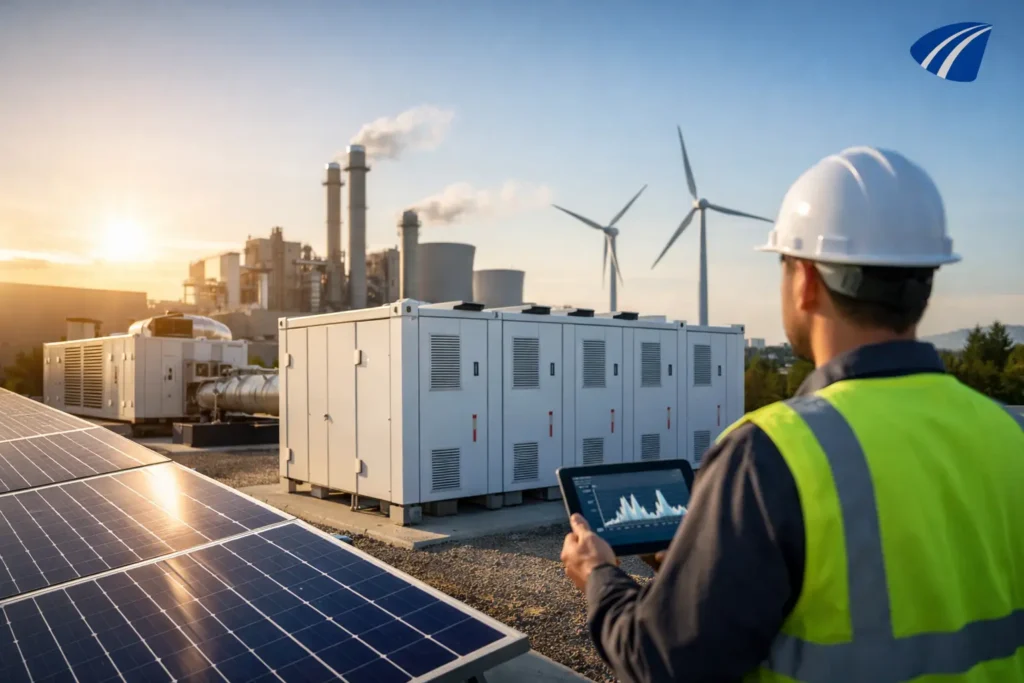
A modular solar system with battery storage solves both sides of the problem. The system is installed on site without waiting for a grid connection, collects energy during the day, and delivers it 24 hours a day through the batteries. That means lighting, the sanitary block, the staff work area and basic commercial functions can operate from the moment construction on the building itself is finished — not when the utility finally reaches the location.
The second advantage is modularity. If traffic grows, system capacity expands by adding new units. If it turns out the location works best only seasonally, the same investment can be moved to another spot — without losing equipment and without a new investment cycle.
Which locations benefit most from this
The clearest application is for new highway rest stops with traffic potential where the connection infrastructure still has to be built. A modular system lets the rest stop go live in its initial phase — lighting, sanitary facilities, staff space and basic commercial functions — and later, when it makes sense, additional capacity can be added or the grid connection can arrive.
The same applies to truck stops and transit zones along trucking routes. Reliability and hygiene standards are crucial here — a driver who once finds himself at an unreliable location will avoid it from then on. Independent power means that lighting, water and sanitary capacity work stably regardless of conditions on the local grid. A third group is tourist and seasonal stopping points — near national parks, lakes, wine routes and events along major roads — where the operating period is concentrated into a few months and fixed infrastructure can’t be justified.
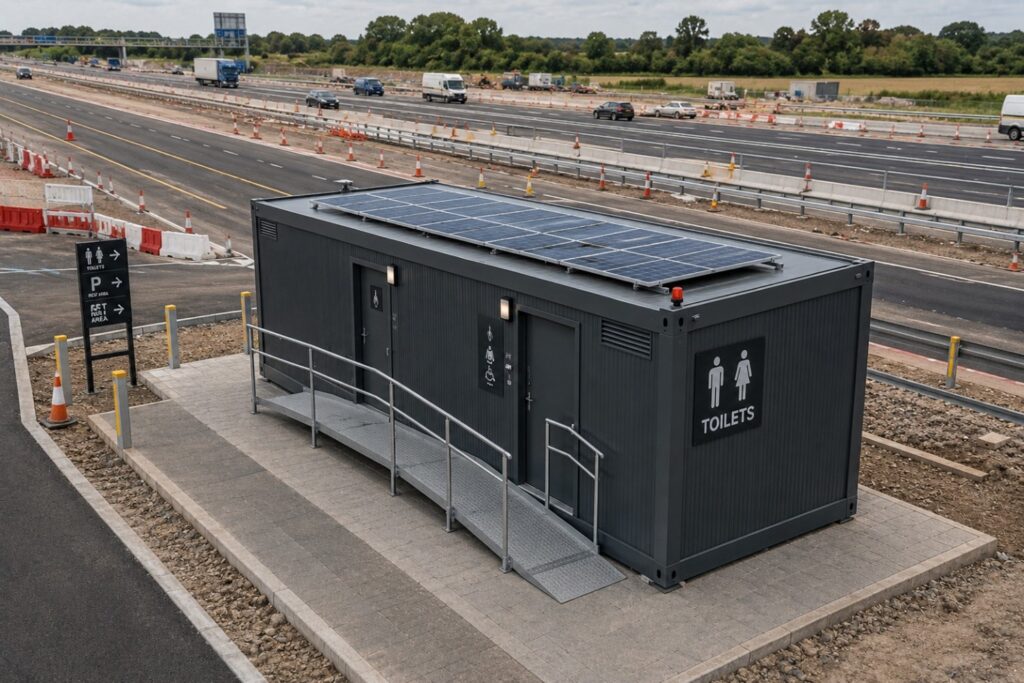
Value that doesn’t come down to the electricity bill
The biggest mistake on projects like these is to reduce the decision to the initial investment cost or to savings on the electricity bill. In practice, what matters more is what happens across the entire operating life of the location. How much revenue each month of earlier opening brings in. How much an outage or intervention costs when the grid goes down. What a predictable operating cost is worth in a business model with thin margins. And what the flexibility to relocate is worth on the day conditions at the site change.
Seen from that angle, it becomes clearest what a modular solar system actually delivers — an energy foundation that follows the rhythm of the location, not the other way around.