Surge Protection for Buildings: Lightning Does Not Have to Strike the Building to Cause Damage

After every major storm, service technicians see the same wave of failures: damaged routers, variable-frequency drives, boiler control systems, inverters, and cash registers. In most of these cases, lightning did not strike anywhere near the building. A surge was enough, a brief voltage spike that travelled through the electrical installation and reached the most sensitive equipment. This is precisely what a rooftop lightning protection system does not protect against.

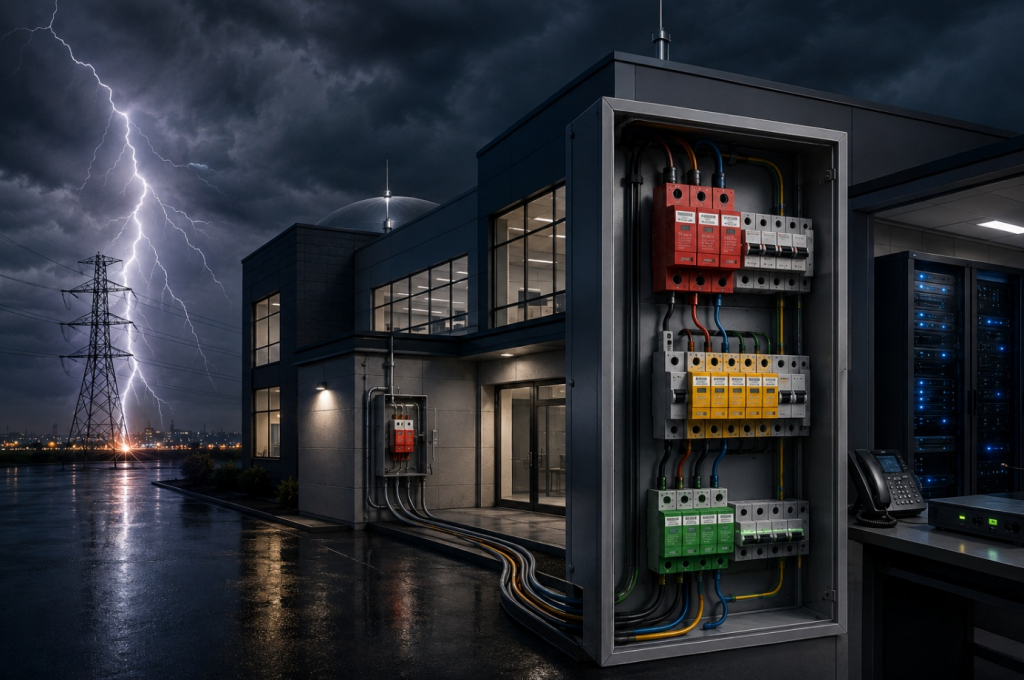
An external lightning protection system has one purpose: to conduct a direct lightning strike safely into the ground and protect the building from fire and structural damage. It does not protect the electronic equipment inside the building. Surges can also result from lightning strikes to the power grid or ground hundreds of metres away, from electromagnetic induction in conductors, and from switching operations within the electrical network itself. Complete protection therefore consists of two layers: external lightning protection and internal surge protection, using surge protective devices installed in electrical distribution boards.

Surge protection is designed in stages, like a series of dams along a river. Type 1 surge protective devices, installed at the point where the power supply enters the building, discharge the highest-energy part of the surge. Type 2 devices, installed in distribution boards, reduce the remaining overvoltage to a level that the electrical installation can withstand. Type 3 devices, installed close to the most sensitive equipment such as servers, control systems, and medical devices remove the final residual voltage.

Each stage has a specific function, and no single stage can replace the others. A protected power strip on its own, without the preceding protection stages, may provide a feeling of security, but not actual protection. A surge protective device is a relatively simple component, but its installation determines how effectively it performs. The connecting conductors must be kept short because every additional metre of conductor increases the voltage that appears during a surge.

The building must also have proper equipotential bonding, because a surge will seek alternative paths through metal structures, pipes, cable shields, and other conductive parts. Signal lines, network cables, antenna connections, and telecommunications lines require their own surge protective devices as well. Electronic equipment is often damaged through precisely these routes from the direction no one thought to examine. Within the overall budget of a building, surge protection is a minor expense, often comparable to the cost of a single failed variable-frequency drive. Surge protective devices also have status indicators and should be checked during regular electrical inspections, because a device that has discharged a major surge may need to be replaced.

A modern facility filled with electronics, from the boiler room to the production line, is expensive equipment connected to the lottery of the weather forecast when it has no surge protection. With properly designed protection, every storm brings one less concern.
How to Reduce Peak Demand With Battery Storage

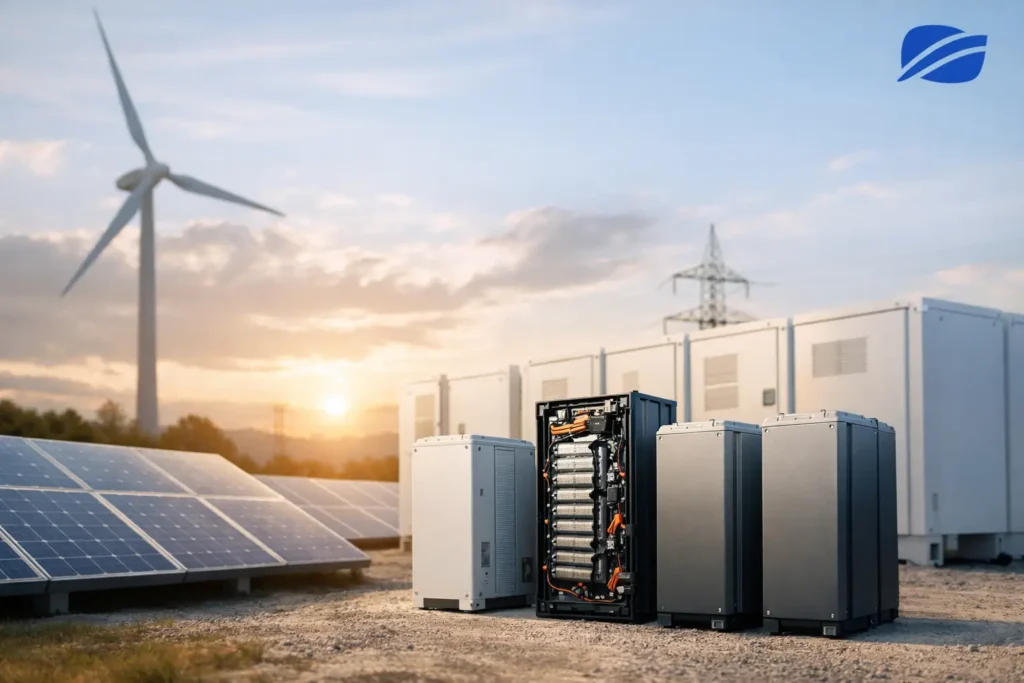
Learn how to reduce peak demand with battery storage, analyze energy consumption, and size a BESS for lower costs and reliable facility operation.

Guide to Factory Energy Audits and Lower Energy Costs

A Guide to Factory Energy Audits Shows Where a Facility Is Losing Energy, What to Measure, and How to Select Measures With a Clear Return on Investment and Lower Risk.

When Do Photovoltaic Systems for Businesses Pay Off?

Photovoltaic Systems for Businesses Reduce Energy Costs and Operational Risk. Learn How to Size a Solar Power Plant Based on Energy Consumption and Operating Profile.

Guide to EPC Contracts for Project Delivery

Guide to EPC Contracts: How to Define Scope, Timelines, Warranties, and Risks for the Successful Delivery of Solar and Energy Projects in Serbia Today.

How Much Does an Industrial UPS Cost in Serbia?

How Much Does an Industrial UPS Cost in Serbia? Learn What Determines the Investment Cost, How TCO Is Calculated, and What Should Be Included in the System Specification for an Industrial Facility.

Best Peak Shaving Solutions for Industry

The Best Peak Shaving Solutions Reduce Peak Demand, Electricity Costs, and Downtime Risk. Learn How to Accurately Size BESS, Solar, and Load Management Systems.

Guide to Powering Critical Infrastructure

Guide to Powering Critical Infrastructure: How to Design UPS Systems, Generators, Batteries, and BESS for Operational Continuity, Risk Management, and the TCO of Every Investment.

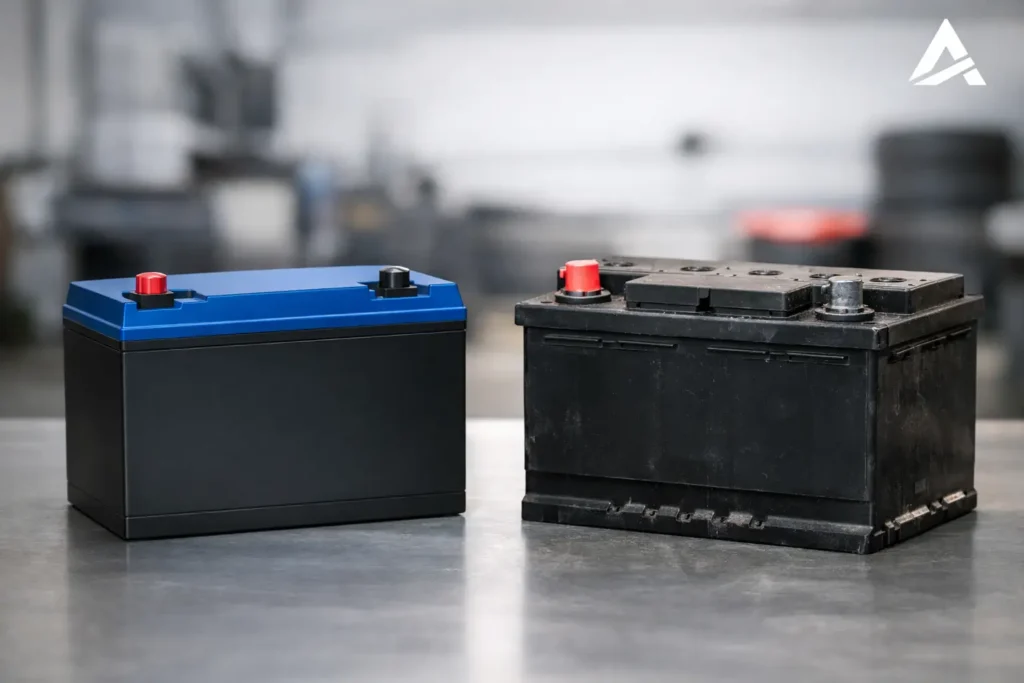
Lithium vs. Lead-Acid Batteries in Practice

Lithium vs. Lead-Acid Batteries: Compare Lifespan, Safety, Cost, and TCO for UPS, Solar Systems, and Critical Industrial Loads.

Learn more

Enter your information to receive more information on the selected topic

Planiraj svoju elektranu

Odgovorite na pitanja ispod kako bi naš inženjerski tim mogao da uradi studiju izvodljivosti nakon koje će vas kontaktirati.

Nakon dostavljanja podataka, naš stručni tim će analizirati Vaš zahtev i pripremiti personalizovanu ponudu sa predlogom optimalnog solarnog sistema za Vaš objekat. Kontaktiraćemo Vas kako bismo predstavili predloženo tehničko rešenje, očekivanu proizvodnju električne energije i odgovorili na sva Vaša pitanja u vezi sa realizacijom projekta.

Solarna elektrana omogućava dugoročno smanjenje troškova električne energije, veću energetsku nezavisnost domaćinstva i doprinosi očuvanju životne sredine korišćenjem energije iz obnovljivih izvora.

Planiraj svoju elektranu

Odgovorite na pitanja ispod kako bi naš inženjerski tim mogao da uradi studiju izvodljivosti nakon koje će vas kontaktirati.

Nakon dostavljenih podataka za izradu studije izvodljivosti, i kada naš inženjerski tim uradi studiju izvodljivosti, predlažemo da organizujemo sastanak gde bismo Vam prezentovali studiju. Takođe, tom prilikom ćemo detaljnije pričati o samoj investiciji i benefitima ulaganja u obnovljive izvore energije, kao i o mogćim otpisima putem dostupnih fondova (IPARD, RAS, EBRD).  

Pored uštede električne energije, solarnom elektranom možete generisati i dodatne benefite kao što su direktran uticaj na smanjenje emsije CO2 što može direktno uticati na konkurentnost prilikom izvoza na tržištu EU, kao i dodatne benefite uštede hlađenja.

Planiraj svoju elektranu

Izaberite tip objekta za koji želite da planirate solarnu elektranu