Production line downtime, PLC controller interruptions, or server failures do not occur only when the power grid goes completely offline. Even a brief voltage sag, frequency deviation, or power surge can disrupt operations, damage equipment, and jeopardize delivery schedules. That is why evaluating industrial UPS systems should not begin with a power rating catalog, but with an analysis of critical loads, the consequences of power interruptions, and the actual operational requirements of the facility.
An industrial UPS is far more than backup power during an outage. It is an active component of the electrical infrastructure that maintains power quality for automation systems, IT equipment, telecommunications, security systems, medical devices, control centers, and critical production processes. A properly engineered system provides valuable time for controlled shutdowns, bridges the startup period of diesel generators, or keeps essential operations running until stable grid power is restored.
Industrial UPS Systems by Topology
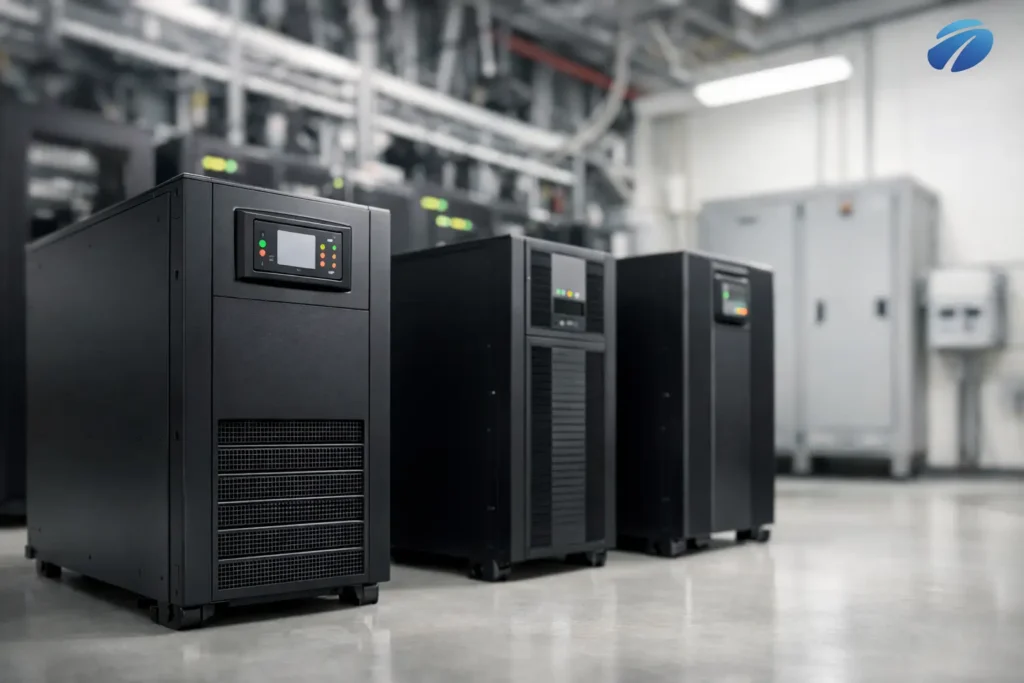
For demanding industrial applications, the most common choice is an online double-conversion UPS. This type of system continuously converts incoming AC power into DC and then back into clean, stable AC output. As a result, connected equipment remains isolated from most disturbances in the utility grid, with no transfer time to battery operation during a power outage.
This topology is the preferred solution for protecting server rooms, automated production lines, SCADA systems, laboratory equipment, and telecommunications infrastructure. While the initial investment and operating losses are higher than those of simpler UPS technologies, the evaluation should never end with the purchase price alone. A single unplanned production shutdown can easily cost more than the price difference between an average UPS and a properly engineered solution.
Line-interactive UPS systems can be a practical choice for smaller office environments and non-critical loads. However, their application in industrial facilities has clear limitations. They typically switch to battery power only after detecting a grid disturbance and are not designed for every load type or complex industrial electrical environment. For critical processes, especially where motors, variable frequency drives, welding equipment, or significant harmonic distortion are present an online double-conversion UPS is generally the more reliable foundation.
A third category includes modular UPS systems. Instead of relying on a single large unit, system capacity is distributed across multiple power modules that can be added as demand increases. Their key advantages include scalability, simplified maintenance, and support for redundant configurations. However, modularity alone does not guarantee higher availability. The quality of the system design, bypass configuration, battery architecture, and maintenance strategy ultimately determine whether these advantages are fully realized.
Monolithic or Modular UPS?
A monolithic UPS can be an excellent solution for well-defined, stable loads, particularly when a high single-unit capacity is required and available space, budget, or existing infrastructure favor a simpler architecture. Modular UPS systems become advantageous when future data center expansion, production growth, or N+1 redundancy is anticipated.
N+1 redundancy means the system includes one additional power module beyond the required operating capacity. If one module fails, the remaining modules continue supporting the load without interruption. Facilities with extremely high availability requirements may also implement more advanced architectures, including parallel UPS systems and independent power distribution paths. However, these solutions should be justified through a detailed risk assessment rather than selected simply because they represent more advanced technology.
UPS Capacity: kVA Is Not the Same as Actual Power Reserve
One of the most common design mistakes is sizing a UPS solely according to the combined nameplate ratings of connected equipment. Proper sizing requires evaluating active power (kW), apparent power (kVA), power factor, peak demand, inrush currents, and anticipated future load growth. A 100 kVA UPS is not automatically suitable for a 100 kW load, as the allowable output power factor depends on the specific UPS model and configuration.
Special attention should be given to non-linear loads. Rectifiers, IT power supplies, variable frequency drives, and many industrial devices generate harmonic distortion that affects power quality and increases thermal stress on the electrical system. The UPS must be designed to operate reliably under these conditions without unnecessary derating or compromising the performance of other connected equipment.
Maintaining a power reserve is essential, but excessive oversizing is not an optimal solution. A UPS that permanently operates at only a small fraction of its rated capacity may result in lower economic efficiency, higher initial investment, and less favorable operating performance. The objective is to design a system that supports realistic maximum demand, planned expansion, and the required redundancy level while maintaining optimal efficiency during normal operation.
Battery Runtime Must Match the Backup Scenario
The question, “How many minutes of battery autonomy are enough?” has no universal answer. If the UPS only bridges the period required for a diesel generator to start and stabilize, 10 to 15 minutes of backup time is often sufficient, with an appropriate safety margin. However, facilities without generators, production processes requiring longer uninterrupted operation, or applications that must complete manufacturing cycles may require significantly longer battery autonomy.
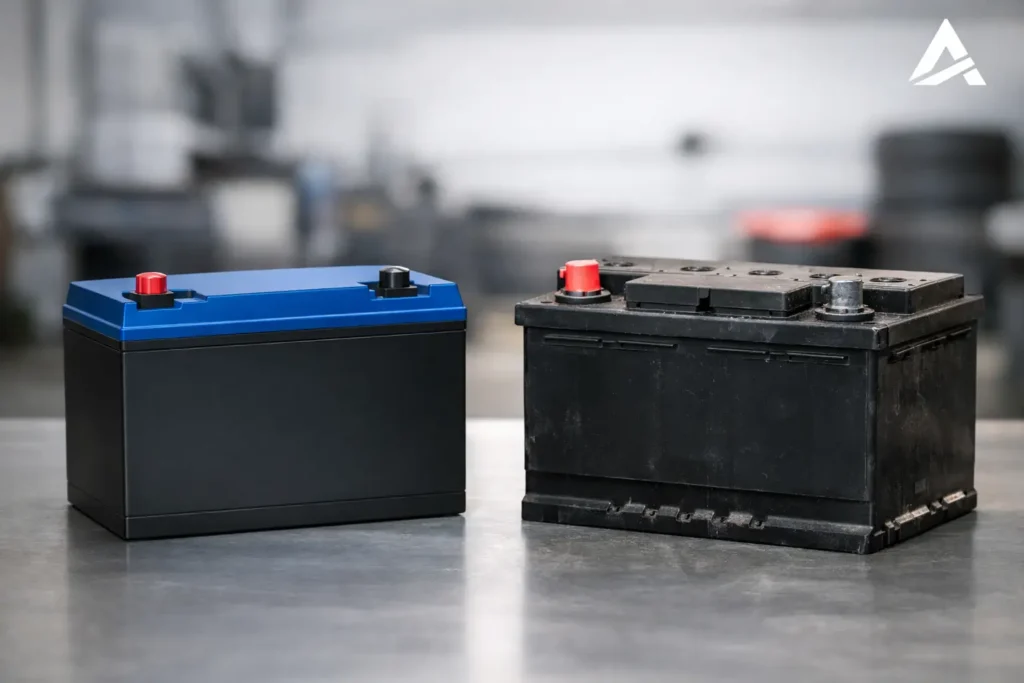
VRLA batteries remain a common choice because of their proven technology and broad availability. Lithium-ion batteries provide longer service life, lower weight and volume, better tolerance to frequent cycling, and more advanced monitoring capabilities. Although their initial investment is higher, systems designed for long service life and limited installation space often achieve a lower total cost of ownership.
Room temperature directly influences battery lifespan. A battery cabinet installed near a heat source without adequate ventilation or cooling will not deliver the performance specified in the design documentation. For this reason, the UPS, batteries, HVAC system, and monitoring infrastructure should never be treated as separate purchases, they must function as a single integrated system.
Input Power, Bypass, and Generator Compatibility: The Critical Details
UPS systems are often selected as standalone products, only for compatibility issues with existing generators, switchgear, or grounding systems to emerge during installation. The UPS input rectifier must be compatible with the generator’s capacity and its ability to respond to dynamic load changes. A high-quality UPS with low input harmonic distortion and a high input power factor can reduce generator sizing requirements, but calculations must always be performed for the specific installation.
A static bypass transfers the load to an alternative power source when the inverter cannot supply it, while a maintenance bypass allows servicing the UPS without shutting down critical equipment. Both play an essential role, but neither replaces stable UPS operation. If the utility grid itself has poor power quality, transferring the load to bypass may expose critical equipment to the very disturbances the UPS is designed to eliminate.
Facilities powered by multiple energy sources, including solar power plants, Battery Energy Storage Systems (BESS), diesel generators, and the utility grid require clearly defined power management priorities. A UPS is not a replacement for a large-scale energy storage system. Its primary role is to maintain power quality and continuity for critical loads, while a BESS can perform broader functions such as peak shaving, energy optimization, and energy management.
Total Cost of Ownership and Maintenance
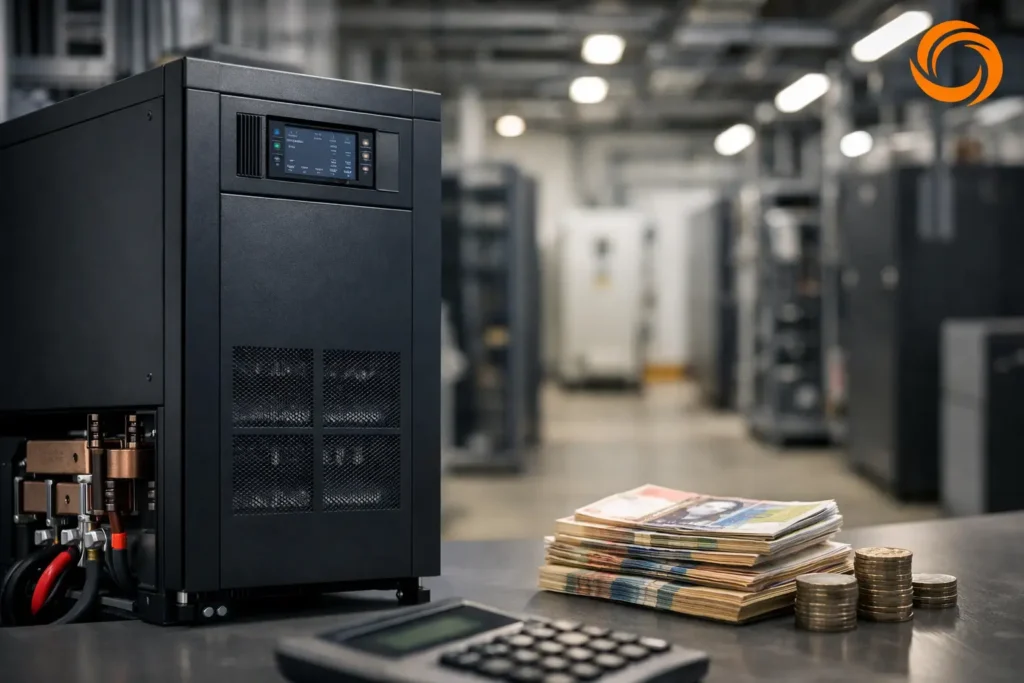
The purchase price of a UPS represents only one component of the investment. Total Cost of Ownership (TCO) also includes operating efficiency under actual load conditions, battery replacement costs, cooling requirements, maintenance availability, spare parts, future scalability, and the financial impact of downtime. Even a small difference in operating efficiency becomes significant in systems that run continuously, especially at higher power levels.
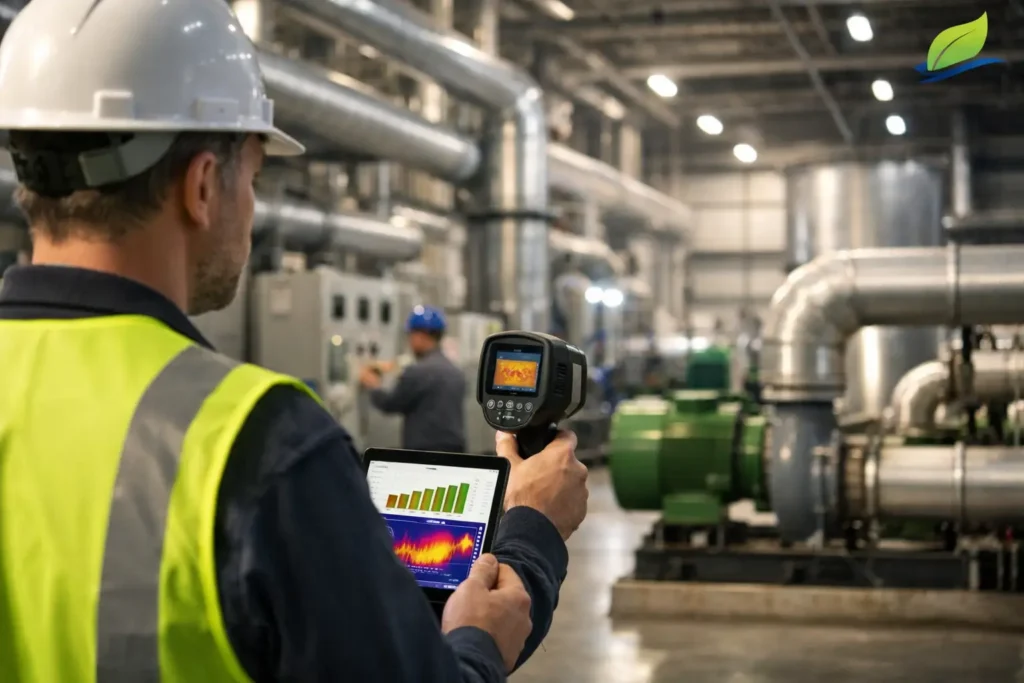
Preventive maintenance includes inspection of cooling fans, capacitors, electrical connections, alarm history, battery condition, and operating parameters. Battery evaluation goes beyond visual inspection. It requires electrical measurements, capacity testing where appropriate, and continuous monitoring capable of detecting degradation in individual battery blocks or modules before failures occur.
Remote monitoring further transforms maintenance strategies. Real-time alerts regarding temperature, overload conditions, battery health, or bypass operation enable corrective action before an incident occurs. For organizations operating multiple facilities, this level of visibility is often more valuable than individual technical specifications found in a product catalog.
Making the Right Decision
A successful UPS project begins with a detailed assessment of the existing electrical infrastructure, including load measurements, power quality analysis, inspection of switchboards, generators, available installation space, and cooling conditions. Critical loads, required battery autonomy, target availability, and future expansion plans should then be clearly defined. Only after these steps does selecting the UPS manufacturer, power rating, and battery technology become a meaningful business decision.
Energize approaches industrial UPS solutions as part of the facility’s complete energy architecture, from analysis and system design to installation, commissioning, and ongoing maintenance. This integrated approach minimizes the risk of installing a high-quality UPS into an electrical infrastructure that ultimately limits its performance due to inadequate power distribution, insufficient cooling, or improperly configured generator systems.
Before approving any UPS investment, request a detailed operating scenario covering utility outages, module failures, battery discharge events, and maintenance procedures. When every one of these scenarios has a verified solution, a UPS is no longer viewed as an emergency expense, it becomes a measurable investment in protecting production, data, and the company’s reputation.