The New EU Rule Transforming Energy Storage and EV Markets

As the energy transition accelerates, batteries are becoming the backbone of modern energy systems. With the rise of solar, BESS, and electric vehicles, the European Union has introduced a new concept: the battery passport.

This is not just a technical update – it represents a major shift in how batteries are produced, used, and recycled.

What is a battery passport?

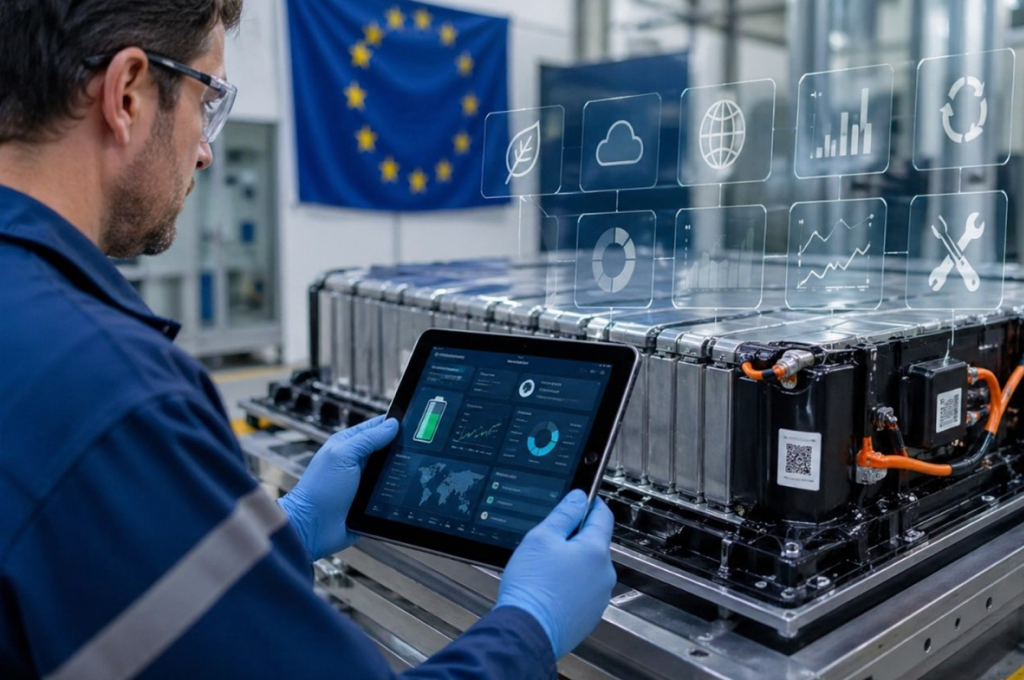
A battery passport is a digital record that tracks a battery throughout its entire lifecycle – from raw material extraction to recycling.

It is introduced under EU Battery Regulation 2023/1542 and will become mandatory from 2026/2027.

Think of it as a digital identity card for batteries.

What information does it include?

Battery passport includes wide range of data: origin of raw materials (lithium, cobalt, nickel), carbon footprint, technical specifications, performance and capacity over time, usage history, maintenance data and recycling information.

Why is the EU introducing it?

1. Sustainability

Reduce environmental impact of battery production

2. Transparency

Provide clear insight into battery quality and origin

3. Circular economy

Enable reuse and recycling (“second life”)

4. Market control

Prevent low-quality imports. Main regulation is EU Battery Regulation 2023/1542.

Even though the regulation is EU based, there are few differences between countries. In Germany, there is still very strict enforcement, and strong focus on CO₂ tracking.

France has sustainability-focused incentives and subsidy-linked compliance

Netherlands has quite advanced digital integration, and also they have smart grid alignment.

Poland and Romania are in development phase, so they have very investment-driven approach. For Balkans, and Serbia, battery passport is still not mandatory, even though it is required for EU exports, and recently became part of tender requirements.

Impact on industries

BESS will have mandatory compliance, easier financing and higher investor trust. EV charging will have better asset monitoring and improved performance tracking. For solar + storage, it becomes part of project documentation.

What does this mean?

If you want to enter the EU market, battery passports are mandatory. You will need to have compliant battery suppliers, updated documentation and digital tracking systems.

Companies that adopt early, ensure transparency and align with EU standards will benefit most.

Conclusion

The battery passport is more than regulation – it’s a new industry standard.

It will reshape battery trade, improve quality, accelerate clean energy adoption.  For companies in CEE and the Balkans, this is a major opportunity.
Surge Protection for Buildings: Lightning Does Not Have to Strike the Building to Cause Damage

After every major storm, service technicians see the same wave of failures: damaged routers, variable-frequency drives, boiler control systems, inverters, and cash registers.

How to Read Your 15-Minute Load Profile

Every company with semi-direct or indirect metering already possesses one of the most valuable documents about its own energy use, yet most have never opened it.

How to read a transformer nameplate

Every transformer carries a metal plate covered in numbers and markings that look like a code meant for the initiated.

Where Can a Substation Be Located on a Site?

The location of a substation is often decided last, after the layout of the buildings has already been drawn, leaving the station to occupy whatever corner remains.

How to Plan Energy Redundancy for an Industrial Facility

A power interruption lasting only a few seconds can stop an automated production line, bring down server infrastructure, disrupt the cold chain, or generate significant scrap.

Air Conditioning for Server Rooms Without Downtime

A server room rarely fails because of a single major fault.

HVAC for Data Centers Without Compromising Performance

The cooling system in a data center does not operate in the background.

How Much Does an Industrial BESS Cost in Serbia?

A BESS is not a solution that can be selected based on a single catalogue price.

Learn more

Enter your information to receive more information on the selected topic

Planiraj svoju elektranu

Odgovorite na pitanja ispod kako bi naš inženjerski tim mogao da uradi studiju izvodljivosti nakon koje će vas kontaktirati.

Nakon dostavljanja podataka, naš stručni tim će analizirati Vaš zahtev i pripremiti personalizovanu ponudu sa predlogom optimalnog solarnog sistema za Vaš objekat. Kontaktiraćemo Vas kako bismo predstavili predloženo tehničko rešenje, očekivanu proizvodnju električne energije i odgovorili na sva Vaša pitanja u vezi sa realizacijom projekta.

Solarna elektrana omogućava dugoročno smanjenje troškova električne energije, veću energetsku nezavisnost domaćinstva i doprinosi očuvanju životne sredine korišćenjem energije iz obnovljivih izvora.

Planiraj svoju elektranu

Odgovorite na pitanja ispod kako bi naš inženjerski tim mogao da uradi studiju izvodljivosti nakon koje će vas kontaktirati.

Nakon dostavljenih podataka za izradu studije izvodljivosti, i kada naš inženjerski tim uradi studiju izvodljivosti, predlažemo da organizujemo sastanak gde bismo Vam prezentovali studiju. Takođe, tom prilikom ćemo detaljnije pričati o samoj investiciji i benefitima ulaganja u obnovljive izvore energije, kao i o mogćim otpisima putem dostupnih fondova (IPARD, RAS, EBRD).  

Pored uštede električne energije, solarnom elektranom možete generisati i dodatne benefite kao što su direktran uticaj na smanjenje emsije CO2 što može direktno uticati na konkurentnost prilikom izvoza na tržištu EU, kao i dodatne benefite uštede hlađenja.

Planiraj svoju elektranu

Izaberite tip objekta za koji želite da planirate solarnu elektranu