A power outage lasting just a few seconds may not seem dramatic until it stops a production line, shuts down servers, interrupts pump operation, or causes data and material loss. That is why the question of UPS or diesel generator is not a minor technical detail, but a business decision that directly affects operational continuity, process safety, and total cost of ownership.
In practice, the wrong choice rarely happens because the equipment itself is poor quality. Much more often, the problem arises when the solution is selected in isolation, without analyzing the load profile, critical consumers, required autonomy time, and real grid failure scenarios. That is precisely where the difference lies between simply purchasing equipment and designing an energy system that truly protects the business.
UPS or Diesel Generator – It Is Not the Same Question for Every Company
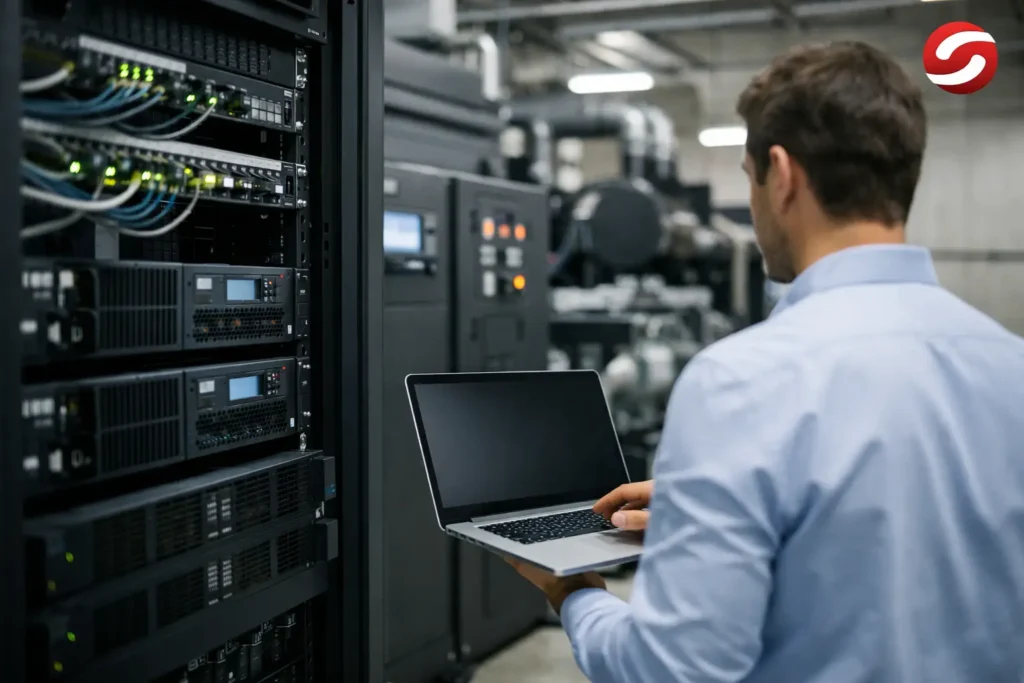
If you operate a data center, pharmaceutical production facility, cold storage system, telecom site, or automated industrial plant, the cost of a power outage is not the same. In some environments, the issue is merely a loss of comfort. In others, it means production downtime, batch failure, system restart, or violation of SLA obligations.
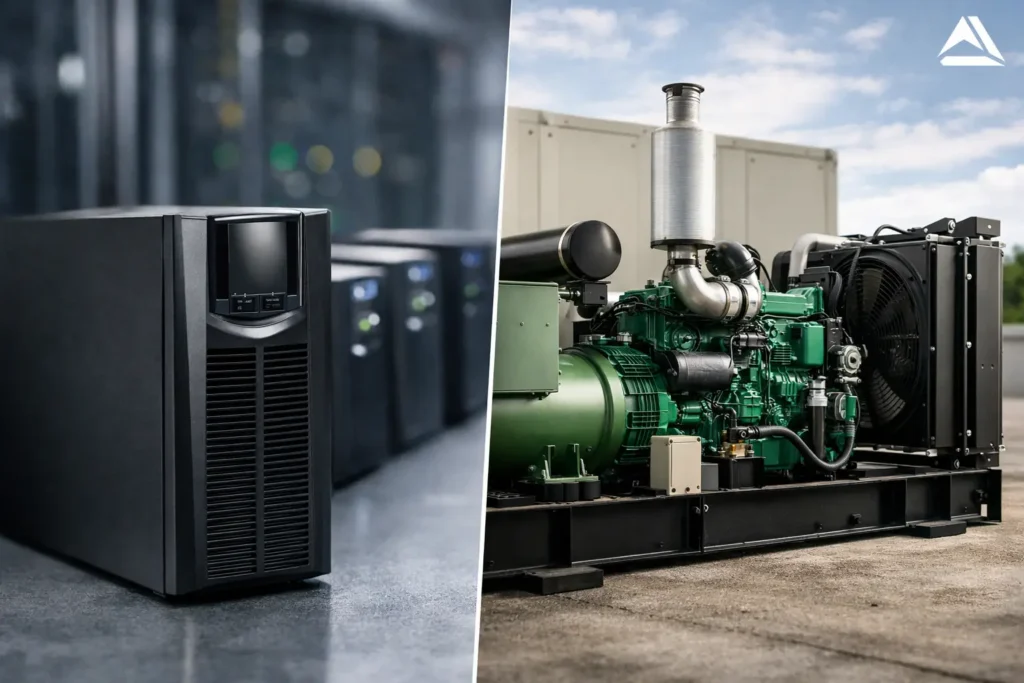
That is why the answer to the question of UPS or diesel generator depends primarily on what exactly you are protecting. A UPS solves one type of problem, while a generator solves another. A UPS provides immediate backup power transfer without interruption. A diesel generator provides longer autonomy, but it requires time to start and assume the load. This is the fundamental technical difference, and almost everything else derives from it.
When a UPS Is the Right Choice
A UPS is designed for situations where even a millisecond of interruption is unacceptable. These include server rooms, IT racks, telecommunications equipment, SCADA systems, medical devices, process automation, and all consumers that require stable voltage and uninterrupted continuity.
In a properly sized UPS system, the transfer to battery power is instantaneous. This means the equipment continues operating without shutdowns, resets, or oscillations that could cause failures. In facilities where power quality is just as important as energy availability itself, a UPS is not a backup option but a primary layer of protection.
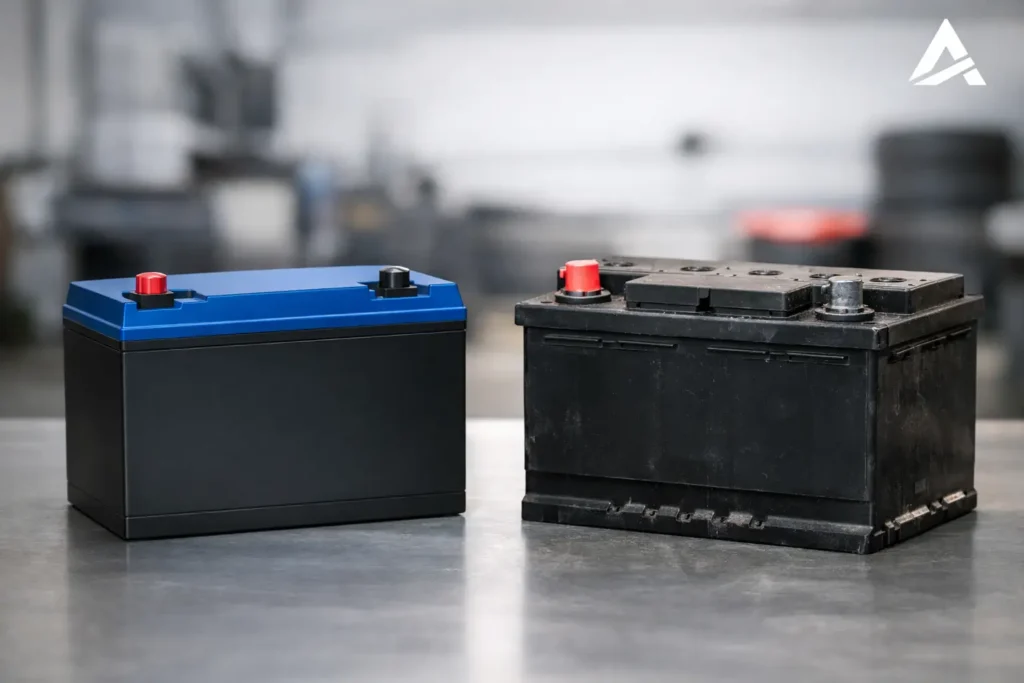
However, a UPS also has its limitations. Its autonomy depends on battery capacity and load power. If the facility needs to operate for hours during an extended outage, a standalone UPS is usually not the most rational solution. It may be technically feasible, but it often becomes expensive due to larger battery capacity requirements, additional space, cooling demands, and future battery replacement costs.
In other words, a UPS is the best solution where immediate response and short-to-medium autonomy are required, or as a bridge to another energy source.
Where a UPS Delivers the Greatest Value
A UPS provides the greatest value when the cost of a single short interruption exceeds the cost of the system itself. This is often the case in data centers, banking infrastructure, PLC-controlled production facilities, laboratories, and buildings with sensitive electronics. In such scenarios, it is not only important that power exists, but that it remains stable and uninterrupted.
A UPS also offers advantages in indoor environments, with lower noise levels and no local exhaust emissions. For many commercial facilities, this simplifies integration, especially when the solution is being implemented into existing infrastructure.
When a Diesel Generator Is the Right Choice
A diesel generator makes sense when longer autonomy is required and a short transfer time is acceptable. In industry, logistics, commercial buildings, construction, agriculture, and infrastructure systems, generators are often the most efficient way to provide multi-hour or multi-day operation during grid outages.
Its main advantage is scalability of autonomy. If fuel is available and the system is properly sized, operation can continue significantly longer than with a standalone battery solution. This is particularly important for facilities outside urban areas, critical high-power processes, and locations with unreliable grid infrastructure.
However, a generator is not the same as a UPS. It requires startup, synchronization, and load transfer time. During that short interval, sensitive equipment without additional protection may shut down. In addition, generators require regular servicing, load testing, fuel quality management, ventilation, exhaust systems, fire protection measures, and adequate acoustic insulation.
If a generator is purchased simply because it appears cheaper per kilowatt, while operating conditions, servicing, and startup reliability risks are ignored, the overall cost calculation can change very quickly.
Where a Generator Delivers the Greatest Value
A diesel generator provides the greatest value in systems where long-term energy availability is critical. This includes cold storage facilities, pumps, industrial plants, construction sites, distribution centers, commercial buildings, and backup power systems for larger installations. Wherever loads operate for extended periods and relying solely on batteries is unrealistic, a generator becomes the rational choice.
This is especially important at higher power capacities. The greater the load, the faster battery-based solutions enter the zone of very high investment costs. At that point, generators become the more logical option, provided the system is properly engineered and supported by a reliable maintenance strategy.
UPS or Diesel Generator According to TCO Logic
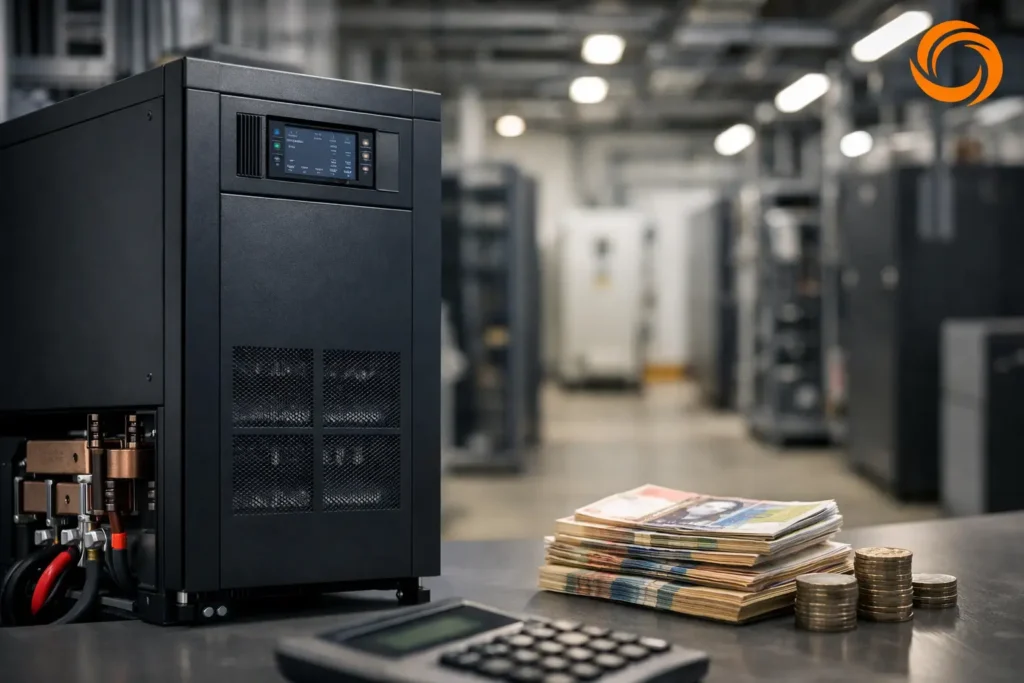
A serious decision cannot be based solely on initial purchase price. It is necessary to evaluate TCO – Total Cost of Ownership throughout the system lifecycle. This includes procurement, installation, fuel, batteries, servicing, periodic testing, spare parts, space requirements, ventilation, noise management, regulatory compliance, and downtime risk.
With UPS systems, the largest long-term cost is usually related to batteries and their operating conditions. High temperatures significantly shorten battery lifespan, making climate control and room management essential rather than secondary considerations. With generators, servicing, fuel, consumables, and regular startup reliability testing dominate operational costs.
It is also important to analyze how the facility actually uses backup power. If outages are short and infrequent, a UPS may offer better economics. If outages are long and more frequent, a generator may be the more rational solution. If the facility requires both sensitive equipment protection and long autonomy, the answer is almost always a combination of systems.
In Most Cases, the Best Solution Is UPS Plus Diesel Generator
In serious facilities, the question of UPS or diesel generator is often incorrectly framed because the choice is rarely one or the other. The real choice is the system architecture in which the UPS instantly takes over the load, while the diesel generator provides extended autonomy after startup. This approach is the standard wherever interruptions are unacceptable and systems must continue operating for hours.
In this configuration, the UPS protects critical consumers from the moment of grid failure until the generator stabilizes. The generator then assumes long-term power supply, while the UPS continues protecting against micro interruptions, voltage drops, and other disturbances. This is far more reliable than expecting a single device to handle every scenario.
That is why system design must begin with load segmentation. Not every part of the facility requires the same level of protection. Critical production lines, servers, automation, and security systems can remain on UPS protection, while less sensitive or large consumers can wait for generator takeover. This optimizes investment costs without compromising reliability.
How to Choose the Right Solution for Your Facility
The first question is not which equipment you want, but how much interruption your operation can tolerate. If the answer is zero seconds, a UPS is mandatory. The second question is how long the system must operate without the grid. If the answer is several minutes, a UPS may be sufficient. If the answer is several hours, a generator becomes necessary. If both requirements exist simultaneously, a combined solution is practically the only serious option.
The next step is analyzing the type of load. Motors, compressors, pumps, servers, HVAC systems, production lines, and sensitive electronics do not behave the same way during startup and do not have the same backup power requirements. Equally important is load prioritization determining what must operate immediately, what can tolerate delay, and what does not need to operate during outages at all.
The third step is evaluating site conditions. Equipment space, ventilation, acoustics, fire protection, service access, fuel storage, room temperature, and future capacity expansion often determine whether the project is truly sustainable and how much it will actually cost.
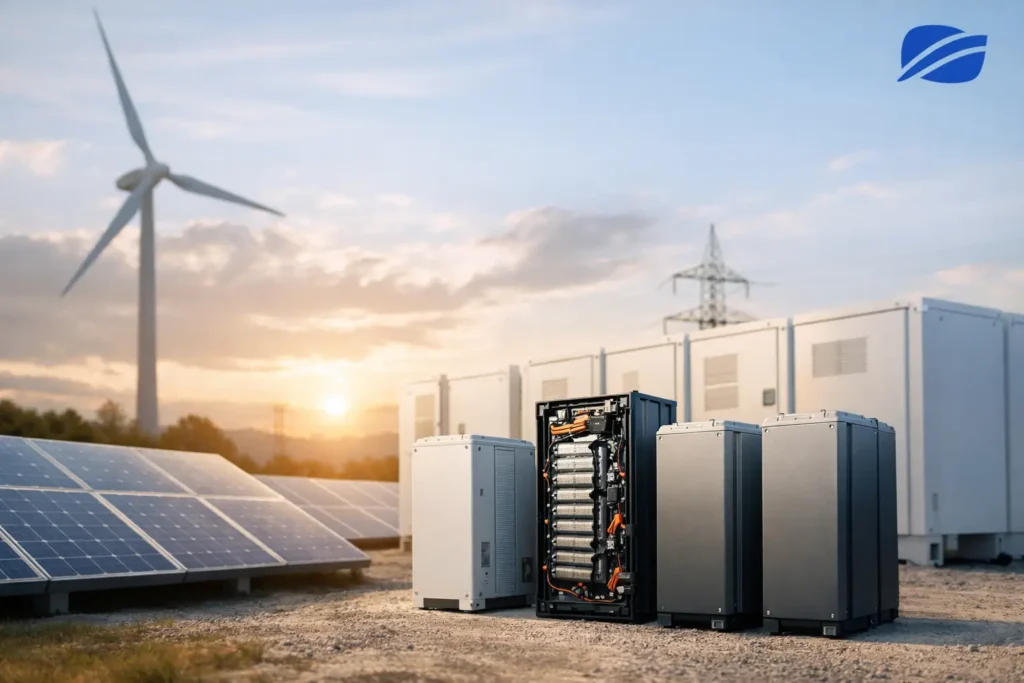
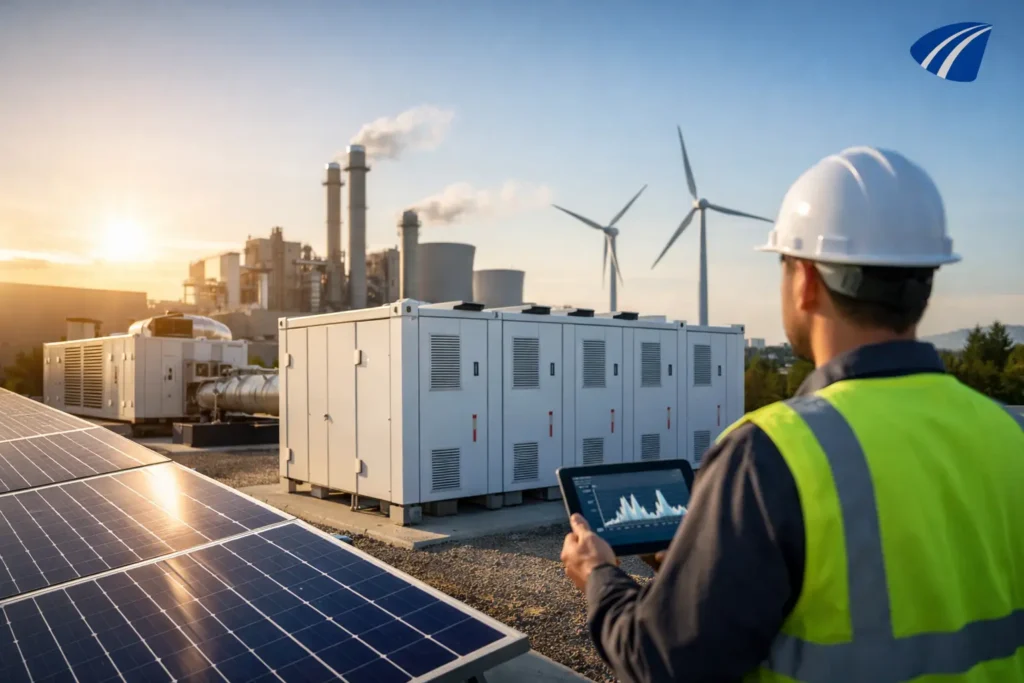
Finally comes integration. Today, backup power should not be viewed separately from solar power plants, battery storage systems, HVAC infrastructure, and energy management. When these elements are designed together, the result is not only outage protection but also improved energy efficiency, lower operational costs, and greater consumption control. This is where the difference emerges between isolated equipment procurement and a serious energy solution, the approach through which Energize guides clients from analysis to implementation.
If you are choosing between a UPS and a diesel generator, do not start with catalogs, start with the risks you want to eliminate. The most expensive system is not the one with the highest purchase price, but the one that fails precisely when you need it the most.