An electricity bill in a factory does not increase linearly. It impacts multiple cost components at once – energy consumption, contracted demand, peak loads, and the cost of every production interruption. That is why an example of a solar power plant for a factory should not be viewed as a promotional scenario, but as an investment decision model that must withstand both technical and financial scrutiny.
In industry, there is no room for incorrect sizing. A solar plant that is too small leaves significant savings unrealized. A solar plant that is too large can negatively affect project economics if the consumption profile has not been properly analyzed. Real value is created only when solar generation is aligned with the factory’s actual operating regime, existing electrical infrastructure, and production plans for the coming years.
What a Good Solar Power Plant Example for a Factory Looks Like
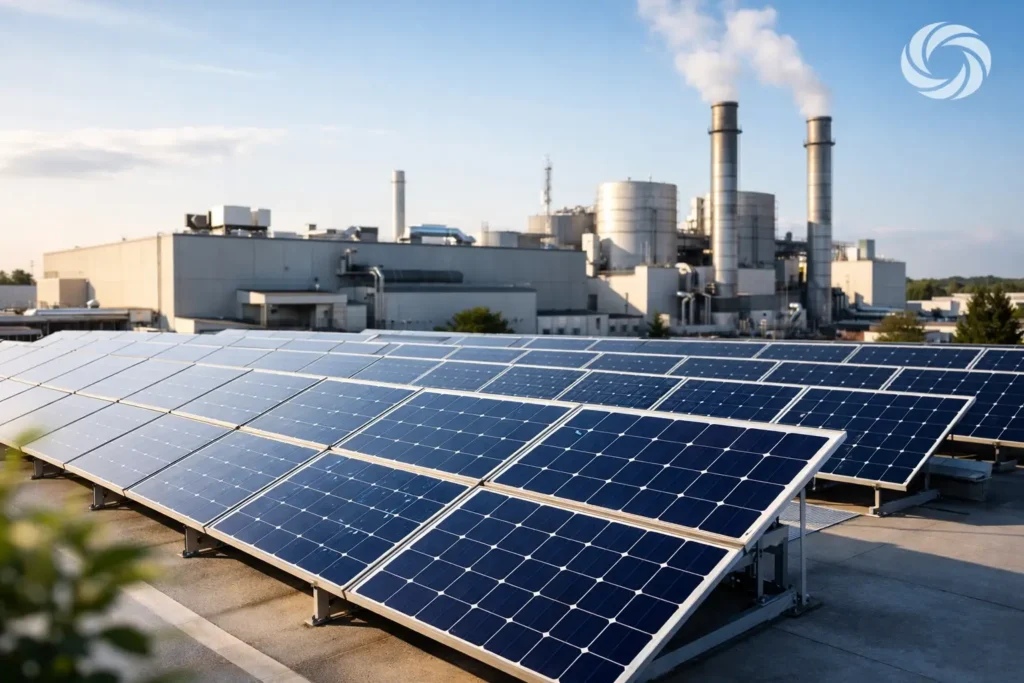
Let us consider a typical manufacturing facility in Serbia with roof space suitable for installation, operating primarily in a single shift with partial activity during a second shift, and consuming approximately 1,200,000 kWh annually. Such a factory often has pronounced daytime consumption, which is favorable for solar because most of the generated energy is consumed immediately rather than exported to the grid.
In this case, a solar power plant ranging between 600 and 800 kWp would typically be considered, depending on available roof area, roof load capacity, building orientation, and permitted grid connection conditions. If we take a 700 kWp system as an example, annual production can be expected to range from approximately 770,000 to 910,000 kWh, depending on location, tilt angle, and shading conditions. For industrial facilities with strong daytime consumption, the self-consumption rate is often high, which directly improves project profitability.
In practical terms, this means that the factory can cover a significant portion of its daily energy demand through its own generation, reduce electricity imports from the grid, and decrease exposure to rising energy prices. If electricity prices for businesses remain influenced by market volatility, every kilowatt-hour generated on-site gains additional strategic value.
Key Parameters That Determine the Investment
When management requests numbers, it is not enough to calculate how many panels fit on the roof. A serious analysis begins with an hourly consumption profile because this reveals how much solar energy will be directly utilized. A factory whose highest consumption occurs between 8 AM and 5 PM is typically far more suitable for a photovoltaic system than a facility whose production is concentrated during nighttime hours.
The next step is assessing the electrical infrastructure. It makes a significant difference whether the power plant is connected to an existing low-voltage distribution system, through a medium-voltage substation, or within a more complex setup involving multiple metering points. The condition of the main switchgear, protection systems, transformers, and control equipment can affect the overall investment more than the price difference between solar modules themselves.
The third factor is the building structure. A trapezoidal sheet metal roof, reinforced concrete slab, or sandwich panel roof each presents different technical requirements. Structural analysis is not a formality but a prerequisite for ensuring the system is safe and sustainable over the long term. In industrial facilities, panel layouts often need to be coordinated with chimneys, skylights, HVAC equipment, and maintenance access corridors.
What Is the Real Return on Investment?
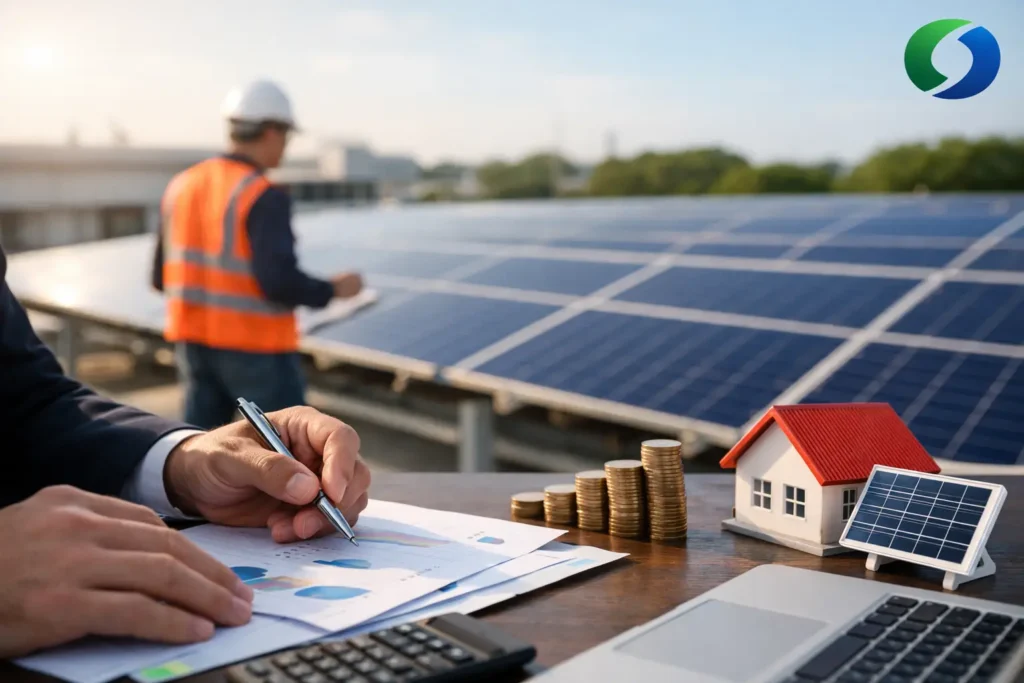
The most common question is not whether solar works, but when the investment pays back. The answer depends on electricity prices, self-consumption rates, financing structure, and project quality. For factories with stable daytime consumption, payback periods are often within a commercially attractive range, especially when projects are based on real operational data rather than optimistic assumptions.
For a 700 kWp system, the business case can be highly compelling if most of the generated energy is consumed on-site. This avoids purchasing more expensive electricity from the grid and creates direct operational savings. Combined with long equipment lifespans, manufacturer warranties, and reduced exposure to market price fluctuations, a solar power plant becomes infrastructure investment rather than an expense.
However, there are situations where expectations should be adjusted. If a factory operates primarily at night, if the roof presents technical challenges, or if there are significant grid connection limitations, the financial model must be more conservative. In such cases, a different system size, phased implementation, or integration with a BESS energy storage system may be considered.
When Solar Is More Than Just Solar
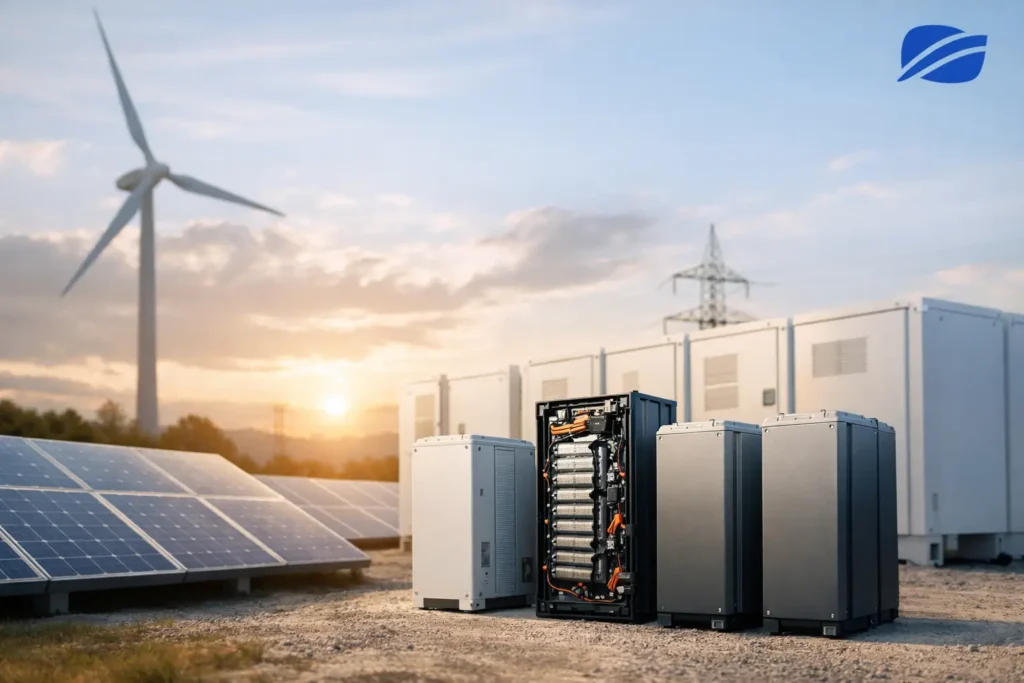
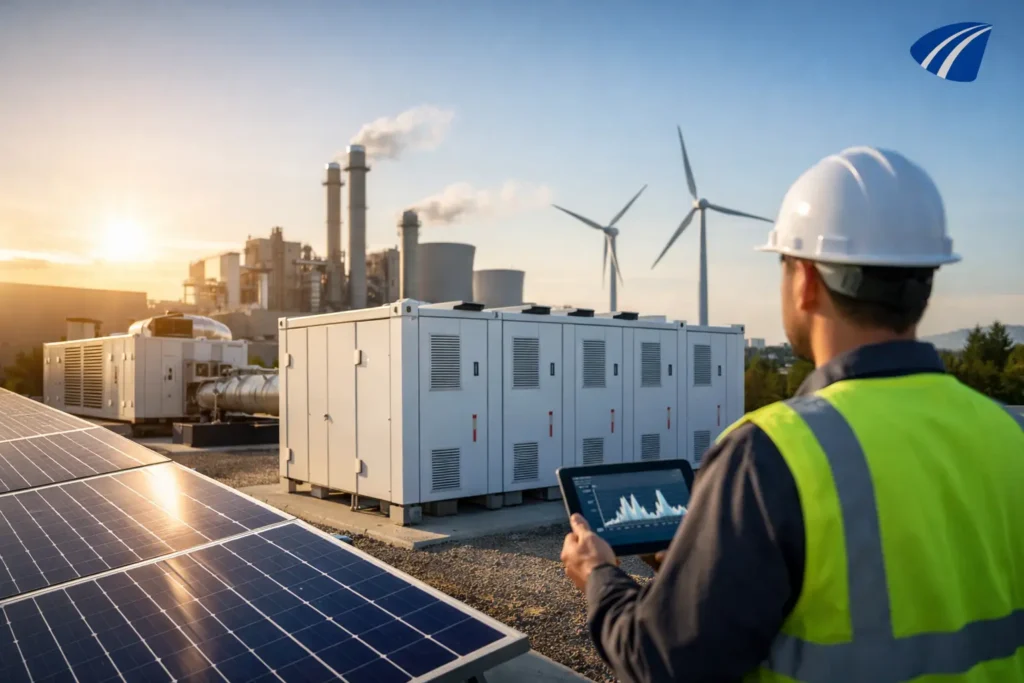
For part of the industrial sector, a photovoltaic power plant alone is not a complete solution. If a facility operates sensitive processes, faces costly downtime risks, or requires consumption stabilization, solar should be considered together with storage, UPS systems, and a broader power management strategy. This is where the difference between equipment procurement and energy system engineering becomes evident.
Battery energy storage is not mandatory in every project. In many factories, solar without batteries already delivers excellent results. However, where load spikes exist, tariff structures affect economics, or greater energy autonomy is required, BESS can significantly increase the value of the investment. This is particularly true when management evaluates not only the cost per kilowatt-hour but also the cost of operational interruptions.
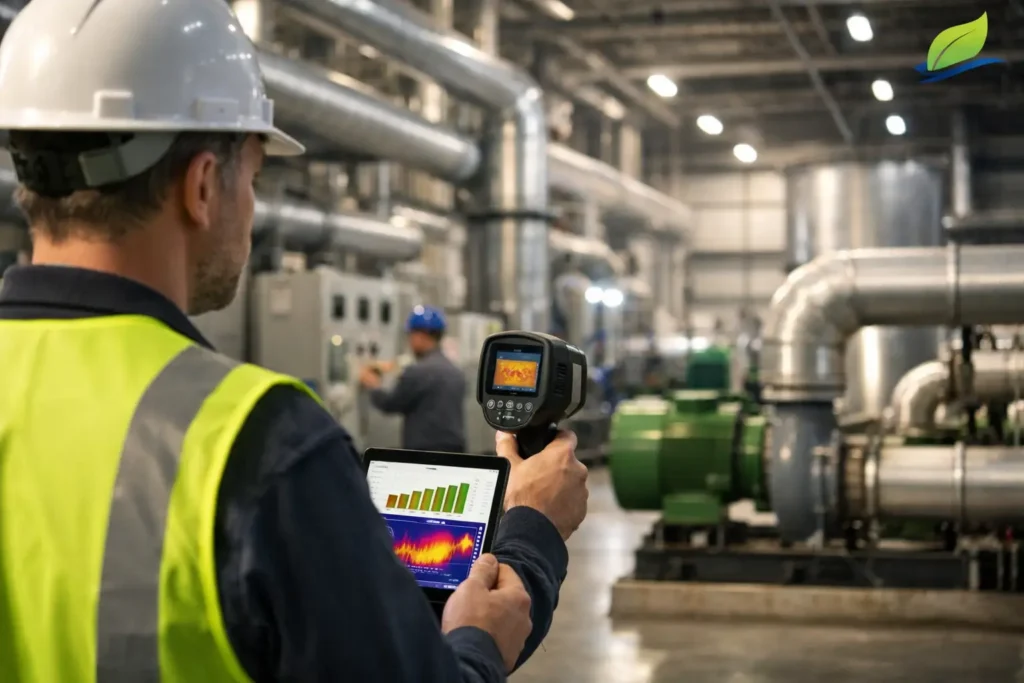
That is why a serious project example does not end with panels and inverters. It also addresses how the system performs during summer peak loads, what happens during voltage disturbances, how production and consumption are monitored, and whether there is room for future expansion.
A Practical Sizing Example
Assume a food industry factory with high daytime peak demand, substantial refrigeration loads, and annual consumption distributed relatively evenly throughout most of the year. The roof is structurally suitable, largely free from shading, and the grid connection allows implementation without costly upgrades.
In such a case, a system of approximately 800 kWp may be a rational solution. It does not need to cover the factory’s entire consumption – and in most cases, it should not attempt to do so. The goal is not energy self-sufficiency at any cost, but maximum technical and financial efficiency. If the solar plant covers the most expensive and most predictable portion of daily consumption, the investment gains strong business logic.
A well-designed project in this scenario includes high-quality modules, industrial-grade inverters, reliable mounting structures, string- or inverter-level monitoring, and a clearly defined maintenance plan. The difference between an average and a premium solution is not visible only on the first day of operation. It becomes evident through stable energy production, fewer interventions, and lower total cost of ownership over time.
Where Companies Most Often Make Mistakes
The first mistake is making decisions based solely on the lowest cost per installed kilowatt. While this may seem rational during procurement, it often results in lower-quality equipment, weaker engineering, and higher operational risks. In industry, a cheaper start can lead to a more expensive system lifecycle.
The second mistake is designing the system without sufficient consumption data. Monthly utility bills are not enough for accurate sizing. Hourly or more detailed consumption profiles are required to understand when energy is actually being used. Without this information, the investor is purchasing an estimate rather than a solution.
The third mistake is ignoring future changes. If a factory plans capacity expansion, a new production line, process electrification, or additional cooling systems, the solar power plant must be integrated into that growth strategy. A system that is optimal today may no longer be optimal in two years if it has not been designed with scalability in mind.
Why the Turnkey Model Matters in Industrial Projects
Industrial investors are not simply purchasing solar panels. They are purchasing accountability for results. When feasibility studies, engineering, installation, commissioning, and maintenance are distributed among multiple parties, the risk of delays, inconsistencies, and responsibility gaps increases significantly.
That is why serious projects require a partner who understands both energy systems and industrial operations. This means being capable of integrating the solar plant with the factory’s existing infrastructure, recognizing regulatory requirements, and evaluating the investment through a TCO perspective rather than focusing solely on the initial price. This is where the difference between a technical contractor and a strategic energy partner becomes clear.
In the Serbian market, this approach is becoming increasingly important because companies are no longer looking only for savings. They seek predictable operating costs, greater business resilience, and infrastructure solutions that can support future growth. When solar, storage, and energy management are engineered as a single integrated system, a factory gains far more than a lower electricity bill.
How to Assess Whether Your Factory Is a Good Candidate
If your facility consumes significant amounts of energy during the day, has suitable roof or ground space available, and operates in an environment where business continuity is critical, there is a strong possibility that a solar power plant could provide substantial value. However, the final answer should not be based on assumptions but on a feasibility study built on real data.
Such a study evaluates consumption profiles, infrastructure conditions, regulatory requirements, expected energy production, financial models, and opportunities for future system upgrades. Only when these factors are clearly understood can management make a decision that is both technically sound and commercially justified.
If you are planning an investment, do not ask only for the system price. Ask for a clear model showing how the power plant will operate within your facility, how much energy it will realistically replace, and how it will fit into the company’s broader energy strategy. At that point, an example of a solar power plant for a factory stops being a theoretical concept and becomes a concrete business decision.