Electricity costs are no longer just an operational expense. For many companies in Serbia, they have become a direct factor of competitiveness especially in manufacturing, logistics, the food industry, and facilities with continuous operations. That is why the question of how profitable a solar power system is no longer a marketing question, but an investment one and the answer depends on the consumption profile, operating conditions, energy prices, and the quality of system design.
In properly dimensioned systems, solar power typically delivers measurable savings from day one. However, serious analysis does not stop at estimating monthly bill reductions. True profitability is calculated through total cost of ownership, system lifespan, expected production, maintenance, potential energy storage, and stability of consumption throughout the year.
What Determines Solar Profitability
The biggest mistake is evaluating profitability solely based on equipment cost per kilowatt. Two systems with the same capacity can deliver completely different financial results. The reason is simple, consumption patterns differ, tariff structures differ, and site conditions differ.
For businesses, the relationship between daytime consumption and daytime production is critical. If the facility consumes most of its energy during the day when solar output is highest the self-consumption rate is high, and the investment pays back faster. If consumption peaks occur in the evening, at night, or on weekends, part of the system’s potential remains unused without battery storage.
Profitability is also influenced by roof orientation, shading, available surface area, grid connection capacity, inverter quality, system losses, and overall equipment reliability. That is why a serious evaluation is not based on assumptions, but on feasibility studies and real production modeling for a specific location.
When Payback Is the Fastest
The fastest returns are achieved by systems aligned with stable daytime consumption. These are typically manufacturing plants, cold storage facilities, distribution centers, office buildings, retail chains, and facilities with high daytime HVAC loads. In such cases, the solar system does not generate energy “for the grid,” but directly offsets consumption and reduces the purchase of expensive electricity.
For households, profitability is also strong, but more sensitive to consumption habits. A home that is empty during the day and consumes most energy in the evening has a very different profile compared to a household using heat pumps, daytime appliances, or operating under a prosumer billing model.
In practice, payback periods often range from 5 to 9 years, but this is not universal. For users with high daytime consumption and well-optimized system sizing, the period can be shorter. For facilities with lower self-consumption rates or less favorable roof geometry, it may be longer. The lifespan of a high-quality solar system significantly exceeds the payback period, meaning it continues to generate financial benefits long after the investment has been recovered.
Why a Larger System Is Not Always More Profitable
A common misconception is that profitability increases proportionally with system size. This is not necessarily true. If the system produces more energy than the facility can economically utilize, additional capacity does not deliver the same financial value as the optimally sized system.
That is why precise system sizing is more important than aggressive oversizing. A well-engineered project aims for optimization not maximum capacity.
How Profitability Is Calculated in Practice
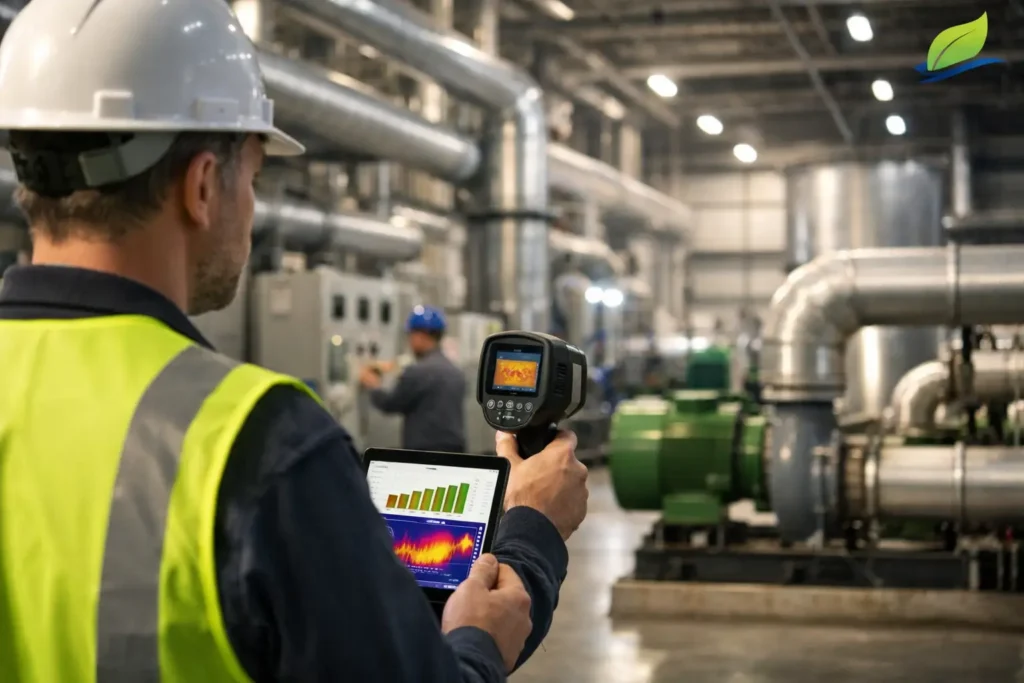
A proper financial model starts with annual consumption, hourly load profiles, and expected system production. It then models how much of the generated energy is consumed on-site, how much is exported to the grid, and the financial value of that energy balance under the applicable billing model.
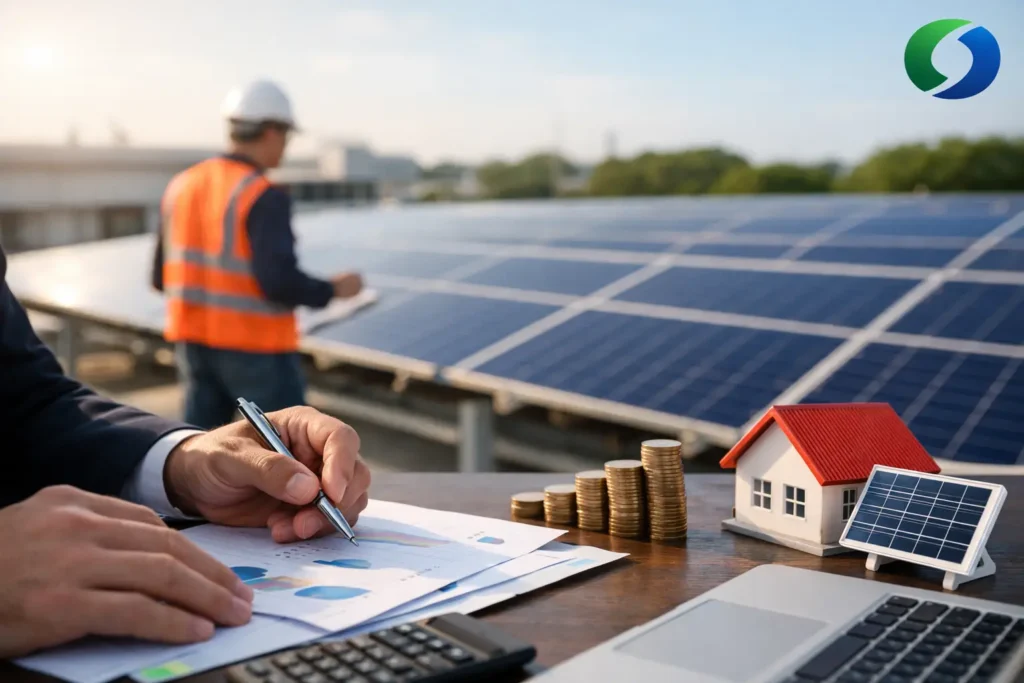
Next come investment and operational parameters: equipment costs, installation, design, grid connection, maintenance, and potential replacement of key components over the system’s lifetime. Only when all these factors are included in a single model can a reliable answer be given on how profitable a solar system is for a specific facility.
An additional layer of analysis includes future electricity price growth. The more expensive grid electricity becomes, the more valuable each kilowatt-hour generated by the system is. This is why solar is not only a cost-saving measure, but also protection against price volatility.
TCO Matters More Than Initial Price
Investors often compare offers based solely on total project cost. While understandable, this is not sufficient. Lower-cost panels, weaker inverters, or poorly executed structures may reduce up-front investment but increase losses, downtime risk, and long-term operating costs.
In energy systems, the key factor is not who is cheapest at the beginning, but who delivers the best performance over 20+ years. That is why the Total Cost of Ownership (TCO) approach is far more rational than comparing initial prices alone.
Solar for Businesses – Beyond Financial Savings
For commercial users, profitability is often reduced to lower electricity bills, but the real value is broader. Solar systems improve cost predictability, reduce exposure to energy price fluctuations, and strengthen a company’s energy position during market instability.
For companies working with international clients, additional factors include ESG requirements, supply chain decarbonization, and increasing pressure to rely on sustainable energy sources. In this context, a solar power system is not just technical equipment, it is part of a broader business strategy.
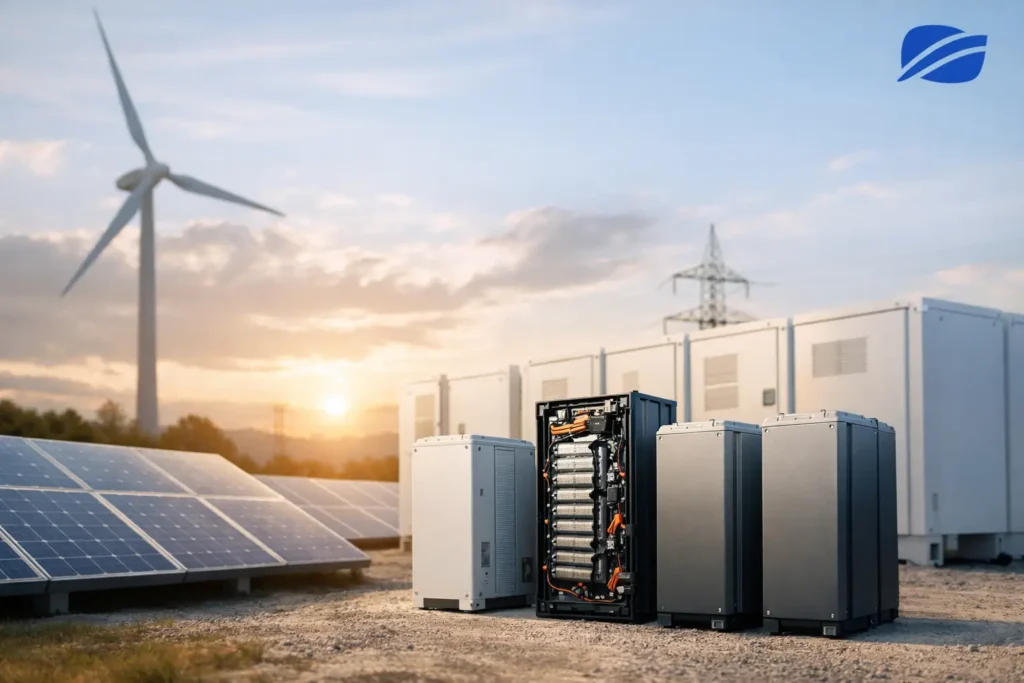
If combined with a BESS (Battery Energy Storage System), the project value can increase even further. This goes beyond energy cost optimization, addressing consumption flexibility, peak load management, and resilience of critical processes especially important in industry, telecommunications, and data centers.
Solar Profitability for Households
For households, the decision is smaller in scale but follows the same logic. The best results come from systems aligned with actual consumption. The system is not successful because it has many panels, but because it accurately matches the property’s energy profile.
For family homes, profitability is typically strong when there is sufficient solar exposure, a well-structured roof without shading, and consumption that can at least partially align with daytime production. Particularly favorable cases include households using electric heating, cooling, or larger appliances and those seeking long-term cost stability without full dependence on the grid.
However, even in smaller systems, execution quality makes a significant difference. Poorly designed systems can lead to lower production, technical issues, and slower payback. That is why choosing a partner who handles analysis, design, installation, and long-term support is just as important as the equipment itself.
Common Mistakes That Reduce Profitability
The first mistake is purchasing a system without analyzing consumption. The second is choosing a contractor who offers a generic, one-size-fits-all solution without engineering customization. The third is focusing exclusively on price, while ignoring performance, warranties, and service support.
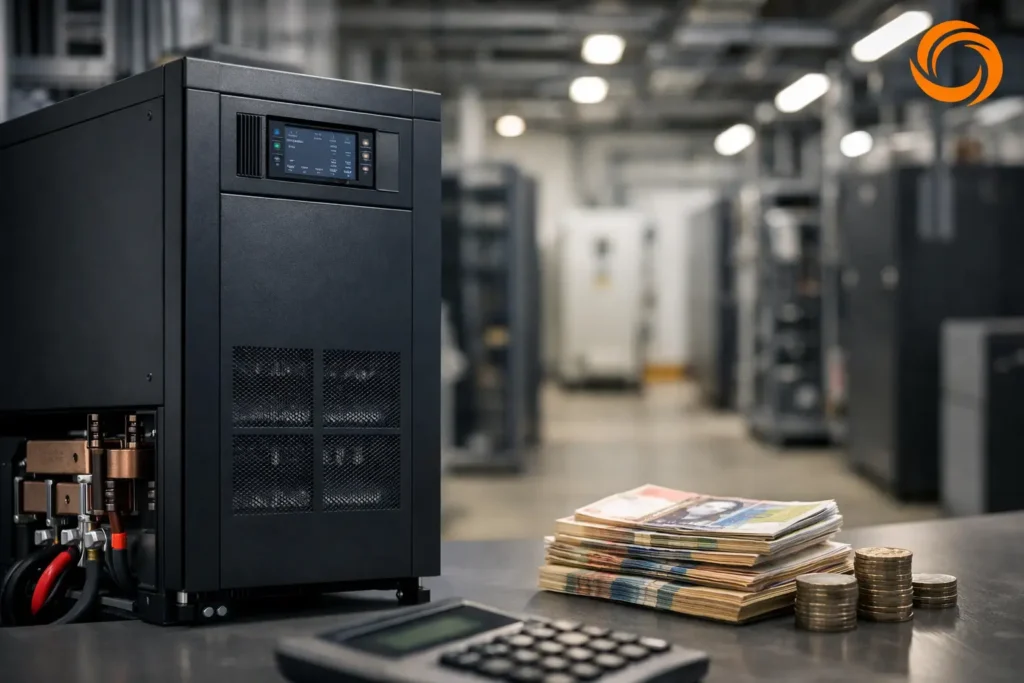
Another common issue is the lack of a broader energy perspective. If a facility experiences power quality issues, frequent outages, high peak loads, or a need for energy storage, a standalone solar system may not be sufficient. In such cases, the right solution is not just solar generation, but integration with UPS, battery storage, or other energy infrastructure systems.
This is where the difference between selling equipment and providing strategic energy solutions becomes evident. When a project is managed from feasibility study to commissioning with clear modeling of savings and technical risks the investor gets a realistic picture, not an optimistic estimate without foundation.
When Is the Right Time to Invest?
Most often when electricity costs become too high to be treated as a fixed expense. Waiting rarely improves the economics. On the contrary, delays extend the period during which companies or households continue purchasing all their energy from the grid, at prices they cannot control.
If a facility has stable consumption, adequate space, and a clear need for long-term cost reduction, the next step is not guesswork but precise analysis. On the website of Energize, project planning starts exactly where it should—with feasibility, data, and a realistic investment model.
A well-designed solar system does not sell the idea of savings it proves before installation, through a project model that demonstrates how the system performs for your specific facility, your consumption profile, and your business objectives.