A factory’s electricity bill is not merely a cost that needs to be reduced. It is an indicator of how the facility uses energy, how exposed it is to price fluctuations, and how dependent production is on the grid at critical moments. That is why the best solar solutions for factories do not begin with selecting panels, but with providing a precise answer to one question: when, how much, and for which processes does your factory consume energy?
An industrial facility with high daytime consumption often has an excellent basis for a solar power plant. However, rooftop area alone is not an investment plan. The production schedule, peak demand, grid connection quality, loads that must not stop, and future capacity growth determine whether the project will achieve its full economic and operational potential.
The Best Solar Solutions for Factories Are More Than Panels
A photovoltaic power plant generates energy when solar radiation is available, but a factory does not always operate according to the same pattern. A food processing facility may have a continuous load due to refrigeration systems. A shift-based production facility may record its highest consumption in the late afternoon or at night. A logistics center may experience sudden peaks caused by equipment charging and HVAC operation.
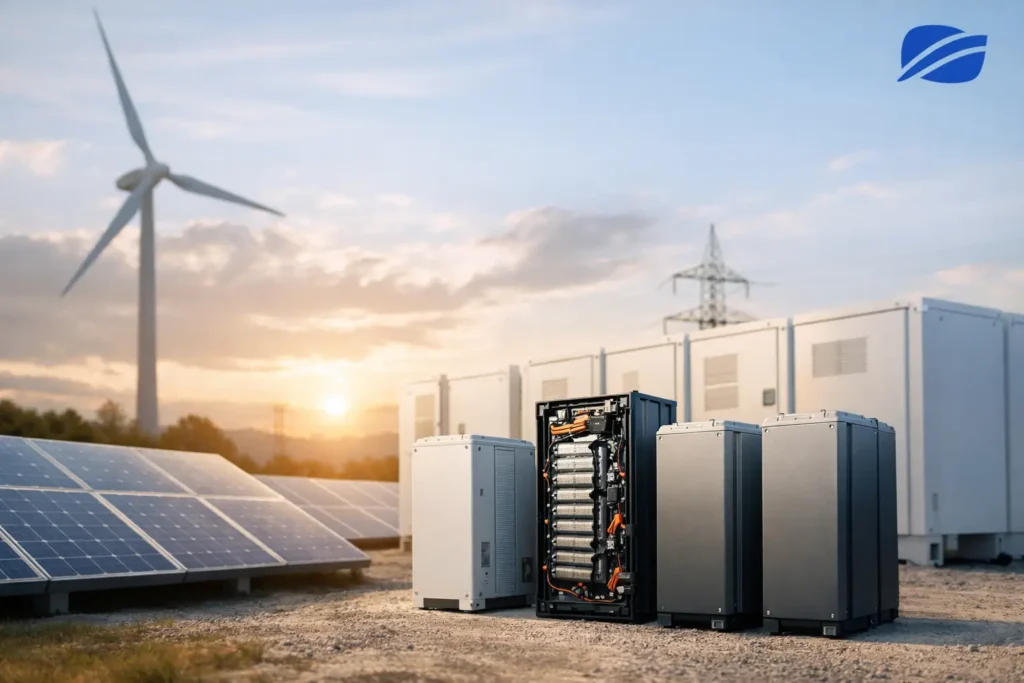
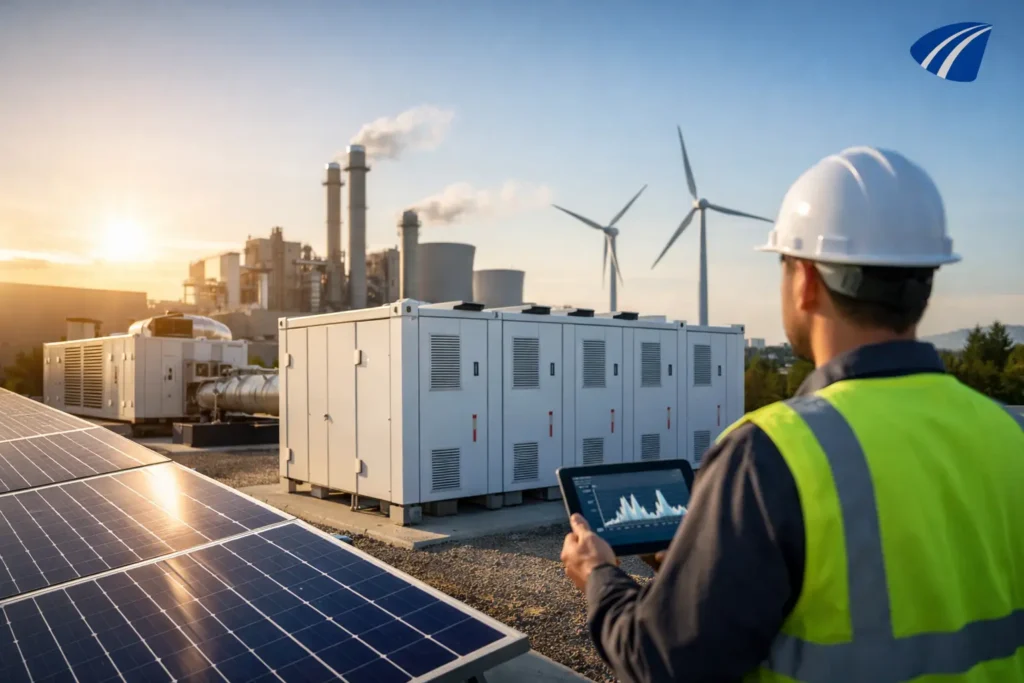
That is why an industrial solar solution should be designed as an energy system, not merely as a series of modules installed on a roof. Its key components may include a solar power plant, an energy storage system, consumption management, backup power, and cooling for critical energy equipment. The right combination depends on the consumption profile and business risk, not on a single universal formula.
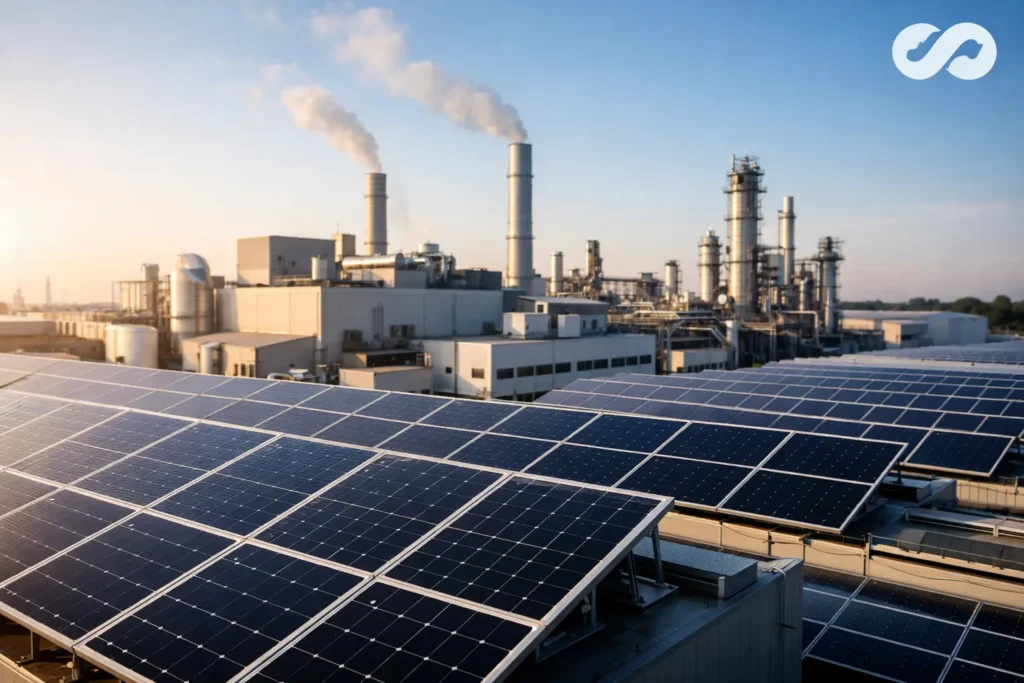
A solar power plant is the most direct way to reduce daytime electricity purchases from the grid through on-site generation. When most of the generated energy is consumed at the time it is produced, the project economics are particularly favorable. In this case, the factory is not only investing in capacity, but also in more predictable energy costs throughout the system’s lifetime.
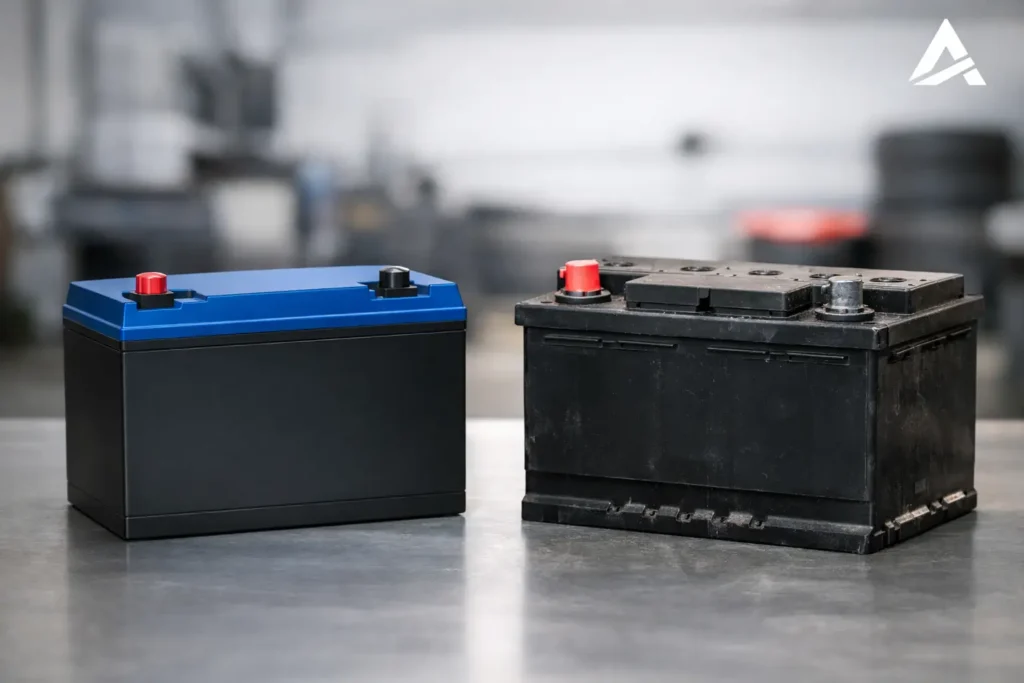
A BESS, or Battery Energy Storage System, has a different role. It can store surplus solar generation and make it available when consumption increases or when solar output decreases. In certain configurations, it can help limit peak demand and provide greater control over energy consumption. However, a battery is not automatically justified in every project. Its value increases when there is a significant mismatch between generation and consumption, a high cost of peak power, or a business need for greater energy autonomy.
Project Start: Analyzing Consumption, the Roof, and the Grid Connection
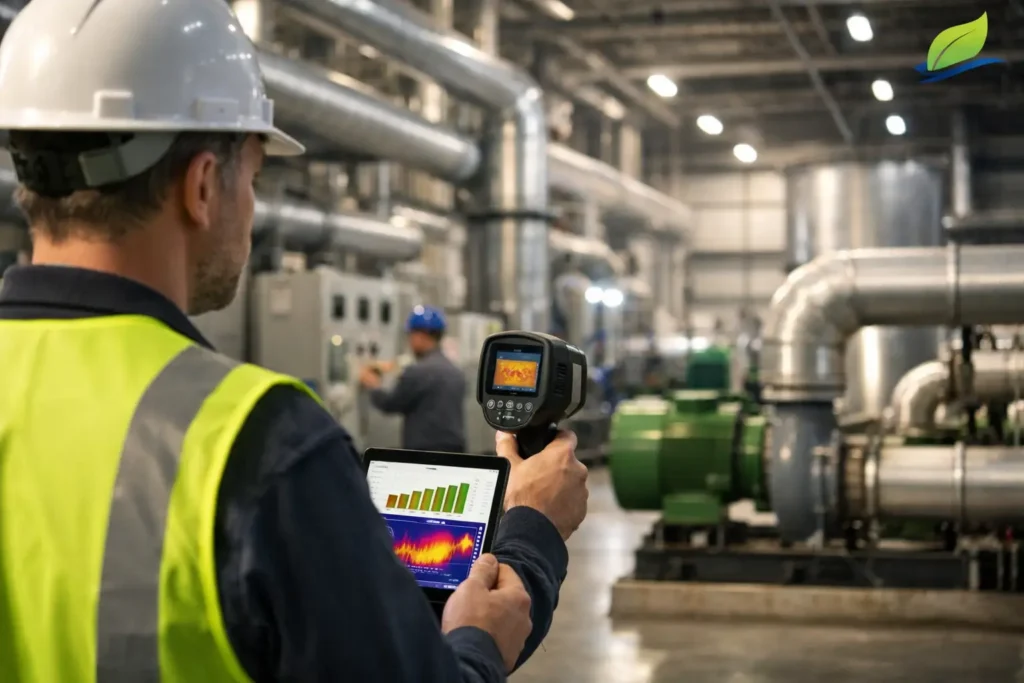
A serious project begins with collecting measurement data. Monthly consumption figures are useful, but they are not sufficient for precise system sizing. Data is required on daily load patterns, work shifts, seasonal fluctuations, and the loads that create peak demand. Only then can it be determined how much of the solar generation the factory can use directly.
The Consumption Profile Determines the Size of the Power Plant
A common mistake is sizing the system exclusively according to the available rooftop area. A large roof is an advantage, but the power plant must match consumption, grid connection conditions, and the investor’s objectives. A system that is optimal for a factory with stable daytime production may not be optimal for a facility that operates mainly at night or experiences significant seasonal variations.
The analysis should also include business expansion plans. A new production line, automated warehouse, additional refrigeration capacity, or electrification of internal transport can significantly change the facility’s energy profile. Designing the system for phased expansion is often more rational than installing a solution that cannot accommodate future requirements from day one.
The Roof Is a Structure, Not Just Available Space
Load-bearing capacity, pitch, orientation, waterproofing condition, shading, and the arrangement of roof penetrations directly affect the solution. In industrial buildings, it is also necessary to assess installation access, fire corridors, service zones, and wind loads. In some cases, a parking canopy or available land next to the facility may be more suitable than the roof, particularly when a higher system capacity is required or when charging company vehicles is planned.
The quality of a project is reflected in the details that remain invisible after the power plant is commissioned: proper cable routing, equipment protection, selectivity of protective devices, grounding, monitoring, and safe maintenance access. The lowest initial offer often excludes precisely these elements, while their cost later returns through downtime, difficult servicing, and a shorter system lifespan.
Grid Connection and Power Quality Can Change the Economics
A factory with limited grid connection capacity or frequent voltage fluctuations has different priorities from a facility with a stable power supply. The existing distribution infrastructure, transformer station, protection systems, and grid integration options must be assessed. The solar system must be aligned with the characteristics of the facility, as well as with applicable technical and regulatory requirements.
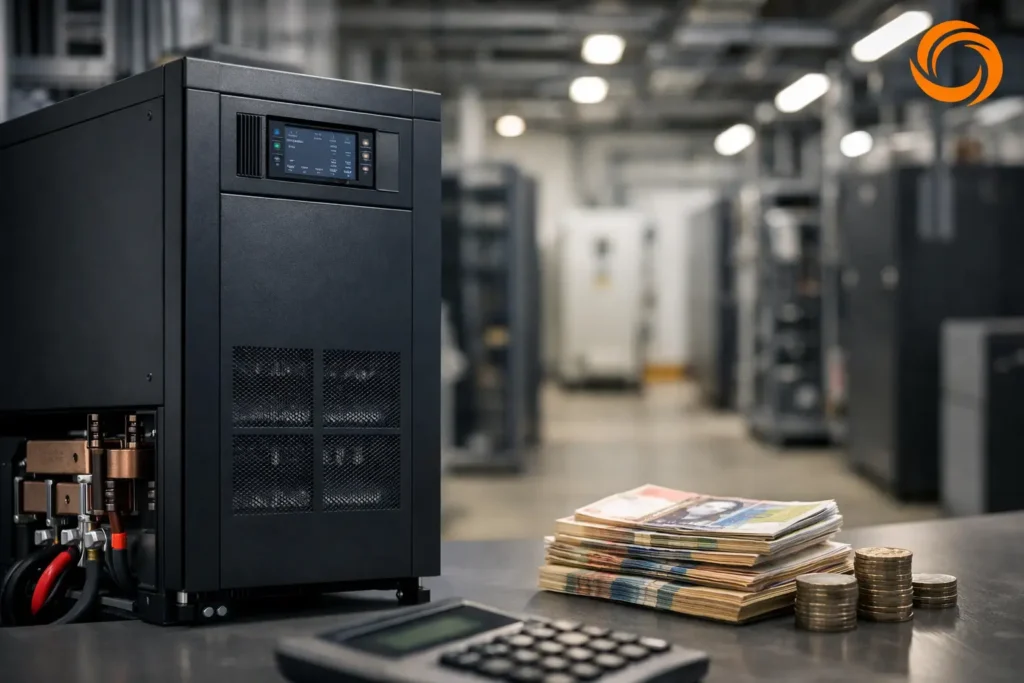
This is also where the decision is made whether the project should be integrated with a UPS system, diesel generator, or BESS. Solar panels alone do not provide backup power during a grid outage. If production continuity is critical, the system must be designed to clearly separate priorities: cost reduction, protection of critical loads, and autonomy during emergency conditions.
Solar, Storage, and Power Management as One Integrated System
The greatest impact is achieved when generation and consumption communicate with each other. An energy management system monitors solar generation, battery status, facility load, and grid parameters. Based on this data, it can determine when it is rational to store energy, when to reduce peak demand, and which loads should be prioritized.
For a factory with cold storage facilities, for example, intelligent management of refrigeration loads can increase the share of on-site solar energy used directly. In a facility with sensitive automation, integrating a UPS and reliable power management protects production from short-term disturbances. In logistics, battery storage can reduce peaks caused by simultaneous vehicle charging and warehouse equipment operation.
These are not separate purchases. They form a single energy architecture whose performance is measured through lower total cost of ownership, greater system availability, and more controlled risk. That is why selecting a partner should not be reduced to equipment price per kilowatt. System design, integration, warranties, service capacity, and responsibility for the entire system are equally important.
How to Measure Profitability Without Oversimplifying
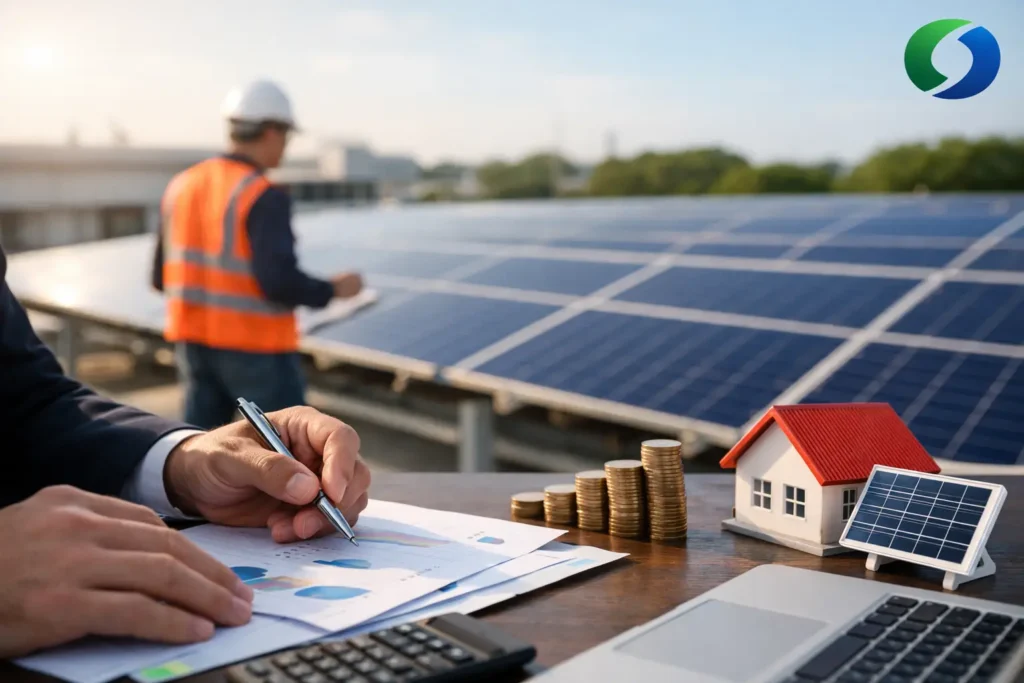
Return on investment is an important indicator, but it is not the only one. An industrial investor should consider how much solar energy is consumed directly, projected electricity prices, equipment degradation over time, and the effect of maintenance on power plant availability. It is equally important to assess the value of avoided downtime, particularly in processes where a single interruption can create costs many times higher than the electricity bill itself.
A good feasibility study does not promise the same result for every facility. It presents several scenarios: a basic solar system, solar with storage, phased construction, and integration with existing backup sources. This allows management to make a decision based on capital expenditure, operational impact, and risk tolerance.
Unrealistically high expectations should also be avoided. Solar does not eliminate all electricity costs, nor does it resolve every form of grid instability without appropriate battery and backup infrastructure. However, a properly designed system can permanently reduce dependence on electricity purchased from the grid and provide management with what it needs most: reliable data and greater control.
From Feasibility Study to Power Plant Operation: One Point of Responsibility
Complex energy projects lose value when analysis, design, procurement, installation, and maintenance are divided among multiple unrelated contractors. When generation deviates from projections or grid-related problems occur, responsibility can easily be shifted from one party to another.
A turnkey model eliminates this gap. One engineering team manages the feasibility assessment, defines the technical solution, coordinates implementation, commissioning, and system monitoring. Energize applies this approach by integrating solar power plants, BESS systems, UPS solutions, and energy infrastructure, with a focus on the real operating conditions of industrial users.
After commissioning, monitoring and preventive maintenance preserve the planned performance of the investment. Power plant generation should be measurable, deviations should be visible, and intervention should be available before a minor fault turns into downtime. For a factory, this is not an additional service it is part of business security.
The best decision is not the largest power plant you can install, but the system that follows the rhythm of your production, protects critical processes, and remains cost-effective for years after installation. Plan your power plant based on operational data, not assumptions this is where the energy advantage begins, visible in every future electricity bill and every uninterrupted day of operation.